

No Fishy Taste: The Easy Way For Beginners To Choose Quality Fish At The Grocery Store
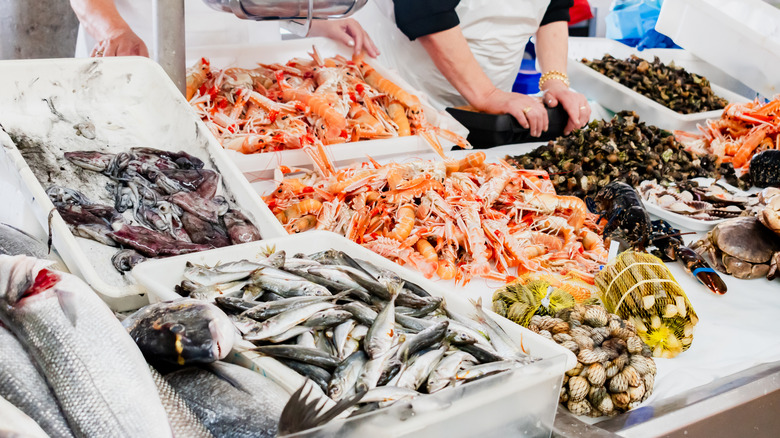
Walking up to a grocery store seafood counter for the first time can feel like jumping into the deep end. But you don't need a marine biology degree to make a good fish dinner — the best way for a beginner to dip their toes in is to ask the fishmonger what's best today.
Surveying the daily catch laid out on beds of ice, trying to parse the cuts and prices, and balancing advice about what's sustainable against what's delicious — it's overwhelming, and it's okay to ask for a little guidance. Fish is one of the most delicately delicious proteins, and quality and freshness matter enormously to the eating experience, especially for newbies, who are still figuring out what they like. They're also more likely to form an opinion, or an aversion, based on a bad first bite.
When you ask your fishmonger for help, you're not really asking which fish species is objectively superior, but which fish is in the best condition at that moment. Fish isn't a static product. Some species have seasons, and with others, the temperature of the water affects how they taste. Some fish may come from nearby waters, others are frozen at sea and shipped thousands of miles. Some filets may have been sitting in the display for several days, while others arrived that morning. A fish that is handled carefully and sold close to peak condition will usually taste cleaner and sweeter. This is because fish's quality starts deteriorating the minute it's harvested. Natural enzymes start breaking down tissue, moisture is lost, fats oxidize, and microbes get to work. That's true of all meat, but fish really tastes like it.
Teach a man to (buy) fish ...
The good news is that fish connoisseurship works like any other kind of food exploration: to cook it and eat it well, you have to spend time in a relationship with an ingredient. Nobody is born knowing the difference between cabbage and iceberg lettuce, or why an August tomato tastes transcendent, while a pallid January tomato tastes like wet wood pulp. But over a lifetime of eating salads, you develop discernment, pattern recognition, and personal preferences. Distinctions that once seemed invisible sharpen into proclivities. Through the process of borrowing the sharp expertise of the fishmonger, you'll hone your own.
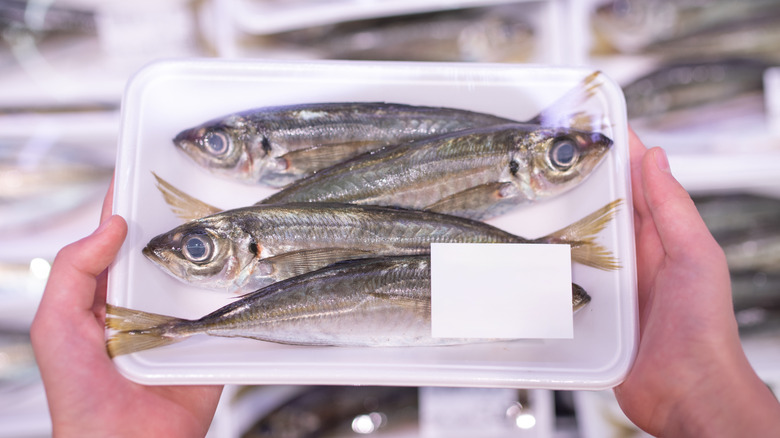
Besides letting the person behind the counter be your guide, one of the first skills to develop when purchasing fish is simply learning how to see them. Essentially, the fish should look healthy, hydrated, and turgid. Fresh filets should be firm, with a glossy, wet sheen. The flesh should appear cohesive, not ragged or separated by gaps that indicate it has become dehydrated. This means it will taste yucky and signal that it's probably been sitting around too long. If you're buying a whole fish, look at the eyes. They should be clear, not cloudy, and the gills should be bright red or pink. None of these signs guarantees perfection, but together they offer clues to how carefully the fish has been handled from water to market.
Another trick: the nose knows. Beginners may assume fish is supposed to smell, well, strongly fishy. But aggressive low-tide aromas are often a warning sign. Good, fresh fish usually smells like the environment it came from, like healthy, clean, mineral-y saltwater, with notes of cucumber or seaweed. The stronger the fishiness, the further the fish has drifted from peak condition.
A taste for the sea
Most fishmongers are excited about their products, love to share their knowledge, and want you to have a good eating experience. When you ask for their recommendations, they'll often explain why; maybe the black sea bass came in that morning, or the waters near this Massachusetts town make for the sweetest oysters. If you ask nicely, they may even share cooking technique pointers or recipe ideas.
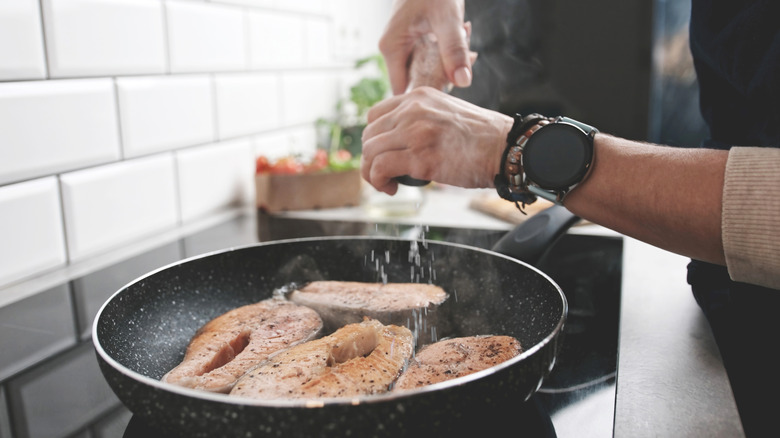
A lot of fish does well with just a hot pan, salt, and butter, finished with white wine or lemon.
That's definitely true for salmon and cod, which are popular starter fishes. Quality salmon is rich and forgiving, thanks to the naturally high healthy fat content, while cod is mild and flaky, adapting to almost any flavor profile. If you're nervous, start with one of those, and learn through practice what properly cooked fish looks like: it's moist and tender, and just opaque at the center. If it gets too much heat, it will start looking dry and fibrous. Still edible, just not quite as delectable.
Once you master the basics, you'll be hooked, and you'll probably want to start casting a wider net. Maybe the fishmonger talks you into making a fish broth with halibut collar, perhaps the training wheels cod finds its way into a coconut milk green curry with corn and lots of fresh herbs, or a blackened fish sandwich made with a hunk of local bluefish introduces you to an affinity for stronger, more assertive flavors. As you build your library of experiences, you'll gain confidence and discover what you like, one dinner at a time. Before long, you'll be an old salt, comparing seasons, developing tricks, and getting fired up when something special arrives.