

Repurpose Empty Jam Jars And Give New Life To Kitchen Scraps
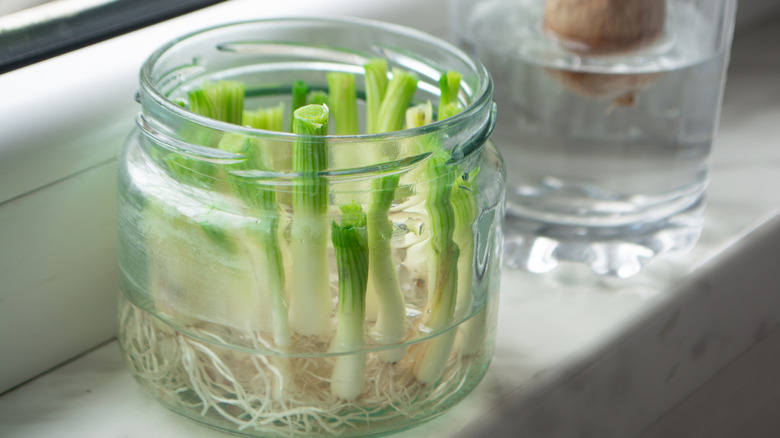
If you look in any trash can, you're sure to spot piles of wasted food. The USDA estimates that between 30-40% of America's food supply is thrown away every year, which equates to over 133 billion pounds of waste. Sometimes we can't control it, but many of us are guilty of tossing viable scraps that can be repurposed.
There are a lot of ways to get inventive with leftovers –- you can turn stale bread into homemade croutons or a tasty bread pudding, use up peels and bones to create a flavorful stock, or transform herbs into a vibrant pesto. You can even regrow some vegetables right in your kitchen. All you need to do is hold onto the roots and clean out some old jam jars.
Many common scraps can be used to make a countertop garden. Scallions are a great example, as are leeks, fennel, romaine, and herbs like basil, rosemary and cilantro. All you need to do is wash out some jars, sterilize them, then add a few inches of water. After you've cut up your vegetables, save the ends and submerge them in the water, making sure the roots are covered and the top ½ inch sits above the water level. Place in a sunny spot and watch the magic happen as new leaves start to grow in just a few days.
How to grow vegetable scraps in jars
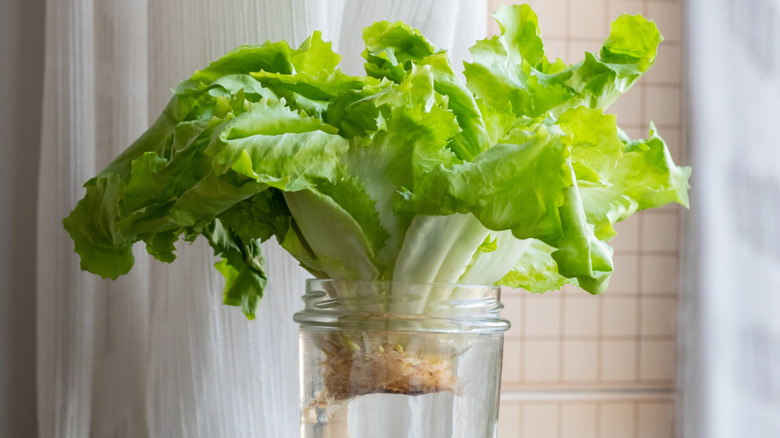
You can leave scallions and leeks right in the jar and harvest as you go. As for the herbs, they'll take a little longer to grow -– typically a few months. Once the roots have grown a few inches you'll need to transfer them to soil. The trick also works for larger vegetables like cabbage, celery, and lettuce, but you might need a bigger vessel, so it's worth holding onto larger glass food jars too.
For the best results, leave the jars in direct sunlight in the kitchen and change the water every few days if possible. Some people choose to add a little bit of diluted fertilizer or trace mineral drops to the water to mimic the nutrients found in soil, but it's not necessary. There's a case to be made for using filtered water over tap too, as chlorine could impact growth, and it might be easier to regrow organic vegetables.
Finally, don't worry if you don't see much regrowth -– lettuce will only sprout in the middle and herbs may only produce a few leaves. But it's fun to watch the process and there are plenty of other ways to regrow new plants from kitchen scraps if you end up enjoying it.