

12 Reasons Restaurant Prime Rib Tastes Better Than Homemade
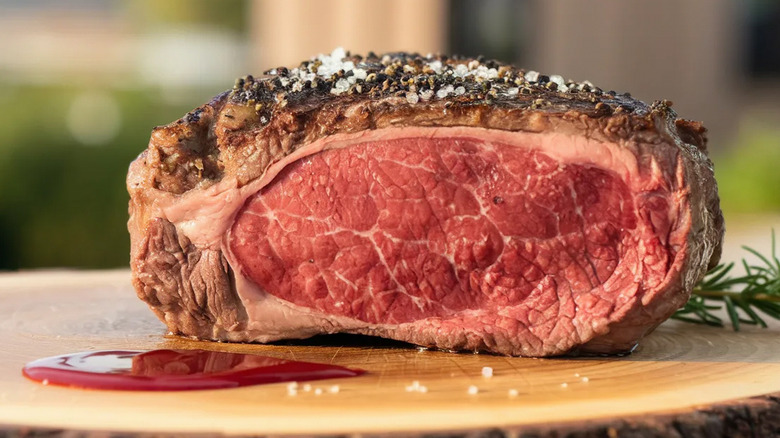
There are some foods that are better when made at home than at a restaurant. For certain cuts of meat, though, it's quite the opposite. This is especially the case with prime rib. Eating some perfectly cooked prime rib at a restaurant is a beautiful thing. Unfortunately, it's pretty hard to rival the professionals. No matter how much you think you know meat, prime rib, especially in a whole roast, is a little trickier to perfect at home without certain tools, know-how, and experience. As someone who's culinary trained and has worked with different cuts of meat in professional kitchens and my own food business, I can attest to the fact that there's a lot more that goes into the juicy prime rib that ends up on your plate than you'd imagine.
The prime rib you order is usually cooked as a whole roast, not as an individual steak, and there are steps taken way before an oven is even turned on. This isn't to discourage anyone who wants to make prime rib at home. With the right tools and a bit of effort, you can still make something delicious. Still, it's hard to beat people who are trained to make it for a living. For a prime rib that's cooked evenly with a gorgeous pinkness all along it, perfectly rendered fat, no gray band of meat, and a succulent browned crust, the professionals just do it better. Here are some reasons why.
1. Restaurants source high quality meat
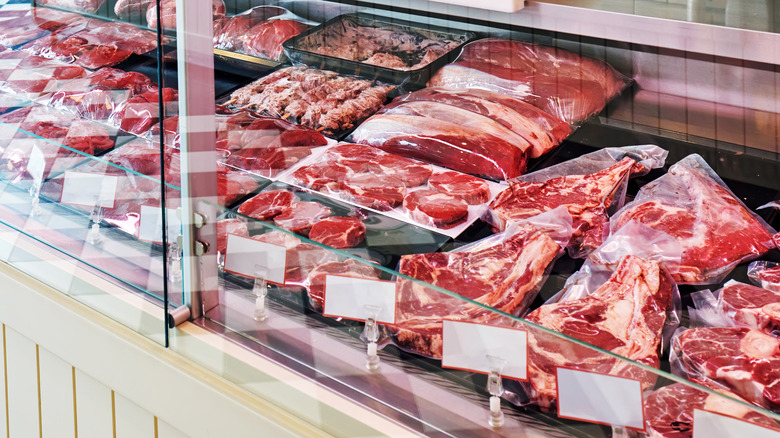
The quality of the meat will always determine how tasty it is. Although not all restaurants are the same, one thing that a good meat restaurant will always do is source high-quality meat. In my experience, restaurants are more connected with butchers and meat suppliers, and some even source premium beef straight from the farm. They're buying wholesale, so they're getting it cheaper than you'll be paying for an individual purchase of the same quality of meat. You've probably seen labels like prime grade, choice grade, select, and more when buying cuts of meat. For many home cooks, choice grade is a safe bet for good meat and, in my opinion, is less price restrictive than prime.
Prime grade, which is the highest quality graded by the USDA, is quite expensive and not as easily accessible to home cooks. In fact, only 2% of all beef is graded as prime, and most of it is sold to restaurants and select butchers.
If it's unclear whether a restaurant or steakhouse sources quality meat, that's not a great sign, because it's in their best interest to make it clear for establishments that do. However, you can always call them to ask. They should be knowledgeable and happy to share with you all the information about the meat quality, origin, and aging process.
2. A professional kitchen has better equipment
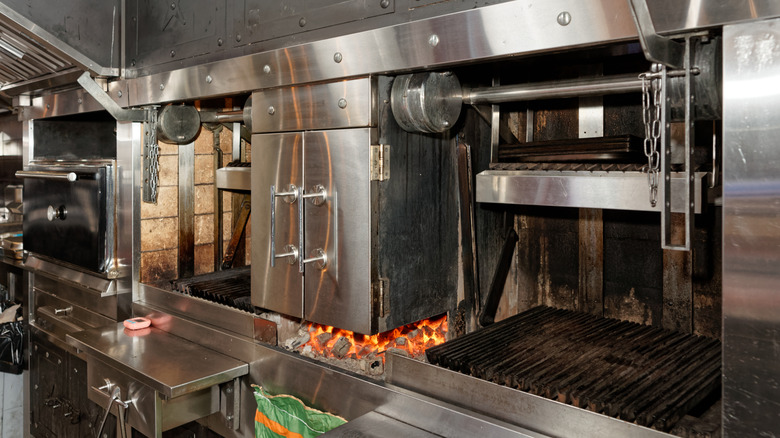
It's not only the skilled professionals who cook the food that matter, but also what they are using to cook with. This is where your home cooking will always be a step below, no matter how skilled you are in the kitchen. Restaurants have professional kitchen equipment, which is simply a whole different level from what you can have in a home kitchen. Restaurants have much larger commercial ovens with different specifications, allowing them to cook larger volumes of food with greater precision.
Naturally, the equipment in a commercial kitchen will depend on the type of restaurant and what types of food it focuses on. Still, in my experience, many professional kitchens that work with meats like prime rib have charbroilers, smokers, heavy-duty grills, and more. Some also have their own meat drying and aging chambers and fridges, which you're unlikely to have at home unless you're a high-level meat aficionado. So, cut yourself some slack, and stop trying to compete with a highly equipped commercial kitchen, and just enjoy eating a prime rib at a steakhouse or restaurant of your choice.
3. Prime rib roast is cooked whole, then sliced
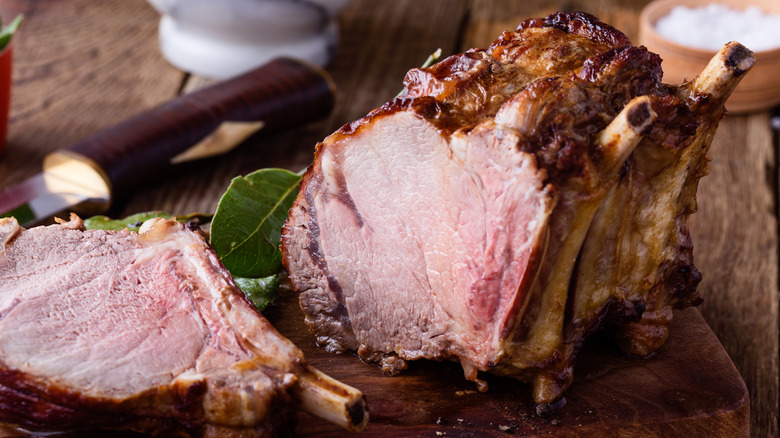
One of the reasons that prime rib is so much tastier when you order it at a restaurant is that restaurants are cooking a whole roast at the optimum conditions, often bone-in, then slicing to order. Buying a whole prime rib roast is an expensive cut of meat, so some home cooks may think it's a better deal to buy individual steaks. However, if you're doing that, you're actually buying ribeye steaks, rather than prime rib. While ribeye is a delicious cut of meat in its own right, there may be some confusion for home cooks on how to prepare it if you think it will be the same as the prime rib you order out. Cooking a ribeye is completely different than cooking a prime rib roast. Ribeye steak is usually cooked on a skillet or grill, and it won't be the same as a whole prime rib roast cooked in the oven, then sliced.
If you're buying a whole roast, you may also opt for a boneless piece because it's much easier to handle. From my experience, I've rarely seen a whole prime rib cooked without the bones in a professional kitchen. Chefs have different opinions as to why, but the general thinking is that cooking meat on the bone yields a much more flavorful piece of meat. Plus, they're an effective heat insulator, helping keep the meat juicy by preventing overcooking.
4. Salting is a priority, and they season it more than you think
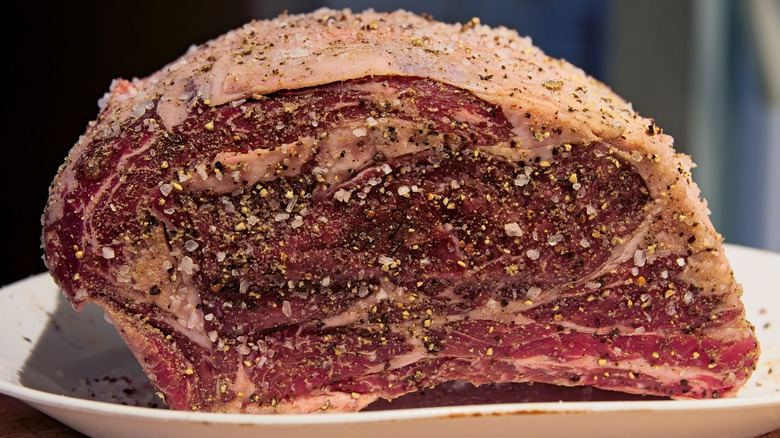
A prime rib roast is a huge cut of meat that requires a lot of seasoning to make it tasty. Perhaps you know the importance of salting your prime rib before cooking, but you'll likely still undersalt it. Many home cooks completely underestimate just how much salt is added; you might be surprised at the amount of salt that chefs use. There's a reason for this, though, and it won't result in a too-salty piece of meat.
For such a large hunk of meat, you need a lot of salt to actually make an impact on it, and you need time for that impact to take effect. Salt is absorbed into the meat through a process called osmosis, and the meat will be more deeply seasoned the longer you let it work. How much you add depends on the size of the cut, but in this case, more is more, and it's hard to go wrong with a lot of salt. For a general rule, add 1 teaspoon per pound of meat.
5. They may brine their prime rib for days
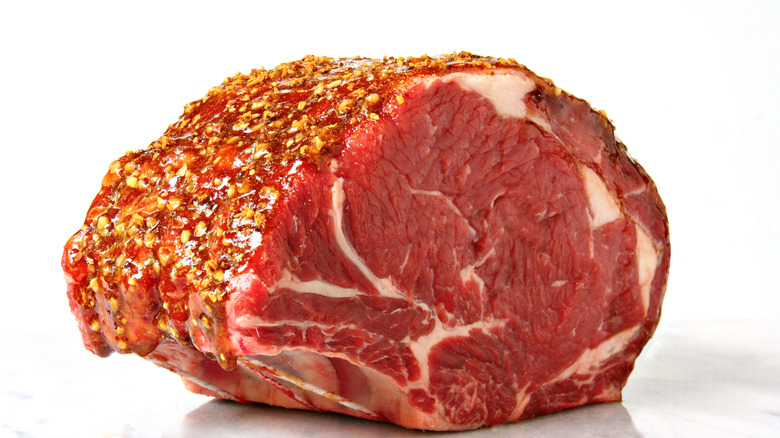
Letting salt permeate the meat is called brining. In my experience, it's something that all restaurants do. There are two schools of thought when it comes to brining, and that's: Either go with a wet or a dry brine. A wet brine involves submerging the meat in a saltwater brine for several days. A dry brine, on the other hand, is simply covering the meat with salt and other dry seasonings.
How long a prime rib is brined depends on the chef and the restaurant, but either type of brining can be used for prime rib – some may brine overnight or up to two days. You can do the same at home, too, but you need to know your stuff, prepare in advance, and make enough space in your fridge. Since restaurants have the fridge space and equipment to hold large pieces of meat for long periods, it's easy to understand why brining is a standard practice.
6. The prime rib may be dry aged
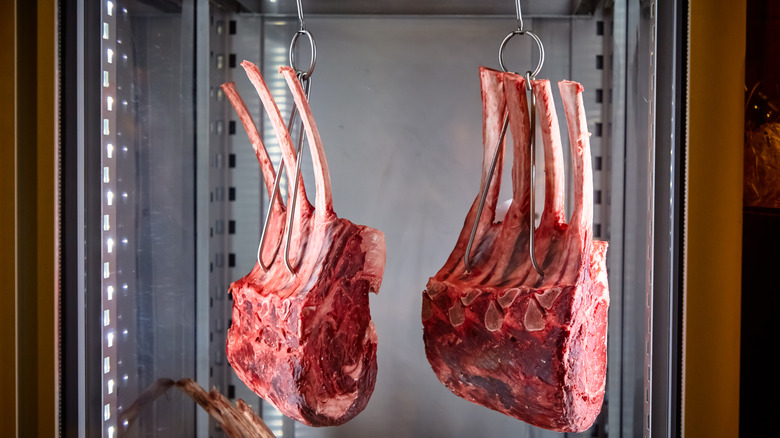
Dry aging can give a restaurant's prime rib an edge. Dry aging allows the meat to develop more flavor and texture over a period of time, in a controlled environment. Some restaurants and steakhouses have their own dry chambers or fridges where they age prime rib – sometimes these chambers may even be on display. The general period of time that prime rib is aged can be between 21 and 60 days.
While it's possible to dry-age meat at home (even if you don't have a specialized dry-age fridge), it's a long process. Additionally, you need not only fridge space for an extended period of time, but also a fan in your fridge. This doesn't seem feasible for the average person, so a restaurant with its own dry-ager will beat out a home cook in most cases.
7. Restaurants don't skip the trussing
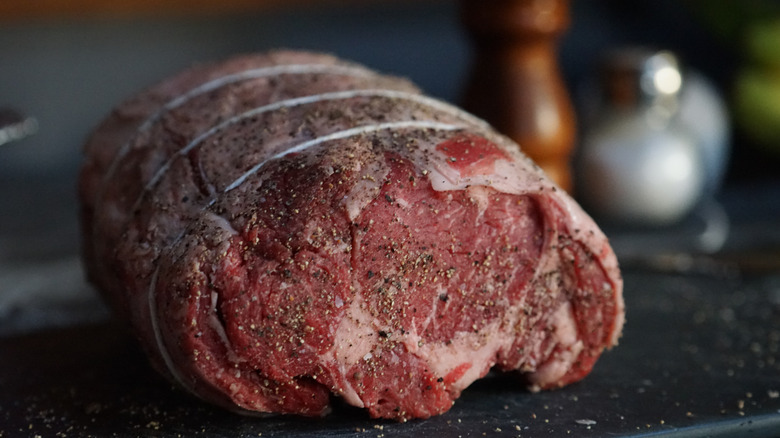
When it comes to large pieces of meat, trussing becomes an essential step to ensure even cooking. It's one of the first things I learned in culinary school when cooking prime rib, and it served me throughout my professional experience as all the restaurants I worked at truss their prime rib.
This is done with butcher's twine, which helps keep everything held in place as it cooks. This prevents parts from sagging, which can cause them to cook at different speeds. Some people think they can forgo trussing altogether. Understandably, it's an extra bit of labor, and not everyone has butcher's twine in their kitchen. Still, if you're buying from a butchery, you can always ask your butcher to do this step for you.
8. They're starting in a cold or low heat oven
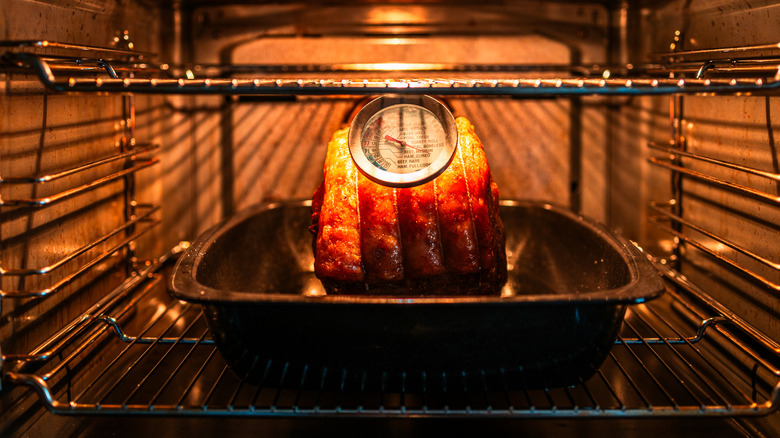
One way to ruin a cut of meat like prime rib is roasting it in an oven that's too hot. In good restaurants nowadays, you're likely to find prime rib cooked at low temperatures. In some restaurants, I've even seen it start in a cold, not preheated oven. Because it's such a large piece of meat, starting hot will inevitably overcook the outer edges before the center has reached the desired level of cooking.
Cooking for longer at a lower temperature of about 200 degrees Fahrenheit allows enough time for the internal temperature to rise without it turning into an overcooked, gray piece of meat on the outside. If you feel ready to give this a go, try out this approachable slow-roasted prime rib recipe. It requires you to cook at 185 F, but if your oven's lowest temperature is 200, just shorten the cooking time slightly.
9. A food thermometer ensures precise internal temperatures
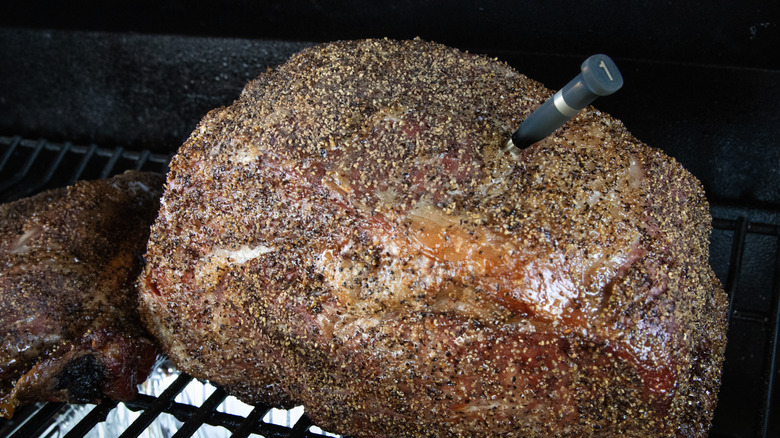
One thing that immediately distinguishes a restaurant kitchen from a home cook's is that a restaurant uses a meat thermometer every time. It's the most basic, but effective piece of equipment a restaurant utilizes, and it's one of the easiest ways to ensure the right level of cooking. Many people have the impression that chefs simply know how to tell the level of cooking by looking or feeling the meat. With prime rib, though, there is simply no other way to know how your meat in the middle is cooked, and no amount of poking or touching the edge can give you an accurate picture.
To reach the exact level of doneness, chefs check the internal temperature at the thickest part of the meat. Thankfully, a meat thermometer is perhaps the most attainable tool for a home cook who wants to cook with more precision, as many are affordable.
10. Restaurants are reverse searing
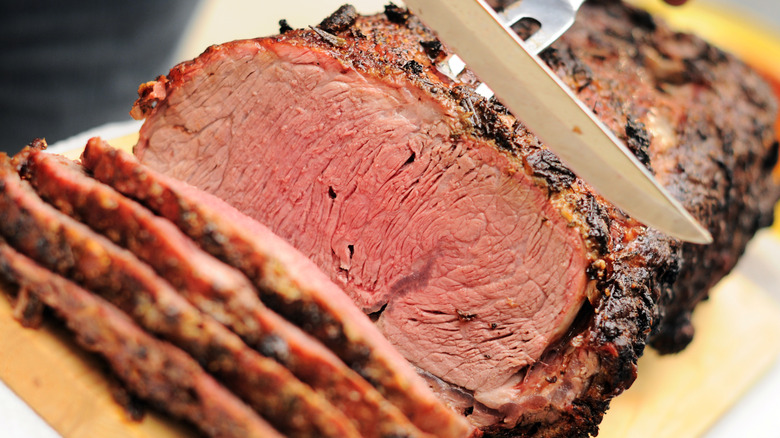
With many meat recipes, whether it's a steak or a stew, you tend to start off by searing the meat at the beginning of the cooking process. It's a common belief that this "locks in the juices." This isn't the case for a prime rib roast. When you sear at the beginning, start with high heat, then turn it low to finish it off. With prime rib, it can take a while to brown it sufficiently, meaning that you can overcook some parts of the meat if you do so. In fact, this is often why your prime rib has an undesirable gray band around it. Instead, a popular cooking method for prime rib is to reverse sear it.
You give the meat a chance to cook more evenly when you cook low and slow from the beginning. Then, crank the heat up at the end, allowing the crust to develop and brown more quickly without the risk of overcooking.
11. They're not rushing the longer resting time required
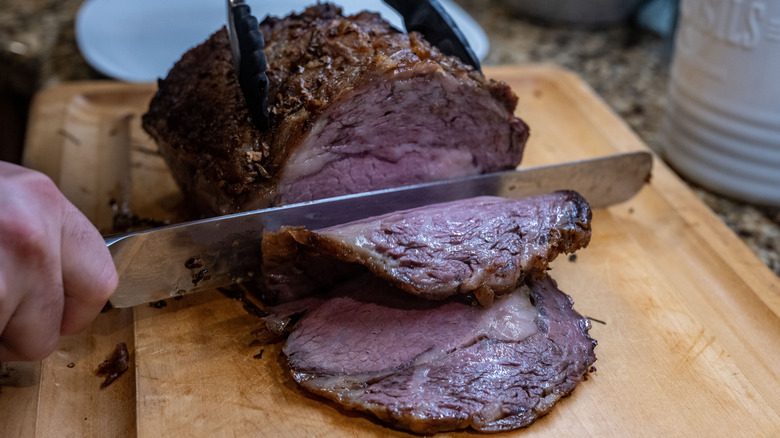
Most meat lovers know the importance of resting meat after cooking. This allows the juices to settle in, and won't cause them to leak out as soon as you cut the meat. For prime rib, this couldn't be more important, but it takes time, and you can't rush it. With steak or other roasts, it may be fine to leave them for a resting time of around 10 minutes, but you're looking at much longer with prime rib.
You should let your prime rib rest for about 30 minutes after you take it out of the oven. This requires a whole lot of patience, as you'll be dying to cut into it to see how it's cooked. Rather than doing so, use a meat thermometer, and respect the resting time. The result will be a much juicier piece of prime rib; it's so worth it.
12. The drippings are collected and turned into a tasty jus
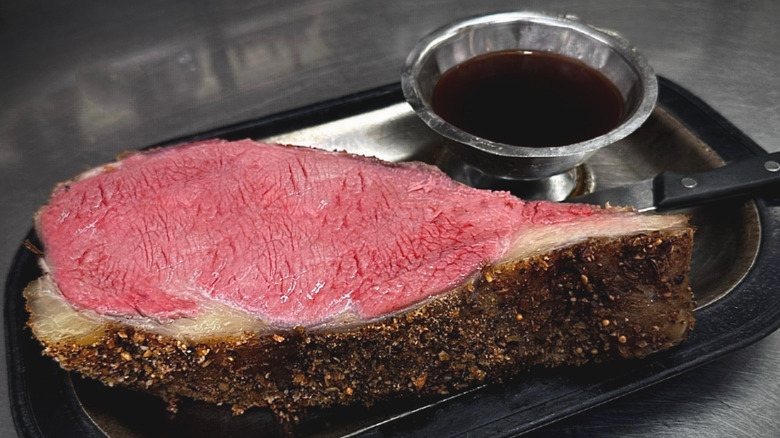
A handy tip I learned in a professional kitchen is to always keep a drippings tray under your prime rib as it roasts. As the meat roasts, the fat renders, and it drops into the tray, along with other tasty meat juices. It would be a waste to discard this valuable by-product, which is literal flavor heaven. Instead, I was taught to collect these drippings, which would then be used to make an umami-packed, rich, meat jus to pour over the prime rib after it's sliced.
For many home cooks, the process of cooking prime rib can already be laborious. Still, if you take this extra step, you can have a delicious accompaniment for your perfectly cooked prime rib roast. Thankfully, it's a pretty easy step, and you can make your own jus by collecting the drippings too. Then, along with some red wine, butter, and Worcestershire sauce, you can make this tasty, rich au jus recipe. All it takes is simmering everything together for about 10 minutes or until it thickens. Season it with salt and pepper, and serve it alongside your sliced prime rib roast for a restaurant-quality meal.