

Cabbage Roll Dumplings With Tempeh Recipe
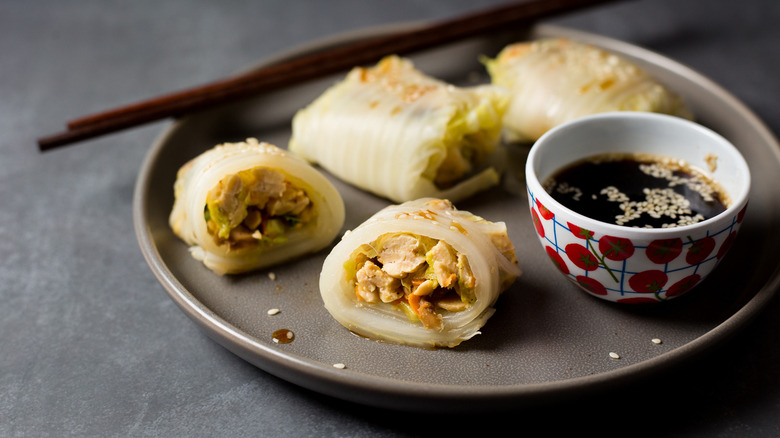
Cabbage rolls are a traditional dish in many parts of the world. In Europe alone, different versions of this warm and comforting dish include kåldolmens from Sweden, gołąbki from Poland, sarmale from Romania, and sou fassum from France. These are usually filled with meat but can include other ingredients like vegetables, cheese, and fish.
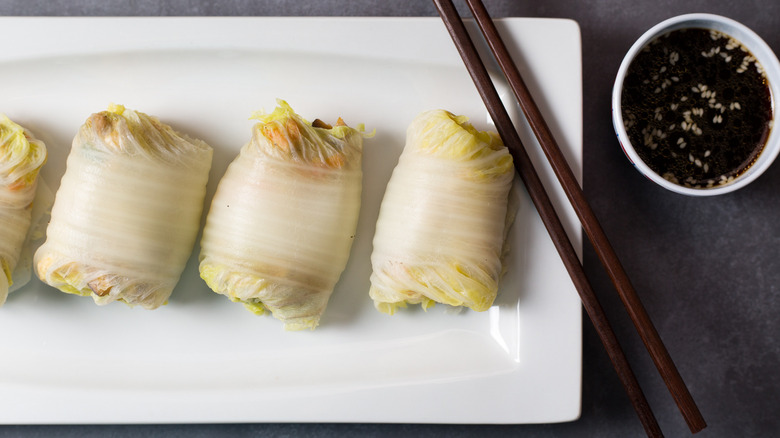
I gravitated towards developing a plant-based version and created a recipe for napa cabbage roll dumplings stuffed with a tempeh-based filling inspired by Asian cuisine. These rolls are packed with fiber, nutrients, and protein. One three-ounce serving of tempeh has 18 grams of protein (as much as chicken), and cabbage, which is a cruciferous vegetable, is a known superfood. Best of all, these rolls are delicious. We crumble the tempeh and mix it with ingredients such as shiitake mushrooms, carrot, garlic, scallion, ginger, soy sauce, and sesame oil, and the umami-rich filling is good enough to eat on its own.
Be gentle when handling and rolling the leaves. Go slow and fold in the sides so the rolls don't come undone. Napa cabbage leaves are longer and narrower than regular green cabbage, so it's best to start rolling from the top leafy end. If napa cabbage isn't available, you can substitute rounder Savoy cabbage or green cabbage leaves and roll from the stem end to get a more textured look on the outside. A soy sauce-based dipping sauce with sweet, tangy, and toasted notes brings this dish together. Garnish the sauce and the cabbage rolls with a sprinkling of sesame seeds for a beautiful display.
Gather your cabbage roll dumplings ingredients
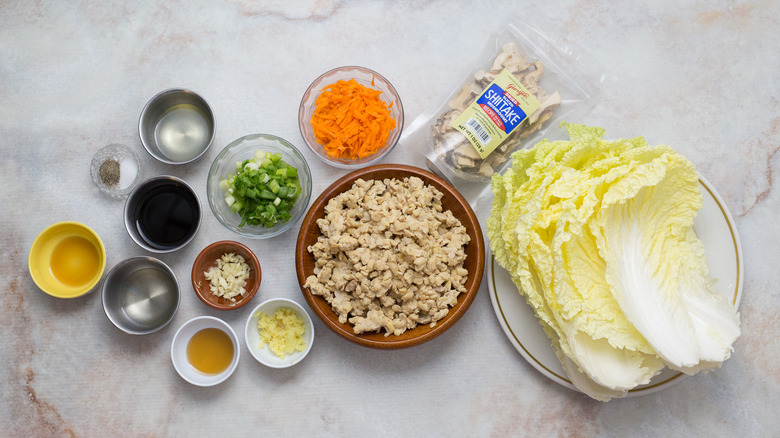
For this recipe, you will first need napa cabbage. While the dish is called "dumplings," the wrapper is the cabbage itself. You will also need dried shiitake mushrooms (although you could substitute fresh shiitake mushrooms if they are available in your area) and tempeh. The remaining filling ingredients are carrot, scallions, garlic, ginger, sesame oil, soy sauce, salt, and black pepper. For the sauce, grab soy sauce, rice vinegar, maple syrup, and toasted sesame oil, which is a different product with a stronger and nuttier flavor than regular sesame oil. Finally, red pepper flakes are an optional ingredient if you'd like to make the sauce spicy, and sesame seeds can be used to garnish the rolls if desired.
Step 1: Soak the mushrooms
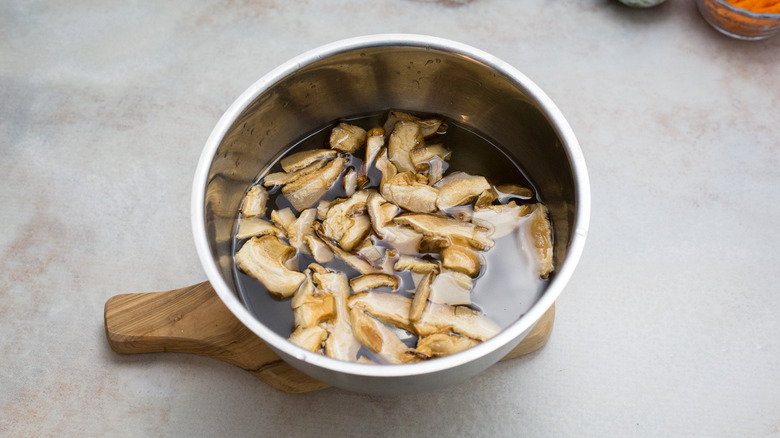
Submerge the dried shiitake mushrooms in a bowl of warm water and let them soak for 15-20 minutes.
Step 2: Boil the water
Meanwhile, bring a large pot of water to a boil.
Step 3: Cook the cabbage
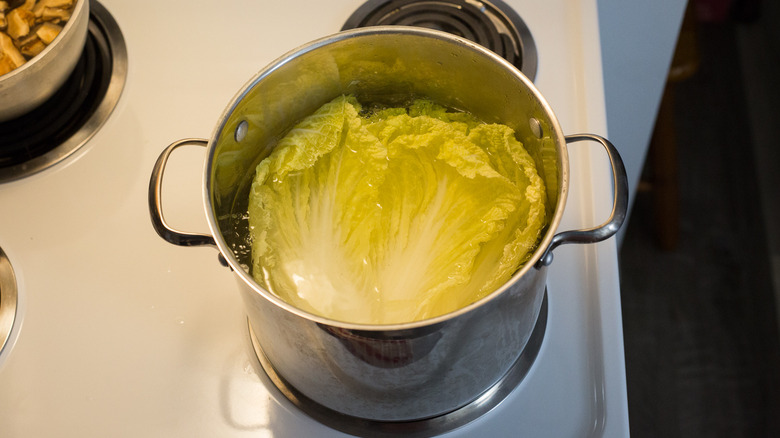
Place the cabbage leaves in the water and cook them for 2-3 minutes until softened.
Step 4: Blot the leaves
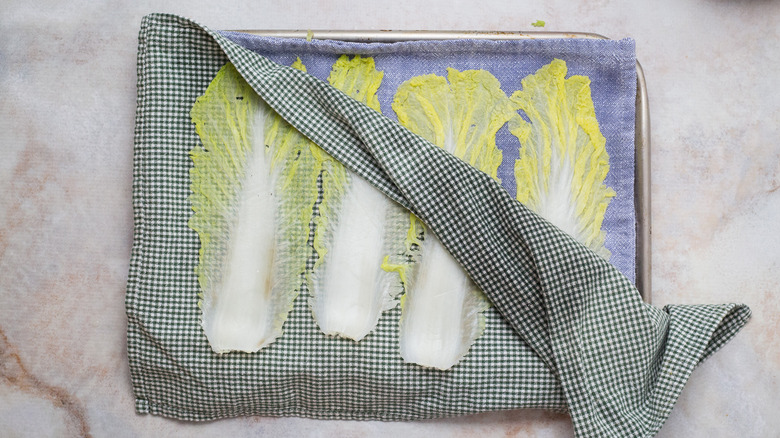
Gently remove the leaves from the water and layer them on a large baking sheet with paper towels or tea towels to blot them dry. Set them aside until they're cool enough to handle.
Step 5: Chop the mushrooms
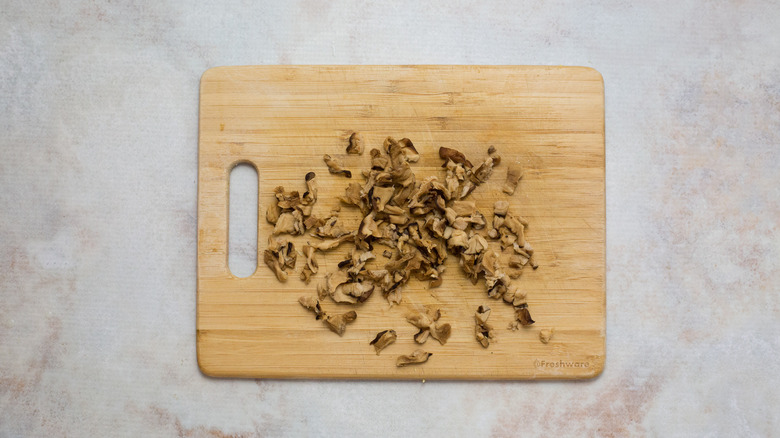
When the soaking time has elapsed, remove the mushrooms with a slotted spoon or strainer, gently squeeze the water out, rinse with fresh water, blot dry, and finely chop.
Step 6: Make the filling
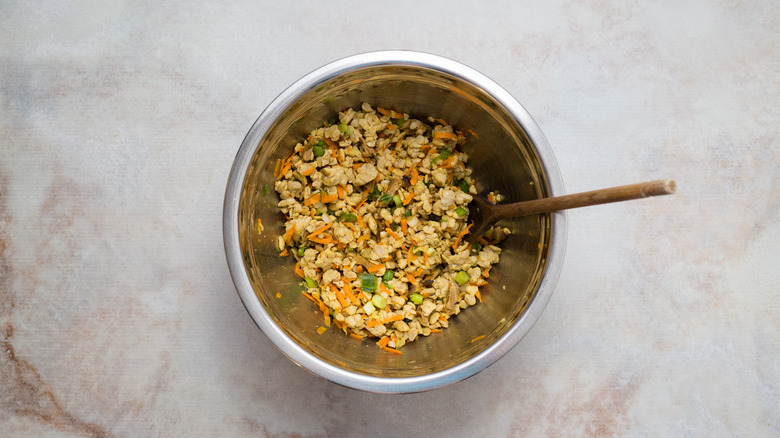
Place the mushrooms in a mixing bowl along with the tempeh, carrot, scallions, garlic, ginger, sesame oil, soy sauce, salt, and black pepper and stir to evenly combine. Taste and adjust for salt and black pepper if needed.
Step 7: Place filling in a cabbage leaf
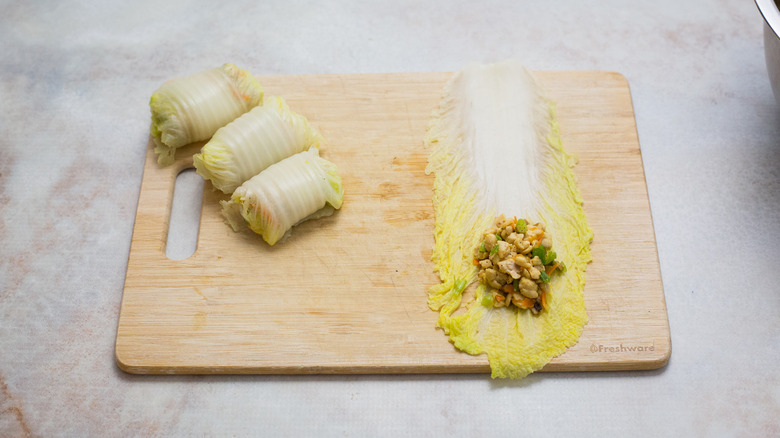
Place 1 cabbage leaf on a flat surface and spoon about 2 tablespoons of filling onto the center of the leaf closer to the top leafy end.
Step 8: Roll up the first leaf
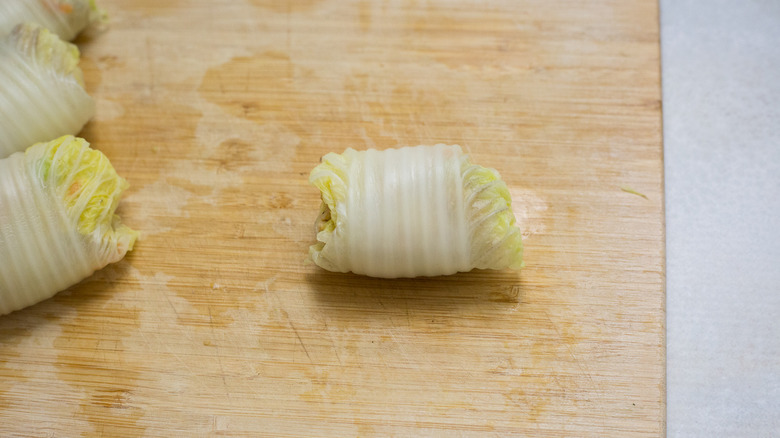
Fold the top leafy end over the filling, fold in the sides, and tightly roll the leaf up all the way to the stem end like a burrito, keeping the seam on the bottom when finished.
Step 9: Finish rolling all the leaves
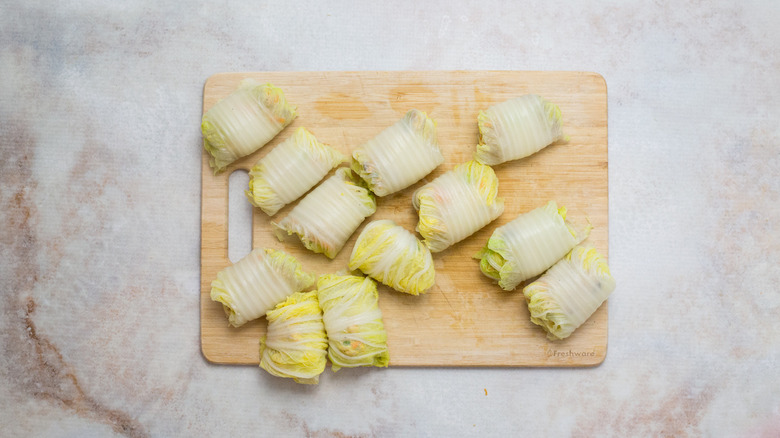
Repeat the filling and rolling steps with the remaining filling and leaves.
Step 10: Steam the cabbage rolls
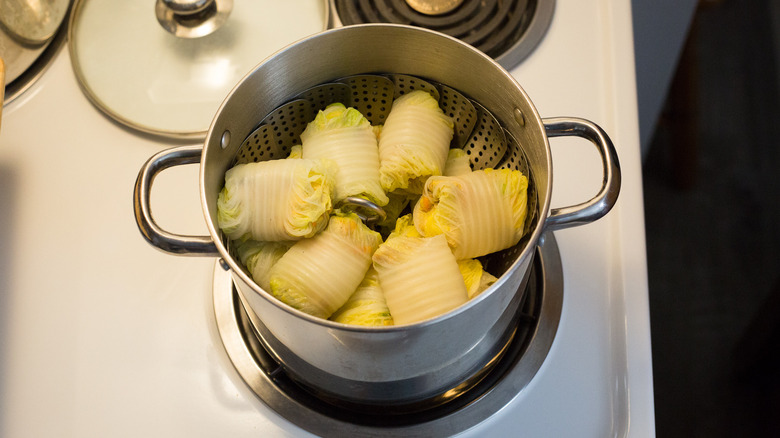
Place the dumplings in a covered steamer basket, seam side down, over rapidly simmering water. They don't need to be in a single layer. Steam for 10 minutes.
Step 11: Make the dipping sauce
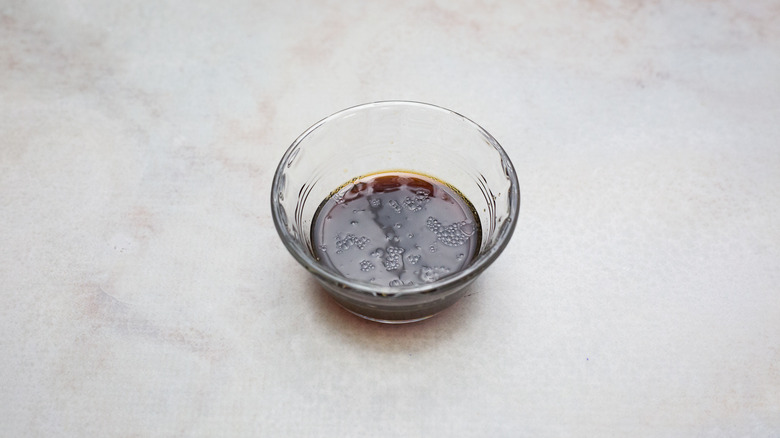
While the dumplings are cooking, place the soy sauce, rice vinegar, maple syrup, and sesame oil in a small bowl and stir to combine. Add a small pinch of optional red pepper flakes if desired.
Step 12: Let the dumplings cool slightly
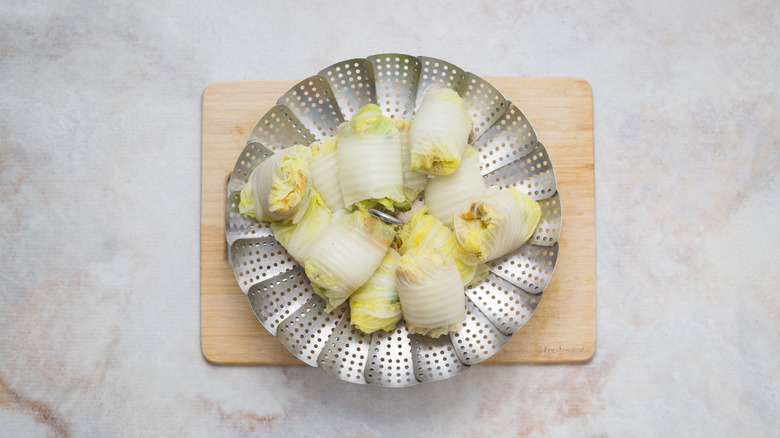
Remove the dumplings from the heat and let them cool for about 5 minutes.
Step 13: Serve the cabbage roll dumplings
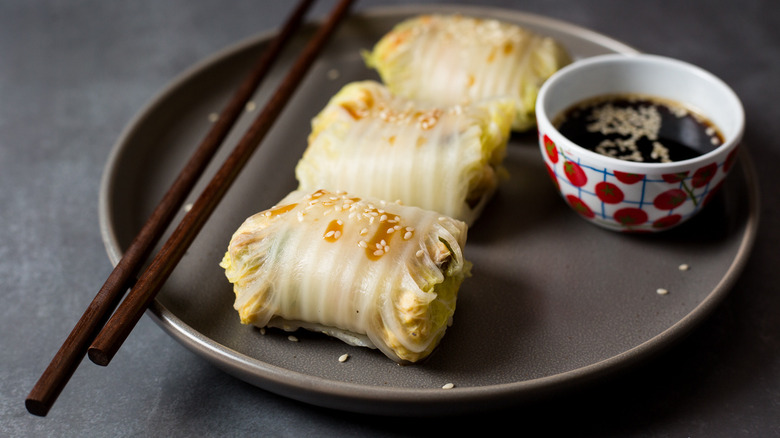
Serve warm with the dipping sauce, garnished with white sesame seeds if desired.
What can I serve with cabbage roll dumplings?
Cabbage Roll Dumplings With Tempeh Recipe
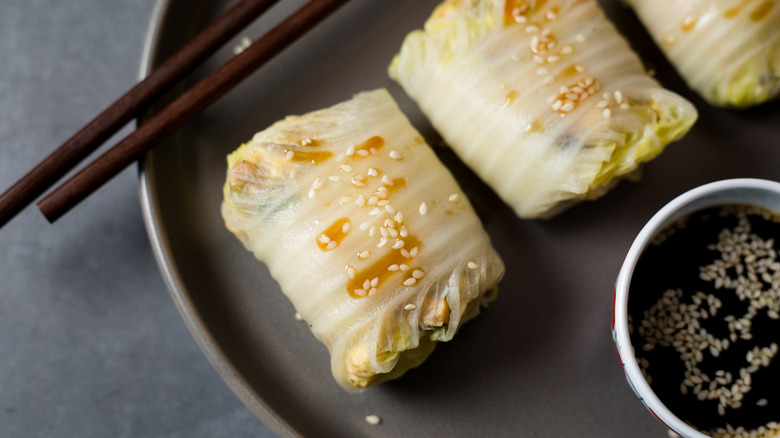
Our nutritious steamed cabbage roll dumplings are full of tasty ingredients like tempeh and shiitake mushrooms, and served with an umami-rich dipping sauce.
Ingredients
- For the rolls
- ½ ounce dried shiitake mushrooms
- 12 leaves napa cabbage
- 8 ounces tempeh, crumbled
- ¼ cup shredded carrot
- 2 scallions, finely chopped
- 1 large clove garlic, minced
- ¼ inch ginger, grated
- ½ tablespoon sesame oil
- ½ tablespoon soy sauce
- ¼ teaspoon salt
- ⅛ teaspoon black pepper
- For the sauce
- 2 tablespoons soy sauce
- 1 tablespoon rice vinegar
- 1 teaspoon maple syrup
- ½ teaspoon toasted sesame oil
Optional Ingredients
- Red pepper flakes
- Sesame seeds
Directions
- Submerge the dried shiitake mushrooms in a bowl of warm water and let them soak for 15-20 minutes.
- Meanwhile, bring a large pot of water to a boil.
- Place the cabbage leaves in the water and cook them for 2-3 minutes until softened.
- Gently remove the leaves from the water and layer them on a large baking sheet with paper towels or tea towels to blot them dry. Set them aside until they’re cool enough to handle.
- When the soaking time has elapsed remove the mushrooms with a slotted spoon or strainer, gently squeeze the water out, rinse with fresh water, blot dry, and finely chop.
- Place the mushrooms in a mixing bowl along with the tempeh, carrot, scallions, garlic, ginger, sesame oil, soy sauce, salt, and black pepper and stir to evenly combine. Taste and adjust for salt and black pepper if needed.
- Place 1 cabbage leaf on a flat surface and spoon about 2 tablespoons of filling onto the center of the leaf closer to the top leafy end.
- Fold the top leafy end over the filling, fold in the sides, and tightly roll the leaf up all the way to the stem end like a burrito, keeping the seam on the bottom when finished.
- Repeat the filling and rolling steps with the remaining filling and leaves.
- Place the dumplings in a covered steamer basket, seam side down, over rapidly simmering water. They don’t need to be in a single layer. Steam for 10 minutes.
- While the dumplings are cooking, place the soy sauce, rice vinegar, maple syrup, and sesame oil in a small bowl and stir to combine. Add a small pinch of optional red pepper flakes if desired.
- Remove the dumplings from the heat and let them cool for about 5 minutes.
- Serve warm with the dipping sauce, garnished with white sesame seeds if desired.
Nutrition
| Calories per Serving | 217 |
| Total Fat | 11.5 g |
| Saturated Fat | 2.4 g |
| Trans Fat | 0.0 g |
| Cholesterol | 0.0 mg |
| Total Carbohydrates | 15.2 g |
| Dietary Fiber | 1.8 g |
| Total Sugars | 2.9 g |
| Sodium | 785.1 mg |
| Protein | 18.1 g |

How can I customize this tempeh cabbage dumpling recipe?
There are a few ways you can customize this cabbage dumpling recipe. Instead of making the filling with tempeh, you could opt to use crumbled extra-firm tofu or mashed chickpeas. They're both high-protein options and would give a good texture to the filling. If you can't find shiitake mushrooms or napa cabbage, you could use the varieties of mushrooms and cabbage that are available. Other vegetables you could add to the filling include bell peppers, broccoli, snow peas, or grated daikon radish. If you don't care for the bold flavor of toasted sesame oil, just leave it out. If you'd like extra heat, stir some crushed red pepper flakes into the filling as well as the dipping sauce.
I've chosen to steam these cabbage rolls, but that's not the only way you can cook them. You can also pan-fry them to achieve a crispy browned exterior. The exterior crunch would be a good contrast to the soft filling as well. Place the rolls in a frying pan with a generous amount of cooking oil, such as sesame oil (not the toasted kind) or avocado oil, and cook on medium for 3-4 minutes per side until browned. Unless you cook the filling first, pour a little water in the pan after that, cover the pan, and let the dumplings steam for 5-10 minutes. If the dipping sauce isn't your thing, you can serve the dumplings with chili crisp.
What can I do with leftover cabbage?
Cabbage is a versatile vegetable, and you can use leftover cabbage in a variety of ways. If you just removed the number of leaves you needed and have leftover raw cabbage, then you can choose to cook it, or you can eat it raw. Raw cabbage is a good addition to green juices and green smoothies, and it provides extra health benefits when it's not cooked. You could also chop it up or shred it and add it to green salads or coleslaw for a bit of crunch. If you have a large amount of raw cabbage you won't use soon, chop it and freeze it to use in soups, stir-fries, or other cooked dishes later, though at that point it won't be great for eating raw because the texture will change after freezing.
There are too many ways to cook cabbage to list here, but a few delicious methods for preparing this sturdy vegetable stand out. Boiling is a simple but delicious way to cook it; just salt the water to give the cabbage extra flavor. You can take cabbage to the next level by roasting, grilling, or stir-frying it (by itself or with other ingredients) so the edges get browned and caramelized. The deep, slightly sweet flavor and the texture of the crispy exterior are terrific. Finally, you can add cabbage to recipes like casseroles, au gratin dishes, soups, and stews for a savory, comforting meal.