

How To Choose The Best Boneless Pork Chops In Your Grocery Store

Boneless pork chops offer a versatile, lean, quick-cooking protein for busy weeknights and impressive dinner parties alike. There's no extra trimming required (bonus points for low prep), and foodies don't have to pay for the weight of the bone, so they can know exactly what they're paying for at the grocery store. Still, even at a reputable deli counter, not all cuts are created equal — which is why we've rounded up a few tips foodies need when buying meat at the grocery store.
Pork chops are the cut of pork from the loin (hip to shoulder). More specifically, boneless chops (aka pork loin filets) come from the top part of the loin, often top loin or rib chop cuts, with the bones and excess fat removed. To select the best boneless pork chops in the display case, pick up the packaging: It should be cool to the touch and damage-free. Next, check the date printed on the sticker label. This lets shoppers know how long the meat has been sitting in the case. A more recent date means a fresher cut. Be sure to steer clear of any pork chops packaged in excess fluid. This leakage is an indicator that the meat has been sitting out for a prolonged period, or that the pork chops were previously frozen and have since thawed.
Fresh boneless pork chops sport a dark reddish-pink hue. The choicest cuts will appear slightly moist and be rippled with a small amount of creamy, white, blemish-free marbling. But, it's a fine line between luscious fat content and grisly meat. Any excessive fat around the edges should already be trimmed off.
Visual cues like a dark red-pink hue, no excess moisture, and a uniform cut are freshness green flags
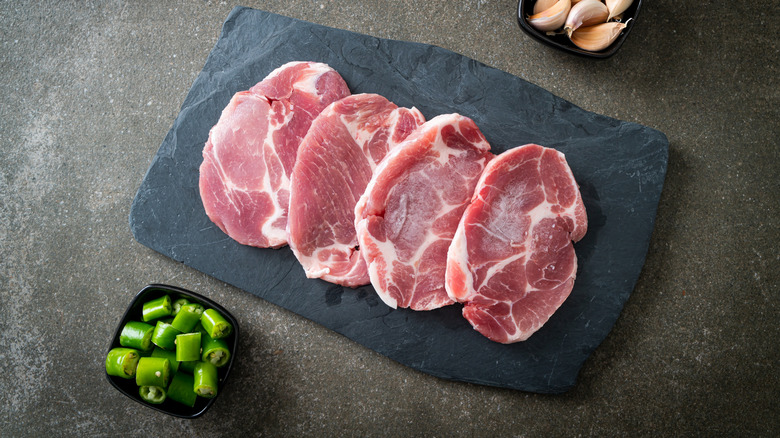
Foodies should also think twice about buying thin-sliced pork chops. Due to the fact that boneless chops are mostly lean, they can be easy to overcook. Opting for chops that are at least 1 ½ inches thick allows for some wiggle room during the cooking process. Pro tip: As you inspect that package in the grocery store, make sure all of the chops inside are sliced to a uniform thickness. Uniform chops require the same cooking time to achieve perfect doneness at 145 to 160 degrees Fahrenheit.
Because of their leanness and lack of tough connective tissue, quick-cooking boneless pork chops perform best when grilled, broiled, or pan-seared. The absence of bones helps prevent accidental carryover cooking and subsequent dryness — which can make boneless pork chops a good choice for any foodies who might be new to cooking with the meat. To ensure an ultra-moist bite, hit your boneless chops with a brine marinade before cooking. This could be as simple as water, salt, sugar, and your choice of spices like dried sage and garlic powder. Six hours soaking in the fridge will do the trick. Short on time? Skip the brine and cook your boneless pork chops in applesauce. That mild, savory meat will soak up both the apple-y flavor and the moisture from the sauce as it cooks.