

9 Mistakes To Avoid When Cooking Pork Chops
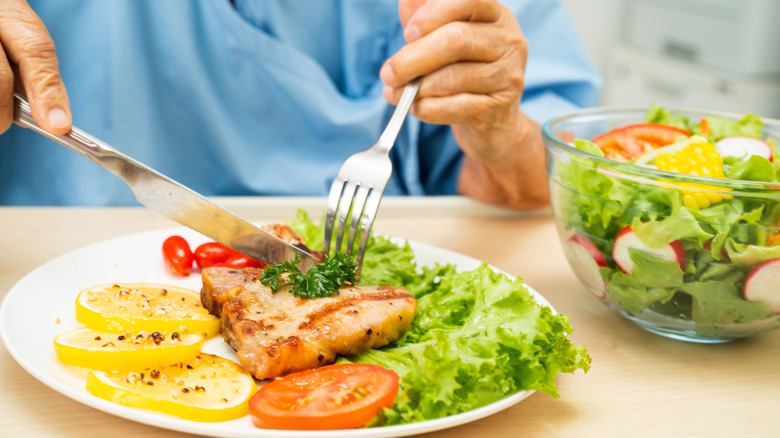
The growth in vegetarian options is probably a good thing in a lot of ways, but most of us still love meat. In fact, according to FMI — the food industry association – the meat industry recorded its biggest year ever in 2024 with over $100 billion in sales. Beef, chicken, and pork are the top-sellers, and why not? All three are great, versatile choices. For one, it's hard to go wrong by picking pork chops for your dinner. That said, although they're relatively straightforward to cook, there are certainly ways to go wrong when cooking your pork chops.
I'm a lifelong fan of pork myself, growing up in a family that raised pork and as a professional cook. In fact, the place where I held my first chef position was a regional chain started by a hog-farming family, specifically as an outlet for its own pork. So drawing on that experience, and the questions I've fielded over the years in cooking classes, here are some of the mistakes I often see people make with pork chops.
Thinking all pork chops are the same
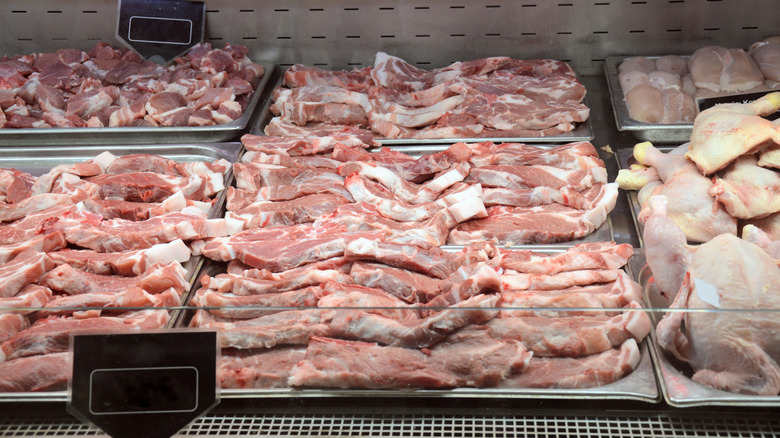
I'm going to start with this, because there are some fairly important differences among pork chops. They're all good, and they're all reasonably similar, but they aren't the same.
Yeah, that's right. The title of the recipe might not be specific, but there's more than one type of pork chop. Pork chops are cut from the tender sections of the hog, mostly along its back. At the front, towards the shoulder, we have rib chops. Then further back, where the ribs run out, you find loin chops. Finally, in the rear part of the loin before it merges into the hind leg, we come to the sirloin chops. You'll also see cuts from the shoulder or hind leg labeled occasionally as chops; I'll circle back to that in a minute.
The thing is, the three kinds of pork chop cuts are all different. Rib chops, like rib steaks, are well-marbled. They come bone-in or boneless and are great for grilling. Loin chops — also boneless or bone-in — are leaner, except for a layer of fat on the outside. They're tender, but prone to overcooking. Sirloin chops aren't as tender as the other two, but they're still plenty tender enough for grilling or pan-searing, and they're also fairly well-marbled.
Treating pork chops like pork leg steaks
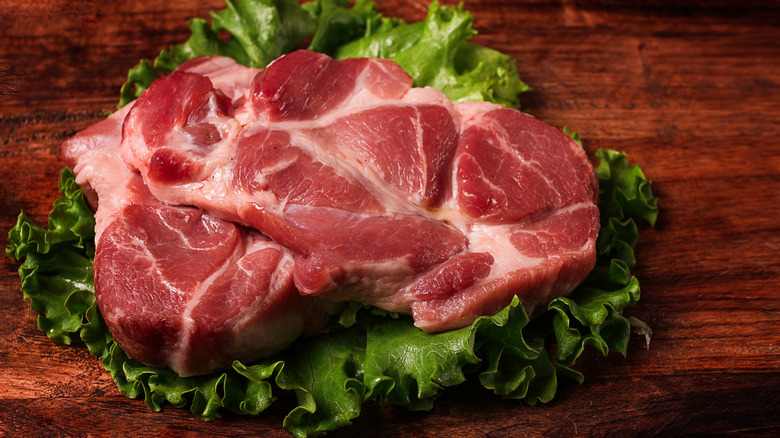
In practical terms, pork chops are the pork equivalent of what we'd call a "steak" if it were beef. Pork rib chops are very much like a rib steak. For example, and you can buy pork loin chops that are cut like a T-bone or porterhouse steak, with a section of the tenderloin included.
So when you're in the meat department and see a package labeled as "pork steaks," you may just assume that this particular store labels its chops that way to appeal to beef lovers. That's not actually the case; there is a real difference between pork steaks and chops. When you see pork steaks, they're almost always cut from the pork shoulder. This is an important distinction because the shoulder is filled with fat, connective tissue, and chewy muscles running every which way. They're the pork equivalent of a blade steak, and while they're not quite that tough, they aren't your best choice for most pork chop recipes. The same holds true in the other direction, as well. Recipes meant for pork steaks aren't your best use of chops because they're meant to break down a tough cut.
To make matters more confusing, some shops occasionally will label their pork steaks as "shoulder chops," or (if they're bone-in) "shoulder blade chops." You'll also occasionally see chop-like cutlets taken from the hog's hind leg. Don't be fooled; they're still not pork chops.
Cooking thin chops like thick ones
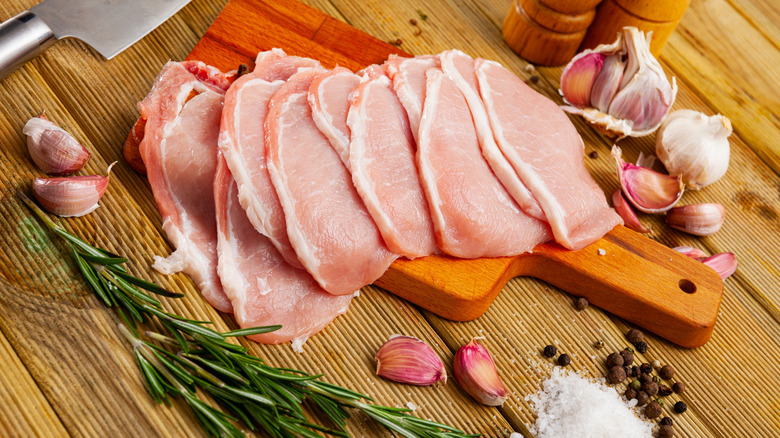
If you're a big-time grilling fan, or a hardcore steak lover, you'll know that thick cuts of beef are tricky to cook evenly to medium-rare. Your best bet is to cook them most of the way at a moderate temperature, either searing them first or at the end when they're nearly done (the "reverse sear" technique).
That same rule holds true for thick-cut pork chops, which also benefit from patient, lower-temperature cooking — with a good, hard sear at the beginning or end to give you lots of browning. But the chops you'll usually see at the supermarket aren't always thick enough for that technique to work well (you'll need them cut to at least ¾ inch, and ideally an inch or more). With thin chops, you'll need to adjust your cooking method. If you try the standard "sear then cook" or "reverse sear" methods on thin chops, you're very likely to end up with dry, overcooked meat.
The best bet for thin chops is to shorten your cooking time and dial up the heat. Yup, thin pork chops are in that relatively small category of foods that are best when cooked at high heat. Get your pan or grill really hot, get a good sear on that first side, and then cook your chops very briefly on the other side.
Not using the right chop for your chosen meal
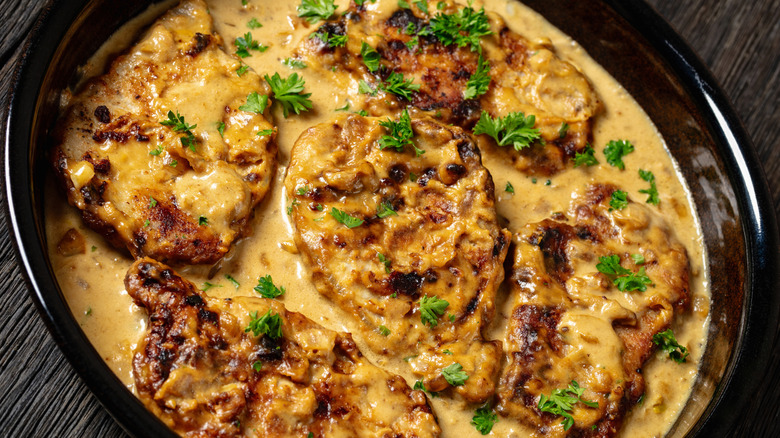
We've talked a bit about the differences between the various cuts of pork chops (and between pork chops and pork steaks). Those differences come into play when you're planning your meal or choosing a recipe.
What does that mean? Well, loin chops, for example, are very lean. Most of the fat you'll see on them is in that thick rind around the outside, rather than marbling that helps keep them moist and juicy. They're best for fast, hot cooking methods. Sirloin chops are chewier (though not unpleasantly so). They're still good when grilled or pan-seared, but that extra little bit of fat and connective tissue makes them better for slow-cooked recipes. Rib chops are fatty enough to slow-cook as well, but it's not really the best use of a premium cut. Sear those bad boys!
It's not the end of the world if you use a chop that's not the best option for a given dish. But if you're shopping with a specific recipe in mind, or picking a recipe to match the chops you've just bought, it's something to be conscious of. Usually using the kind of chop a recipe calls for is a safe choice, but not all recipe writers are reliable on details like this.
Cooking lean pork without brining it first
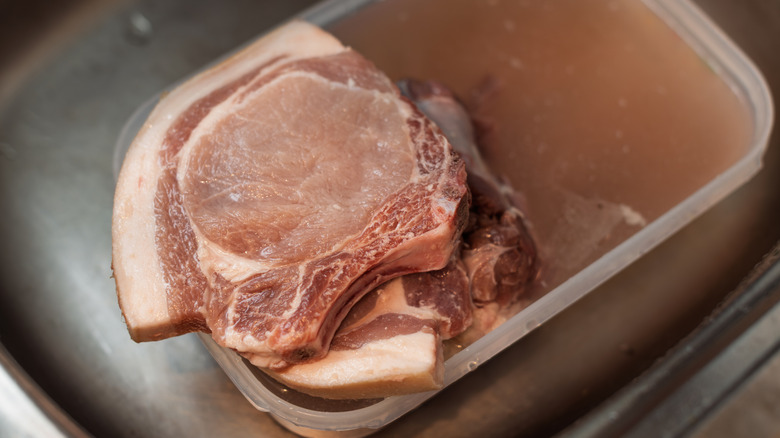
You may be too young to remember the 1980s-era advertising campaign that rebranded pork as "the other white meat," but you're almost certainly familiar with the phrase. In a time when consumers were fat-conscious, it successfully associated pork with chicken as a lower-fat alternative and in all fairness, modern pork really is leaner than it used to be.
Technically, pork is a red meat (as defined by the USDA), but like your holiday bird, it does have both lighter and darker meat. And those lighter cuts, especially the loin, actually are similar to white meat. Like a turkey or chicken breast, they're lean and easy to overcook, meaning they can become dry easily. If you're already at that point, you can hide the problem with a lot of gravy or sauce, but you're better off simply brining the pork chops before you cook them.
A couple of hours in brine is all it takes, and even 30 minutes helps. The salt in your brine helps the pork's cells trap and retain moisture, and that moisture stays put when it's cooked. That way, even if you do get distracted and overcook them, they'll still be moist and juicy. As a bonus, they'll also be nicely seasoned all the way through.
Grilling without trimming
Steaks and chops have two kinds of fat, broadly speaking. One is the kind that's inside the actual muscles themselves, which we usually call "marbling." It makes the cuts juicy and tasty, and it's a good thing. Then there's the kind that wraps around the outside of the muscle in a thick slab — and that's a whole other thing.
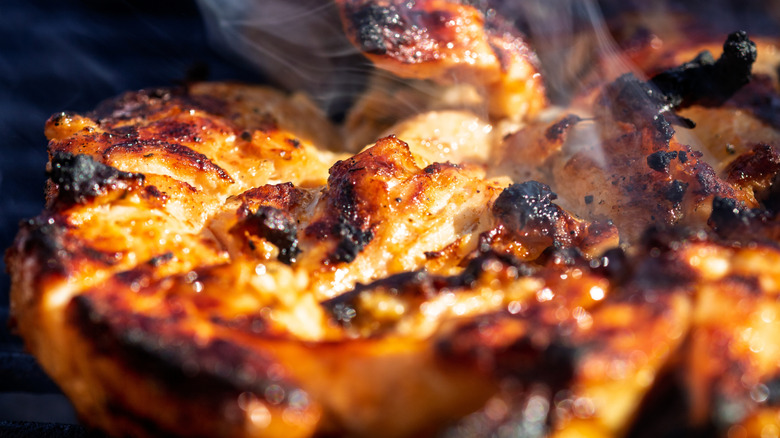
In some cases, you'll want to hang onto that rind of fat. Pitmasters will tell you not to trim the fat from a pork shoulder before it goes into your smoker, for example, but in this case, we're talking about pork chops, not pulled pork. And if you're going to throw them on the grill, you really need to trim that fat from your pork chops.
In a smoker, that fat insulates the pork and helps it cook slowly and steadily, reducing moisture loss. That's not happening with a chop on the grill. Instead, that excess fat melts and drips onto the flame or coals, where it causes flare-ups and nasty-tasting, sooty smoke. Your chops will come out looking like they've been cooked in a locomotive's chimney, and you'll get tired of battling the flames. Instead, trim that rind of fat on rib or loin chops to ¼ inch or so, and score it with a knife to help it render quickly. Then it'll be crisp and delicious when grilled — and definitely tastier.
Skimping on the seasoning
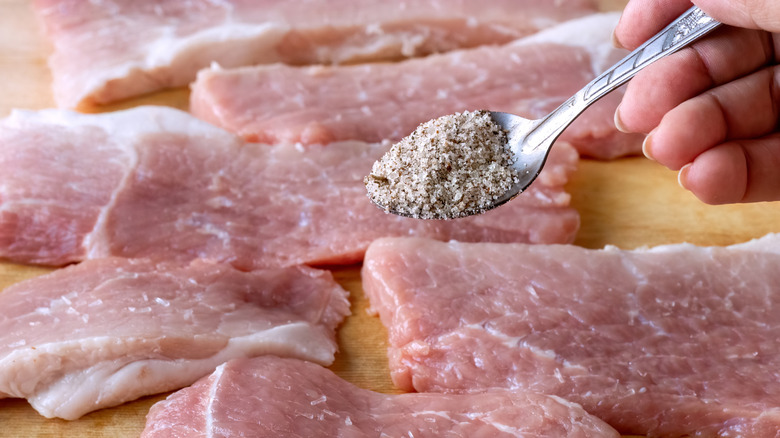
In my cooking classes, people would sometimes ask me why restaurant food often tastes better than homemade. There are a lot of possible answers to that question, but one of them is simply that chefs and restaurateurs aren't shy about seasoning. We like flavor.
The great thing about pork is that it packs more richness and umami than chicken, but it's less assertive than beef. So it really provides a supportive showcase for whatever flavors you choose to add. If you have a well-stocked spice rack or herb garden, this is the time to show it! There are plenty of ways to add more flavor to pork chops, and you'd benefit from experimenting with all of them.
For just a partial list, I'd suggest massaging a dry rub onto the surface of the pork, with lots of spices or dried herbs. If you have fresh herbs, add them to the pan with a pat of butter near the end of cooking time. Baste the chops with that herby butter for a great "chef technique." Flavorful marinades are great, too, though you'll need to blot the chops dry so they brown nicely when you cook them. And hey, don't sleep on plain old salt and pepper (unless you've brined your chops, in which case they're salty enough). They bring a lot to your food, which is why they're the universal seasonings they are.
Cooking them past the recommended temperature
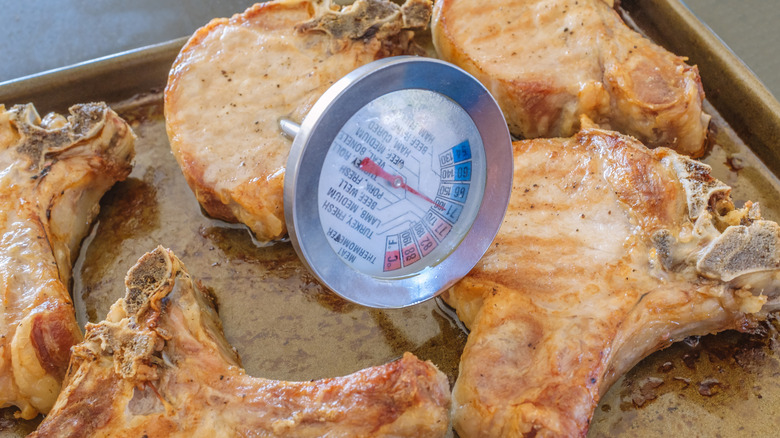
Most of us grew up in the "pork needs to be cooked well-done" era, and didn't especially question it. I certainly didn't, and even my friends who were most militant about having their steaks rare or medium-rare were fine with serving pork that was cooked absolutely to death.
Well, here's a news flash: You don't need to cook pork well-done anymore. In 2011, USDA changed its guidance on pork, lowering its recommended temperature from 160 F to 145 F, the same as for other whole cuts of meat (not ground). When it's cooked to that temperature, your finished pork chops will have a delicate hint of pink inside, and they'll be nice and juicy.
The whole reason for cooking pork well done was to minimize the risk of trichinosis, a nasty ailment caused by a roundworm parasite called Trichinella spiralis. It used to be common in pork, but changes in hog-rearing practices have made it really rare in commercially raised pork. So get a good instant-read thermometer, and train yourself to cook pork chops to the ideal temperature of 145 F. You'll thank me later for it.
Overlooking the sheet pan
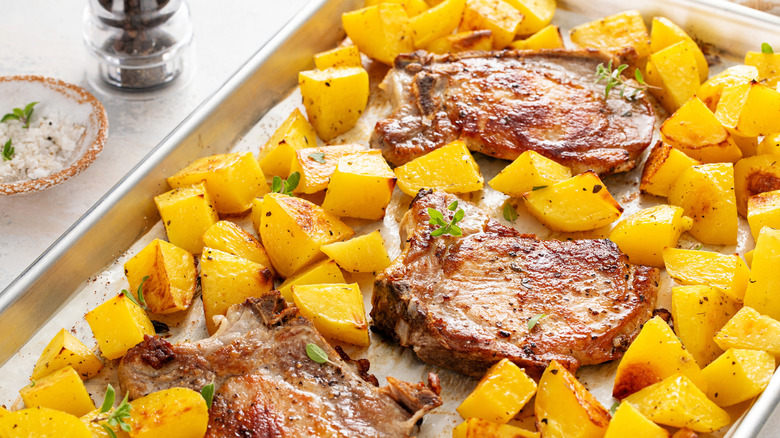
When you think of cooking pork chops, what's your go-to method? Pan-seared? Always good. Grilled? Of course. Smothered? A classic for a reason. But if you don't think of using a sheet pan, you're missing a trick.
Sheet pan meals are something that gets revived pretty regularly, because they're a really convenient way to bring a meal together with minimal fuss and cleanup. Most sheet pan recipes are sized for a half-sheet pan, measuring 13x18-inches. I recommend them because of their versatile size; they're big enough to roast a chicken or turkey on, though I also own a couple of the larger ⅔-sheet sizes (16x22-inches), which allow for larger meals. They're handy when you're cooking pork chops for four or more and still want to have room on the pan for your vegetables.
There are a couple of ways you can approach sheet pan meals with pork chops. One is to pick vegetables that cook in about the same time as the chops (say, broccoli and cauliflower florets or asparagus spears). Another option is to use dense root vegetables like carrots, parsnips, or rutabagas (this is the cold-weather option, obviously) and par-cook them before roasting them. That's how it's done in this honey mustard pork chops recipe, for example. The first option minimizes prep and cleanup, but with the second approach, you'll have time to wash dishes while the chops are baking.