

Don't Let Your Grill Run Out Of Fuel: Here's How Long Propane Typically Lasts
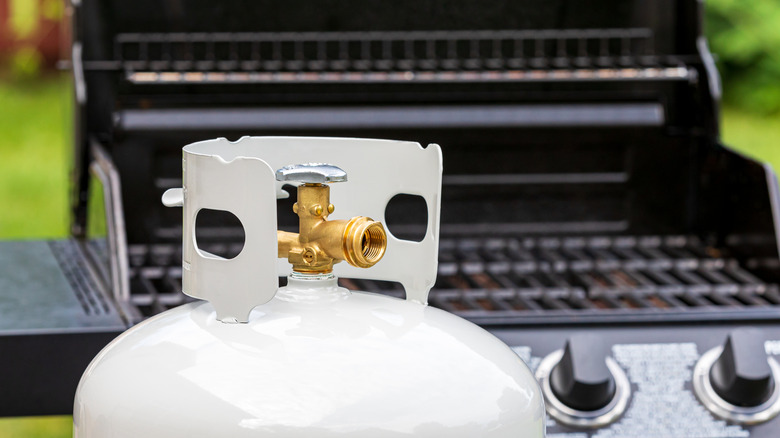
It's officially grilling season, and for those who like to fire up burgers for the family or smoke a tender brisket for a party, you'd better know how to calculate your grill's propane use. Few things can ruin a cookout than running out of gas halfway through dinner, but it's a common gas grilling mistake we all make. For most grill owners, the good news is that a standard 20-pound propane tank lasts longer than you might think. Also called a grill cylinder, this is by far the most common size, and the one you'll find at home improvement stores, gas stations, and hardware stores.
Under typical conditions, a full 20-pound tank provides around 18 to 20 hours of cooking time on a medium-sized gas grill. In practical terms, that's about eight to 10 full meals, or multiple grilled tomahawk ribeye steaks, although actual results vary depending on how heavily the grill is used. If you've got a larger grill, that figure drops to around 10 hours of cooking time.
If you don't mind doing a little math, one of the most accurate ways to estimate your propane consumption is to check your grill's BTU rating. BTU stands for British Thermal Units, as in a way to measure heat output. To estimate your runtime, divide the total BTUs in your tank by your grill's hourly BTU consumption. You can also use an online calculator, but it's helpful to understand these kinds of numbers when you're trying to choose the best grill for your barbecue needs.
There's a few ways to estimate how much propane remains
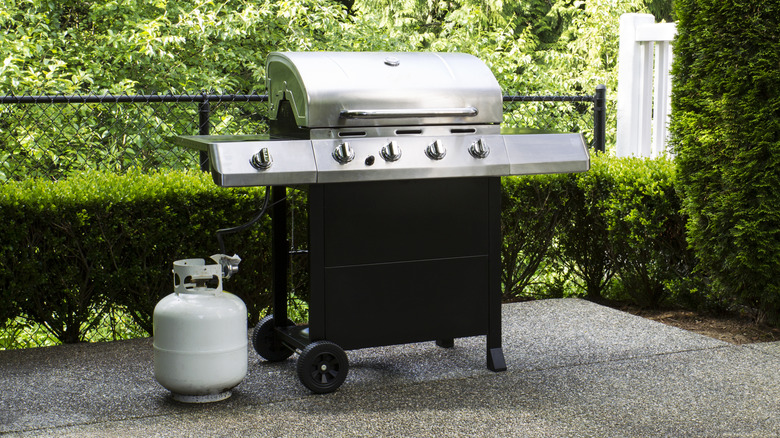
Of course, most don't grill with every burner cranked to high heat throughout the entire process. Some other variables affecting your propane tank life include the number of burners being used and the cooking temperature. Weather can also be a factor, as windy or frigid conditions force a grill to work harder and use up more fuel.
An external tank gauge can provide a rough reading before company heads over, but there are other homespun ways to estimate how much propane is left. The simplest is to just weigh your tank if you have access to a household scale. The standard empty 20-pound cylinder weighs 17 pounds, so you'll need to subtract that number from the total to see what's left. There's also a simple water test that checks propane levels in a pinch. Pour warm water down the side of the tank, then run your hand along the metal. The area still containing liquid propane will feel much cooler than the empty portion. It's not an exact science, but it's certainly easy and free.
After all this fuss, be sure to store your grill's propane tanks properly. You'll want to always store the colorless, odorless gas outside in an upright position away from direct sunlight. Obviously, keep it away from flammable items and children as well. Continual maintenance and cleaning will keep your grill operating as efficiently as possible, but it's never a bad idea to keep a spare tank on hand, too.