

No Smoker? No Problem. Here's How To Smoke A Tender Brisket On The Grill
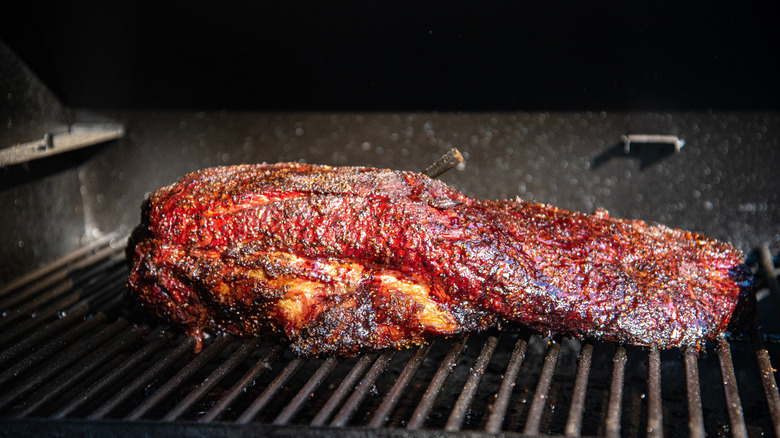
Without a surfboard, you're just standing in the ocean — similarly, you need the right equipment to cook a brisket properly. While you don't need the fanciest offset smoker, you need to adjust your process to make whatever setup you have work for you. Whether you have a coal, pellet, or gas grill, you can take a strategic approach to cooking a succulent slab of meat.
Before we dive into these strategies, let's define a few principles of smoking a brisket that stay true across every method. You should still prepare your brisket in the same way, trimming excess fat and applying the same seasonings such as a rub to the surface. No matter what type of grill you're using, you want to make the heat source indirect to the meat, to replicate the way an offset smoker works. This means you can establish a lower temperature over a long time and cook the meat evenly without overcooking any part. It also means your grill needs a lid. Place the fat side of the brisket to face whichever direction the heat is coming from to form a thermal barrier.
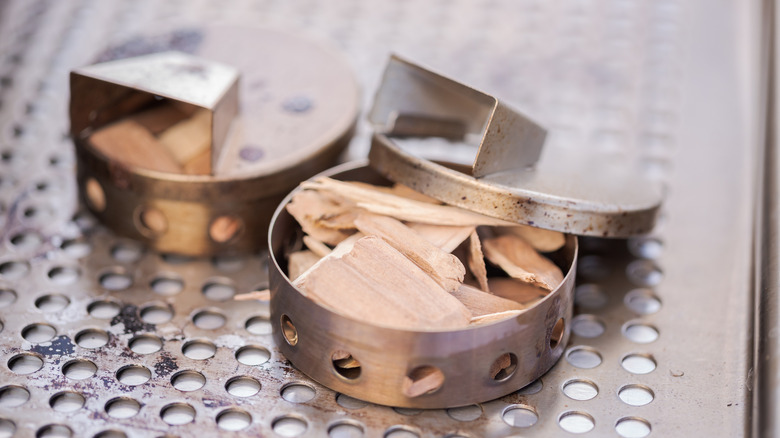
Lastly, the smoking itself can be done without using wood as the fuel source. Whether you're cooking with coals or gas, you can soak wood chips and use a commercial smoking box, or create one out of aluminum foil. Whether you're smoking up some steaks or a whole packer brisket, these principles can help to keep results tasting like real barbecue.
Not all grills are created equal
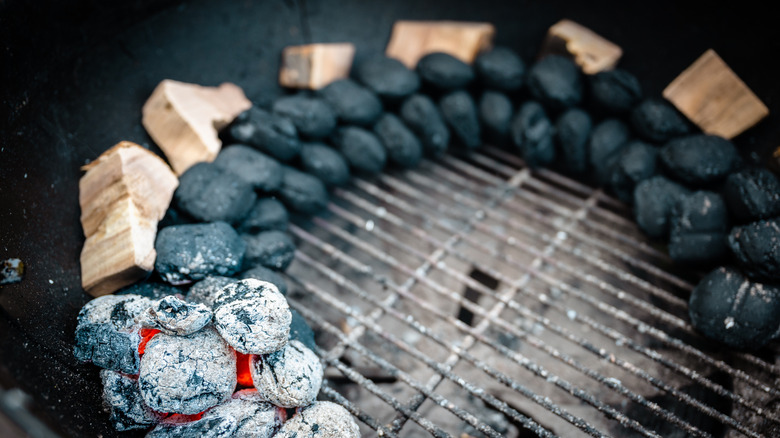
You can successfully turn your charcoal grill into a smoker for a second-to-none brisket. If an offset smoker is a one-bedroom house, this method is a studio apartment. You can employ the snake method of arranging coals away from the meat and slowly cooking it at a consistent temperature. This also allows you to keep that lid closed to retain moisture and heat. Another way to ensure the brisket doesn't dry out in there is to place a drip pan with water in it to evaporate over the course of the cook. To add smokiness, you can throw soaked wood chips directly onto the coals, or even place them strategically over the coal snake for sustained smoking.
Using a pellet grill is possibly the easiest method for smoking a brisket low and slow, as this can be a "set and forget" way of cooking a big piece of meat. Many of these grills are programmable to specific temperatures and cooking modes that reduce helicopter-parenting while cooking meat as tricky as brisket. This often includes smoking modes, and since it's powered by wood pellets, this method can satisfyingly smoke meat with comparatively less effort and frustration than other methods. Many pellet grill users even set their barbecue up overnight to give the meat as long as possible to cook. That's a good idea, as longer cooks provide more time to break down brisket's collagen and connective tissue, making it more tender and juicy.
Set realistic expectations for gas grill brisket
Cooking a brisket on a gas grill is not always advisable, as it is the hardest needle to thread. High heat and (quite often) a lack of tight seal means it can be difficult to keep a low enough temperature while maintaining internal moisture. You can approximate the results of a smoker by isolating one burner, while leaving at least one other off, and set the brisket here to offset it from the heat. A drip pan over the active burner with water in it can once again release vapor into the cooking environment to carry heat and maintain moisture. Preheat your grill to high, then lowering to a medium temperature for cooking.
A smokebox or its tinfoil cousin can release steady woodsmoke flavor into the barbecue and infuse the meat. To play it safe and avoid an overcooked or dried out brisket, you can always use the grill for an hour or two to impart smokiness to the meat, then complete the cook in the oven at a consistent, low temperature to approximate a low-and-slow process.