

How Rare Is Too Rare For Prime Rib? Here's The Safest Temperature
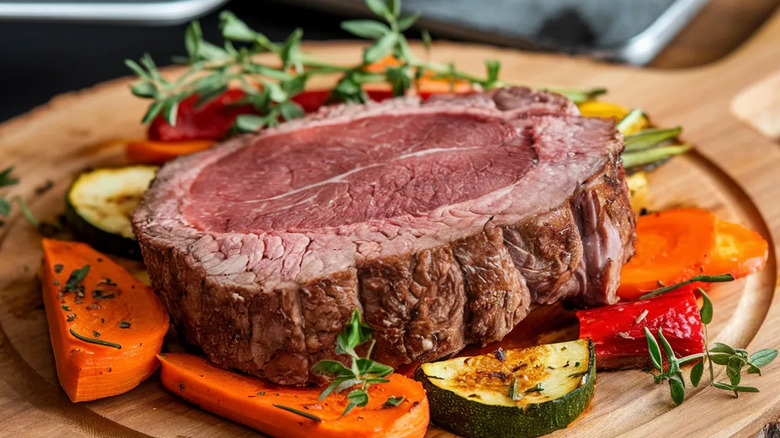
Prime rib is the king cut for a reason. It's known for being very juicy, well-seasoned, and a succulent, special-occasion dish that many folks only order at steakhouses. If you have ordered it at your favorite upscale restaurant, you probably are familiar with the question, "And how would you like that cooked?" While prime rib is known for its pink color, there is a point where rare is just a little too rare — and eating an undercooked piece can make you sick.
Sam Hazen, executive chef at Palladino's Steak & Seafood, recommends serving and eating medium-rare prime rib. "If it is too rare, it becomes chewy and doesn't have a great texture," he says. "It needs to be cooked a bit more to break down the collagen in the meat to make it palatable." Besides having a waxy texture, undercooked prime rib can be a breeding ground for foodborne illness. For a medium-rare prime rib, Hazen recommends cooking it until the internal temperature reads 128 degrees Fahrenheit and then resting it for a half-hour before slicing for maximum moisture.
How to get the perfect cook on your prime rib
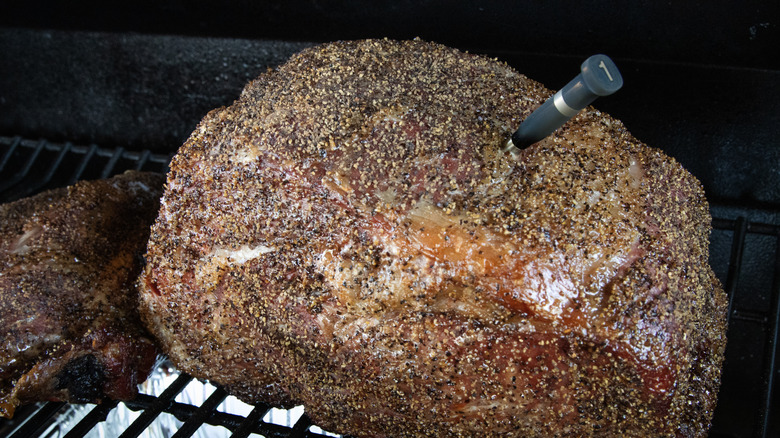
Getting the perfect prime rib at home is an art. Chef Sam Hazen prefers to cook his prime rib low and slow — 225 degrees Fahrenheit for a few hours — to both reduce how much the cut shrinks and achieve the perfect cook. That said, low-and-slow isn't the only way to go. Other expert-approved prime rib tips include using a reverse sear method for perfectly tender and flavorful prime rib every time. Instead of the classic sear, this method involves cooking the steak low and slow, then finishing it in a skillet to develop that signature crust and roasty flavor. It's perfect for folks who like a balance of crisp exterior and soft, pink, and juicy interior.
Other folks have taken to unconventional cooking methods to prepare prime rib, including cooking it in an Instant Pot and in a smoker. Regardless of the method you choose, be sure to take an internal temperature reading and let your prime rib rest, as this allows the juices to recirculate and ensures that the temperature continues to rise to the USDA-recommended minimum for prime rib: 145 degrees Fahrenheit.