

20 Pastries You Must Try At French Bakeries
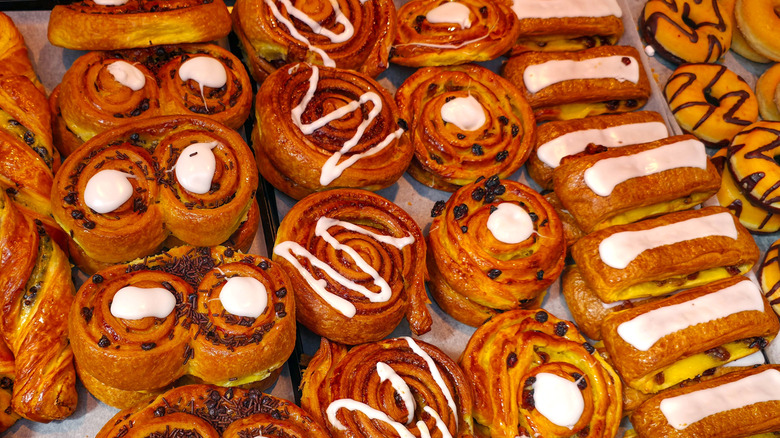
Visiting an artisanal French bakery delights the senses. Before you step through the door, you're greeted by the tantalizing aromas of vanilla, caramel, toasted almonds, and freshly baked bread. Whether in France or the United States, these spots offer more than croissants and baguettes. As a French-speaking globetrotter who's explored diverse French regions and sampled their exquisite specialties, I've compiled this list of quintessential pastries to try, including a historical overview and a pronunciation guide.
You can't go wrong with these timeless favorites, which are available at any authentic boulangerie. There's just one social rule to remember: Don't order before greeting the staff with a friendly "Bonjour." If you're not traveling to Europe, you can still visit French bakeries in the U.S., like Almondine, St. Honoré, La Farm, and Lorraine to get your fix.
Brioche
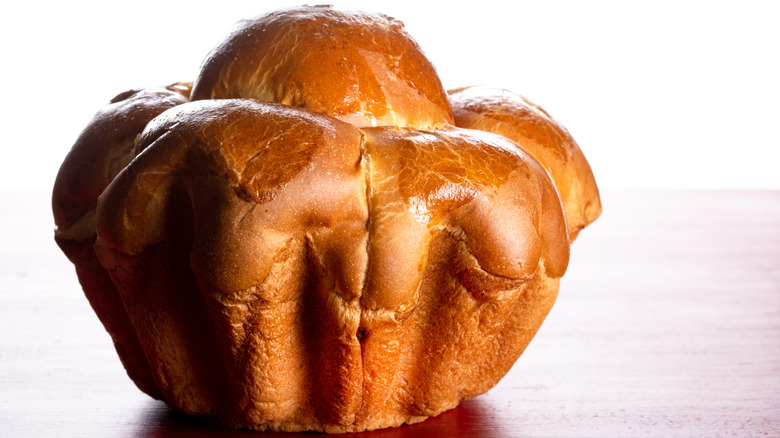
Pillowy and subtly sweet, la brioche ("bree-yosh") is a subcategory of bread rather than cake. Its ingredients, which include butter, eggs, and milk, can be found in every pantry. In France, this versatile staple is enjoyed round the clock, especially at breakfast or as an after-school snack. Experts recommend using it for bread pudding, too.
Brioche originated in the Normandy region in the 15th century and was popularized nationwide during Easter celebrations. You'll find it in different shapes and sizes. For instance, the head-shaped version, brioche à tête, originated in Paris in the 18th century. Its flavors range from chocolate and orange blossom to pink praline and custard rum. There are irresistible seasonal variations, too. If you visit Alsace around Christmas, try the festive Kouglof stuffed with rum-soaked raisins.
Madeleine
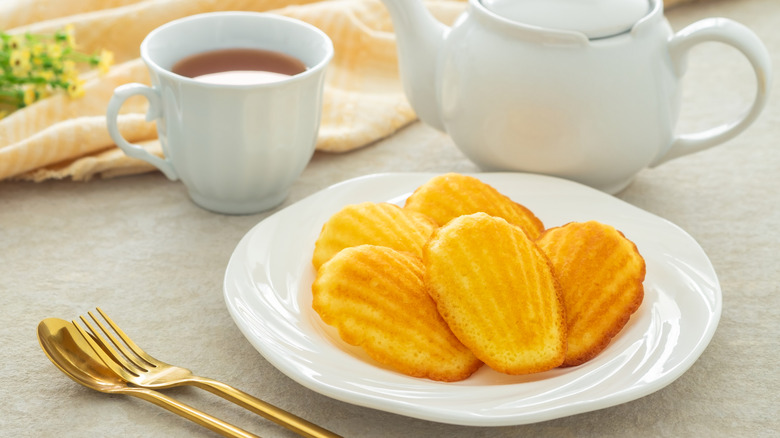
Pronounced "mad-lehn," French madeleines feature a lovely shell design. They were invented in the 18th century to cheer up the exiled king of Poland, the Duke of Lorraine. His servant, Madeleine Paulmier, often baked him her signature spongy cookie cakes. They were so beloved that the Duke's daughter, Marie, introduced them to the French court when she married King Louis XV. It was author Marcel Proust who later popularized them in his novel "In Search of Lost Time."
Today, those delicate treats can be purchased at the supermarket, but nothing beats the aroma and fluffiness of freshly baked madeleines. There's a wide range of flavors and toppings to choose from, including vanilla, honey-orange, lemon curd, chocolate chip, coconut, almond, and lavender. Though madeleines are generally sweet, don't overlook the savory variations, such as Comté cheese with rosemary.
Baba au rhum
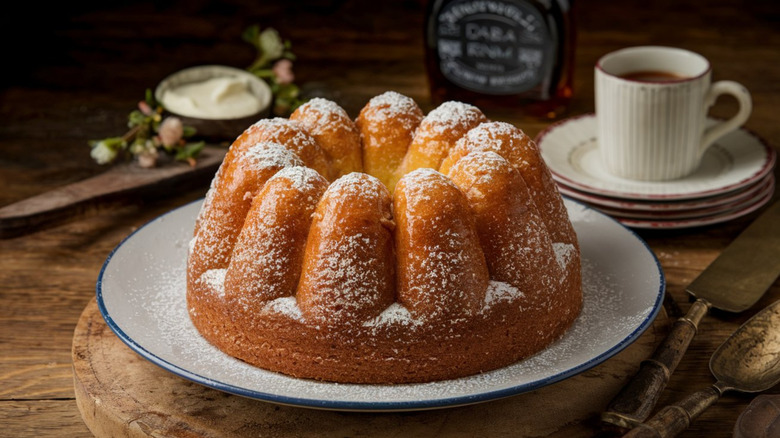
Le baba au rhum ("bah-bah oh rom"), one of the tastiest pastries to savor in Paris, is soaked in a sugary rum syrup. The initial version of this boozy cake featured Alsatian wine, which was later replaced with dark rum. It was likely inspired by the Polish babka, a rounded yeast pastry. As for the name "baba," it means "woman" in Polish and "dad" in languages like Arabic, Farsi, and Mandarin.
This cake is topped or filled with whipped cream, fruit, and/or preserves, and prepared with milk, eggs, flour, and butter. Its invention is credited to Nicolas Stohrer, pastry chef to the Duke of Lorraine and King Louis XV. He also founded the oldest pastry house in the French capital. You can still visit Stohrer and its sister confectionery shop, À la Mère de Famille, to sample an authentic baba.
Chouquette, profiterole, and croquembouche
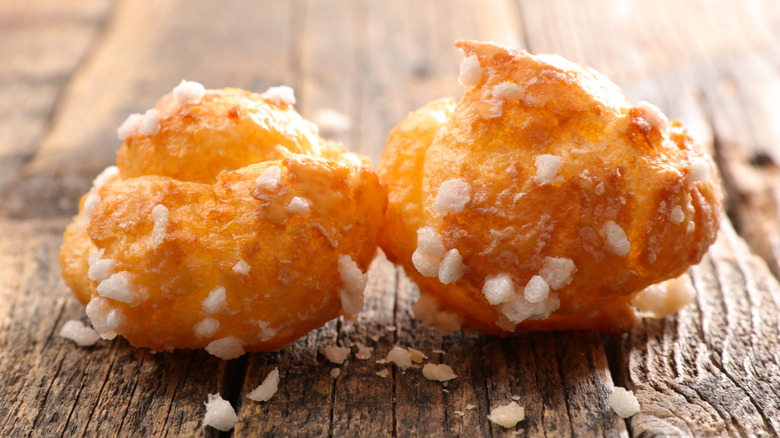
You're familiar with vanilla cream puffs, but have you heard of the French chouquette ("show-kett")? It's a minimalist, hollow choux pastry sprinkled with small sugar crystals. Crispy and crunchy on the outside but soft on the inside, this buttery, milky afternoon snack is best consumed the day it's baked.
It was likely Popelini, Queen Catherine of Medici's chef, who first thought of rehydrating dough with eggs and dividing it into small, round balls. He then introduced them to France, likely inspiring Jean Avice's pâte à chaud ("heated dough"), which morphed into pâte à choux. Officially, it was famed 19th-century chef Marie-Antoine Carême who first refined those puffs into an elaborate, cone-shaped montage.
Today, an individual cream puff is called a profiterole ("proh-feet-uh-roll"),while the tower itself is a croquembouche ("crock-awm-boosh"). Bound together by chocolate ganache and caramel, the latter is a staple at weddings.
Macaron
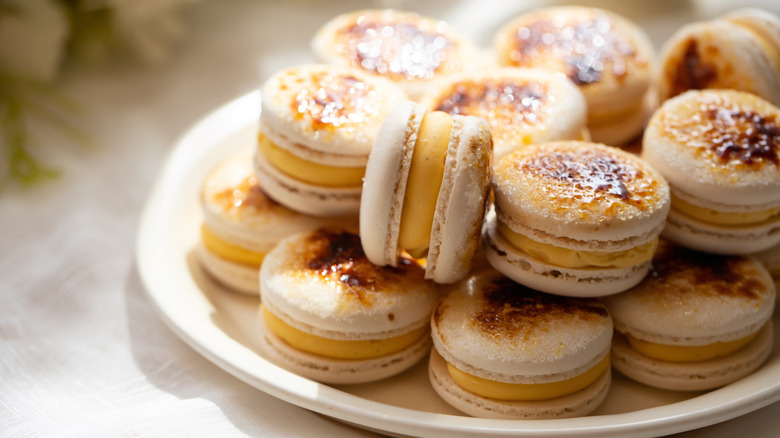
Pronounced "mah-kah-ron," a macaron is different from a macaroon, a chewy coconut cookie glazed with chocolate or apricot jam. Macarons are delicate treats prepared from powdered sugar and almond flour. They have a crisp exterior and soft interior and come in many flavors, including lemon, rose, and salted caramel. Their colorful display is the focal point of French bakeries as well as iconic specialty brands like Fauchon and Ladurée. Gifting a box from these renowned houses is sure to delight anyone (but it will cost you).
The macaron likely originated in the Middle East. It was Queen Catherine de Medici who brought the "maccherone" from Italy to the French court. From there, different variations emerged in other regions. Then, in the 19th century, Parisian chefs decided to bind two halves of that crumbly cookie with jam, buttercream, or compote.
Mille-feuille
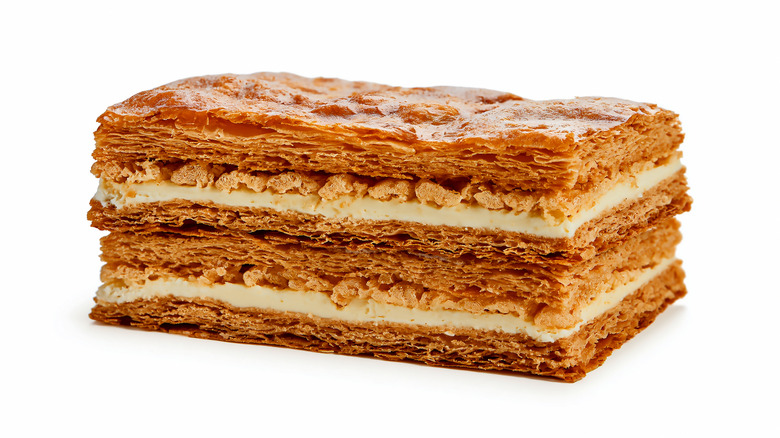
The mille-feuille is roughly pronounced as "meel fuh-iy" and means "1,000 sheets." It consists of several layers of ultra-thin puff pastry dough bound together by a pastry cream. The toppings and fillings vary per bakery and region and include powdered sugar, whipped cream, and berries. My mom, for one, prepares this dessert with bananas, strawberries, and shaved almonds. She also spikes it with rum or whiskey. Others prefer orange-flavored liqueurs like Cointreau.
This treat, often called a Napoleon, was likely inspired by Middle Eastern pastries and brought to Europe via Spain. It was initially made with jam and was first highlighted in the mid-17th century cookbook "Le Cuisinier François" by chef François Pierre de La Varenne. The name "mille-feuille," though, first appeared in Chef Vincent La Chapelle's 1733 work, "The Modern Cook." As for Chef Marie-Antoine Carême, he's credited with perfecting the technique and introducing the rich cream filling.
Pain aux raisins
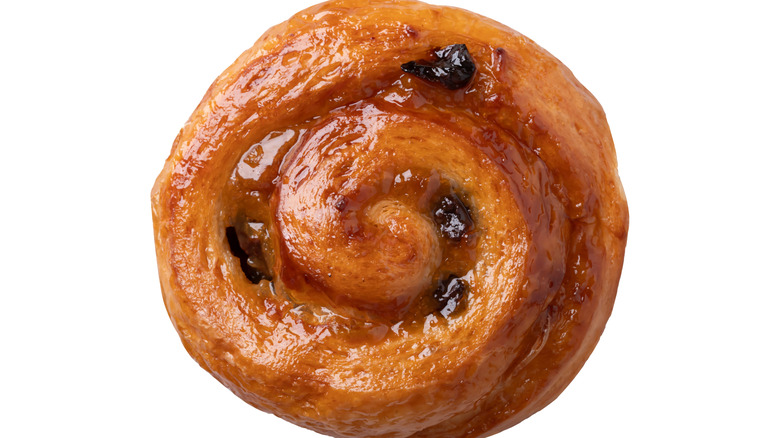
You don't need to visit an artisan bakery to savor a pain aux raisins. Roughly pronounced as "pahn oh reh zahn," this swirly, raisin-filled viennoiserie is also referred to as "escargot" or "snail." It's a breakfast staple across France, particularly at hotels. Some bakers use croissant dough, while others prefer a brioche texture. Sticky fingers are guaranteed either way, as this rich pastry is glazed with syrup and filled with cream. You can also expect to find variations with chocolate chips, cinnamon, berries, rum, orange zest, or apricot glaze.
Though this pastry is linked to French gastronomy, it probably originated in Vienna. According to some accounts, it was commercialized in 19th-century Paris by Boulangerie Viennoise. Famed pastry chef Gaston Lenôtre was likely the first to present a version enhanced with rum-soaked raisins and pastry cream.
Pain au chocolat (chocolatine)
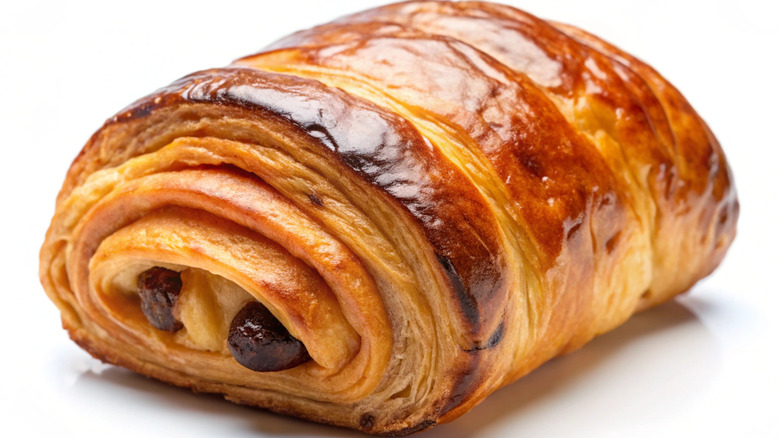
If you walk into a bakery in France and Canada and order the rectangular "pain au chocolat" ("pahn oh shoh-koh-lah"), literally "chocolate bread," chances are you'll be sternly corrected and handed a chocolatine ("sho-koh-lah-teen"). While both names refer to the exact same popular viennoiserie, it's a risk you'll have to take. It seems that these terminologies have been sparking the same heated debate for years, depending on the city or region. In the U.S., you can simply ask for a chocolate croissant to enjoy with your coffee, latte, or tea.
As with the pain aux raisins, the chocolate version first made its way to Paris via Boulangerie Viennoise in the 19th century. While it was originally prepared with brioche dough, modern preparations are usually flakier.
Chaussons aux pommes
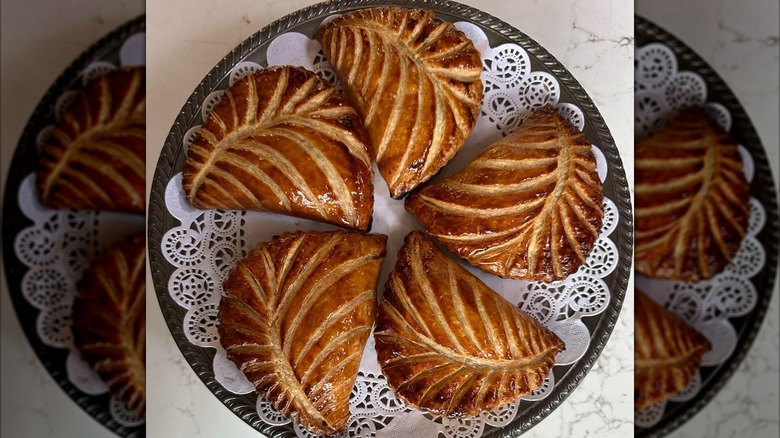
If you're a fan of apple turnovers, you'll also enjoy the French version called chaussons aux pommes. Pronounced like "shoh-sohn," it means "apple slipper." This buttery and flaky treat is prepared with unsalted butter and vanilla extract, and it doesn't contain cream.
The chausson was popularized in Saint Calais, where it's been the star of a medieval festival for centuries. According to lore, around 1630, a noble lady saved the town residents from an epidemic and treated them to flour and apples. That's how this simple but comforting French pastry was allegedly born. If you enjoy food festivals in the U.S., check out this lively annual event if you can. It's held every first weekend of September and features a chausson-baking workshop, an artisanal market, and live entertainment.
Kouign-amann
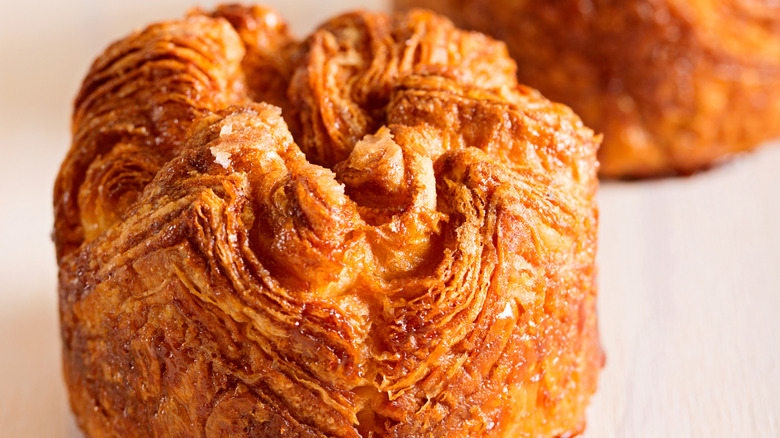
In northwestern France lies a scenic region that still proudly maintains its Celtic heritage: Bretagne (or Brittany). Its hearty culinary offerings are renowned worldwide, especially the folded galette (a savory buckwheat crepe I wholeheartedly recommend) and salted butter sablés (which are even better when they're flavored with salted caramel). Brittany is also home to the town of Douarnenez, the birthplace of the famous kouign-amann ("koo-nyah-mahn"), a Breton term meaning "butter cake."
This simple yet ultra-rich treat was likely developed around 1860 by master baker Yves René Scordia. It may also have Swedish origins through old trade routes. Scordia initially made the cake with lightly salted butter, sugar, and bread dough. He then kneaded it over and over again, just like with puff pastry. You can also find different variations in other countries featuring chocolate, fruit, or cinnamon.
Canelé de Bordeaux
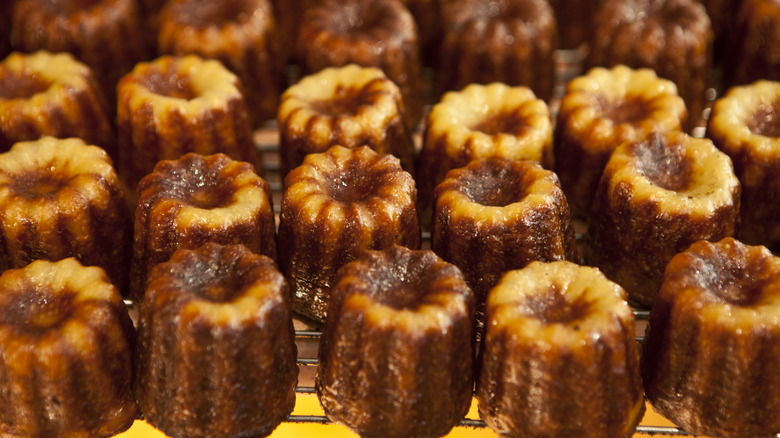
Le canelé ("kah-nuh-leh") is another unmissable treat typically found at French bakeries. Meaning "fluted," this dark, tiny pastry features a caramel-crusted exterior and a soft, moist interior. According to several accounts, the first canelés were created by the nuns of the Annonciades convent in the port city of Bordeaux. Eager to make the most of basic ingredients, they whipped up an uncomplicated pastry from leftover wheat grain and egg yolk. They later enhanced these humble treats with components salvaged from docked ships, such as vanilla and rum. Many batches were either sold to help the convent stay afloat or distributed for free to underprivileged communities.
The canelés almost disappeared from existence during the French Revolution, when the sisters were driven out of Bordeaux. Fortunately, they were revived at the turn of the 20th century and are now considered a time-honored staple of French baking.
Tarte Tatin
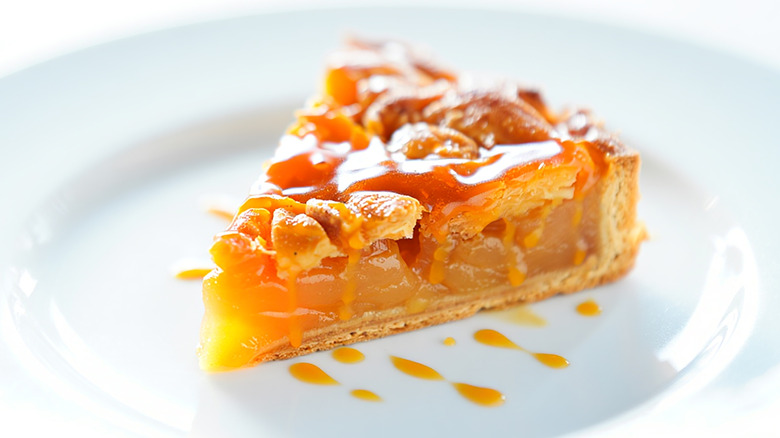
France boasts many succulent tarts. The almondine or Bourdaloue, for instance, hails from Paris and combines almonds and pears. As for the world-renowned tarte Tatin, a golden, upside-down apple tart, it originated in the Loire Valley. It's typically enjoyed warm with whipped cream or a scoop of vanilla ice cream.
La tarte Tatin was apparently created by accident in the 19th century. It owes its name to sisters Caroline and Stéphanie Tatin, who ran an inn. One time, as she was making a traditional apple tart, Stéphanie realized she'd forgotten to line her pan with pastry. So, she added the dough on top of her apple mixture, baked it as is, and flipped it over. The sisters were so thrilled with the caramelized outcome that they regularly served their signature dessert at their hotel.
Tarte au citron meringuée
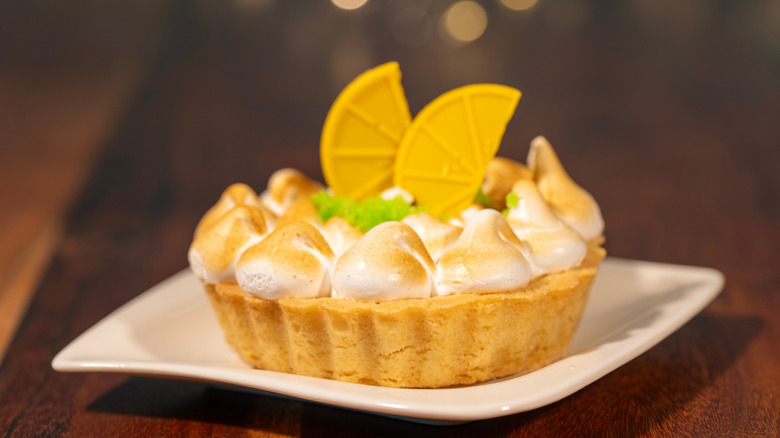
La tarte au citron meringuée ("tahrt-oh-see-trohn muh-rang-eh"), or "meringue and lemon pie," is another French staple. It's prepared from simple ingredients and features various textures and flavor profiles. The outcome is a buttery dough, a silky curd, and a lightly toasted meringue topping.
This delightful creation combines elements from different countries. Since France isn't a major producer of lemons, it relies on citrus imported from other countries. The curd probably originated in England in the 17th century, while the meringue technique came later. It was perfected and popularized in France by (yet again) the iconic 19th-century chef Marie-Antoine Carême.
Saint-Honoré
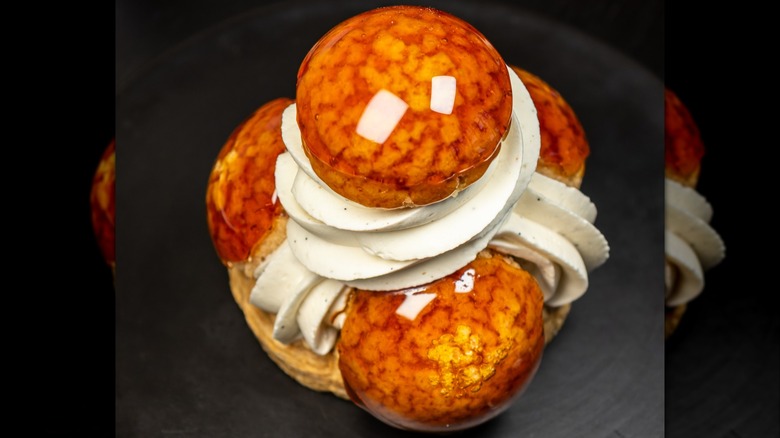
Those beloved, cream-filled profiteroles inspired yet another iconic French dessert: le Saint-Honoré ("sant-oh-no-reh"). It was invented in the 19th century by chef Auguste Jullien to honor the eponymous patron saint of bakers and pastry chefs. As the story goes, this saint was a 7th-century bishop of noble origins from Amiens who performed baking-related miracles in northern France.
Chef Jullien worked at the Chiboust Boulangerie, located on Rue Saint-Honoré in Paris. For his famous creation, he started by laying out a base made from buttery puff pastry. He then assembled several sugar-dusted, caramel-dipped profiteroles around an elaborate centerpiece that blends Italian meringue and vanilla pastry cream. Topped with whipped cream, this elegant montage is known as the Saint-Honoré, a luxurious tribute that flawlessly combines smooth and crispy textures. That's just the traditional version, though. Modern variations may feature chocolate, caramel, or fruity fillings.
Gâteau opéra
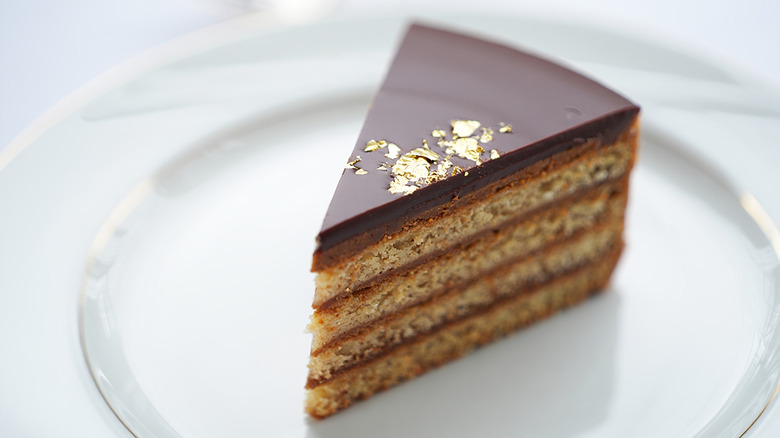
A cake display at a French bakery can be overwhelming. As such, you may want to start with a piece of gâteau opéra ("gah-toh oh-peh-rah"), or "opera cake." If you love coffee and chocolate, you wouldn't be disappointed. This elegant dessert features around six alternating layers draped in a glossy chocolate ganache. They consist of an almond sponge cake pre-soaked in espresso or a robust coffee syrup, some chocolate ganache, and a coffee-flavored buttercream. As you devour your piece in a flash, keep in mind that this intricate assemblage demands skill and patience.
So, what's the story behind this timeless classic, which isn't that old? It was invented in 1955 by chef Cyriaque Gavillon. He operated from the Dalloyau shop. It was his wife who inspired the name: She claimed the cake's layers were reminiscent of the balcony seats at the Palais Garnier opera.
Fraisier
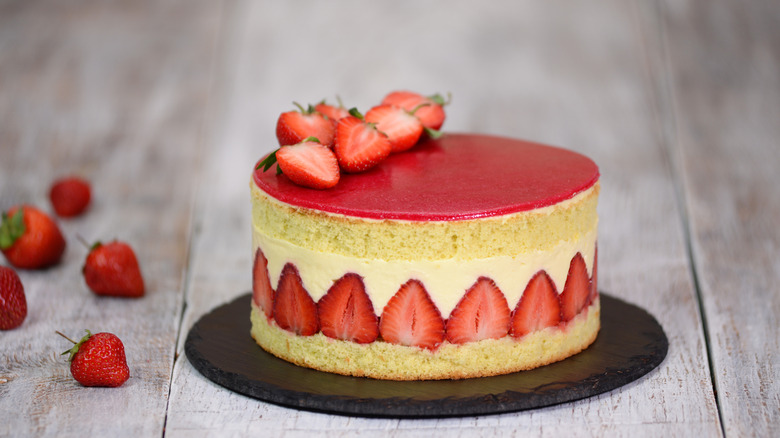
For those who prefer fruity rather than chocolatey cakes, le fraisier ("freh-zyeh") is particularly recommended. As the name implies, this rich, decadent dessert is loaded with fresh strawberries, which are left both whole and sliced in half. It was likely created in the royal court in the 16th century before gradually spreading to other social classes.
The fraisier features at least two layers of sponge cake, as well as pastry cream and/or mousseline cream. Toppings can vary but typically include whipped cream, marzipan, or even chocolate. Plus, for an even juicier result, some bakeries incorporate a berry coulis, jelly, or lemon syrup. Others spike their cake with a little kirsch (a dry cherry liqueur). In short, no two fraisiers are exactly the same, but as long as the sponge layers are fluffy and the strawberries are in season, it doesn't really matter.
Financier
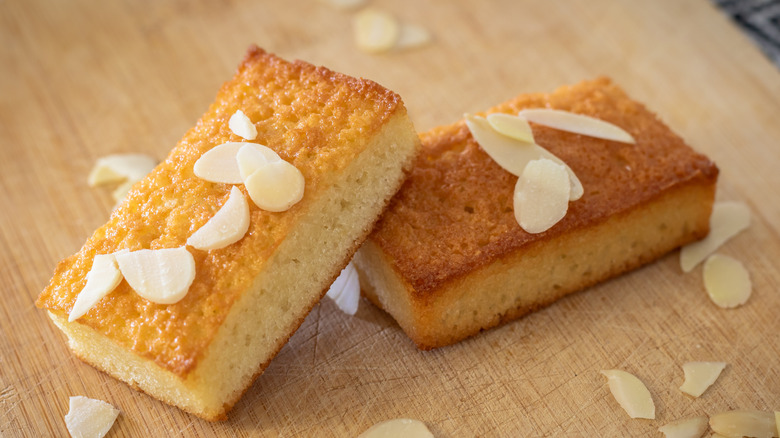
For anyone who'd rather avoid ultra-rich and creamy French desserts, a simple financier ("fee-nuhn-see-yeh"), meaning "financial," is a great choice. This bite-sized treat is subtly nutty and shaped a little like an ingot. It's prepared with almond flour, brown butter, egg whites, and icing sugar. Flavorings and garnishes vary. Some add honey, pralines, and shaved almonds, while others prefer orange blossom, chocolate chips, pistachios, or berry slivers. You may also find versions of the financier with poached prunes, cocoa beans, or pecans. The majority of these modern interpretations are created outside of France.
As the story goes, this little cake was created by a Parisian pastry chef whose bakery was located near Paris' financial hub. To honor his banking and stock-exchange clients, Lasne opted for rectangular molds reminiscent of gold bars.
Croissant aux amandes
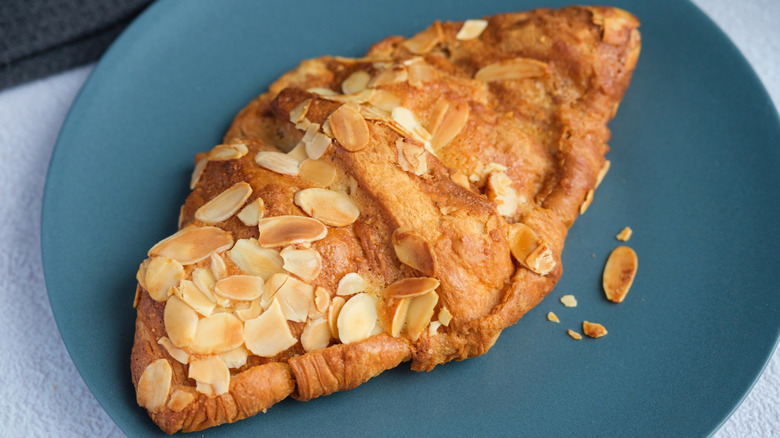
No visit to a French bakery is complete without a croissant, be it plain, subtly flavored, or filled with scrumptious ingredients. This buttery, flaky viennoiserie is pronounced "krwas-suhn," without the "t." Be sure to try le croissant aux amandes ("ah-muhnd"). It's best eaten warm and is filled with almond cream or paste and sprinkled with toasted shaved almonds and powdered sugar.
The croissant, which is typically crescent-shaped, originated in Austria and was popularized in Paris via a Viennese bakery around 1839. Its ancestor is probably the kipferl, which was allegedly invented in the 13th century. Others claim this pastry was created to symbolize the defeated Ottomans (their flag featured a crescent symbol) at the Battle of Vienna. Regardless of its background, the croissant is now associated with romantic Paris and a creamy cup of coffee.
Éclair
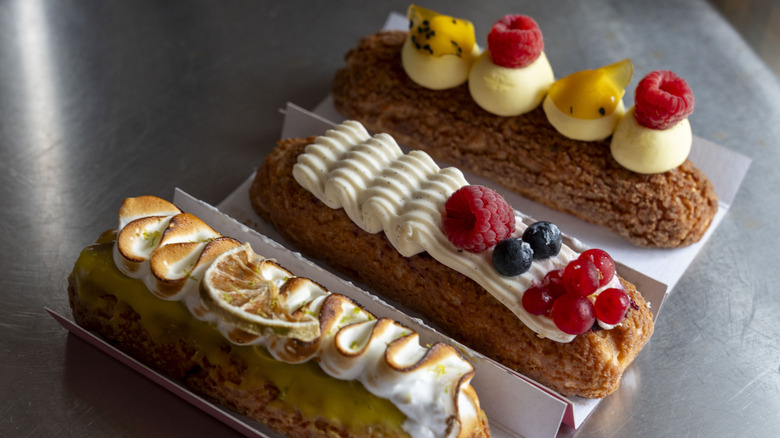
Pronounced "eh-clare," éclair translates to "flash of lightning" — a fitting name for a rich, oblong pastry that is usually gobbled down at record speed. It's a beloved treat around the globe, but the chocolate version is especially popular in France and the U.S. As a matter of fact, the latter celebrates National Chocolate Éclair Day on June 22.
The iconic French chef Marie-Antoine Carême is credited with the invention of the choux dough, which forms the base of this pastry. It was initially called "duchess bread" and is filled with pastry cream and topped with icing and/or whipped cream. You'll find countless different takes of this crispy finger treat at modern bakeries. The combinations of fillings and toppings are numerous and include salted caramel, green tea, hazelnut mocha, and seasonal fruits.
Paris-Brest
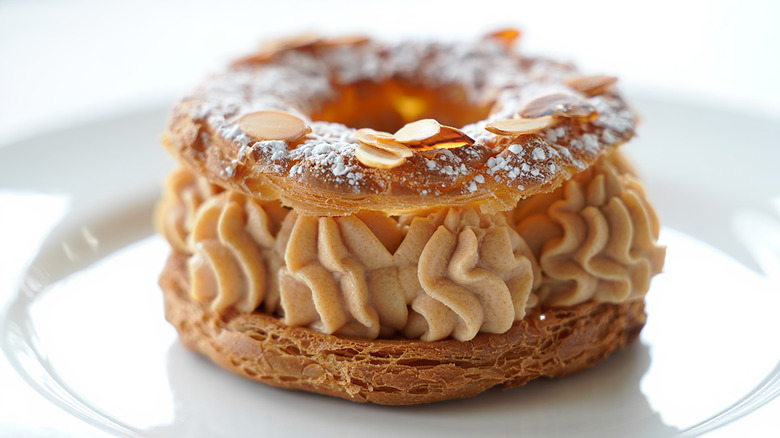
Pronounced "pah-ree breast," the Paris-Brest pastry refers to two major French locations: the capital city and a port hub nestled in the region of Bretagne — a culinary center in its own right.
Around 1910, Pierre Giffard, the founder of the Paris-Brest-Paris cycling competition, commissioned a symbolic dessert for the event from chef Louis Durand. The latter worked at Maison-Laffitte, located on the race's route. Inspired by the bicycle wheel, he whipped up a choux pastry filled with praline cream and topped with crunchy almonds. This is the most popular version of the Paris-Brest, but you can find other flavors like coffee, caramel, and chocolate. Some prestigious houses also spike their creations with St-Rémy brandy or orange liqueur.