

11 Spritz Cocktails, Explained
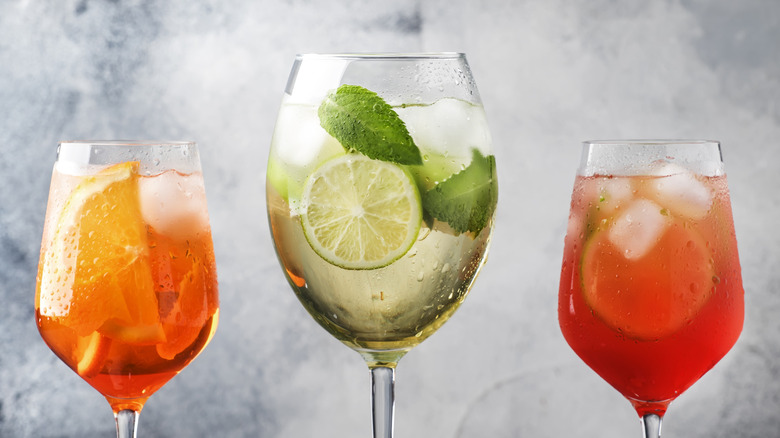
On a hot, summer day, there's no cocktail quite as thirst-quenching as a spritz. This refreshing aperitif, often consumed in Italy to wind down in the hours between work and dinner, has garnered immense popularity in the U.S. in recent years.
Although the spritz cocktail, which is typically a ratio of prosecco, club soda, and liqueur, is commonly associated with summer, the drink's versatility makes it a light, bubbly option for any season. The bittersweet flavor profile and relatively low ABV make it the perfect drink to slowly sip over some light snacks and good conversation.
While classic variations like Aperol and Hugo spritzes now line drink menus across the country, the original drink is thought to have roots in the 19th-century Veneto region, when the area was still a part of the Austrian Empire. Back then, Austrian soldiers watered down the local wines to make them more approachable. This simple recipe has since evolved into the classic spritz cocktails we know today, and it shows no signs of slowing down. Here are a few spritz cocktails that you should know, from the classics to regional favorites and modern iterations.
Aperol spritz
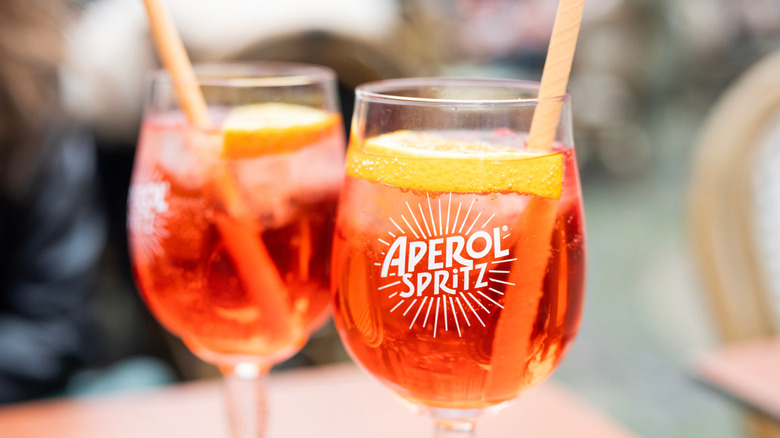
Arguably, the most well-known spritz out there, the Aperol spritz, is the mascot of all spritzes. Italy's signature sparkling cocktail, this classic is the perfect gateway into the vast world of spritz drinks. With a 3-2-1 ratio of 3 parts prosecco, 2 parts Aperol, and 1 part club soda, the drink can be easily made without the need for bar tools. The key component, Aperol, a slightly bitter Italian liqueur made from a secret recipe that dates back to 1919. In the 1950s, after a few decades on the market, the first recipe for Aperol spritz was created.
With ingredients like bitter orange, herbs, cinchona, and rhubarb, the botanical liqueur is citrus-forward, herbaceous, and bittersweet. Less bitter than its aperitif cousin Campari, Aperol is the perfect stepping stone for those looking to get into bitter cocktails. The best way to serve Aperol spritz is in a wide-stemmed wine glass or balloon glass, filled with ice and garnished with an orange slice.
Hugo spritz
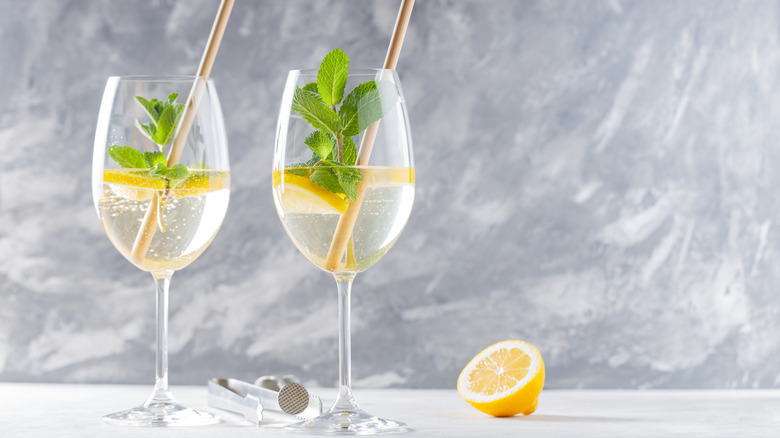
If you keep up with culinary trends on social media, you may have already heard about the Hugo spritz. Nicknamed as the it drink of the summer 2023, the Hugo spritz was a viral TikTok trend that year, so it makes sense that out of the spritzes, the Hugo would have its moment to shine.
Bitterness can be a controversial flavor profile in drinks — you either love it or hate it. The Hugo spritz is an accessible cocktail, in that it has all of the qualities of a good spritz, without the typical bitterness. The cocktail was first developed by Italian bartender, Roland Gruber, at a bar in north Italy. It was created as an alternative to the Aperol spritz.
The Hugo spritz was initially made using prosecco, club soda, and elderflower cordial. Nowadays, it is most commonly made with elderflower liqueur like St. Germain. The drink has a delicate floral flavor profile with sweet undertones. It is often garnished with fresh mint leaves and a citrus wedge, ideally lime or lemon.
Limoncello spritz
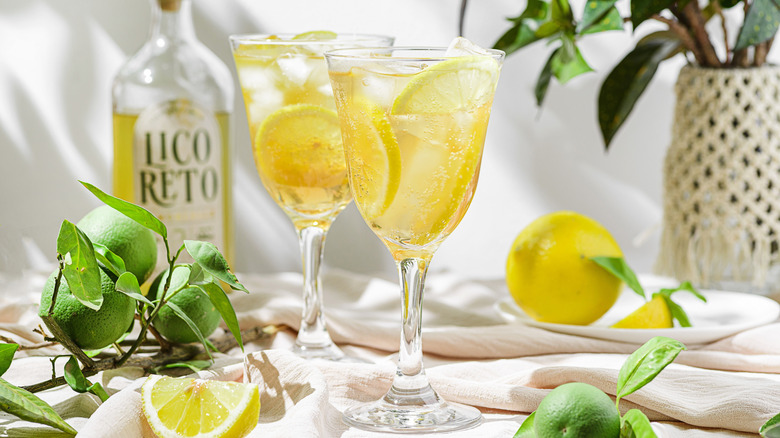
Also called an Amalfi spritz, limoncello spritz is yet another sweet, refreshing spritz variation to try this summer. Along with the classic prosecco and club soda, this spritz gets its namesake from the popular Italian liqueur, limoncello. Limoncello is a syrupy, citrusy liqueur made from lemon zest, high-proof neutral alcohol, and simple syrup.
Making classic limoncello from scratch is surprisingly easy, albeit time-consuming. Lemon zest is typically soaked in alcohol for days. The infusion is mixed with simple syrup, and the mixture is strained. The resulting liquid is then left to rest for about a month. However, the wait is worth it for that golden, lemony goodness.
If you like tangy desserts, like lemon bars or lemon rock candy, you'll fall in love with limoncello. Developed in southern Italy in the early 1900s, it has become a cultural staple in the region. Often served complimentary at the end of a meal or as a welcome drink to guests, the sweet liqueur embodies Italian culinary hospitality. If you want to transport yourself to the Amalfi coast this summer, add this limoncello spritz to your cocktail rotation.
Campari spritz
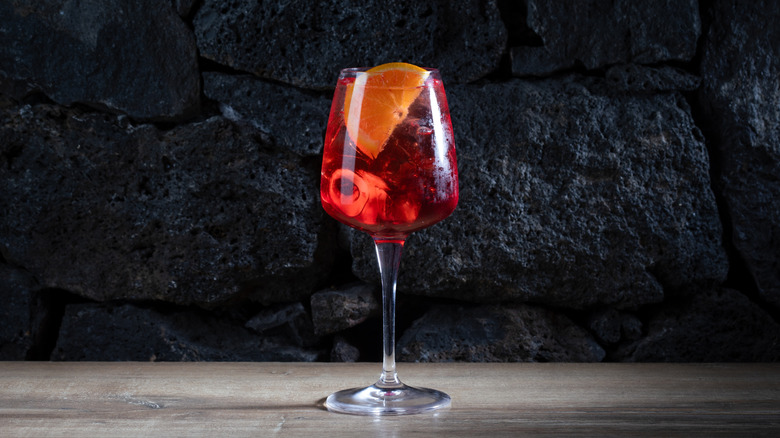
If Aperol spritz had a mature older sibling, it'd be Campari spritz. A little darker, a little bolder, but just as refreshing, the Campari spritz is packed with flavor. While Aperol and Campari are owned by the same company, the Campari Group, they aren't quite interchangeable. Both spritzes are structured the same, with that 3-2-1 ratio, but if you order a Campari spritz, expect a cocktail with more bitterness and stronger herbaceous notes.
Campari is a classic Italian liqueur, made with a blend of 68 botanicals. The first and only iteration of Campari was made in 1860, with a recipe so secretive that the only confirmed ingredient is bitter orange peel. Nowadays, the liqueur is used in famous cocktails like the the classic Negroni and the the whiskey-based Boulevardier. The Campari spritz provides the same rich complexity of those classics, but with a refreshing, bubbly finish perfect for warmer months. For an added touch, garnish with an orange slice.
Cynar spritz
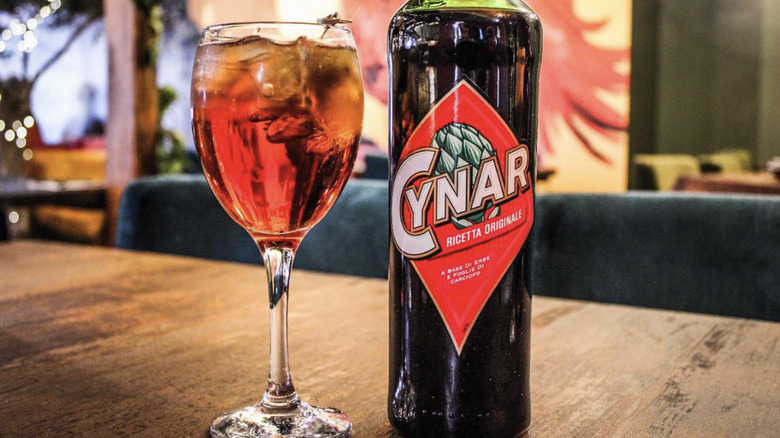
When it comes to Italian bittersweet liqueurs, or amari, it doesn't stop at Aperol and Campari. There are dozens of different varieties to choose from, and Cynar is a regional Italian amaro worth exploring. Bittersweet liqueurs have been created since Medieval times, when monks made herbal blends for medicinal purposes. Recipes continued to be developed and perfected over centuries, and eventually, liqueurs like Cynar came onto the scene.
Having first appeared in the early 1950s, the recipe includes 13 different herbs and spices, but only one has been confirmed. As seen on the logo of the Cynar bottle, the liqueur contains artichoke, specifically artichoke leaves. However, the actual artichoke flavor is quite subtle. Cynar has a strong vegetal and earthy profile. It has hints of bitterness and sweetness, and as an amaro, it can be enjoyed neat or in a cocktail. For an herbaceous kick, Cynar is a great liqueur to use in a spritz.
Select spritz
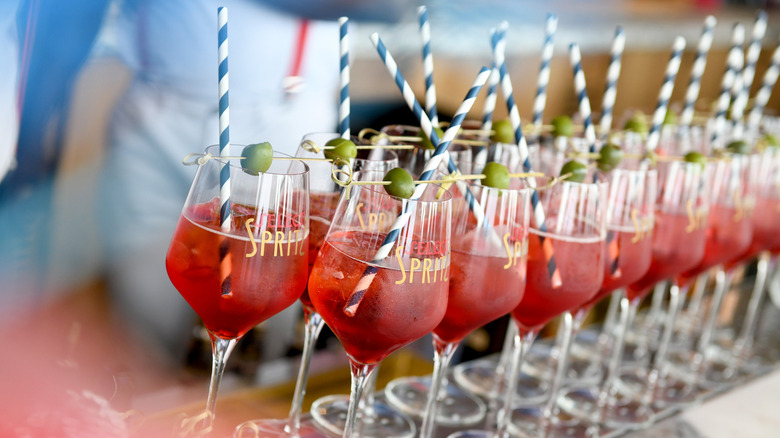
Also dubbed as the Venetian spritz, the Select spritz is rooted in the city streets of Venice. Select, a bittersweet liqueur, was developed by two brothers in 1920 in the Venetian Castello district. Made with 30 different herbs, roots, and spices, including rhubarb and juniper, the key ingredient in gin, Select is Venice's go-to classic for spritzes. It is made with the same process as it was over a century ago. With its deep red hue and fruity bittersweet flavors, Select nestles itself between Aperol and Campari. It's a little more bitter than Aperol, and a slightly more fruit-forward than Campari.
You can find Select spritz on the menu at nearly every bar in Venice. So if you are ever in Venice, or simply want to do as the Venetians do, grab a bottle of Select and make a Select spritz. Don't forget its signature garnish, the green olive.
Cappelletti spritz
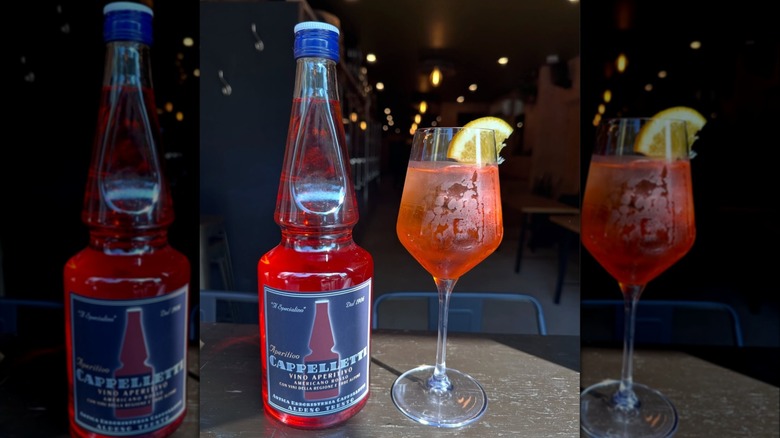
If you want to impress your guests with a less common spritz variety that has deep-rooted history, try the Cappelletti spritz. Cappelletti Aperitivo is a wine-based aperitivo with origins in the Triveneto region of Italy, the same area where Austrian soldiers created the first spritzes. These spritzes were initially made with wine and water, but over the years, bittersweet liqueur was added.
Cappelletti Aperitivo was first made in 1909, and used carmine color, a pigment made from insects, for its bright red coloration. The liqueur, which is made by the fourth generation of the Cappelletti family, still uses natural carmine color in its recipe. The aperitif leans on the bitter side, though not quite as bitter as Campari, and has subtle grapefruit and orange notes. The addition of wine in the recipe provides a softer mouthfeel and overall dry finish when used in a spritz. While not as popular as other aperitifs, it can still be found at many liquor stores across the U.S. Next time you're picking up cocktail ingredients, keep an eye out for Cappelletti Aperitivo.
Ramazzotti spritz
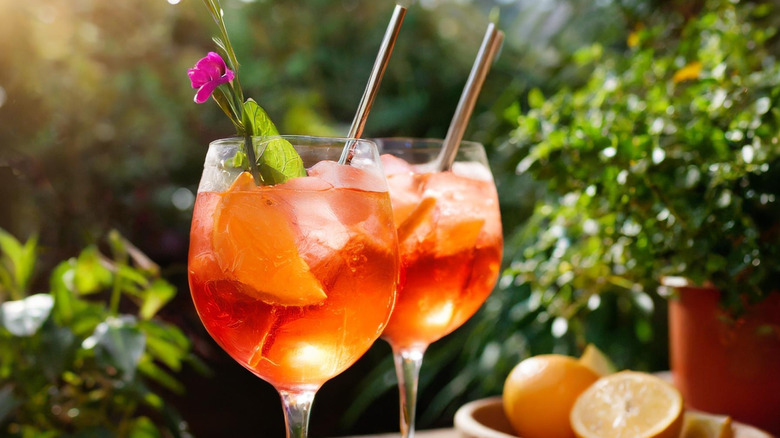
Ramazzotti is a legendary Italian liqueur brand, with spritz options for every palate. If you enjoy licorice and dark chocolate notes, a spritz made with the classic Amaro Ramazzotti is up your alley. However, if you are a fan of floral, fruity flavors, a spritz made with Ramazzotti's Aperitivo Rosato will be sure to hit the spot.
The history of Ramazzotti goes back over two centuries. In 1815, an herbalist combined 33 ingredients to create Amaro Ramazzotti. This secret blend — the original recipe remains the same – was the first Italian liqueur that didn't use wine as its base. It works in a spritz, providing bittersweet, almost cola-like flavor to the drink.
Ramazzotti expanded its products over the years and released Ramazzotti Aperitivo Rosato, which is perfect for spritzes. It has flavor notes of hibiscus flower and orange blossom, with hints of fresh tangerine. Paired with prosecco and basil, this Ramazzotti spritz makes for a light, refreshing afternoon cocktail.
Zirbenz spritz
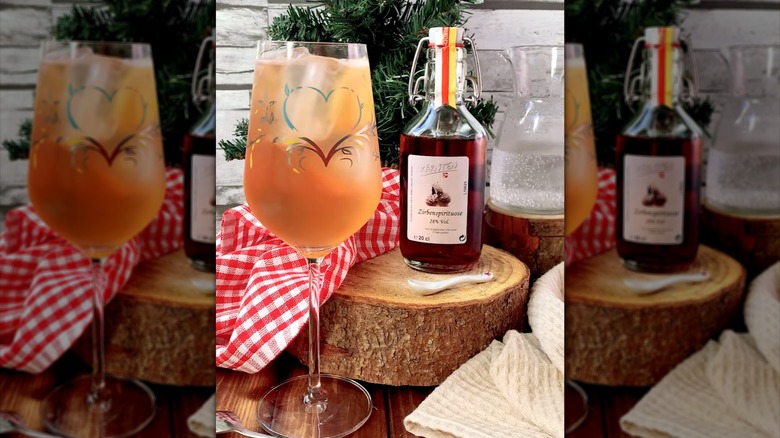
A spritz doesn't have to use Italian liqueur, and it doesn't have to be sipped in the summer either. The best spritz for a chilly winter evening is the Zirbenz spritz. Hailing from the Austrian Alps, Zirbenz is a stone pine liqueur. People in the Austrian Alps have been making homemade liqueurs like Zirbenz for centuries.
A popular apres-ski drink, Zirbenz comes from a family distillery dating back to 1797. If you are looking for a prominent pine flavor, this liqueur delivers tenfold. To make Zirbenz, farmers hike mountainous terrain and climb the pine trees to harvest the fruit. Some of these trees can survive for close to a millennium.
The resulting effort leads to a liqueur with a blend of woodsy notes like pine needles and sap, and subtle undertones of honey and lemon peel. When paired with prosecco and club soda, the pine flavor mellows out. For nights when you're cozy by the fire, but still want a light, fizzy beverage to sip on, the Zirbenz spritz encapsulates that seasonal spirit.
Spritz bianco
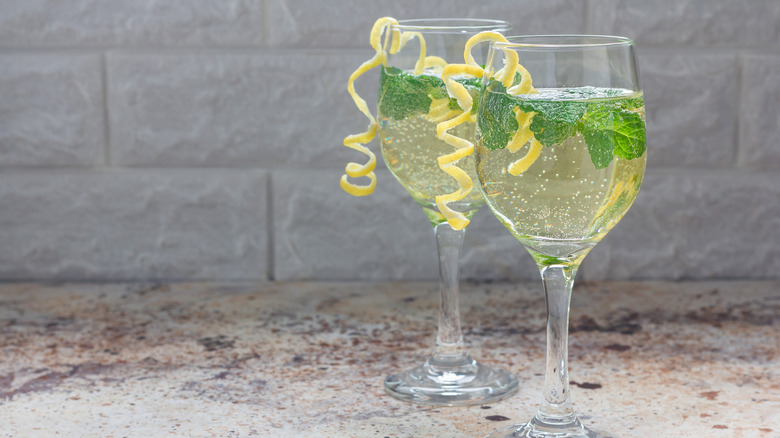
Spritz bianco is quite similar to the origins of the spritz itself, which included wine and water. The spritz bianco, or white spritz, is a popular choice in Friuli-Venezia Giulia, in northeast Italy. This regional spritz uses dry white wine, a switch from the usual choice of prosecco, and is paired with club soda and a slice of lemon.
You may not be able to find the spritz bianco on the menu in other areas of Italy, but in places like Friuli and Udine, there are sure to be a few bars that sell it. While the white wine version is more common, some places sell spritzes using red wine. When the spritz is made with red wine, the lemon garnish is swapped out for an orange slice. If you aren't a big sparkling wine fan, this bianco is a simple but tasty substitute. With a low ABV, you can sip in the early evening without worrying about a buzz.
Italicus spritz
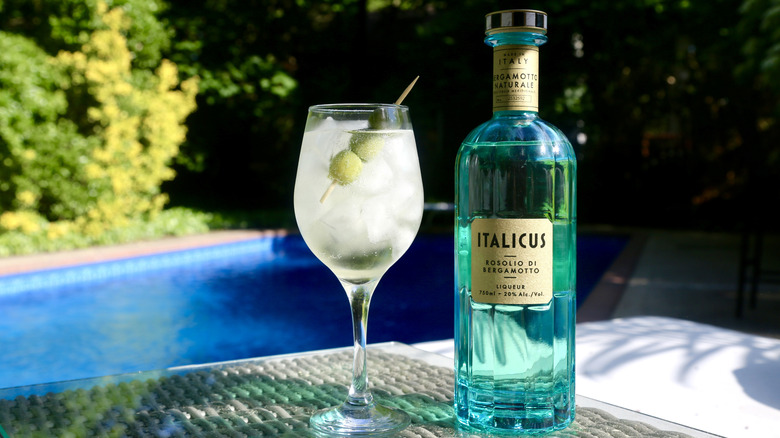
If you are a fan of the Hugo spritz, make room for Italicus, because this might be your next go-to spritz. Italicus Rosolio Di Bergamotto was released pretty recently compared to other liqueurs frequently used in spritzes. It was developed in 2016 by Giuseppe Gallo who decided to research a traditional Italian liqueur called rosolio, which was once drunk by the kings of Italy before vermouth or amaro were in the picture.
Eventually, Gallo created his own version of the liqueur, using bergamot as a primary ingredient. Other ingredients include citron peels, chamomile, and lemon balm, all sourced in Italy. The Italicus spritz is floral with hints of citrus and subtle bitterness. It's a flavorful alternative for those who aren't big fans of bitter-forward spritzes. This spritz is paired with a garnish of green olives – the brininess adds a welcome flavor profile to the cocktail. If you want to channel the feel of Sicily this summer, give the Italicus spritz a try.