

The Biggest Scandals In McDonald's History
Every single day, more than 60 million people walk into a McDonald's restaurant around the world and take advantage of its quick, easily accessible, and relatively cheap food. The chain, founded in California in 1940, is a fast-food behemoth — there's no doubt about it. While many love biting down on its Big Macs and dipping salty fries into their McFlurrys (yes, it's a thing; don't knock it until you've tried it), like many major corporations, McDonald's has some pretty scandalous skeletons lurking in its closet. In fact, some might just be scandalous enough to put you off your next visit to the Big Arches.
Not convinced that you can be dissuaded from your favorite McDonald's order? See how you feel after you've read some of the biggest scandals in McDonald's history. From major racial discrimination lawsuits and outbreaks of food poisoning to seriously questionable menu items, it seems like this fast-food chain really has been through it all.
The McMillions scam
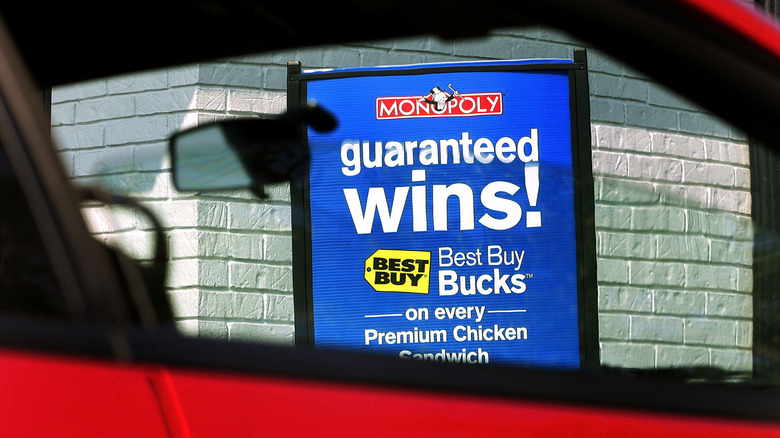
McDonald's has run many different contests and games in its decades-long history, but one of the most well-known is McDonald's Monopoly. On the surface, this game seems pretty harmless: Customers peel off and collect game pieces from their drinks, fry boxes, and burger packaging to be in with a chance of winning a prize. Often, the prize is free food, but in rare cases, people can win cars, vacations, or even $1 million in cash. Well, it's rare for the average consumer to win a boatload of money through McDonald's Monopoly, but if you have the keys to the castle, like one man did in the 1990s, then it's actually pretty easy.
Back in 2001, in a major scandal for McDonald's, Jerome P. Jacobson was arrested by the FBI for running a scheme to defraud the fast-food chain out of its Monopoly and "Who Wants to Be a Millionaire" cash prizes. At the time, Jacobson had been working for Simon Marketing, the firm in charge of McDonald's contests, and managed to rig the system so the game pieces would land in the hands of people he knew. In turn, they would pay him large sums of cash. It's estimated that Jacobson managed to earn around $3 million from the scam (nicknamed the McMillions scam) and stole around $24 million from McDonald's before he was arrested.
The pink slime claims
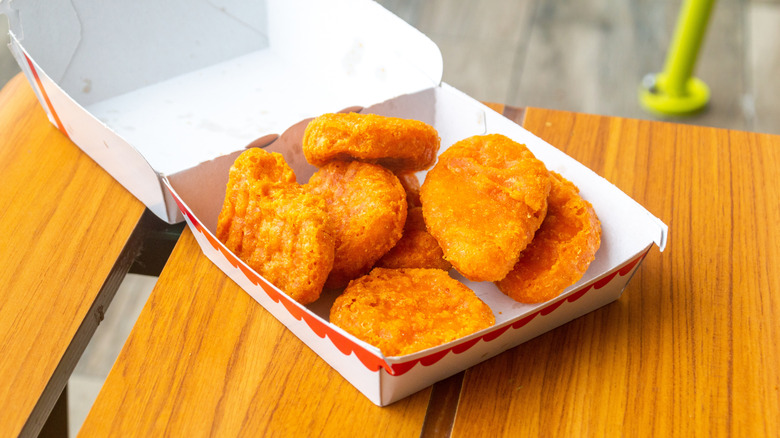
In 2014, McDonald's wasn't impressed when a photo of pink slime went viral. Why? Because the photo, which depicted what can only be described as a gooey pink snake, allegedly showed its Chicken McNugget ingredients. The fast-food chain vehemently denied that this was a chicken nugget ingredient, and even released a video portraying exactly what goes into one of its most famous menu items (white boneless chicken meat, apparently).
But actually, some might say the outrage at the fake image wasn't entirely misplaced. Only a few years earlier, British chef Jamie Oliver revealed on his TV show that McDonald's actually did use a strange pink slimy ingredient in its beef burgers. Yep, this wasn't one of those myths about fast-food that you can stop believing — it actually happened. The slime in question was actually boneless lean beef trimmings, and they're basically everything that's left after beef has been cut for the meat industry. To kill bacteria, these trimmings are usually treated with ammonium hydroxide.
In 2011, McDonald's confirmed it would no longer use ammonia-treated beef, but for some, the damage was done. The rumor that it uses pink slime still plagues the fast-food chain and comes up time and time again in the mainstream media and on social media.
The McLibel case against environmental activists
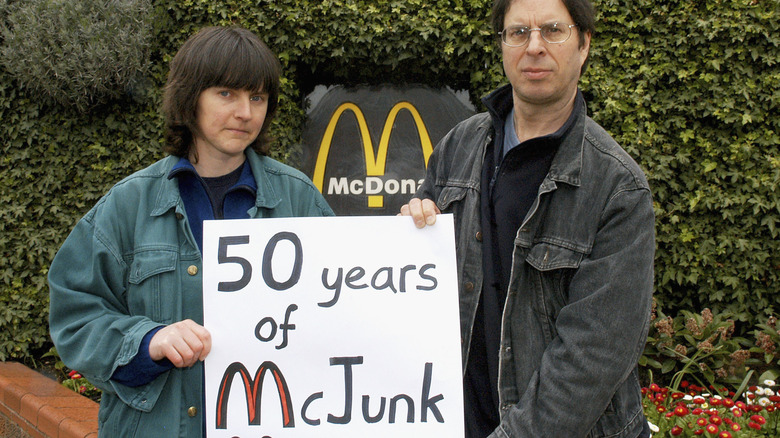
McDonald's might have legions of fans around the world, but it also has plenty of critics. It has been widely condemned by many for its treatment of animals, for example, as well as for its environmental impact. But this criticism is nothing new. In the 1980s, as McDonald's expanded rapidly across the U.K., some British activists decided they were going to try and dissuade people from patronizing the chain.
The group of five activists distributed leaflets accusing McDonald's of poisoning rainforests, misrepresenting its nutritional value, among other things. The fast food giant wasn't too happy, to say the least, and in the 1990s, it decided to bring legal action, successfully suing two activists, Helen Steel and David Morris, for £60,000 in damages. The case, nicknamed McLibel, was a major PR scandal for McDonald's, mostly because it was a multi-billion-dollar company suing two individuals, one of whom was an unemployed parent. Not a good look.
In the end, Steel and Morris, who had to fight with little legal support, appealed and were awarded £57,000 for denial of a fair trial. Still today, the case is looked back on as a disaster for McDonald's, but also as one of the longest legal trials in U.K. history (it ran on for nearly three years). In 2025, it was brought back into the public consciousness with the launch of the BBC podcast "The People vs McDonald's."
The $1 billion racial discrimination lawsuit
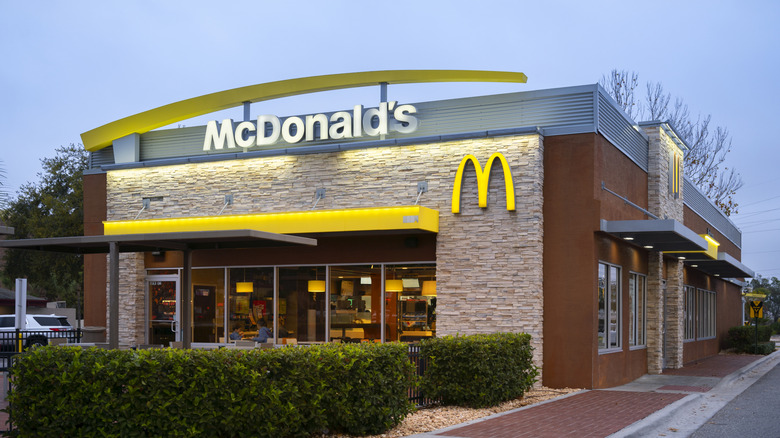
Sometimes, McDonald's is the one doing the suing, but often, it's on the receiving end of a lawsuit. In fact, over the decades, it has been sued for everything – from scalding hot coffee spills that caused third-degree burns to wage theft. But one of the biggest lawsuits it has ever had to face was in 2020, when more than 50 Black franchisees in the U.S. came together to sue the chain for racial discrimination. They were later joined by an additional 27 former franchisees, which brought the total number of restaurants involved to almost 300.
According to the franchisees, who were represented by the Ferraro Law Firm, McDonald's deliberately blocked them from accessing as many opportunities for growth and success as white franchisees. In the $1 billion lawsuit, the franchisees accused the fast-food chain of many things, including pressuring Black franchisees to open McDonald's restaurants in dangerous areas and denying them financial assistance.
In 2022, the lawsuit was dismissed by a Chicago federal judge. But it didn't get off the hook completely. A very similar lawsuit, filed by Black franchisee and Major League Baseball player Herb Washington, was settled in 2021. In this case, the fast-food giant agreed to buy Washington's restaurants for $33.5 million. And in another similar, separate lawsuit around the same time, McDonald's agreed to purchase four restaurants from two franchisee brothers, James and Darrell Byrd, for $6.5 million.
The BBC sexual abuse investigation
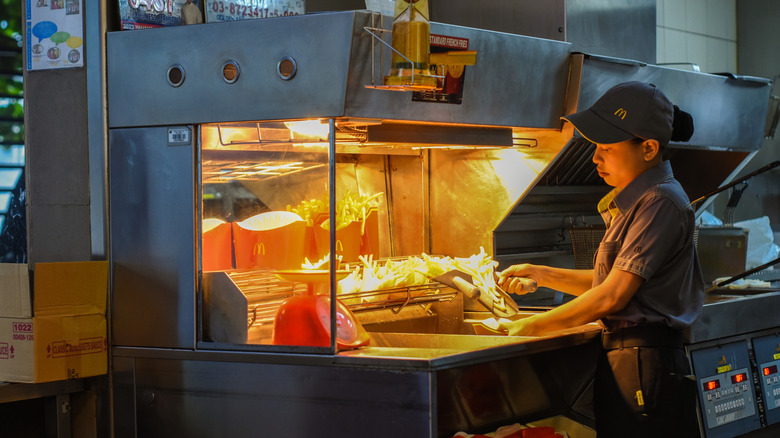
In 2023, another major scandal rocked McDonald's U.K. when the BBC revealed it had collected allegations of sexual assault, harassment, racism, and bullying from more than 100 McDonald's workers across the country. The workers, many of whom were young women and junior members of staff, accused their managers of failing to support them against things like antisemitic abuse, groping, and racial slurs.
The scandal was still ongoing in 2025, when hundreds more young workers told the BBC that despite McDonald's promises to change, the issues were still happening. In 2026, things went from bad to worse for McDonald's when a group of five trade unions filed a complaint with the U.K. government's Department for Business and Trade over the fast-food chain's failure to protect workers. In response, the government agency offered mediation between the unions and McDonald's.
On social media, many workers have claimed that little has happened since the BBC investigation, despite the CEO expressing that they want to move on from the scandal. "Nothing has changed," said one Reddit user in the r/McDonaldsUK subreddit. "If a manager (especially salaried) does anything wrong they just get quietly moved. We have online training that's just box ticking."
McAfrika
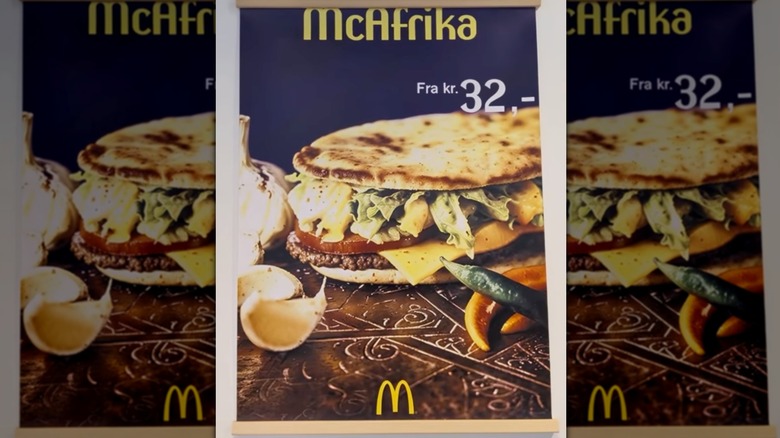
McDonald's has released many, quite frankly, questionable menu items over the years. In the 1970s, for example, there was McSpaghetti, which was meatball marinara in a box. And in the 1960s, there was the Hula Burger, which was a pineapple and cheese sandwich. Needless to say, it flopped spectacularly. But one of McDonald's most controversial discontinued items has to be the McAfrika. Yes, that was the actual name of a burger sold at McDonald's.
The McAfrika, which was a pita sandwich with beef, cheese, tomatoes, and salad (apparently based on an authentic African recipe), launched in Norway in 2002. But many activists were furious with the timing. In the early 2000s, several countries in southern Africa were facing famine due to crop failures, so many saw the launch of the McAfrika in a rich European country as insensitive at best. In response to the criticism and the waves of bad press it prompted, McDonald's apologized, but it didn't withdraw the burger. Instead, it allowed aid workers to leave collection boxes in its restaurants.
The E. coli outbreak
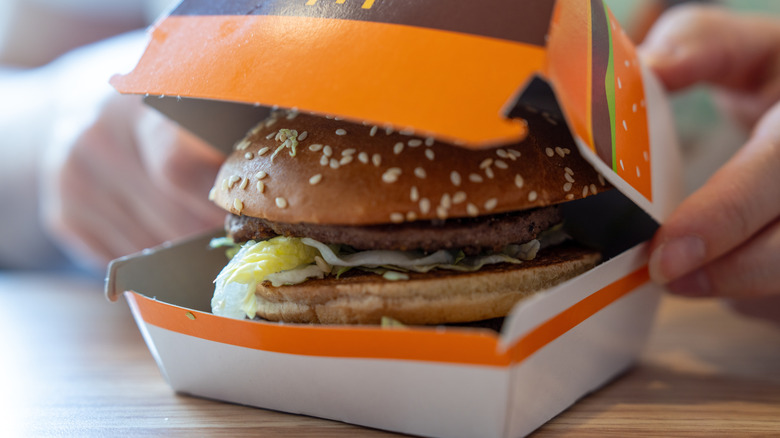
Sometimes, McDonald's manages to skate over its scandals and move on. And sometimes, its shares drop in response. That's what happened in 2024, after the fast-food giant became the source of a major E. coli outbreak.
In October 2024, after the outbreak was revealed, McDonald's shares dropped by 7% while its sales plummeted and its trust with consumers fractured. It's unsurprising, considering that the chain had been selling burgers filled with contaminated onions in the U.S. More than 100 people were confirmed to be infected with E. coli as a result (although the true number was likely much higher). More than 30 people were hospitalized, and one person died.
In December 2024, the outbreak was declared over, but the aftershocks kept coming. In 2025, for example, the fast-food giant settled a lawsuit filed by a man who got sick from E. coli for an undisclosed amount. In 2026, legal action was still being taken against the chain over the outbreak.
The modern slavery allegations
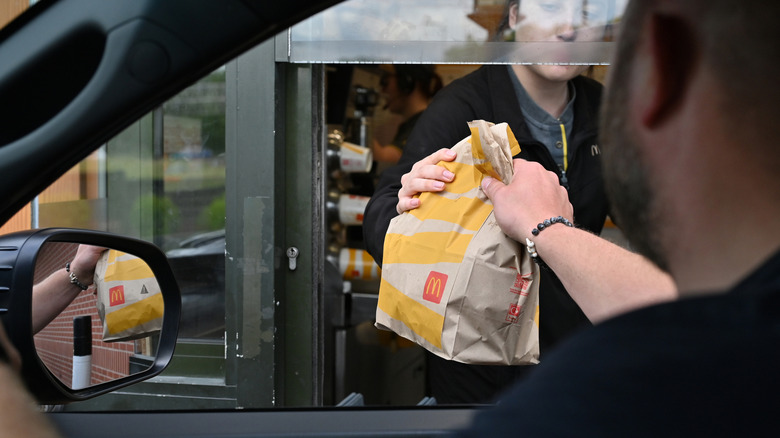
In 2024, McDonald's had more to worry about than E. coli. This was also the year that modern slavery allegations came to light in the U.K. Once again, a BBC investigation uncovered the situation, reporting that a human trafficking gang from the Czech Republic had been forcing people to work in factories and McDonald's in the mid-2010s.
According to the BBC, McDonald's wasn't devoid of blame. Not only had it managed to miss that four victims' salaries were being paid into one bank account for four years, but it also didn't notice that the employees were also working excessive amounts of overtime. Both are major red flags for modern slavery. Also in 2024, the gang members were found guilty.
Unfortunately, though, this wasn't the first time that McDonald's had been caught up in a human rights scandal. The year before the BBC modern slavery investigation hit the headlines, more than 300 minors, including two 10-year-old children, were found working at McDonald's restaurants in the U.S. In blatant violation of child labor laws, the 10-year-old children were unpaid, working until 2 a.m., and operating deep fat fryers.
Sundae Bloody Sundae
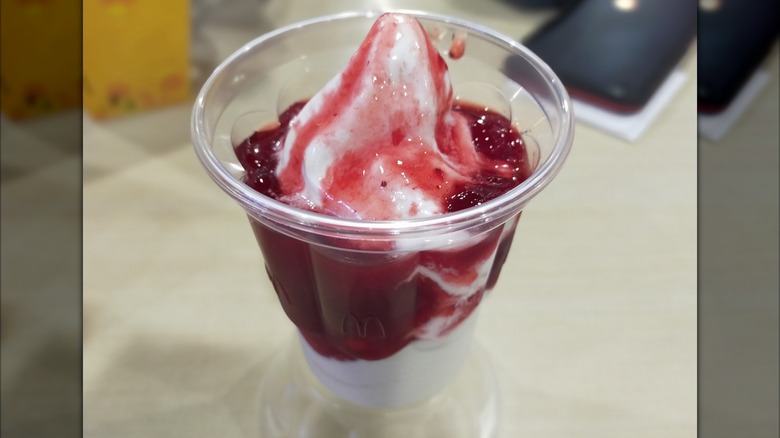
It seems that McDonald's didn't learn from the McAfrika scandal, because in 2019, it launched another insensitive and inappropriately named menu item. This time, it was in Portugal, and it was the Sundae Bloody Sundae. Yes, it might seem impossible to believe, but that was a real dessert offered across the country for Halloween 2019.
For the uninitiated, Bloody Sunday refers to Sunday, January 30, 1972, when 13 Northern Irish people were killed and at least 15 more were injured by the British Army during a civil rights march in Londonderry. More than a decade later, the Irish rock band U2 wrote a song about the tragic event called "Sunday Bloody Sunday."
In response to the backlash to its Sundae Bloody Sundae dessert, McDonald's Portugal apologized and pulled the menu item from the market. It claimed that it did not mean to offend and had only intended to celebrate Halloween.
Happy Meal fitness trackers burnt children
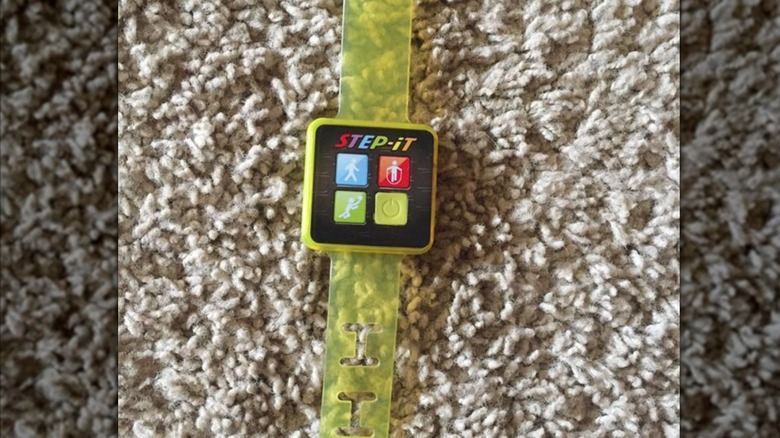
McDonald's has come under a lot of scrutiny over the years for promoting childhood obesity. Its Happy Meals, of course, are the worst offender, as their fun toys and smaller portions are exclusively marketed toward children. McDonald's has taken some steps to make its Happy Meals more nutritious, like offering vegetable sticks and fruit as a side option, for example. In 2016, it also decided it would be a good idea to start including colorful plastic fitness trackers in its Happy Meals. But the move seriously backfired.
It turns out those fitness trackers were actually dangerous. More than 70 incidents were reported as a result of the trackers, which caused burns and skin irritation on children's wrists. As a result, McDonald's had to recall no less than 29 million units in the U.S. and 3.6 million in Canada.
The CEO was fired over a relationship with a member of staff
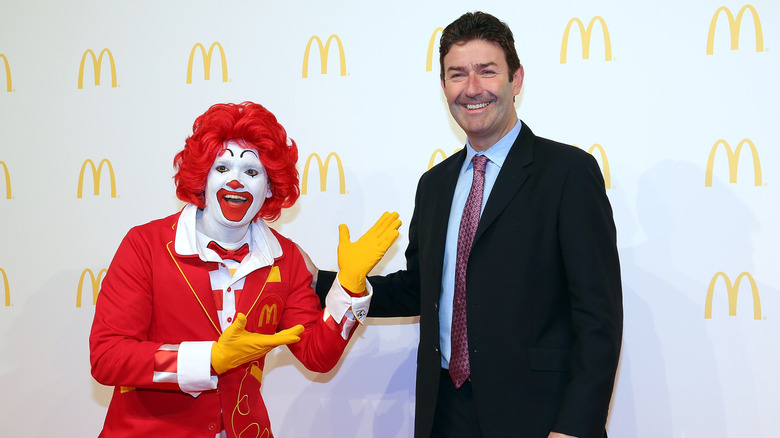
In many companies, managers dating employees can be a thorny situation. But when it's the CEO of a corporation dating an employee, things get even more complicated. One person who knows this better than most is Steve Easterbrook.
In 2019, the former McDonald's CEO found himself at the center of a major scandal when he was fired for misconduct due to a relationship he was having with an employee. The relationship was consensual, but it was against company policy. Easterbrook apologized and agreed to step away from his role, albeit with a very generous severance package of more than $100 million.
But the scandal didn't end there. In 2023, he was fined $400,000 for misleading investors. It turns out it wasn't just the one employee that Easterbrook had had an affair with, but multiple. McDonald's accused the former CEO of lying and misleading investors about the relationships and claimed it would never have paid him millions of dollars if this had been known.
It sold expired meat in China
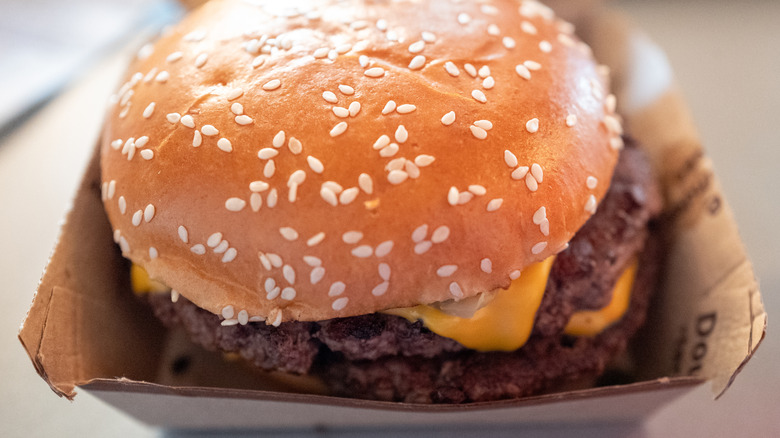
A decade before the E. coli scandal in the U.S., McDonald's came under fire in China for selling potentially dangerous meat. It turns out one of the fast-food giant's suppliers, which it had worked with since the 1990s, had been selling the chain expired meat.
Undercover filming by a Shanghai broadcaster revealed that not only was the supplier potentially selling McDonald's and other fast-food chains rotten burgers, but it was also unsanitary. Workers were seen dropping food on the floor before placing it back on the conveyor belt to be processed, for example.
McDonald's stopped using meat from the supplier, named Shanghai Husi Food Co., and then the entire facility was temporarily suspended by the Chinese government. Still, the impact was huge. McDonald's sales and profits declined as a result — and not just in China, either, but all over the world.
It was sued for copyright infringement over Mayor McCheese
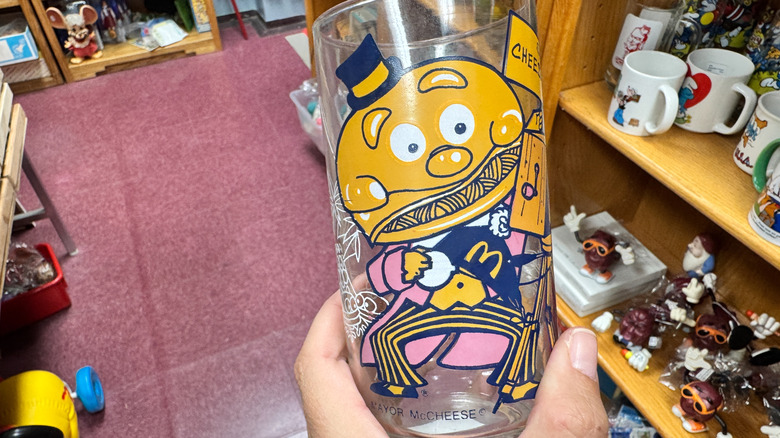
If you were a child in the 1970s, you might remember Mayor McCheese, one of the first McDonaldland characters who, of course, presided over McDonaldland Town Hall. But he wasn't in office very long. In 1973, McDonald's was sued over Mayor McCheese's likeness to another children's character: H.R. Pufnstuf.
It turns out, an ad agency reached out to Sid and Marty Krofft, the creators of Pufnstuf, in 1970, asking to use the popular character in a McDonald's campaign. The plan ended up being scrapped in the end. Well, at least, that's what the Kroffts thought, until Mayor McCheese appeared on screens across the U.S. bearing a striking resemblance to Pufnstuf. And then they got mad. Really mad. Mad enough to sue for copyright infringement. In 1977, McDonald's paid $50,000 in damages to the Kroffts, and by the mid-1980s, it had phased out Mayor McCheese for good.
The non-decomposing burgers
Food is supposed to decompose. If you've ever forgotten about a sandwich on the backseat of your car or left some fruit in the bowl while you're on vacation, you're likely familiar with this fact of life. But for several years, people have been fascinated by the fact that some McDonald's burgers just don't seem to decompose.
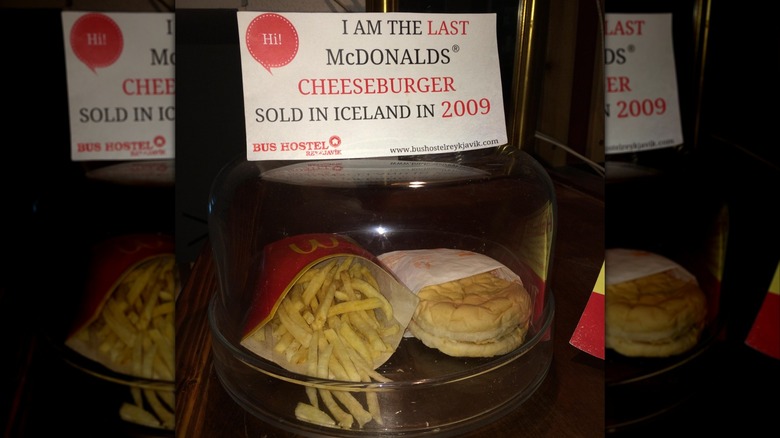
In 2015, for example, it was revealed that one of the last burgers and fries sold in McDonald's Iceland before it closed in 2009 had not shown any signs of mold. To be clear, that is six years without any sign of decomposition. In 2019, a decade after the meal was bought, the food appeared to be mostly intact. People were fascinated, so a livestream of the burger and fries was set up from its home in a museum. Yes, really. A museum.
Plenty were amused by the burger, but many were horrified. "The display reminds Icelanders why they got rid of McDonalds," wrote one person on Reddit. Another added, "Yet people eat this. Food that doesn't spoil sitting in your body." Since then, a few people have revealed old McDonald's burgers that haven't decomposed, including some that were bought more than two decades ago. According to the fast-food chain, though, all of these burgers simply haven't been in the right environment to decompose. The chain notes it's not any suspicious ingredients, but rather a lack of moisture that has allowed the burgers to stay intact for so long.