

Why DIYers Use Pool Noodles For Cabinet Paint Projects
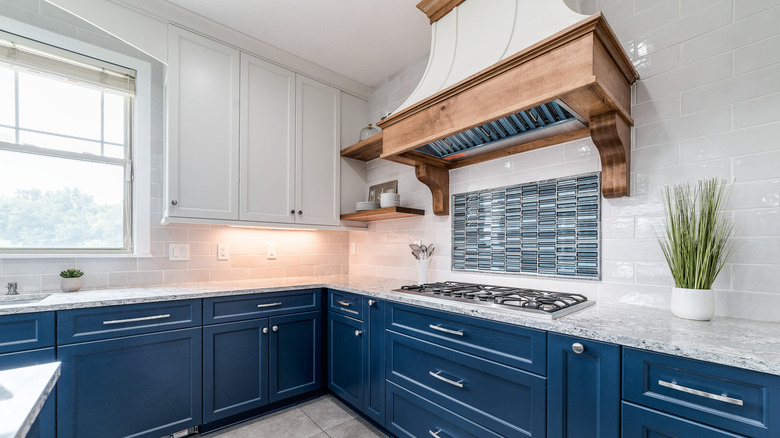
We love a good DIY project around here, especially if it involves transforming our favorite place: the kitchen. We've seen many makeovers, but very few offer tricks to make the do-it-yourself parts easier. Take the cabinets, for instance. Painting the doors without removing them is one of the biggest mistakes people make when painting kitchen cabinets. But with the help of some wire hangers, a garment rack, and pool noodles, you can paint mess- and worry-free.
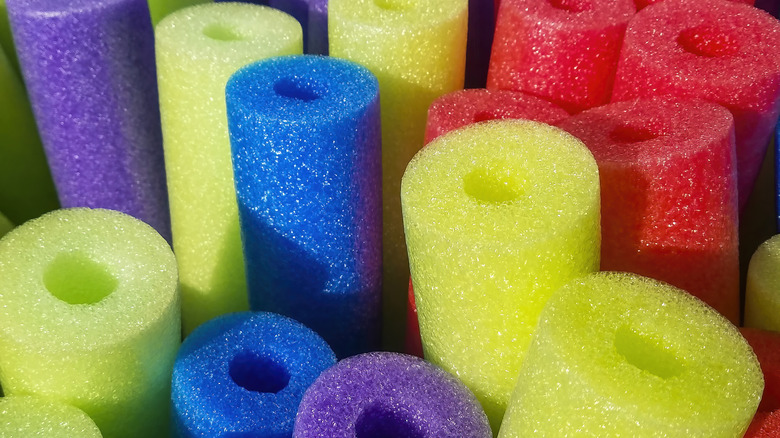
For this DIY project, you'll hang your cabinet doors on a garment rack and use pool noodles to space them out. This keeps them from bumping into each other while drying, and makes them easier to paint. First, remove the doors from their hinges, screw hooks into the tops, and hang them on the garment rack using hangers. Next, cut the pool noodles into thick chunks, add horizontal slices to each, and fasten them over the garment rack pole between the hangers. Make sure the hangers and doors are evenly spaced.
If you've added enough pool noodle foam between each hanger, the cabinets should remain still. Spray paint with the color of your choice and let them fully dry before reinstalling them. Whether you've set up outside, in the garage, or indoors with tarps, this easy hack will make painting your kitchen cabinet doors a breeze — no need to pay hundreds of dollars for a pro.
Tips for getting the most out of this hack
If you don't have the budget for a full kitchen renovation, painted cabinets can really transform the space. But before hopping to it, keep a few DIY expert tips in mind. Label each door — the one step you should never skip before painting kitchen cabinets — to know what goes where. And make sure cabinet surfaces are cleaned, sanded, and primed with a high-quality primer. Also, let the cabinets fully dry before reattaching them to their hinges to avoid smudging.
Lots of DIY hacks involve pool noodles (read: this herb garden hack). But for this one, you'll need proper tools to cut them, especially if they're made of hard foam. We suggest using a serrated knife, like a bread knife, or an electric knife to get through them easily. Wear safety goggles to prevent foam particles from getting in your eyes. And as far as painting? Wear a respirator mask to cover your face so you don't inhale the fumes.