

What Tim Hortons Does With Leftover Donuts

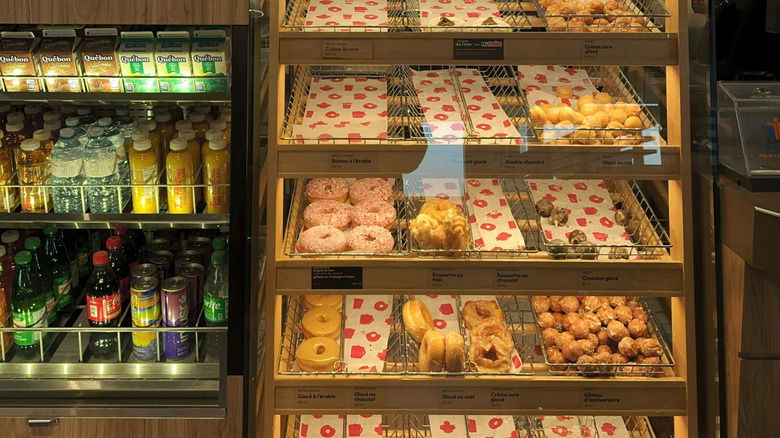
Who doesn't love perusing the cabinets at a Tim Hortons to choose the best flavor? The problem is that the case often stays quite populated right up until closing time — meaning those donuts have to go somewhere. You may think this means an end-of-the-night windfall of donuts for staff, but in many cases, staff aren't permitted to take home leftovers. Whether that's Tim Hortons in its Canadian land of origin, or in its second home of the USA, the destiny of leftover donuts is rarely straightforward. Some stores work with nonprofit companies to find leftovers a new home and reduce waste, while others have clear orders: Leftovers go in the trash.
Despite millions of families facing food insecurity in the United States and the problem of excess food waste, these two issues don't cancel each other out. Tim Hortons employees on Reddit discuss the reasons why they believe the word from the top is often to toss leftovers out. One user suggested that franchise owners or managers don't permit staff to take donuts home because "they don't want people to overproduce food in order to take it home." Another user also explained that the policy treated donuts as a form of compensation, saying: "Corporate thought that if workers took home the leftovers that 'we would make extra' so they stopped allowing it."
There are options available for franchises to help those in need
Rumours circulate that donated leftovers are a no-go for fast food chains for fear of expired food making recipients sick. In the US, at least, this is no longer the case, with the Bill Emerson Good Samaritan Food Donation Act protecting food donors at the federal level from liabilities of supplying food that didn't sell.
Tim Hortons in Canada partners with a certified B Corp social impact company called Too Good To Go, which allows restaurants and retailers to sell leftover food to customers at a clearance price via its app. While some Tim Hortons sites in the US also use Too Good To Go, participation depends on individual store initiative. Customers must search the app for nearby deals, as brand-level adoption is less widespread than in Canada, where more than half of locations participate.
This platform helps reduce the amount of food going into the garbage, and gives a handful of states a way to comply with food waste laws. Five US states have now made it harder to legally throw food away, namely Massachusetts, Connecticut, California, Vermont, and Rhode Island. While platforms like this are a useful tool for businesses trying to ease their food waste, employees have still claimed that there's an excess of food that never makes it into the hands of people.
Only 2.4% of surplus food gets donated in the US
There are a handful of firsthand accounts of Tim Hortons staff explaining that some stores have donated leftover food to nearby shelters, but that practice has largely stopped for a variety of reasons, including concerns about consistency, freshness, and food safety. Ultimately, the handling of leftover food is largely left to individual stores. Some staff still take leftovers to shelters or people in need of food, sometimes with the support of managers or owners, and sometimes without it.
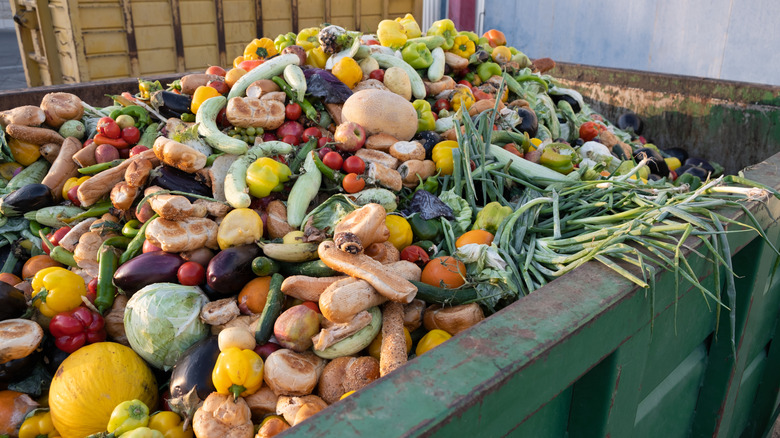
There is a significant food waste problem in the United States, with an estimated 29% of food going to waste in 2024. Of the 69.6 million tons of surplus food produced, only about 2.4% is donated. While platforms like Too Good To Go help reduce waste by redistributing unsold food, they also highlight a broader tension between waste reduction and how businesses manage value, ethics, and brand perception.