

Enjoy Artichokes By Melting Them Until Impossibly Tender
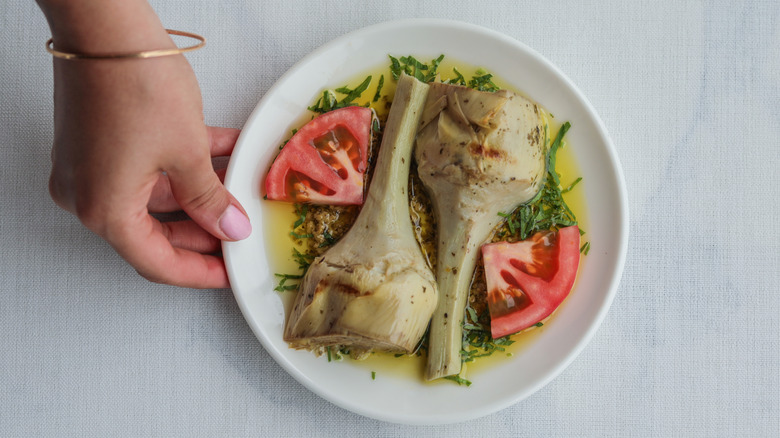
We should be grateful for internet trends that get us eating more vegetables, especially those treated as delicacies in some parts of the world. The increased interest in the technique of "melting" vegetables has well and truly taken hold, which makes sense, given that it can elevate veggies like cabbage or broccoli, or create scrumptious versions of underrated leeks.
Melting vegetables is a bit of a misnomer. The vegetables don't melt, but they are first given flavor by searing or some other caramelization method such as frying, baking, or grilling. They are then slow cooked, either by baking while covered, braising, or steaming, which ensures a meltingly soft and tender texture. This makes it a winning approach for tougher, stalkier, or firmer vegetables. Artichokes, with their robust structure, are the perfect fit for melting, and the technique can make the sometimes labor-intensive vegetable easier to manage.
Melting artichokes is almost a variation on the classic recipe for carciofi alla Romana, or Roman artichokes, a classic appetizer. For melting artichokes, the taste elevation phase comes in the form of a shallow bath of olive oil with herbs and garlic and cooking slowly in a flavor enhancing liquid like white wine or broth in a pot. The artichoke goes in at a high heat, but that drops immediately to a simmer to cook slowly for up to 50 minutes, poaching and steaming them all the while. Once the liquid boils off, the artichokes finish cooking by frying in the remaining oil, now enriched by the flavor of the other ingredients.
Melting makes a tougher plant tender
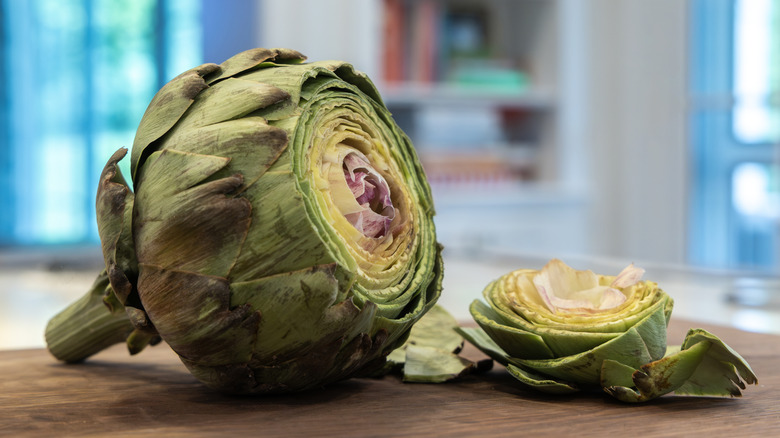
There are many different approaches to preparing artichokes for cooking, but the most straightforward for a melted vegetable experience is to reduce it to the heart. This involves chopping off the top quarter of the flower (the pointy end), removing the tough outer leaves, the stem, and the fluffy choke on the inside.
You may also experiment with leaving the core of the stem on the flower, as this can also become wonderfully tender and absorb the flavor of the steaming wine or broth. If you're partial to peeling and nibbling on the tougher outer leaves, you can leave these in place to soften on the flower, just make sure to trim the top third off to remove the sharp tips. You might also prefer to cut your artichokes down the middle and lay them down on their side, which can allow you to make melted artichokes in the same way you might melt cabbage wedges, or you can even grill or panfry them first for a richer flavor.
To serve, drizzle any remaining garlic and herb-rich oil from the pot over the artichokes for a finishing touch. For a classic flavor palette opt for old-faithful herbs like rosemary or sage. To get closer to the Roman version, try to track down mentuccia, a type of calamint which has a flavor that's a bit like minty oregano.