

Avoid These 13 Mistakes When Baking Bundt Cakes
We may receive a commission on purchases made from links.
For beginner and avid bakers alike, Bundt cakes can sometimes lead to kitchen disasters. Sometimes it's a cake that bakes unevenly, browns too quickly, and, more often than not, it's a cake that doesn't come out of the tin in one piece. This can be a real disappointment when you're after that beautiful Bundt cake shape, with perfect ridges or mounds. As a recipe developer and food business owner, I have made too many Bundt cake mistakes in my life. After years of trial and error and many failures, I've finally got the hang of making a perfect Bundt cake. Thankfully, you don't have to go through years of flops to figure out Bundts, as long as you know and avoid a couple of common errors that people make with them.
So, if you are super excited to try out a new dazzling Bundt cake tin, don't be afraid. Plus, if you flip over your cake only to find the top has stuck to the tin, just remember it happens to the best of us! If you're not an experienced baker, with a little Bundt-making know-how, you'll become a whiz at it soon enough. Here are some mistakes to avoid when making Bundt cakes.
1. Using a Bundt pan that's too big
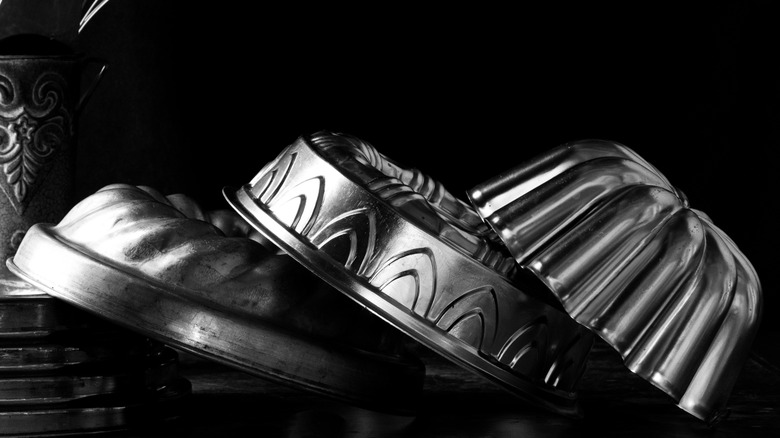
It can be a little harder to get the size of your cake right with a Bundt pan. Most cake recipes are written for regular cake pans that are easier to measure. Bundt tins are either sold by diameter (in inches) or cups, but I recommend always using the cup measurement. Inches can be irrelevant depending on the depth and shape of the ripples, whereas cups will tell you the volume of batter your tin can hold.
You don't want to buy a Bundt tin that's too big because, unless you make extra batter, you'll end up with a cake that's too "short" and probably overbaked. Go for a traditional-sized Bundt tin like a 12-cup (like this Nordic Ware option) one, rather than a 15-cup one. In my experience, a 12-cup (and even a 10-cup) tin tends to be the right size for many cake recipes and cake mixes, whereas a 15-cup is always going to be a larger cake and require more batter to get it right.
2. Not adding enough grease or non-stick spray to the pan
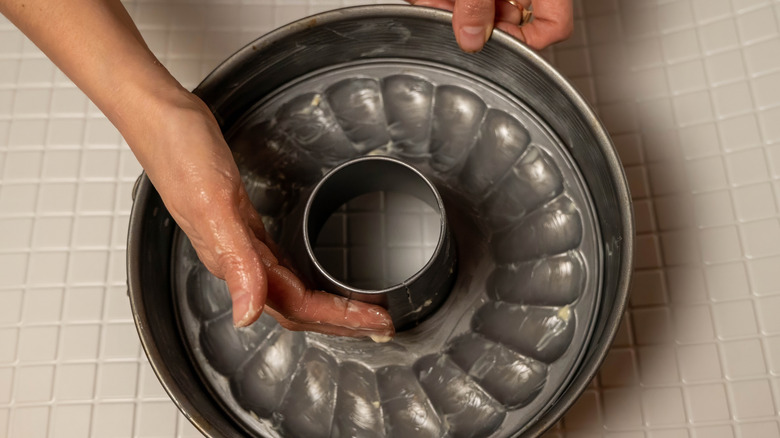
Perhaps the most common way a Bundt cake can flop is by not coming out cleanly, in one piece, from the pan. It has the potential to look so beautiful, and it's almost heartbreaking when bits of cake stick to the pan, leaving you to piece it together manually. The most important way to avoid this is to add enough grease to the pan. Whether you use butter, oil, or non-stick spray, you have to make sure to be generous and get it in every nook and cranny.
You can use a brush to do this, but I advise people to get their hands dirty and use their fingers to do the greasing, even if they're using a spray. This is because you'll be able to feel if there are dry spots around the edges of each ripple. If you're using a non-stick spray, spray it all over the pan, but then use your hands to spread it evenly.
Make sure your hands are washed first, then go to town greasing your pan. However, it's important that you don't add your grease too early. There were times when I greased my pan as the first step, and by the time my batter was ready to be poured in, the grease had slowly been drizzling down the pan and pooled at the bottom. Always do the greasing just before you're about to pour the batter in to avoid this, and try to have an evenly greased pan.
3. Leaving out the flour dusting layer
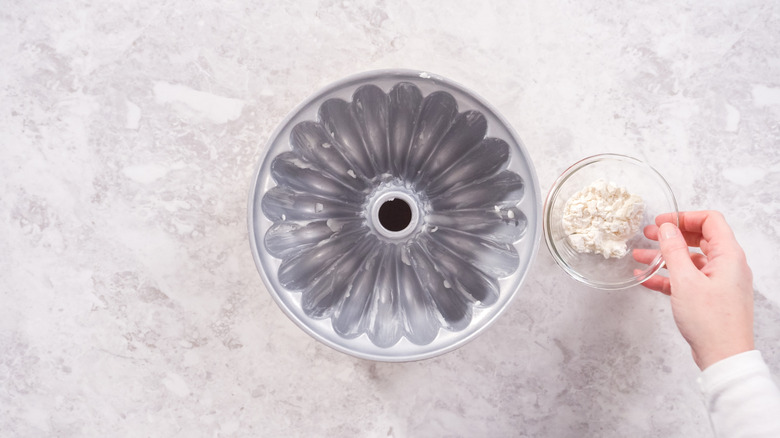
Many people think it's enough to simply grease a cake pan and get on with it. This may be fine for regular cakes, but with Bundt pans, it's worth giving it an extra layer of non-stick material using a dusting of flour. Both grease and flour will give you two layers of protection against sticking. That doubles the chances that your cake will release from the pan in the pretty Bundt shape. After greasing, simply dust some flour all over the pan, and tip out any extra.
For folks who still don't want to add that wheat flour layer for any reason, you can use a dusting of something like almond flour or even cocoa powder for a chocolate Bundt cake. Having used both of those before, I can attest that they work similarly to wheat flour and even add a tiny bit of the flavor to the cake.
4. Forgetting to grease the middle part
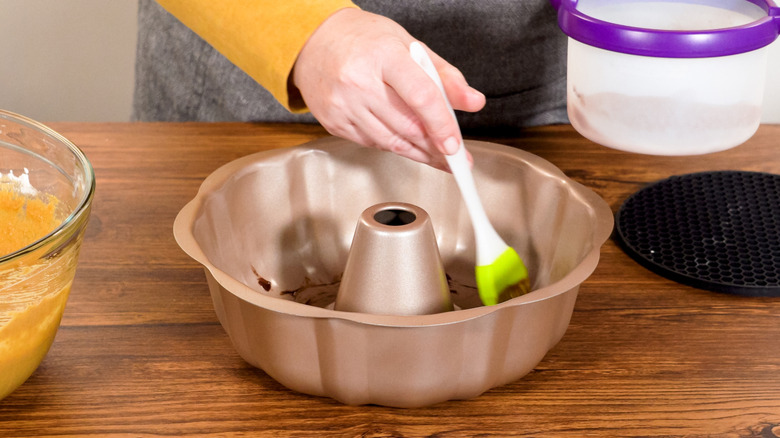
I am sure that most people know to do this, but if it is your first time making a Bundt cake, it's possible that you'll forget to grease the middle part of the pan. The part that sticks up in the center of an upside-down pan is what makes the hole in the cake. Since that part touches your batter too, it needs to be greased (and floured) too — just as generously as you've done the edges.
Make sure to repeat whatever you've done to grease the rest of the pan on the middle, and use a brush or your hands to make sure the grease is evenly distributed. When dusting with flour, lift up the pan and tap the flour all around the pan to make sure flour falls onto the center part, turning as you go so that you get every part dusted. This way, you'll ensure the cake doesn't end up sticking to the middle of the pan, and the hole in your Bundt will have a smooth edge all the way around.
5. Filling the pan with too much or too little batter
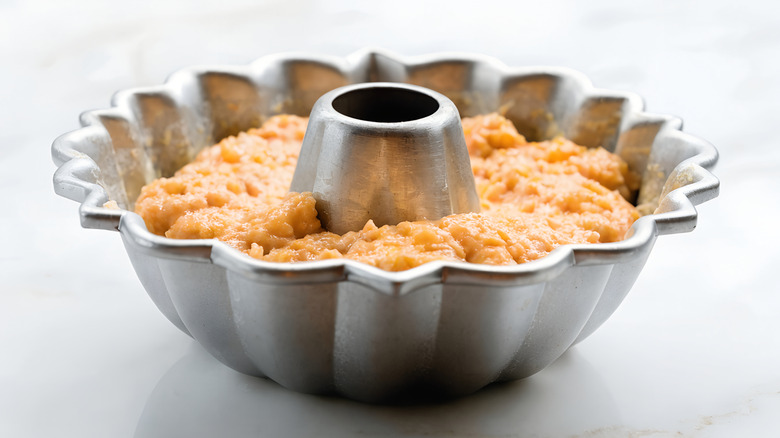
This step requires you to use your discretion. When you're filling up your Bundt pan with cake batter, you want to make sure you're adding the right amount. As with using a pan that's too large, if you add too little batter, the cake will come out shorter and more overbaked than you want. Bundt cake tins cook your cake from the inside as well as the outside, so you can overcook the batter if you don't use enough in your tin. At the same time, if you overfill the pan with batter, the cake will be wonky and rounded at the bottom, and you run the risk of undercooking it.
It's easy to tell if you've overfilled your cake tin. Still, a good rule of thumb that I always use is that the cake pan shouldn't be more than two-thirds of the way full of batter. Using this general rule has ensured my cakes cook evenly and come out with a nice, flat bottom.
6. Using any cake recipe for a Bundt
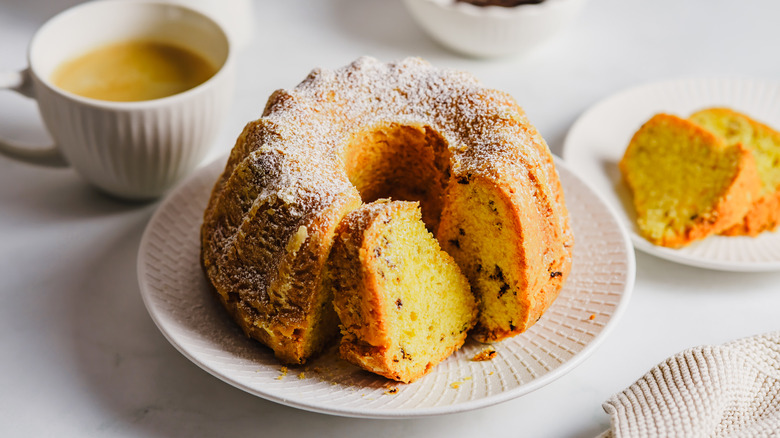
It might seem like any kind of cake recipe will work in Bundt form, but actually I've found that denser cakes work better. Cakes with a finer crumb won't hold together in a Bundt tin. The shape of the pan, the way it bakes from the inside, and the fact that it needs to essentially "fall" out of the pan once it's baked, creates plenty of opportunity for something to go wrong.
I suggest using pound cake recipes or other denser, less delicate cakes like fruit cake, or even banana bread. This means you should avoid your favorite fluffy and airy sponge cake or something like a chiffon cake, for example. If you really know your way around baking, you may be able to figure it out, but to give yourself the best chances, avoid fine-crumbed cakes as a whole.
7. Not tapping the pan to spread the batter
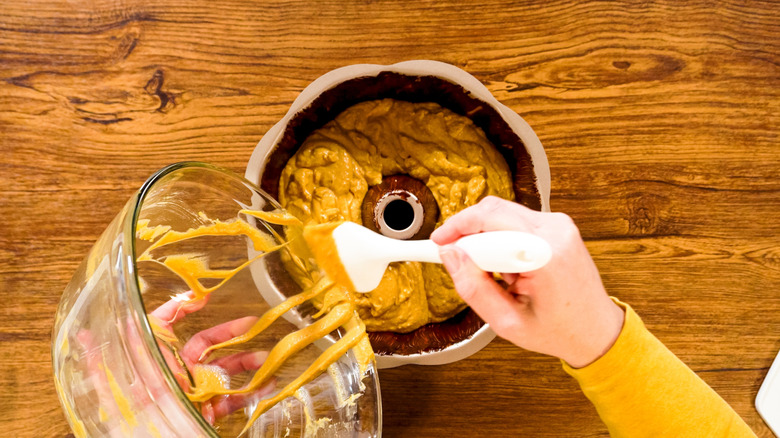
Once you've poured the cake batter into the pan, you should give everything a good tap to remove air bubbles and get the batter settled evenly. Forgetting this step can give you an uneven bake in the end, so it's not one worth skipping. Naturally, this depends on the type of cake batter you're using. If it's a looser batter, you may not need to do this. However, given that you should be making denser types of cakes in your Bundt pan, a good tap is necessary.
To tap your pan, lift it up a little off the counter with both hands and slam it down a few times. It doesn't have to be super hard — just enough that the batter lays evenly. If your batter is really dense, like a thick fruit cake that doesn't move with ease, then you may want to tap it a bit harder than usual to make sure any trapped air comes out.
8. Unmolding the cake while it's still hot
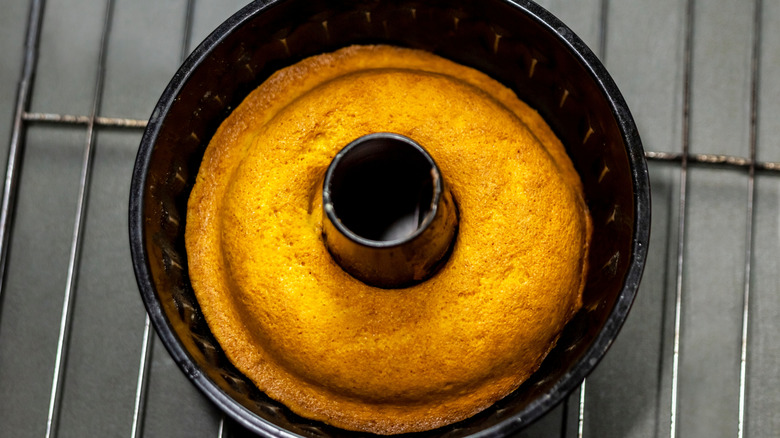
Unmolding is one of the most delicate steps in making a Bundt cake. This is where you can make or break your cake. Many people make the mistake of doing it while the cake is still too hot. Perhaps it's because people assume it needs to be tipped out before it cools or because the smell of the cake is just so tantalizing and you want to eat it sooner than you should. However, if you don't exercise some patience, it's more likely that you will end up with a broken cake that's got bits stuck to the pan. Plus, you can also end up burning yourself!
Always wait for your cake to cool sufficiently before you flip it over and attempt to unmold it — even if you've greased it really well and you think it's going to slip right out. You've put all the effort into making a good Bundt cake, a few more minutes is worth waiting for. I recommend waiting at least 15 minutes. Make sure to wear some oven gloves or mitts as the pan will likely still be too warm to handle with bare hands.
9. Sticking a knife in to dislodge the cake
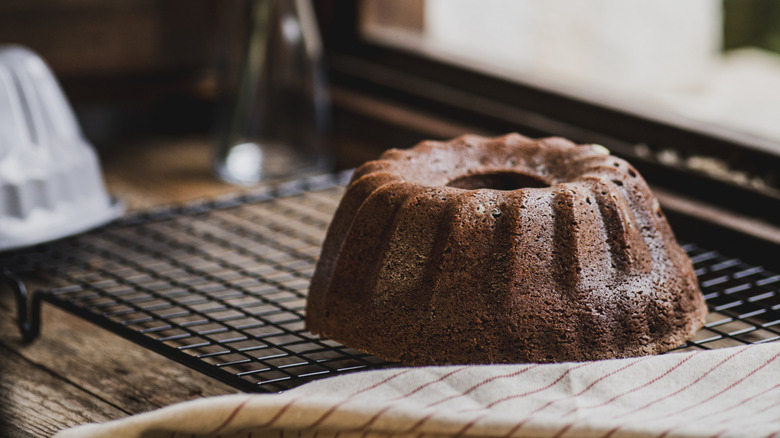
You may want to physically dislodge the cake all around the pan before you flip it over. However, with Bundt cakes (and all uniquely shaped cake pans), it's not as simple as sticking in a knife all around. Obviously the pan doesn't have smooth edges, and using a knife will likely scratch your pan. Plus, since Bundt pans tend to have a non-stick coating, you're probably going to cause damage to that layer if you use a knife.
Keep that knife far away, but if you must get something in there, use a thin silicone spatula instead. It will help you separate the cake from the tin without damaging the pan or the cake. Alternatively, if you've followed the steps of greasing and flouring the pan sufficiently, let gravity do the work. Before flipping the pan upside down, I like to hold it on its side and lightly bang it on the kitchen counter. Turn it, and repeat until you've banged all the way around. This helps to loosen the cake from the edges before you flip it over.
10. Adding glaze on a warm cake
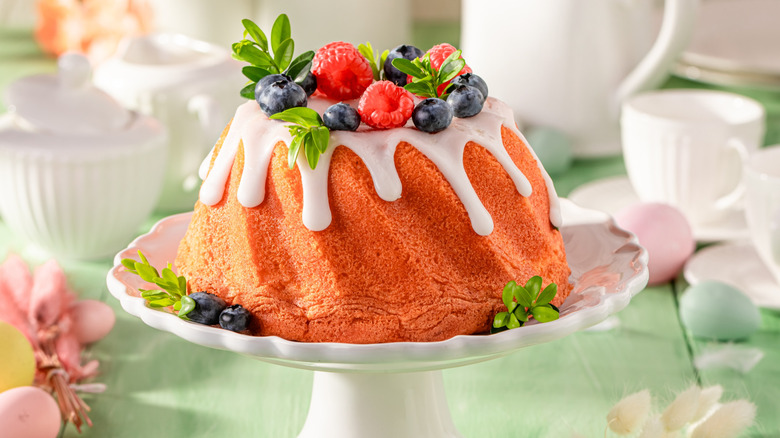
A Bundt cake is already pretty enough that you don't have to frost it to decorate it. A simple glaze can be beautiful and delicious, which is why many people choose to take this route. Still, you want your glaze to drape all over your cake in a delicate way, and adding it to a cake that's still warm will prevent it from doing so. If your Bundt is still warm, the glaze, which is mostly made of sugar, will melt when it touches the cake. This will cause it to thin and run off the sides, ending up on your plate or table rather than your Bundt.
Even if you think the cake has cooled a bit and "should be fine," the glaze won't stay put if it's even just a bit warm. Believe me, I've been there, and it's so disappointing. Let your cake cool completely — meaning it's not warm to the touch. Then get to glazing and watch your magnificent creation come to fruition.
11. Only sticking with safe flavors
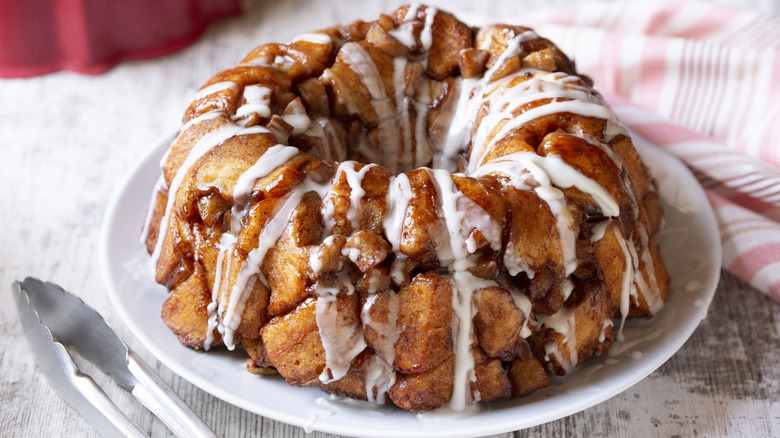
If you're a little nervous experimenting with Bundt cake flavors, you may be missing out on some truly delicious possibilities. I've found that often people stick to plain vanilla, chocolate, or coffee Bundt cakes. But just because it may be a little trickier to get the baking just right with an unconventional Bundt cake flavor doesn't mean you shouldn't venture out a little bit. As long as you look for denser cake recipes, you should have success. You can even play with fruit, liqueurs, rainbow sprinkles, or other fillings.
Give your sweet tooth some satisfaction by trying out this sticky toffee Bundt cake recipe, or sneak some booze into this spiced rum Bundt cake. If you love cheesecake but you're also a chocoholic, then try this combo in a chocolate and cream cheese Bundt for a tangy, rich-yet-light cake that's sure to impress your dinner guests. Lastly, if you want to try something totally different, go for a fudgy blondie texture with this blondie Bundt recipe. It's dense and bound to work well in your Bundt pan.
12. Thinking a cake stuck in a pan is unsalvageable
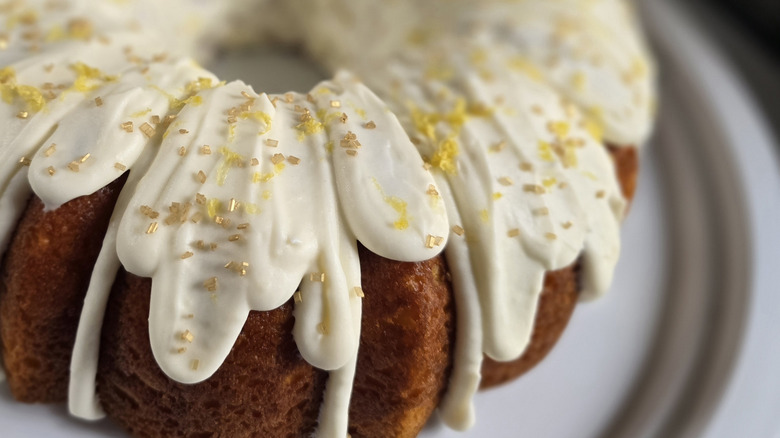
Now, if the worst has happened and your Bundt cake didn't come out of your pan in one clean piece, it doesn't mean you should toss it. It happens to the best of us, and while it won't look as pretty as you intended it to, it will still taste good. Don't waste a perfectly good cake that simply needs some decoration to hide the flaws. If there are large chunks of cake stuck to your pan, get each piece out of the tin with a silicone spatula and use your hands to fill in the rest of the cake to the best of your ability. Once you've pieced it back together, there's nothing that a bit of frosting or ganache won't hide.
Pipe some thick frosting onto your cake to fill in the gaps, or spoon over a layer of ganache all over. If it's still bumpy, use some fruit like strawberries, blueberries, cherries, orange slices, or whatever fruit you can cut up into shapes and lay them over the cake. This should have salvaged your cake and actually turned it into something beautiful. So don't despair if things didn't go as planned; just use decorative elements to cover all the imperfections.
13. Not cleaning every nook and cranny in the pan
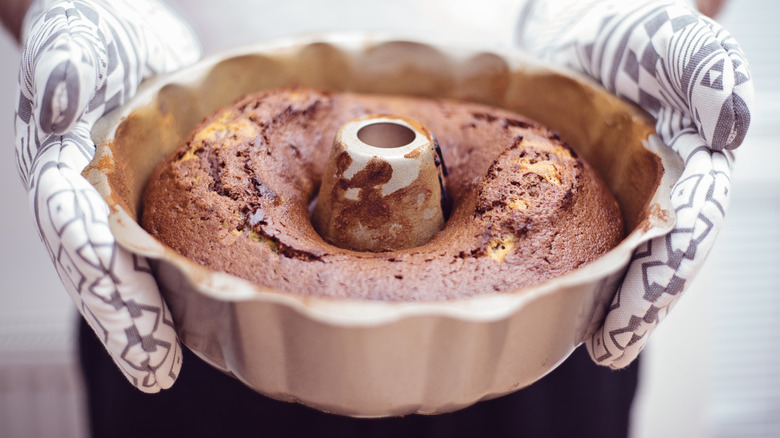
You might think that cleaning isn't an important step to making good Bundt cakes, but Bundt pans are notoriously hard to clean, and it can ruin your next batch if you don't manage to get all the cake residue off. A Bundt pan has too many corners, ridges, and angles to be easily cleaned with a quick wipe of a soapy sponge. Just as you used your hands to grease it, let your fingers guide you when you clean it so you can feel all the parts that still have cake crumbs stuck to it.
If your pan is dishwasher-safe, always give it a check with your fingers once it comes out of the dishwasher. I find that my hands can always feel things that my eyes don't catch. Just stay clear of wire sponges, which can scratch the non-stick layer. Warm water and a soft, soapy sponge should do the trick.