

Bobby Flay Tells Us His Absolute Best Burger Tips - Exclusive
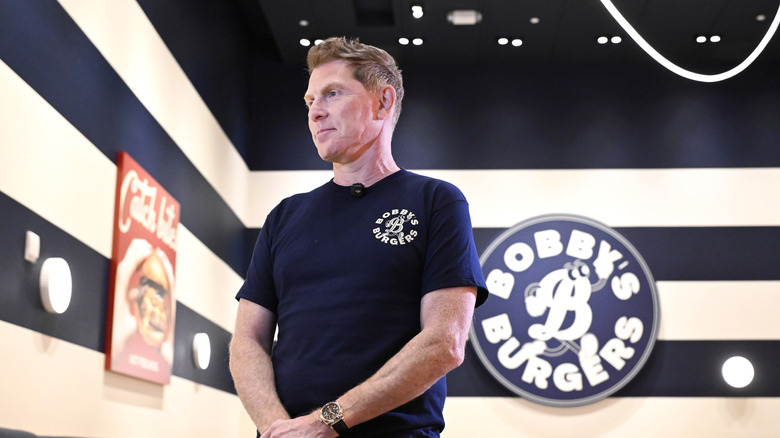
It's fair to say that everyone loves a burger — whether you slather yours with a creative store-bought sauce or stick to the classic mustard-and-ketchup combo, play with different seasonings and spices or swear your allegiance to salt and pepper, or enjoy it in a fast-food drive-thru or at a backyard barbecue with friends and family. This sandwich is the perfect canvas for culinary and flavor innovation, and no one knows that better (and embodies it more) than celebrity chef Bobby Flay. Flay's career has spanned almost 30 years of television shows, cookbooks, and restaurant openings, though he comes back to the humble burger with his chain of Bobby's Burgers restaurants, which have locations around the country.
We had the opportunity to have an exclusive sit-down interview and talk burgers with Flay at the grand reopening of Bobby's Burgers at the Mohegan Sun Resort & Casino in Uncasville, Connecticut. He shared not only his definition of the perfect burger, but also what home cooks and barbecue enthusiasts should keep in mind when preparing them at home.
Think about the components of your burger individually
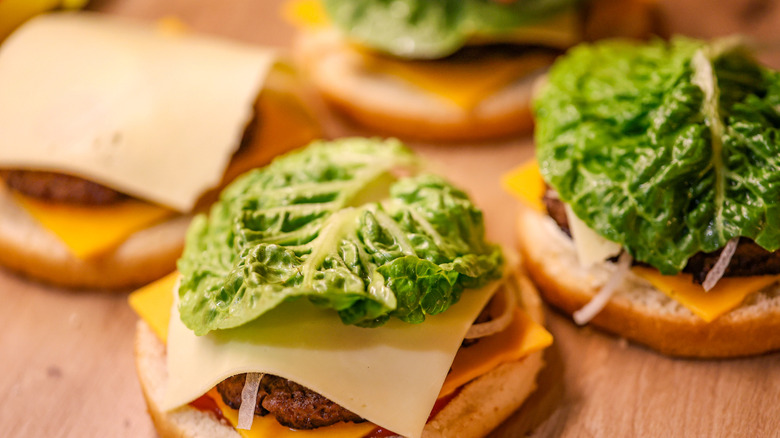
Have you ever heard the expression, "bigger than the sum of its parts?" It's a sentiment that applies to a lot of things, but it's especially relevant for burgers.
"You know, when I look at a burger, I think of it as the quintessential sandwich," celebrity chef Bobby Flay says. "But what's really, I think, important is to take every component and think about it individually and after that, think about how it's going to work together. Because that's something that's really important." Flay goes on to explain the importance of how a burger eats, and how it should eat. This is what he calls a satisfying result — mentioning things like the quality of the meat, its ratio and seasoning, and how these elements can enhance the natural beefiness of the burger.
That being said, you can't try to fix a burger made with quality meat by changing up the seasoning, nor can you hide a subpar patty with a mountain of gimmicky toppings or fancy sides. Individual components have to work together as a team to create a stellar bite — and the home cook is responsible for running those team-building exercises.
Use an 80/20 beef blend
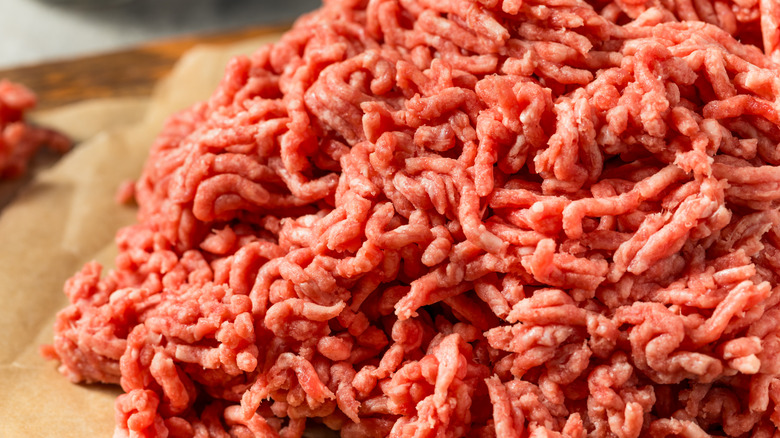
Great burgers start with great beef, plain and simple. "The ratio of beef to fat is very important to me as well," Bobby Flay told us. His go-to blend for making burgers is right around 80/20. "I mean, I think that's kind of the perfect amount for flavor and juiciness, et cetera," he says. This is a common ratio found in grocery stores, and it's beloved for its blend of richness and flavor. It's the ratio that other celebrity chefs, including Ina Garten, stand by, too.
However, 80/20 is not the only option in the burger world, and some people prefer more fat, opting for a 70/30 mix instead. While an 80/20 will produce crispy and moist smash burgers, some folks will go for the 70/30 option because it essentially cooks the burger in its own grease, like a shallow-fry. While this fat content results in an indulgent burger, it puts you at greater risk of flare-ups if you're cooking it on a grill, and it can result in a greasy mouthfeel. For Flay, this much fat is excessive, and he thinks the structure becomes loose and flab-like. "You know, it's almost like too rich. Let's face it, we all like rich foods, but I think there's a limit to it," he says.
Don't neglect your seasonings, but keep them simple
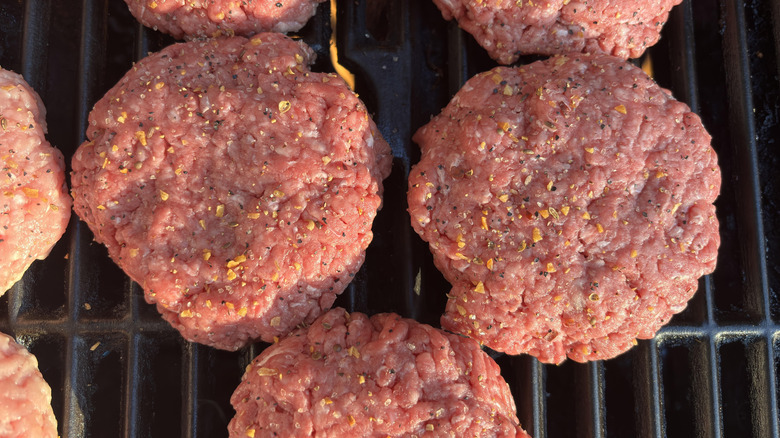
Seasoning is an essential part of building a burger, as it enhances the natural flavor of the beef. For Bobby Flay, this means turning to tried-and-true burger seasonings: salt and pepper. Flay heavily seasons patties with salt and pepper on both sides. He explains that this allows home cooks to easily manage condiments and other elements they want to incorporate in their burgers. He tells us that this seasoning method — on the outside of the patty rather than the inside of the burger — helps to create the crust and gives folks a great textural contrast.
Now, there are others who prefer to get creative with their seasonings, but as Bobby Flay notes, there comes a point at which those seasonings transform the burger into something it's fundamentally not. "We don't put anything in the burger [at Bobby's Burgers]. To me, that's meatloaf, and we're serving burgers," he says. "I know a lot of people like to do that, they like to put garlic or onions or garlic powder or whatever it is inside the meat and then mix it together. We don't do that. I want it to taste like beef but I want it to be enhanced by the different flavors." In short, let the flavor of the meat do the talking, and let the seasonings be the megaphone.
Avoid overworking the meat
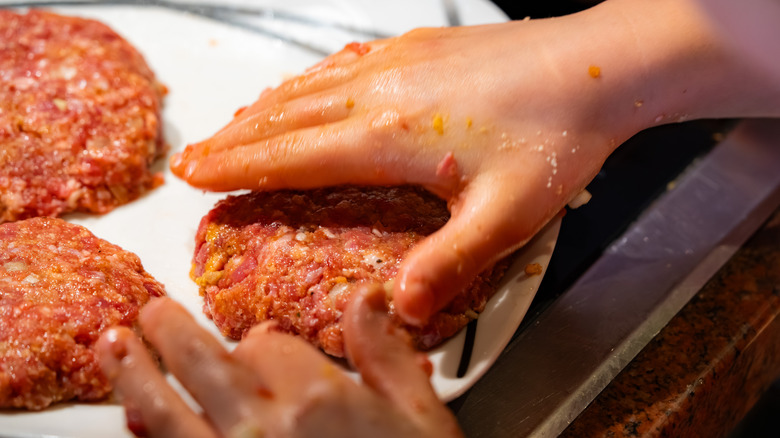
We'd characterize burgers as being very unfussy and able to take a joke. However, one of the things that the patties — and ground beef as a whole — doesn't appreciate is being overhandled. When you poke and prod your meat, like when you're mixing in the seasoning or shaping the burgers, you're slowly releasing myosin, which causes the meat to turn jelly-like and dense. It'll also cause your burgers to shrink. The secret to avoiding it is to handle your meat as little as possible.
Bobby Flay directly called out overworking as one of the biggest issues people at home make with burgers. "[Home cooks] go to the store and they buy ground beef from the butcher or whatever and they overwork it, which is a very, very common mistake," he says.
Per Flay, time and efficiency are the key to getting burgers from grounds to bun with the least amount of overworking possible. "We basically just want to get it to that patty form. It doesn't have to be perfect. Do it as quickly as possible, with the least amount of movement as possible. That's very important for how the juices run through it," he says.
Resist the urge to flip the patty frequently
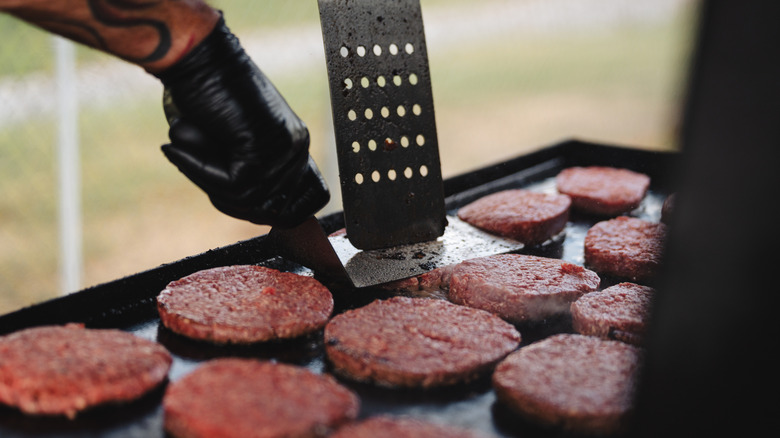
Flipping burgers constantly just seems like the thing to do, especially if you've spent time around self-proclaimed grill masters who almost subconsciously move their patties every couple of minutes. But this is perhaps one of the biggest mistakes you're making with burgers at home. As Bobby Flay says, "Don't keep flipping and turning it because you're not gonna have that direct heat." The heat is what gets the perfect sear on the outside of the burgers. Otherwise, you're setting yourself up for gray patties, per Flay. Besides destroying the crust that you worked too hard to create, flipping burgers too often can also ruin them because it causes the patties to expel their juice, resulting in a drier bite. The best thing to do instead is to leave your patties alone as they're cooking.
Flay notes that some people just assume that they should be constantly flipping their burgers on the grill. But in reality, they should really only be turned once. The bottom should be perfectly crusty (which you'll get from following his aforementioned season-the-outside trick) before you give it a quick flip.
Cook the burger on a flat-top or cast iron skillet
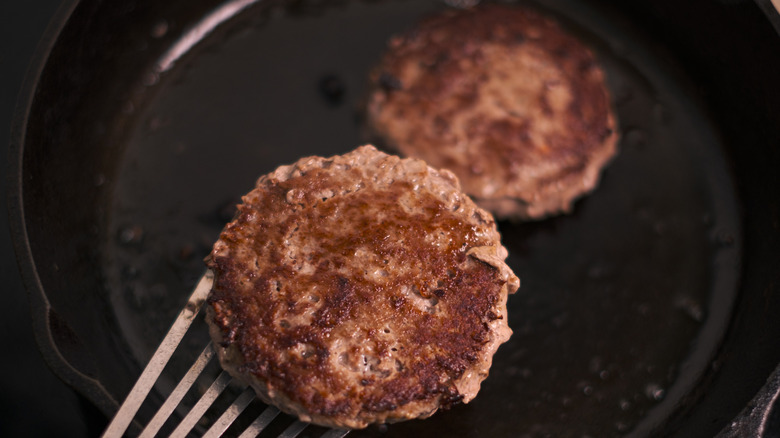
The surface on which you cook burgers matters. At Bobby's Burgers, the patties are cooked on a flat-top grill. This method is superior for cooking burgers, per Bobby Flay, because "they're basically cooking in their own juices as they cook." When you cook your burgers on grill grates, all that moisture and fat seep down through the grates — lost into the abyss — where they can potentially cause a flare-up.
Obviously, not all home cooks (aside from those with a Blackstone) are going to have access to the same flat-top as a restaurant. But one easy and worthwhile alternative, per Flay, is a cast-iron skillet. "It kind of emulates the very hot flat iron griddle like we have," he says. Cast iron is an exceptionally good material for high-heat cooking because it maintains its heat, meaning you can get it ripping hot and help create that desirable crispy coating on the outside of your patty. Save those stainless steel pans and non-stick skillets for something else.
Cook it medium
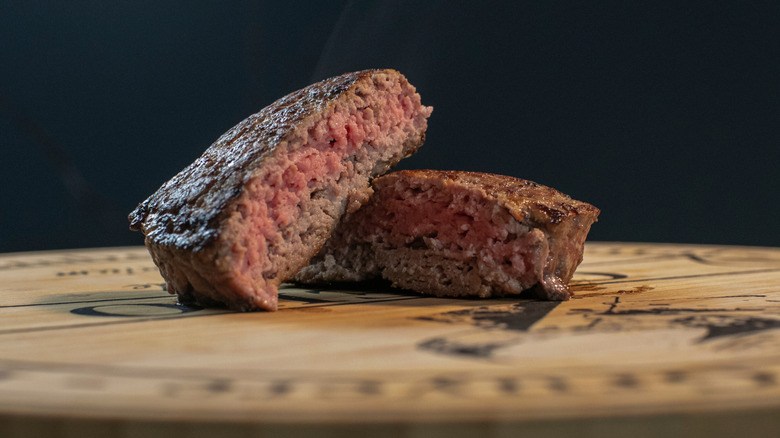
Restaurant-goers and burger lovers know that the level of doneness is an important question in the whole burger-cooking process. For Bobby Flay, the answer is always medium. "I want the fat to melt a little bit more than medium rare ... It's juicier," he says. And for many cooks, medium is the perfect temperature — the burger still has a subtly pink center, with a juicy and moist texture.
While it's easy to tell the staff how you'd like your burger prepared, it is harder to tell when to flip your burger and pull it from the heat to ensure it has the right amount of color and crust that you want. Flay told us that an internal thermometer is the best thing you can use for this. For medium burgers, you'll want to pull the patty off the heat once the internal temperature reads between 140 and 145 degrees Fahrenheit.
Determining when to pull the burger off the grill comes with years of experience. "I think that there's no substitute for experience in this kind of stuff, but the more you do it, the more you'll be able to look at the burger and know that it's basically where you want it to be," Flay says. He recommends looking for a crust on the sides to tell when it's done, and also letting it rest for a few minutes, presumably so the juices can redistribute.
Use steam to melt your cheese
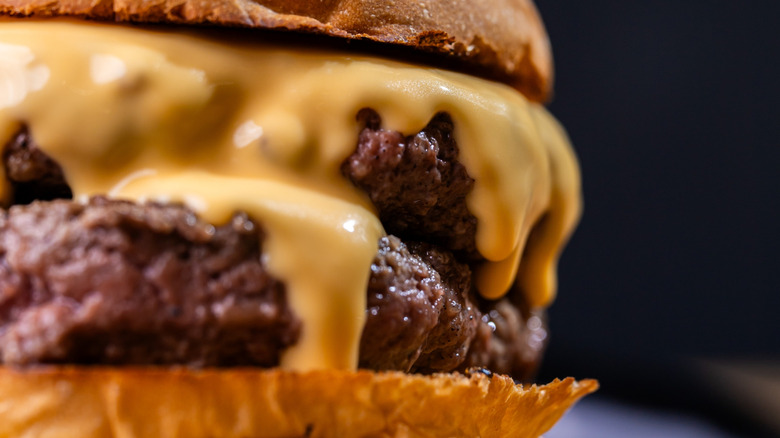
In our interview with Bobby Flay, he made it very clear that he is an American-cheese-on-a-burger man (and we don't blame him). However, he also made it abundantly clear that he is a proponent of melty cheese on burgers. "It drives me crazy when I order a burger, and they don't spend the extra 20 seconds to melt the cheese. I'm like, please melt the cheese. It tastes better and it looks better," he says.
If you just throw a slab of your favorite Kraft Singles on the patty, it may not melt by the time the patty is completely cooked (or even worse, you risk overcooking the burger in order to melt the cheese). Luckily, Flay has a solution: Steaming the cheese on the burger. Once the burgers are cooked on the flat-top, "we put the cheese on top, and then we cover it, and right before we cover it, we take a splash of water, and we create the steam," he says. He notes that the steam serves several purposes: It helps cook the edges of the burger that the direct heat didn't get to, creates a juicier patty, and helps the cheese melt. If you're trying this at home, you might use a pan lid or flip another skillet on top of your cast iron to help trap that steam.
Get creative with your toppings, but don't go overboard
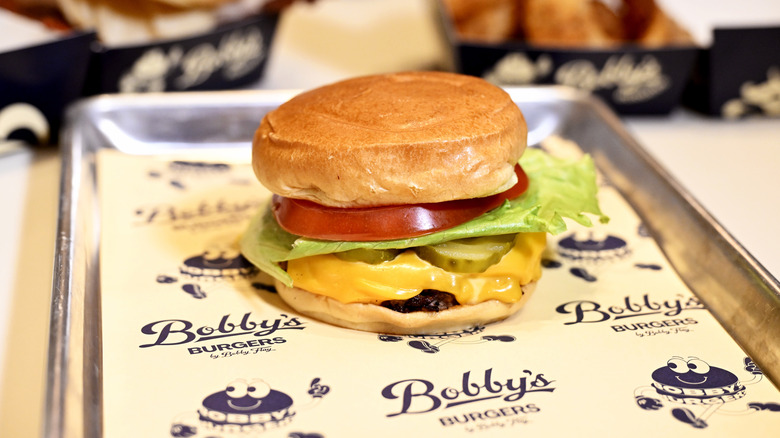
Just because a burger is versatile doesn't mean you should just throw toppings on it and hope that it sticks — literally and figuratively. For one, adding too many condiments muddles the flavor of your burger and detracts from the elements and profiles that you worked so hard to build. "It's almost like, you know, when you were a kid and you were water painting and had 900 different colors and all of a sudden it just turned brown. To me, that's what happens with too many condiments on a burger," Bobby Flay says.
We asked Flay about this balance, and what is too much. He recommends sticking with one sauce — be it ketchup, mustard, mayonnaise, or a special burger sauce, then adding another element, like mushrooms. "But I don't think you need anything else other than that. If you start piling all these things on top of it, you lose it," he says.
That said, Flay is not above adding whimsical additions to the burger. He is known for his Crunchburger — which pairs a classic burger with crispy potato chips. When we asked him about other fun toppings, he offered some unique suggestions. "I like to put things that have textures to them, different kinds of pickles, like pickles, red onions ... cucumbers, or coleslaw. Things that have a little bit of crunch to them, a little bit of freshness to them, but also flavor," he says.
Toast the bun
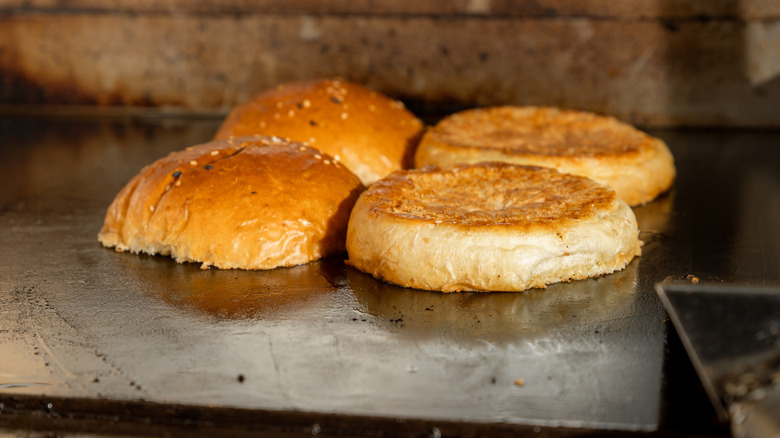
The burgers at Bobby's come with brioche buns, which are the gold standard for burgers. They're hearty enough to stand up to wet toppings and offer their own buttery flavor to the rest of the sandwich. That said, besides worrying about choosing the right bun, you should also learn how to prepare it for maximum flavor and texture. For Bobby Flay, that means toasting it — always.
We did ask Bobby whether he likes to slather butter on the buns before toasting. The butter will help make them crunchier, impart flavor, and it can even improve the structural integrity of the sandwich — especially if you're working with wet or juicy toppings. However, you do risk making the burger too rich (yes, there is such a thing). "I know a lot of people [butter their burger buns]. I think that's overkill. And also, there's tons of fat on cheese, there's tons of fat in the burger. It's enough fat," he says.
Pair it with the right sides
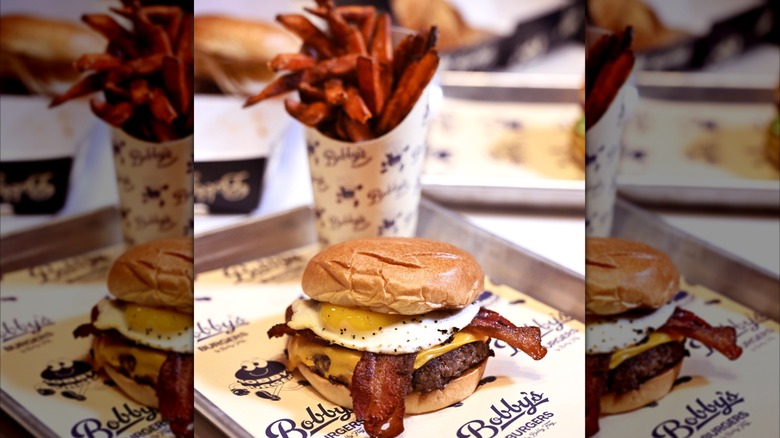
There is a reason why burgers and fries are such great friends. The salty, crispy fries add to the textures at play, while giving the palate a reprieve from the rich, well-topped burger. Not pairing your burgers with proper sides would be doing them both a disservice.
We asked Bobby Flay about his favorite sides to pair with and serve with burgers, and he pointed us to some of the mainstays on Bobby's Burgers' menu. While he does say there's something good about sweet potato fries, the onion rings do have his heart. "I think the onion rings are special," he says. The rings at Bobby's are crispy, light, and boast tons of flavor, per Flay. If you're preparing an already heavy burger, eating them with crispy, light onion rings — instead of starchy french fries — could make your burger experience all the more decadent, all while putting what he calls the "quintessential sandwich" at the forefront.