

The Blueberry Myth Grocery Shoppers Keep Believing
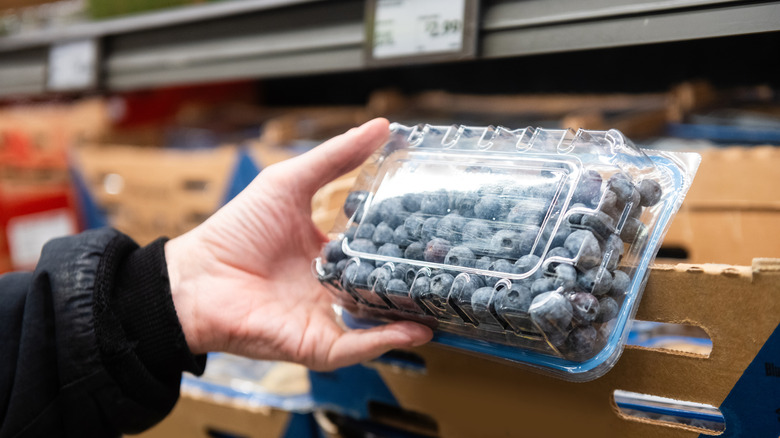
The sun is shining, the grass is looking greener, and everyone's calendar is quickly filling up. It can only mean one thing: Summer is nearly upon us, and it's finally time to enjoy all of our favorite fruits. Stone fruits and melons are classics, of course, but one of the finest joys of summertime is biting into a sweet, juicy blueberry. If this is what you've been dreaming about all year then it's about time you get to the store — but not before you hear one of our top blueberry shopping tips: don't be fooled by larger berries.
Tasting Table spoke to a range of experts about the mistakes people make when buying blueberries and one of the topics that came up was basing decisions on size alone. Many of us assume that bigger means better, but this isn't the case when it comes to blueberries. Florencia Cusumano, head chef at Butler bakeshop in New York City, told us that smaller blueberries can actually pack more flavor, while the big boys can taste bland. She said, "Bigger isn't better here. Oversized blueberries can be watery and dull in flavor, while smaller ones often carry a more concentrated sweetness."
How to pick the best blueberries
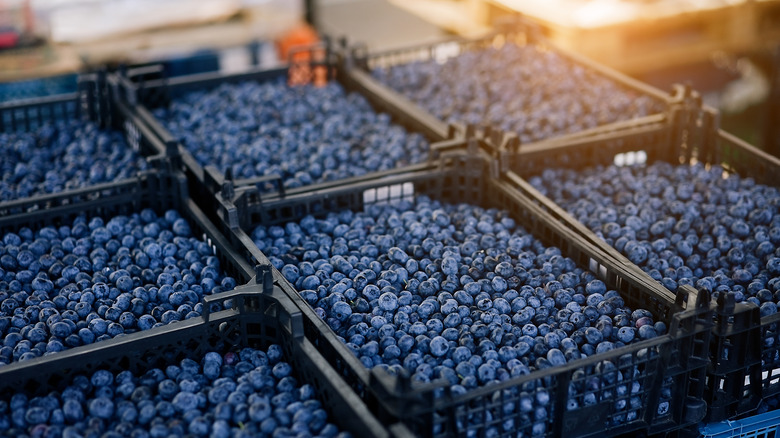
Wild blueberries are a prime example of when small means mighty. Unlike the cultivated berries most of us are used to, wild blueberries grow, well, in the wild. They are native to North America and are commonly found growing naturally in fields across Maine and Canada. Wild blueberries have a higher skin-to-pulp ratio, which results in extra antioxidants and a distinct, more fragrant flavor. These tiny heroes are significantly smaller than cultivated berries and offer a sweet shake up for blueberry desserts or a way to offset acidic vinaigrettes.
Smaller cultivated berries can also pack just as much flavor as their larger counterparts. The size of blueberries depends on a number of factors, like changes in sun exposure or water, and the taste can vary greatly between each batch you buy. This is because there are a number of different varieties of blueberries being grown by the country's largest producers, and the type usually isn't stated on the packaging.
So, instead of focusing on the overall size, look for uniformity. A box of blueberries ranging in sizes indicates a mixed harvest or inconsistent ripening, meaning that some of the berries could be mushy and bland and others sour. Try to find ones with a deep purple color and smooth, firm skins. And if you're growing blueberries at home, taste them before picking.