

In A Pot Vs In The Ground: Which Is Best For Growing Blueberries
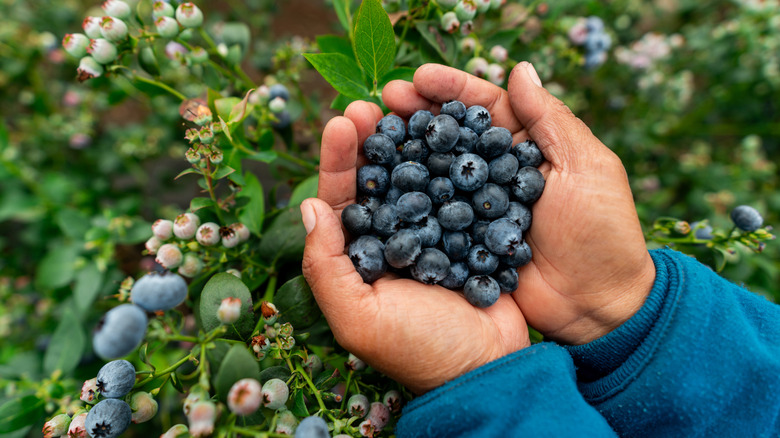
Plants, in general, want to be growing in the ground. That's where they come from, and where the full ecosystem exists: organic matter decomposing, microbes cycling nutrients, layers of sediment filtering moisture, and of course, worms and other bugs squirming through, aerating the soil and pooping fertilizer. This is why blueberries will generally do best planted directly into the earth — but only if conditions are right. Raised beds and containers are still valid gardening strategies, and the best choice depends on what you can offer the plant.
Healthy, open dirt is a self-regulating environment that does a lot of the work for you. The subterranean ecosystem's stability is built into the structure. It is a large, layered system that recycles itself, stores moisture, regulates temperature, and supports vast, diverse microbial and insect communities. A container is a closed system. Where the earth absorbs and rebalances fluctuations, a container reflects them, heating up and drying out more quickly. Whatever nutrients are in that soil are all the plant has access to, unless you actively replace or supplement them, and water can drain too quickly or get stuck. It does not mean container gardening is inherently inferior, but it does mean that the plant will want you to be attentively managing every variable.
There are times and types of plants that call for potting. Mint and horseradish, for example, spread aggressively through rhizomes, which are underground stems that send up new shoots wherever they travel, and un-contained, they will completely take over and choke out the rest of your landscaping. Blueberries are not that kind of plant. They stay put, growing as shrubs with a fixed base, like a bouquet stuck in the ground. Their root systems do not spread far, so they depend heavily on the soil quality in their immediate surroundings.
Support, not containment
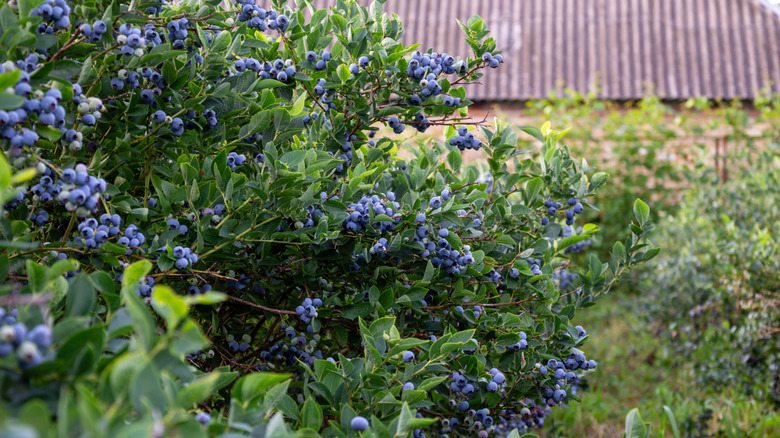
The blueberry is a wild plant that has been selectively bred for certain traits, like producing a lot of sweet fruits. It is a woody, perennial shrub that grows in a series-system of canes, sending up new growth while older wood continues to produce fruit more slowly. Given the right conditions, they can live and produce berries for decades, without a ton of tending or intervention. This is because they are relatively close to their wild ancestors — less like the highly delicate ornamental rose and more like the still slightly wild thistle relatives, the artichoke and cardoon. Because of this, blueberries do not require constant intervention, but they do depend on a stable environment, and occasional pruning can help keep the plant growing and optimally productive.
The trickiest environmental factor is soil. Blueberries need acidic conditions, typically in the range of pH 4.0 to 5.5, along with high organic matter and good drainage — but consistent moisture. Their roots are shallow and fine, which makes them efficient at absorbing nutrients but sensitive to drying out and soil chemistry imbalances. In the ground, especially in naturally acidic, organic material-rich soils, those conditions are easier to maintain over time. Natural mulch from falling leaves helps retain moisture and gradually contributes organic material, and the surrounding soil forms a buffer against sudden weather changes.
When planted directly into suitable ground, blueberries thrive, because the plant can settle securely into a long term rhythm. If your plants are happy, you will have a bounty for blueberry wine and from-scratch blueberry pie filling. But not everyone has an acre of open land with perfect, nutritious-but-acidic soil to play FarmVille with, and that is where containers come in.
Bonsai blueberry
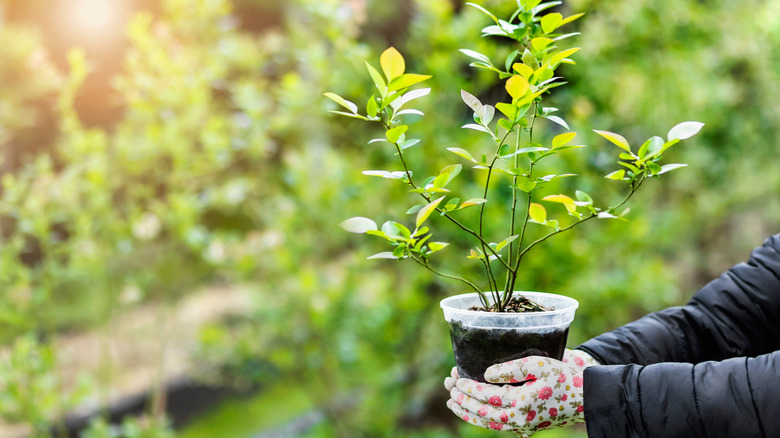
If your native soil isn't acidic enough, you are trying to maximize the harvest of a meager patio or balcony space, your landlord won't let you dig into the yard or you might move soon, or if you just want more control over the growing environment, blueberries can absolutely be grown in pots. In some cases, containers are actually the better option because you can create the exact soil conditions the plant prefers, instead of trying to modify the earth.
That control implies being hands-on. A container is not set-it-and-forget it, and nothing is being replenished, unless you add it yourself manually. Water moves down, through, and out quickly, carrying nutrients with it every time, meaning the soil becomes depleted, and will need to be refreshed every few years— check your kitchen for DIY fertilizers. Roots are confined to a limited space, which can lead to crowding and tangling as the plant grows over time. The container itself is more exposed to the ambient climate and temperature swings, heating up faster in the sun and cooling more quickly at night. Because blueberry roots are shallow, they need frequent watering to avoid drying out.
To make it work, start with a large container that plans for the baby plant to get bigger over time and an acidic potting mix designed for plants like blueberries or hydrangeas. Keep the soil consistently moist but not waterlogged, and plan to amend or refresh periodically to replace what has been lost. Pairing multiple plants can improve pollination and yield, and placing the container where it gets steady light without excessive heat will help maintain balance. Growing potted blueberries isn't hard, or worse, but it means you are stepping in to do the work that the ground would normally handle on its own.