

10 White Fish Worth Buying And 4 To Skip
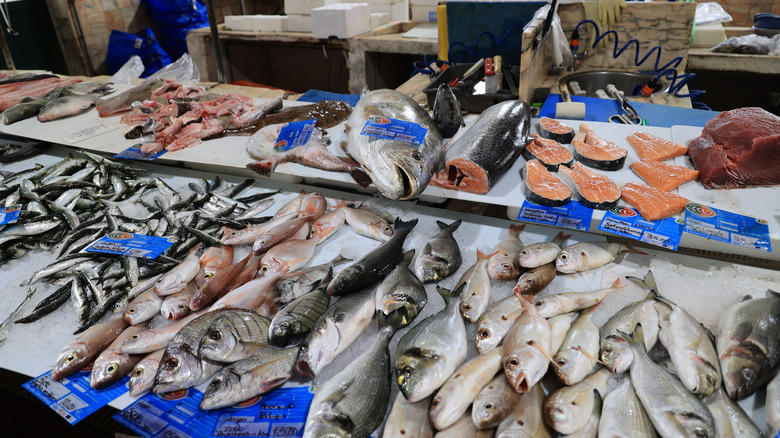
While a certain famous tuna brand might feel otherwise, for cooks, white fish are the real "chicken of the sea." The term "white fish" is a loose one, covering a range of both fresh and saltwater varieties, with little in common except the color of their flesh.
Yet, white fish are surprisingly interchangeable in most recipes. They're mostly mild-tasting, versatile, well-suited to a range of sauces and preparation methods, and a lot, though not all, are quite affordable. Most kinds of white fish are well worth buying, depending on your tastes and your budget, but there are a few to avoid for various reasons.
I'm a trained chef and former restaurateur, with two seafood-centric restaurants under my belt, and this is a topic I'm close to. My father's family fished for generations, and I myself participated briefly in the inshore small-boat fishery as a teen. Drawing on that personal and professional background, here are 10 white fish that I think are worth buying, and four more you should avoid.
Buy: Cod
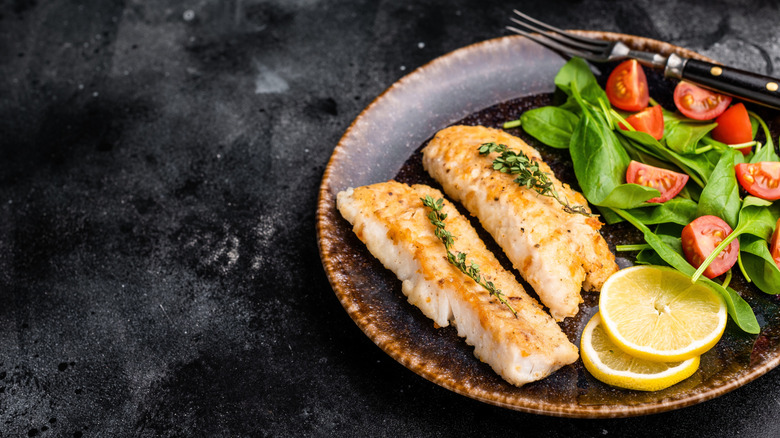
The culinary case for buying cod is a slam-dunk. It's white, meaty, and firm but tender, ideal for most recipes that call for white fish. For centuries, it was a staple food across Europe, harvested from local and North American waters. In fact, it was arguably the most important trade item in the Western world at one point in history.
Its sheer long-term popularity makes cod one of the most iconic of all white fish, but that popularity came at a cost. Eventually, the seemingly limitless population of Atlantic cod collapsed from overharvesting, ending a way of life for longtime fishing families like my own. Some still argue for avoiding cod on that basis.
Although cod stocks in the waters off New England and Atlantic Canada haven't rebounded fully, sites like Seafood Watch list plenty of sustainable options. Atlantic cod from many European countries and from certain fisheries in the U.S., are still a safe buy. So is Pacific cod, and cod certified by the Marine Stewardship Council (MSC). So by all means, aim to be selective in your purchasing (Atlantic cod from Canada, alas, is rated Avoid), but there's no reason you can't enjoy the fine selection of codfish recipes available to you.
Buy: Haddock
The cod family includes a number of close cousins, including hake, ling, and the freshwater burbot or "eelpout" that Midwesterners are familiar with. Of the species that are close kin to cod, the one you'll see most in stores is haddock, and it's definitely worth buying.
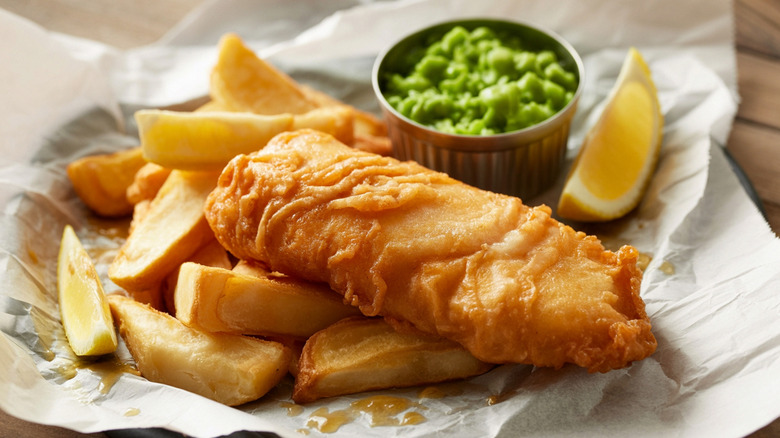
Haddock is similar to cod, but there are differences between them. You'll find haddock fillets are generally thinner and smaller than cod, for one. It's also more delicate, because the fillets are thinner and the individual flakes of muscle tissue are thinner than cod as well. While you can use haddock interchangeably with its bigger cousin in most recipes, you'll need to use a little more care not to break it. Haddock is a popular option for fish and chips, and it's what I used at my fish and chips restaurant.
Aside from its culinary virtues, haddock stands out for a couple of other reasons. I always have some in my home freezer because it's inexpensive compared to most other white fish, and easy to find. It's also sustainable: Seafood Watch hasn't flagged a single haddock fishery anywhere with an Avoid rating. So buy it when you see it and eat it in good conscience.
Buy: Monkfish
A lot of bottom-dwelling fish look rather nightmarish. Monkfish may not be the ugliest things in the sea, but they definitely have "a face only a mother could love." Picture a basketball filled with razor-sharp teeth, and you've got the idea.
Once you get past that outsized head, the tail of the monkfish yields firm, meaty fillets of pearly-white flesh, often tinged with pink. There aren't any fine bones to pick out, either, so monkfish fillets are the seafood equivalent of a pork tenderloin: just sweet, lean meat. Some go so far as to call monkfish "poor man's lobster," because the mild, sweet fillets resemble a lobster tail in size, shape, and arguably flavor.
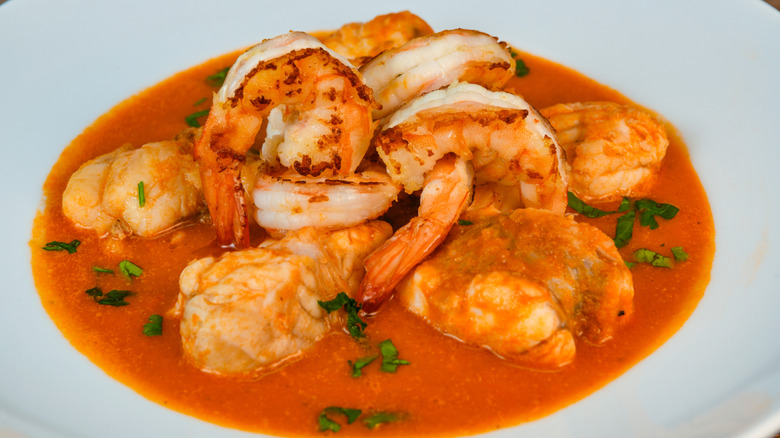
You can cook monkfish in many different ways, but recipes you'll find online tend to skew toward Mediterranean flavor profiles, because monkfish has long been prized in that region. So you'll see it served in tomato-based sauces, or wrapped in prosciutto, and it's an ingredient in classic French bouillabaisse. The only thing to watch out for is the source of your monkfish. According to Seafood Watch, trawl-caught or MSC-certified monkfish is sustainable, but monkfish taken with gillnets should be avoided.
Buy: Pollock
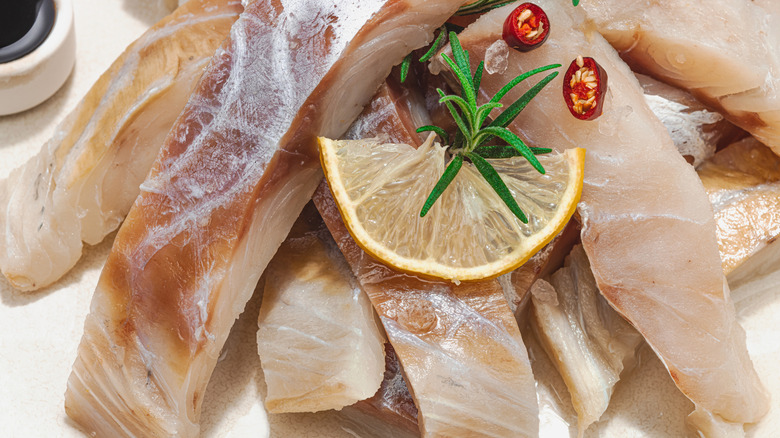
Pollock is another member of the extended cod family, available from both the Atlantic and Pacific oceans. The Pacific variety is widely sold in the U.S. as "Alaskan pollock." Atlantic pollock is a different but similar species (sold where I live as "Boston bluefish").
Pollock is lesser known than cod and haddock, but you've probably eaten it before. It's what you get in McDonald's Filet-O-Fish, for example, and it's the main ingredient in things like frozen fish sticks and imitation crab or lobster (surimi). When you buy it as fillets, you'll find that it looks a lot like cod or haddock. It can be used in most of the same recipes, though it's more delicate and not as firm as cod (one of the main culinary differences between them).
Pollock is usually a good value seafood purchase, being both versatile and relatively low-cost compared to other wild-caught white fish. Treat it gently, as you would with haddock, which is probably a more direct comparison than cod itself. On the sustainability front, most Pacific and Atlantic fisheries get a thumbs-up from Seafood Watch, though there are a few fisheries in Canada and New England that get an Avoid rating.
Buy: Sole and flounder
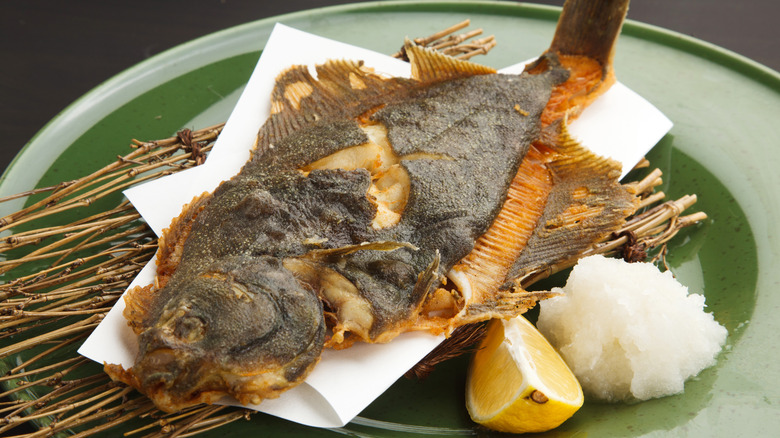
These flat-bodied bottom dwellers have a surrealistic, Picasso-esque appearance that fascinated me as a child. They're just as tasty as any other white fish, though.
Sole and flounder are sold in most supermarkets, either fresh or frozen. The oddball anatomy of sole and flounder can be confusing if you're used to other fish (you could say they're in "landscape" mode rather than "portrait" mode), but you'll get four fillets per fish instead of two. They're usually sold already filleted at the supermarket, though smaller fish are sometimes sold whole.
To fillet one yourself, feel with your fingertips for the place where the two fillets meet. Cut along that line with your knife, then turn the blade horizontally to take each fillet in turn from the top side; then flip it over and do the same for the underside. Portioning a cooked flounder works the same way, but you can do it with a fork or a fish server because the flesh is tender when it's cooked. From a sustainability perspective, sole is always a safe choice, and while a few flounder fisheries rate an Avoid from Seafood Watch, far more get a thumbs-up.
Buy: Skate
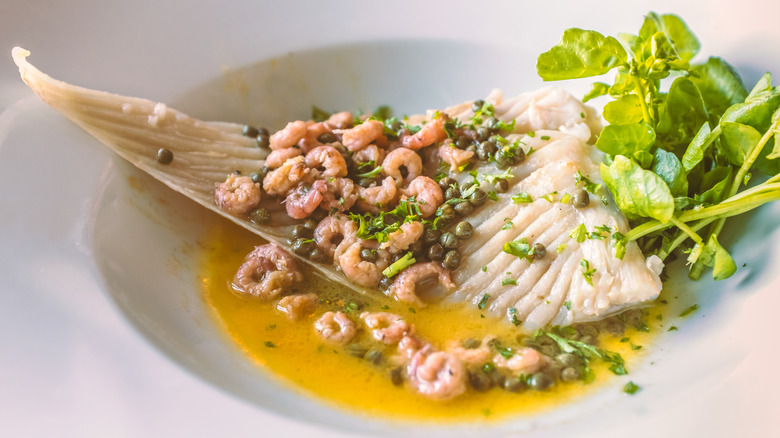
Skate is a particular favorite of mine. When I was young and living on the West Coast, it was something I bought regularly because of its availability and relatively low cost.
Skates are ray-like flatfish, and the edible portion comes from their wide, wing-like fins. They're moist and flavorful, with long strands of flesh in thick flakes. Since skate are in the shark family, they have cartilage, rather than true bones, running in a thick plate between the upper and lower fillets. That makes them super-easy to debone, either before or after cooking. All you need to do is slide a sharp knife between the cartilage and flesh, and it comes away easily. Skate is often overlooked in the U.S. for a few reasons.
First, it's not a major fishery (they're taken as accidental bycatch from other fisheries); second, some species are threatened; and third, as a member of the shark family, they'll begin to produce ammonia (ick) if they're not perfectly fresh. That said, it's well worth a try if you see it at your favorite store. I love it with capers, lemon, and brown butter, but it's delicious in almost any recipe.
Buy: Halibut
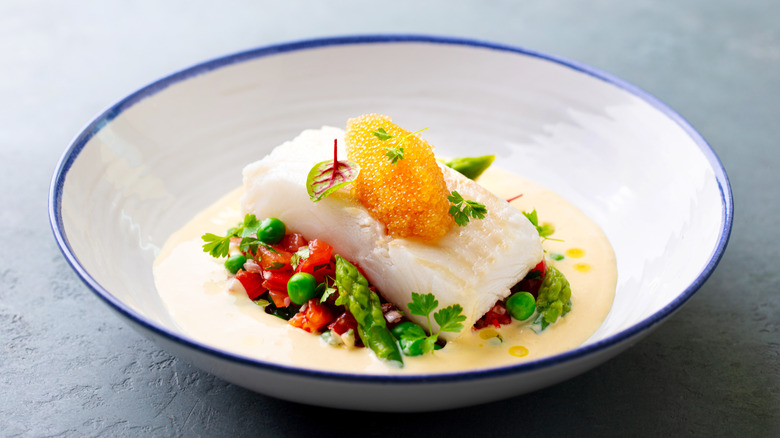
Like flounder, halibut is a flatfish, found in both the Atlantic and the Pacific. Halibut are different from flounder in part because of their moist, firm flesh (most flat fish are delicate) and partly because they're bigger. Mature Atlantic halibut and Pacific halibut can both grow to 500 pounds or more. That means big, meaty portions, even from a relatively small fish.
Fish in general are divided into lean (low-fat) and "rich" or "oily" (high-fat) species, and for me, halibut is the king of lean white fish. Its thick fillets and steaks are firm, moist, tasty, and succulent. You can cook it any way you choose, because unlike many other white fish, its flesh is firm enough to hold together. So fry it, poach it, grill it, or even cut it into cubes and stir-fry it; it'll hold up.
The only downside is that halibut commands a premium price, so depending on your budget, you might not be able to enjoy it as often. Sustainability-wise, Pacific halibut is your best bet, with no Avoid ratings from Seafood Watch. MSC-certified Atlantic halibut from Canada is sustainable, but U.S.-landed Atlantic halibut (and a third species, Cortez halibut from Mexico) should be avoided.
Buy: Tilapia
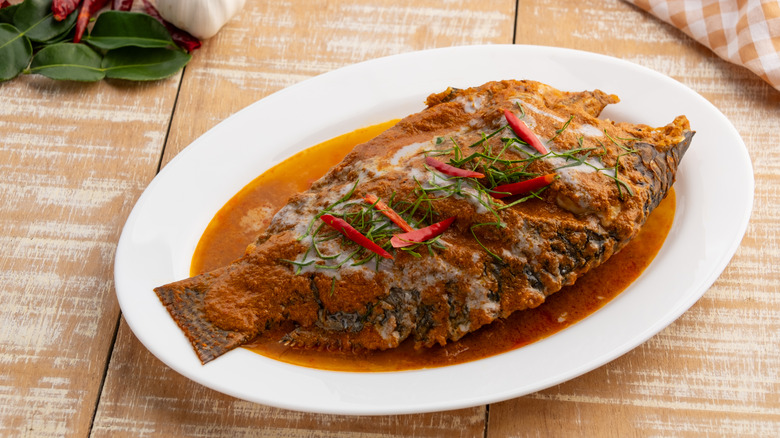
While skate and halibut are personal favorites, tilapia is not. I include it on my list because it's a great value option almost everywhere, if you're looking for white fish that won't break your budget.
That's because tilapia is just about perfect for aquaculture. It puts on weight rapidly, thrives in shallow and warm waters, and reproduces prolifically. Unsurprisingly, given these advantages, it's farmed worldwide. I'm not enthused about it because I can get better-tasting fish for a comparable price, but that might not be true where you live. Tilapia is a solid, budget-smart option for inexpensive, lean protein almost anywhere.
Tilapia's understated flavor is actually an advantage, if you embrace it, because unlike skate, cod, or monkfish, you don't need to fuss about overwhelming the flavor of the fish itself, so you can run wild with your seasonings (Tilapia Masala, anyone?). It's also sustainable, since tilapia in the U.S. market is almost always farmed. U.S.-raised tilapia is often grown in land-based tanks (North Carolina alone produces 1 million pounds a year that way, according to Aquaculture), and Seafood Watch gives a thumbs-up to most Asian and Latin American growers as well. There are tilapia producers to avoid, but I'll circle back to them shortly.
Buy: Catfish
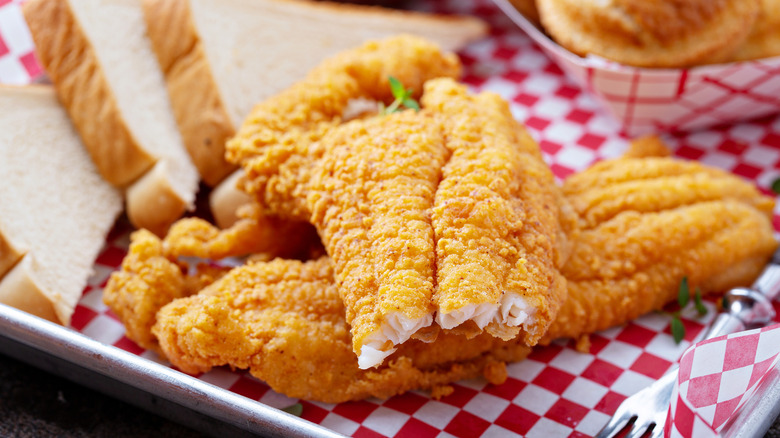
If you're from the South, you don't need me to tell you that catfish is worth buying. If you aren't in a position to catch your own, catfish is widely and sustainably farmed in the U.S., and there are sustainable wild fisheries as well.
Catfish is mild and sweet-tasting, usually sold in stores as fresh or frozen fillets, though catfish steaks are sometimes available as well. Catfish fillets are delicate and fall apart easily, so breading them makes great sense because it helps hold the portions together. That said, you can certainly poach, bake, or steam catfish if that's what your recipe calls for. Catfish steaks are versatile to cook with because their bones, skin, and relative thickness help keep them intact. The downside is that you'll have bones and skin to deal with at the table.
All American catfish is rated by Seafood Watch as a Best Buy or Good Alternative, and U.S.-farmed catfish makes the organization's "Super Green List" as one of the most sustainable fish options you can buy. Asian species can't legally be sold as "catfish" in the U.S., though they're pretty similar. I'll come back to that in a moment.
Buy: Striped bass, white bass, and sunshine bass
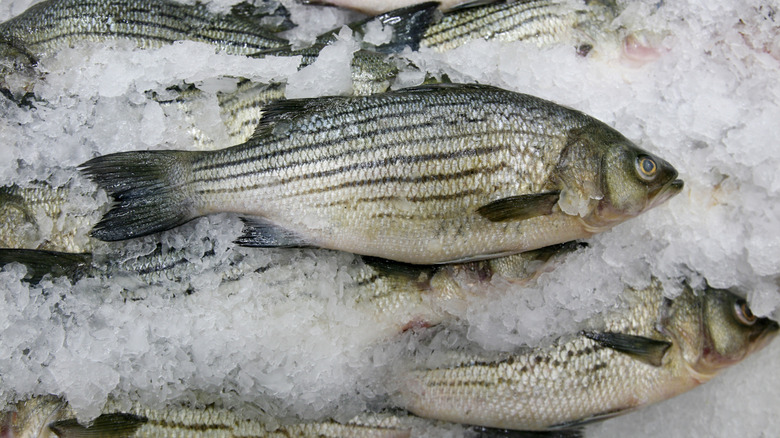
If you love to spend time on the water with a rod and reel, you know that bass is equally good as a sport fish and a meal. If you don't catch your own, or if you don't get to do it as often as you'd like, you may be able to find bass at a good fish shop.
Bass falls somewhere in the mid-range of white fish for texture and firmness. Its flesh is sweet and flavorful and lends itself well to most recipes. It's also richer than many other white fish, with plenty of omega-3 fatty acids. I usually keep things simple and pan-fry it, ideally with the skin on if I can get it that way (I'm squarely in the "eat the crispy skin" camp).
There are modest commercial fisheries for striped bass from the Atlantic and Chesapeake Bay, for white bass from Lake Erie, and both striped bass and "sunshine bass" (hybrid striped bass) are farmed in the U.S. and elsewhere. Bass is another no-brainer for sustainability; Seafood Watch has no Avoid ratings for any bass you'll find in stores. In fact, U.S.-farmed striped bass, like U.S.-farmed catfish, makes Seafood Watch's Super Green List.
Avoid: Chinese-farmed tilapia
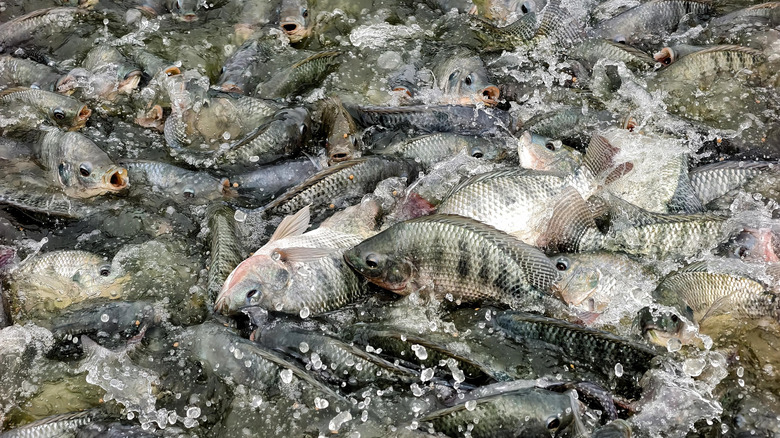
Tilapia is farmed in warm-climate regions all over the world, from its native Africa to sunbelt states in the U.S. It's an easy fish to farm, as I mentioned earlier, and more importantly, it's easy to farm sustainably. That's why it's discouraging that tilapia from China, the world's largest farmer and exporter of tilapia, should be avoided.
Seafood Watch has given all tilapia from China an Avoid rating, because it manages to hit essentially all of the negative factors that apply to farmed fish: there's strong evidence that Chinese producers use banned chemicals and antibiotics in their tilapia aquaculture operations, making the fish a risk for antibiotic resistance; escapes from farms are common, and invasive tilapia are now out-competing native fish species; disease is present in the industry; and China's oversight and regulatory enforcement of the industry are sub-standard.
Tilapia from Mexico is also chancy, with Seafood Watch taking issue (again) with the risks of escapes, chemical and antibiotic use, disease, and a combination of poor oversight and the inadequate data available for scrutiny as a result. On the upside, some certified tilapia is produced in Mexico, and you can buy that without a problem.
Avoid: Asian catfish from Vietnam
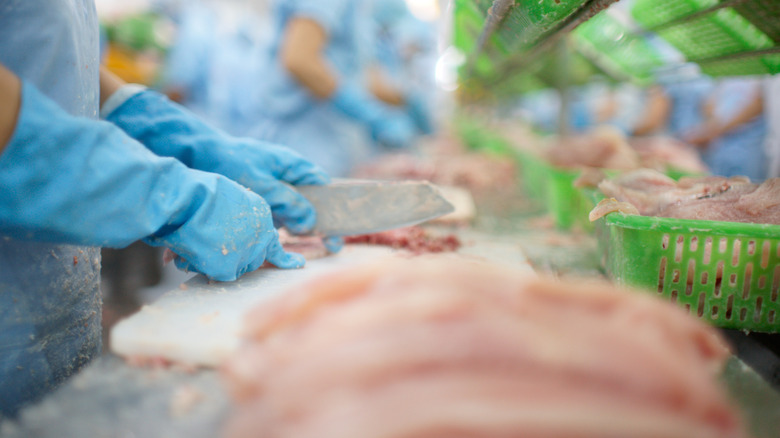
While catfish is a solid option for American buyers, Asian catfish is more complicated. The fish itself — sold as basa, swai, or pangasius — is similar to North American catfish, though by U.S. law only the native species can be sold as "catfish."
You can use Asian catfish in all the same ways as the local kind, but the issue (again) is sustainability. The biggest producer is Vietnam, and Seafood Watch gives the bulk of Vietnamese production an Avoid rating due to its intensive farming methods: more fish per pen, more waste to dispose of, and many operators are suspected of dumping their waste illegally. There are also grounds to believe that growers' use of chemicals and antibiotics doesn't meet international standards.
There are sustainable sources of Asian catfish, even within Vietnam. Those operators meet the standards set by international certification bodies, so their fish are raised in conditions that meet or exceed the standards here in North America. Look for certifications if you're going to buy Asian catfish. But with the homegrown product being inexpensive and high-quality, I find little motivation to do that.
Avoid: Orange roughy
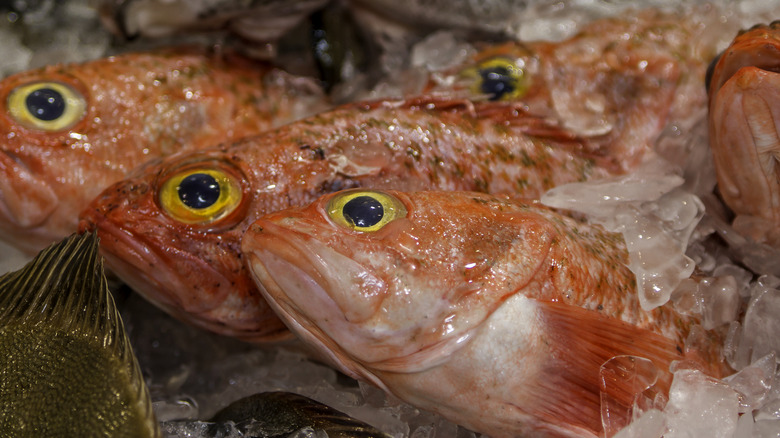
Many chefs love orange roughy. It's a deep-sea fish from the Pacific Ocean around Australia and New Zealand, which tastes great and has firm flesh that holds together beautifully regardless of your cooking method.
The problem with roughy is its unusual vulnerability: they can live to be 100 years old but seldom reproduce before their 30s. That's not a recipe for survival if too many humans develop a taste for them. Additionally, roughies are caught with trawls, nets that scrape the bottom and disrupt the coral-based ecosystem. Roughy was badly over-fished in the '80s and '90s, and recovery has been slow.
Seafood Watch gives the roughy fishery some of the lowest sustainability ratings it's possible to earn (because you can't get below zero). MSC certification has been earned and lost sporadically, and large questions remain about the health of the roughy population, gaps in the data, and the effectiveness of New Zealand's oversight. Though some roughy is currently MSC-certified, it's probably safest to skip it. Ultimately, lack of buyers is a species' best protection.
Avoid: Sea bass
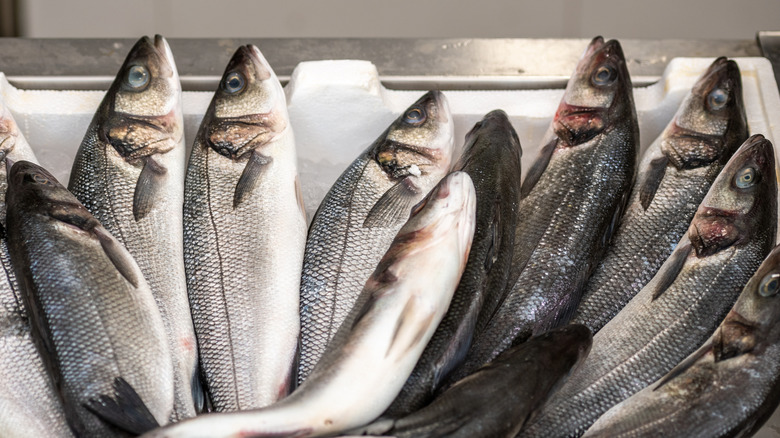
Sea bass has been popular on menus for years. Like freshwater bass, they're an excellent fish from a culinary point of view. Unlike their freshwater cousins, though, it's a lot harder to find sea bass without sustainability issues.
The kinds you'll see most in stores are black sea bass, white sea bass, giant sea bass, and farmed European sea bass, usually sold as branzino, and they're all problematic. Farmed branzino are red-rated by Seafood Watch for chemical use and environmental impact. Some black sea bass fisheries are red-rated for their environmental impact and shaky management measures, and the gillnets used for white and giant sea bass are a danger to other marine life. Chilean sea bass, aka Patagonian toothfish, is heavily overfished in Chile, though there are sustainable fisheries in a few other countries.
Sea bass is hard to buy ethically unless it's certified. A few fisheries earn "Good Alternative" status for their methods, but it's hard for consumers to find them. Updated standards for traceability, new in 2026, will make it easier for you to know whether you're making a good purchase. Until then, buy regular freshwater or farmed U.S. bass instead.