

Skip Adding These Ingredients To Your Casserole — Unless You Like It Watery
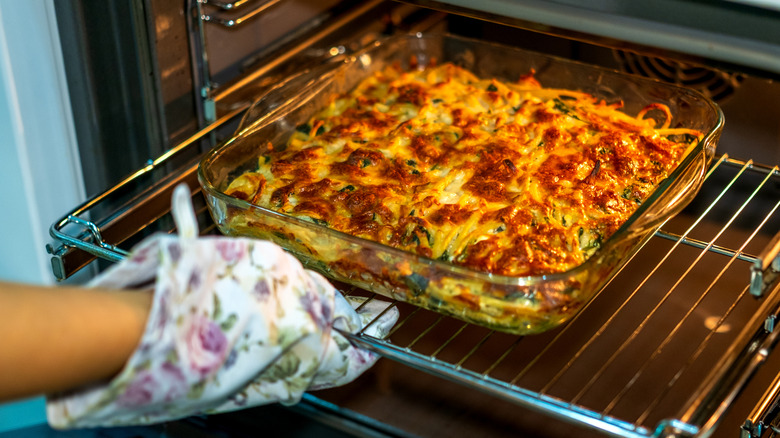
Casseroles are a classic comfort food that can be made on a dime and with minimal prep work. Whether it was a labor of love, or a utilitarian dinner thrown together at the end of a long day, no home cook wants to open the oven to a watery casserole. As in so many arenas, the best offense in the casserole game is a good defense, and there's an easy way to proactively stave off excessive moisture from square one.
That's why we spoke with Tara Bench, the cookbook author and blogger behind Tara Teaspoon, who offered her tried-and-true tips for nailing the perfect casserole texture every time. According to the pro, excessively wet vegetables are often to blame for a watery casserole. To that end, Bench recommends avoiding a few players that should never go near your casserole dish. "There are plenty of ingredients that don't belong in baked casseroles, but obvious ones are watery veggies like cucumbers, zucchini, sliced or cherry tomatoes, uncooked mushrooms," she explains, "and anything that will release loads of water or moisture into the recipe."
Instead, Bench recommends "[keeping] these ingredients for side dishes and salad!" For a complete meal, this fresh, minimal cucumber salad with pearl onions would make a fabulous side dish to counterbalance a heavier Tex-Mex cowboy casserole. Or consider this summer orzo pasta salad with cherry tomatoes and zucchini that would equally complement this robust weeknight chicken Alfredo bake.
High-moisture veggies can create a soggy casserole
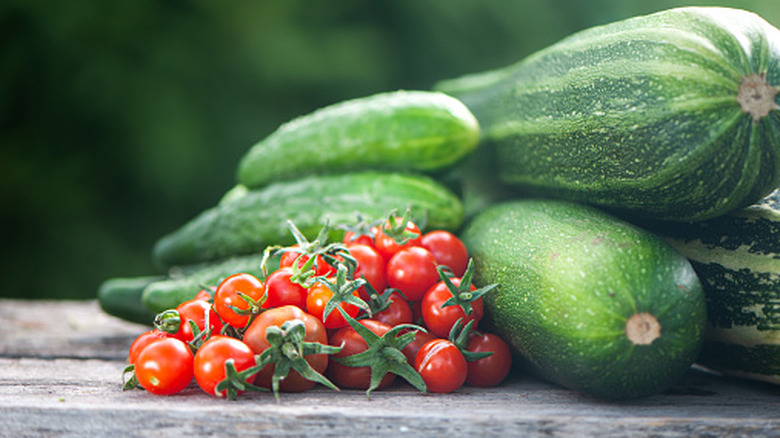
There's no need to pass your favorite produce by at dinnertime, just save the high-moisture stuff for non-casserole applications. Instead, Bench recommends building your casseroles on a base of low-moisture veggies, which will deliver bright flavor without excess wetness. Alternatively, you can also reduce the water content of high-moisture veggies by hitting them with a quick trip on the stove or in the oven.
"Roasted or sautéed mushrooms, zucchini, or squash are great additions," Bench adds. "The key is to cook watery veggies to release their moisture before adding them to any casserole or baked dish." Simply slamming your sliced squash on a foil-lined baking sheet for a few minutes in the oven can help dehydrate the vegetable before it gets worked into your go-to casserole recipes as normal. Plus, the oven will already be preheated and ready to bake that casserole (win-win).
This browned-and-bubbling comfort food classic should be all three of those things: Browned, bubbling, and comforting. A runny, watery mouthfeel is diametrically at odds with that profile. To help foodies out, we've also rounded up a few failsafe tips for retroactively fixing a watery casserole in a pinch. No need to despair when a wet dish comes out of the oven (you can thank us later).