

You're Probably Forgetting To Clean These Hidden Parts Of Your Grill
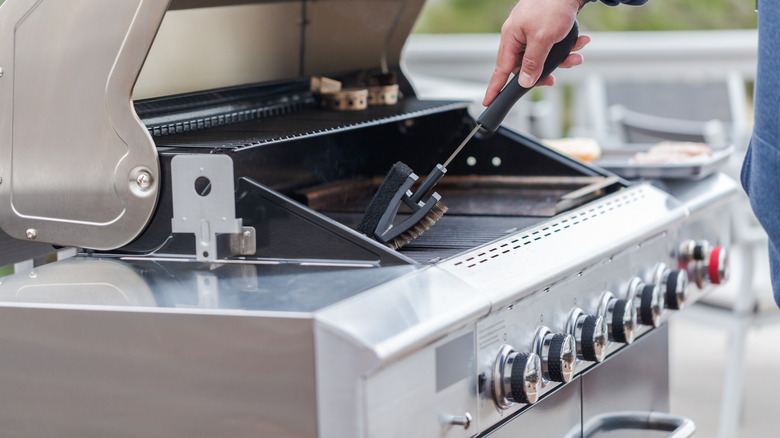
The best time to clean your grill for seamless summer barbecues is right after you use it, but you should also give it a deep clean every year to tackle buildup on internal parts. While most people understand the importance of regularly cleaning the grill grates and other visible parts on their backyard barbecue grill, many neglect to clean the more hidden components. These parts can develop a buildup of grease, oil, ash, and other cooking residues over time. Depending on how often you use your grill, you should commit to a deep cleaning each season, or before you fire it up for your first barbecue. This will give you a chance to inspect all components, test their safety and performance, and remove potentially hazardous buildup from internal elements.
The most important parts to focus on when deep cleaning a gas, charcoal, or pellet grill are the heat plates (aka Flavorizer Bars), Venturi tubes, spider guard, regulator, burner tubes, igniter, drip pan or grease tray, and ash catcher. Neglecting to deep clean can increase the risk of premature wear and tear, degradation of crucial components, and costly repairs. You may even be at risk of critical safety issues, like grease fires or flare-ups, exposure to carcinogens, contamination caused by old food debris, clogged or failing burners, rust and structural damage, and pest and rodent infestations. Follow these essential tips and tricks for deep cleaning your grill before your next summer cookout. Not only will your grill be sparkling clean and ready for anything you want to cook, but it will light faster and perform better, ensuring a successful barbecue.
Heat plates
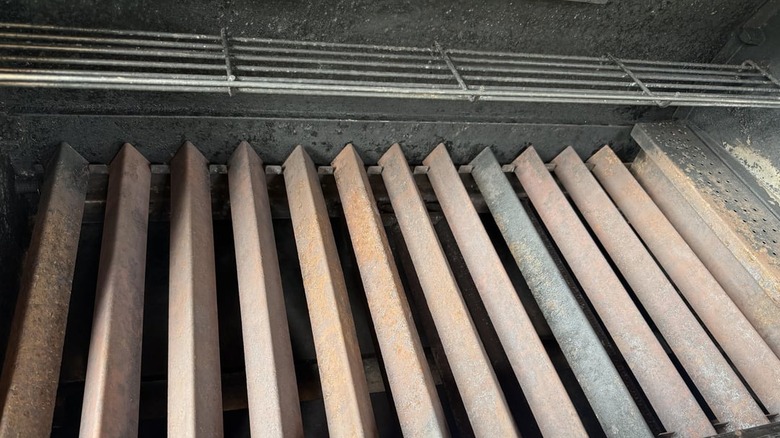
Heat plates, also called diffusers or Flavorizer Bars on Weber grills, are located below the grill grates and above the burner tubes. They look like angled metal pieces or ceramic- or porcelain-coated steel bars. These bars ensure even heat distribution by breaking up large flames and reducing hot spots so the grill maintains a more consistent cooking surface. They also protect the burners from dripping grease and fat, reducing the risk of a dangerous flare-up or grill fire. As the grease and fat drip onto the surface, they smoke and evaporate, infusing your food with a deeper, richer grilled aroma and taste.
However, these elements get dirty quickly, especially if you're laying meat directly on the heat plates to caramelize it. Without regular care and cleaning, they can rust or corrode, which will affect how efficiently your grill operates, and can also increase the risk of safety hazards. In most cases, grease, debris, and moderate rust can be removed with a deep cleaning; however, check for cracks, holes, or damage as that indicates it's time to replace the bars. To clean the Flavorizer Bars, heat plates, or diffusers in your grill, remove the grill grates.
If the bars have minimal buildup, use a grill brush to remove debris and then wipe them down with a soft cloth, dish soap, and warm water. If they are really dirty, take them out and clean them in the sink using a steel wool pad and a razor blade or putty knife. Don't wash them in the dishwasher or use any harsh cleaners, chemicals, or abrasive tools. For stubborn grease and grime, skip the steel wool and instead use vinegar and dish soap.
Venturi tubes and spider guard
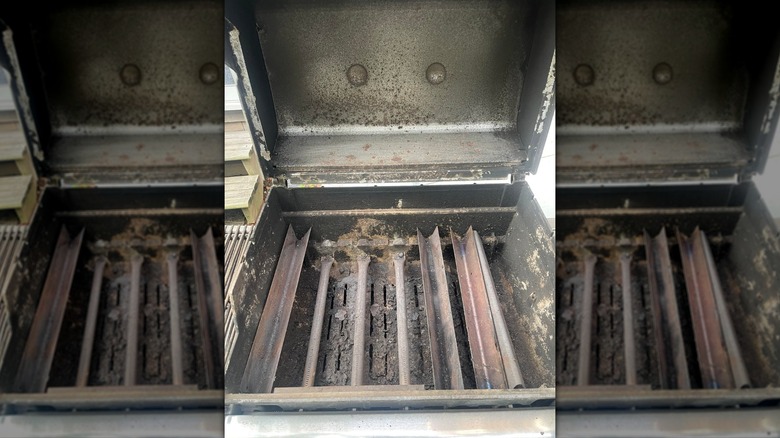
A Venturi tube is a gas grill component. It connects the control valve to the burner, and mixes fuel with oxygen to create a combustible gas mixture for the grill burners. The tube is protected by a spider guard, which keeps bugs from getting caught in the tiny areas and blocking gas flow. However, even with the guard, the tube needs to be cleaned at least once a year. The spider guards should also be cleaned regularly. If spiders or insects build webs or nests in or around the tube, it can prevent the gas from flowing properly to the grill burners. This can cause a dangerous backup, resulting in some gas escaping and potentially igniting. This is called a flashback, and it's a huge cause for concern as it could result in major burns, a fire, and damage to your grill.
To clean the Venturi tube, access the grill's burner assembly and remove it carefully. Inspect the area for signs of pests or insects, such as cobwebs or nests. Next, take off the spider guard and clean it gently with a damp cloth to remove dust, cobwebs, and other debris. You shouldn't need to remove the Venturi tube to clean it; just use a long, flexible wire brush with nylon bristles, called a Venturi tube cleaning brush, to remove debris. Check for rust, corrosion, or signs of damage. Also make sure that the tube is properly in place, covering the valve nipple. Put the guard back in place and replace the burner assembly.
Regulator and fittings
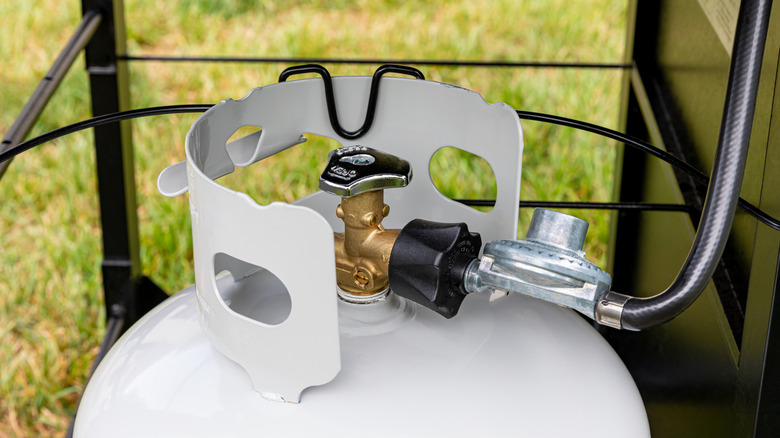
The regulator connects the propane tank or gas to the grill and consists of a hose, fittings, and valves. It controls the amount of gas or propane that reaches your grill, which ensures safety and proper operation. A problem with the regulator, such as a clogged hose, faulty valve, or loose fitting, could prevent your grill from lighting or cause a dangerous gas leak. Inspect your regulator for signs of rust, cracks, leaks, or faulty connections. If you notice a buildup of soot on your grill burners, rust or corrosion, high or uneven flames, yellow or orange flames, or if your grill makes a humming sound, a sudden popping sound, or a roaring noise when you turn the burners on or off, there could be an issue with your regulator.
Cleaning your regulator will remove any debris or rust that has built up and maintain proper regulation of the pressure and flow of gas to the grill. Before cleaning, make sure the regulator is disconnected from the grill and the grill and gas supply are turned off. You may need a screwdriver to remove the regulator from the grill. Look for signs of damage and check for blockages or clogs. Use a soft brush to remove debris, and a cloth and mild soap to clean the exterior components. You can also take the regulator apart to clean the internal components. Make sure to rinse and dry them thoroughly before reassembly. You can also use a can of compressed air to clean the regulator ports and improve gas pressure and flow.
Burner tubes and igniter
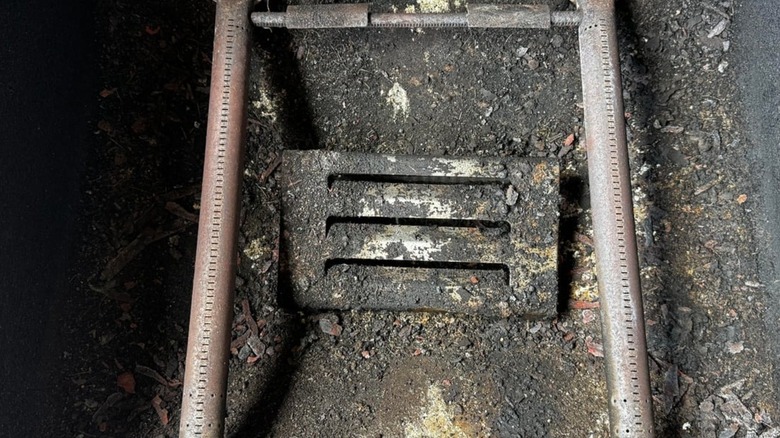
The burner tubes are part of the grill's burner assembly, and are located inside the firebox directly below the cooking grates and above the heat deflectors or diffusers. They are narrow, hollow metal pipes that distribute gas to the burners, creating flames for cooking. They work in conjunction with the Venturi tube to maintain even heat distribution and efficient combustion. The grill igniter is an ignition module that consists of a push-button, battery-operated, or electrical device that generates sparks that cause the burners to ignite. It's located inside the firebox next to the burner tubes. If you have trouble lighting your grill or notice uneven flames, the problem may be due to buildup on the burner tubes or a clogged igniter.
To inspect and clean these components, turn off the gas supply to your grill and disconnect the gas tank. Take out the grill grates to access the burners. Do not use water to clean these components. Instead, use a clean brush like a bottle brush or burner cleaning rod to remove debris and use a handheld vacuum to get rid of remaining residue. You can use a stiff pipe cleaner or pin to clear the burner ports if they are clogged. Next, check the igniter to make sure the electrodes are secured properly and all wires are connected. Use a wire brush to loosen debris and remove and clean the ignitor button using a cotton swab and rubbing alcohol. If the igniter still doesn't function properly after cleaning, try replacing the battery.
Drip pan, grease tray, and ash catcher
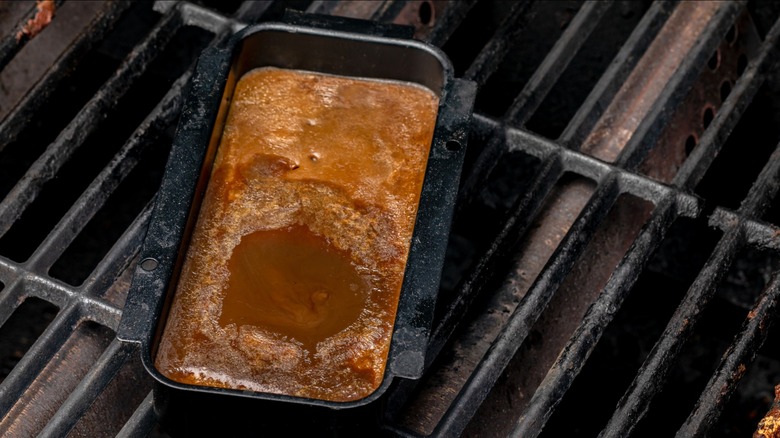
The drip pan or grease tray is located under the cooking grates and collects fat, food debris, and grease. This prevents grease fires and also extends the lifespan of the components located underneath the grates. It should be cleaned regularly, though you can line the pan with aluminum foil to make cleaning easier. The ash catcher is a tray, pan, or bowl located under the firebox of a charcoal or pellet grill. It collects fallen ashes and debris, and letting ash build up can block vents, preventing the coals from getting hot enough to cook food. Cleaning these elements will reduce foul odors, lower the risk of pest infestations, prevent flare-ups, and maintain grill safety.
To clean the drip pan and grease tray, start with a cool grill, and then remove the parts carefully. Use a bench scraper or putty knife to scrape away grease, food debris, and other residue. Soak the pieces in warm water with a few drops of dish soap and use a soft sponge to clean them thoroughly. Dry them before putting them back in place to prevent rust. Most people clean ash out of their charcoal or pellet grill after every use, but the ash catcher or ash tray will still need a deep cleaning every once in a while. Though it's typically okay to clean your grill while it's still warm, you should let the grill cool for 48 hours before removing the ash tray or pan. Dump the ashes into a fire-proof container and then use a small shovel or scoop to remove any remaining ash or debris from the grill.