

These Pepperoni Details Could Be A Red Flag At Pizzerias
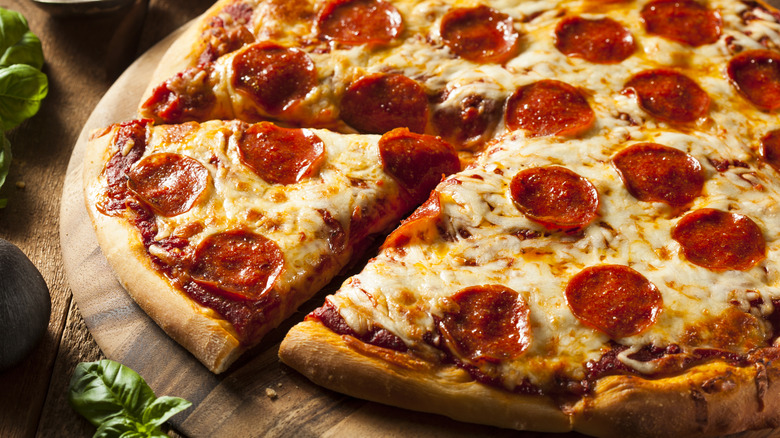
It's no surprise that pepperoni is a popular pizza topping, but just how popular is it? Data from Gitnux shows it's the number one topping in the United States, featured in 36% of all pizza orders. That's remarkable since pepperoni wasn't always so popular. Sausage is the second most popular topping at just 14%. Americans bought $46.8 billion worth of pizza in 2022, meaning nearly $17 billion was spent on pepperoni pizza. With all that pepperoni being served up, it helps to know how to spot the difference between the good and the bad.
Tasting Table talked to Noel Brohner, pizza consultant and instructor, and founder of Slow Rise Pizza Co., to get his expertise on pepperoni. We wanted to know which pepperoni details could signal a red flag in a pizzeria.
"One of the biggest red flags is pepperoni that looks lifeless after the bake — perfectly flat, pale, rubbery, and almost steamed-looking instead of crisped," Brohner said. "Great pepperoni should react to the oven. It should blister, curl, char slightly around the edges, and develop texture."
Brohner said that many pizza makers look for cup-and-char pepperoni. He described it as the kind "where the pepperoni curls upward into little cups that hold rendered fat and concentrated spice." It's typically a good sign. Flat pepperoni may be a red flag. "Large flat discs that never move in the oven are often standard commercial 'lay flat' pepperonis," he said. "Those aren't automatically bad, but many chain and commodity products are engineered specifically not to curl or char."
Pepperoni oh no
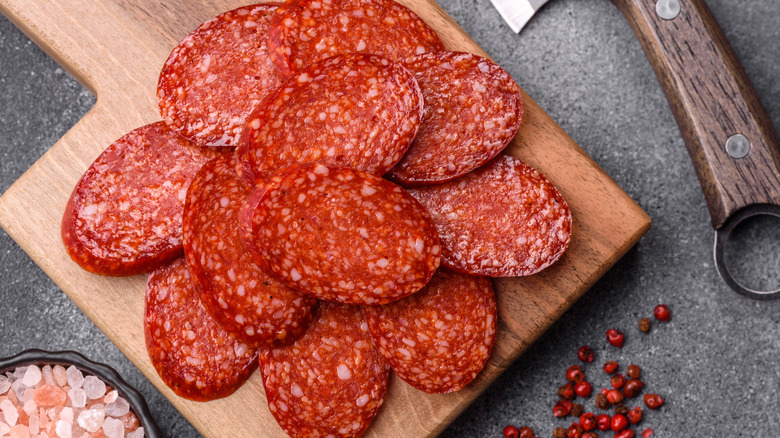
It's not just the shape or the thickness of the pepperoni you want to look for. It's how it responds to the heat while it cooks. "Another red flag is uncontrolled grease. Pepperoni should absolutely render fat in the oven — that's part of the flavor," Brohner explained. But if you have ever had a pizza that was so greasy on top you needed to use a napkin to sop some of it up, that's a problem. "There's a difference between beautiful little pepperoni cups holding flavorful oils and a pizza flooded with orange grease because the pepperoni never crisped or integrated properly into the bake."
Some people prefer a greasy pizza, and some are happy to blot the grease in the hopes of reducing calories. To be fair, a lot of that grease isn't pepperoni oil. It comes from cheese, especially low-quality cheese, and sometimes the sauce. But low-quality pepperoni and low-quality cheese together could make for a very messy, greasy pizza. "Low-quality pepperoni usually gives itself away through both flavor and oven behavior. Cheap products often stay strangely flat during the bake and release grease without developing much texture," Brohner told us.
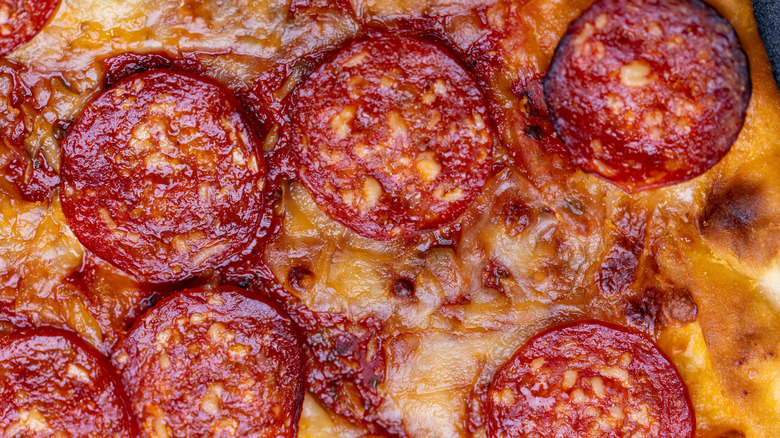
"Great pepperoni should keep a rich red tone after baking while developing crisp edges and slight blistering," Brohner said. "Cheap or poorly handled pepperoni often turns grayish, dry, or rubbery instead of lively and crisp." So what should you be looking for with good pepperoni? "You should be seeing contrast — charred edges, rendered oils, crisp rims, and some chew in the center."
Red pepperoni, not red flags
Because there are many different types and brands of pepperoni, it can be difficult to spot an inferior product. That includes not just low-quality pepperoni, but pepperoni that has been sitting out too long. Keep an eye out for telltale signs of oxidation. "Pepperoni that has been sitting out too long often starts to look dry before it even hits the oven," Brohner explained. "The edges may appear leathery or faded, and the slices can lose that fresh reddish color."
If you only see the pepperoni after the pizza is baked, there are still signs to look for. "Fresh pepperoni should crisp and curl naturally while still keeping some chew in the center. Older pepperoni tends to shrivel aggressively and harden into stiff little discs instead of developing that balance of char, crispness, and texture," Brohner said.
We asked Brohner not just what bad pepperoni looked like, but how to tell if it was good. "One of the best signs is visible cupping and charring," he said. He also noted that flat pepperoni isn't always a bad thing. "Some of the best pizzerias in the country have even started mixing traditional lie-flat pepperoni with cup-and-char varieties to create different textures and flavor layers on the same pie."
Personal taste always wins out, but Brohner added one final point. "Great pepperoni should develop a rich red color with caramelized edges and visible rendering during the bake. Texture-wise, you want contrast: crisp rims, slight char, rendered fat, and some chew in the center instead of rubbery uniformity." Once you understand the hallmarks of pepperoni that have good color, taste, and texture, it becomes easier to spot them every time.