

7 Facts To Know If You Enjoy Knob Creek Bourbon Whiskey
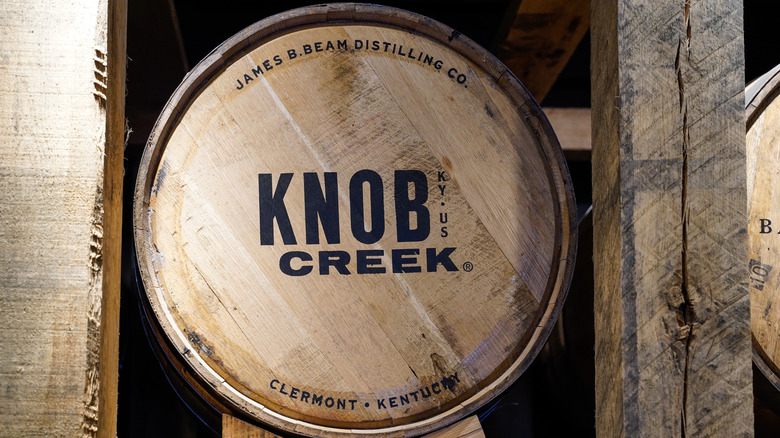
Knob Creek is one of those bourbons that feels instantly familiar. It's the kind of bottle you'll spot behind most decent bars, often poured into an old fashioned or served neat for someone who just wants a dependable whiskey. For many drinkers, it sits comfortably in the middle ground between everyday and premium. It's widely available in stores and bars but still carries a sense of quality, backed by one of the biggest names in American whiskey. In fact, it's one of the best bourbons you can buy at Costco.
Look a little closer, though, and Knob Creek turns out to have a more specific place in bourbon history than casual drinkers might realize. It emerged at a turning point for bourbon, helped redefine what premium American whiskey brands could look like, and leaned heavily into ideas like age, proof, and tradition at a time when those qualities had largely been dialed back. It's also a useful bottle for understanding how modern bourbon works. The brand leans on age, proof, oak, and Kentucky heritage while still producing it in small batches. As a regular Knob Creek drinker with professional spirits training, here are some facts you should know about the popular bourbon.
1. Knob Creek was part of the 1990s bourbon revival
Knob Creek launched in 1992 as part of the Jim Beam Small Batch Bourbon Collection. It was created by Booker Noe, the grandson of Jim Beam and a sixth-generation Beam family distiller. That timing matters because bourbon wasn't always the booming category it is today. By the late 20th century, American whiskey had spent years losing cultural ground to lighter spirits, especially vodka, and many producers were trying to make bourbon softer, easier, and less assertive.
Knob Creek moved in the other direction. It was presented as a pre-Prohibition-style whiskey, with Beam saying it was inspired by the Bottled-in-Bond Act and made to reflect full-flavor American whiskey. That positioning made it part of the premiumization wave that helped bourbon regain credibility among drinkers who wanted something bolder than the lighter, lower-proof bottles that had become common. It wasn't the only bottle involved in that shift, but it became one of the most visible because it had national distribution, a clear identity, and the backing of Jim Beam.
2. Knob Creek is named after a real Kentucky place tied to Abraham Lincoln
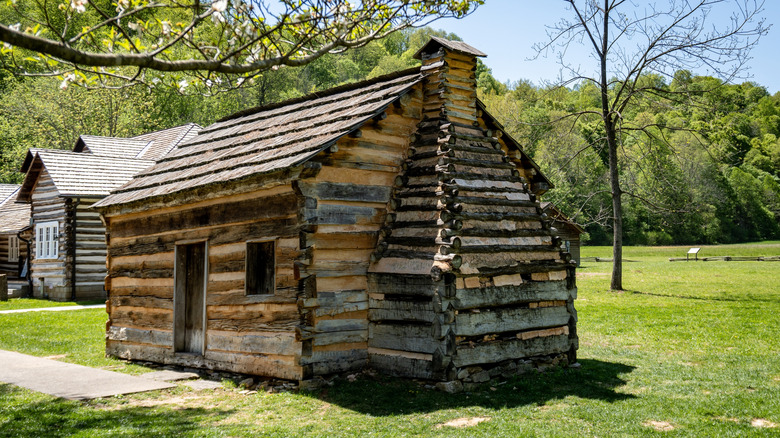
The name Knob Creek sounds like the kind of rustic whiskey branding that could have been invented in a boardroom, but it points to a real Kentucky location. Knob Creek Farm is part of the Abraham Lincoln Birthplace National Historical Park, and the National Park Service describes it as the place where Lincoln formed some of his earliest childhood memories. Lincoln's family lived at Knob Creek Farm after leaving his birthplace at Sinking Spring, and the site is now preserved as part of the broader Lincoln landscape in Kentucky.
That doesn't mean Knob Creek bourbon is made there, nor does it mean Lincoln had anything to do with the whiskey. The connection is historical and symbolic rather than production-based. Still, it gives the brand a more grounded origin story than a purely invented label. Beam used the name to evoke older Kentucky whiskey traditions, while also tying the bottle to a recognizable piece of American history.
3. Its 100 proof bottling helped bring bolder bourbon back into focus
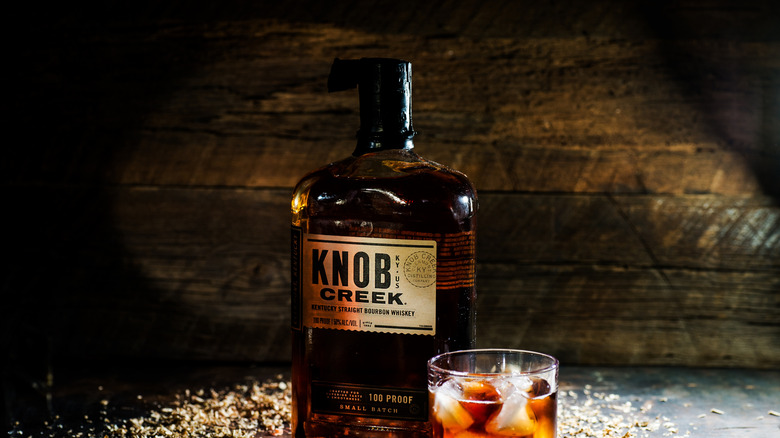
Knob Creek's standard nine-year-old bourbon is bottled at 100 proof, which means it is 50% alcohol by volume. That's a meaningful choice, especially for a widely available bottle. Many mainstream bourbons sit at 80 proof, both for commercial reasons and so they're more palatable for a broader audience. While lower proof can make a whiskey easier to sip, it can also soften the flavor. Beam says Knob Creek was bottled at 100 proof to help deliver its authentic, full-flavor profile. The brand also connects that higher strength to pre-Prohibition-style whiskey, a framing that fits its broader identity.
In the glass, that higher proof gives Knob Creek more weight than many entry-level bourbons. It has enough structure to hold up as one of the best bourbons in an old fashioned or a whiskey sour. In fact, Knob Creek makes one of the best high-proof bourbon bottles: its 12-Year Cask Strength. It also made higher-strength bourbon feel less niche. Knob Creek wasn't a limited barrel-proof release for collectors; it was a bottle regular drinkers could find, buy, and use, which helped make stronger bourbon feel normal again.
4. Knob Creek originally leaned heavily on its 9-year age statement
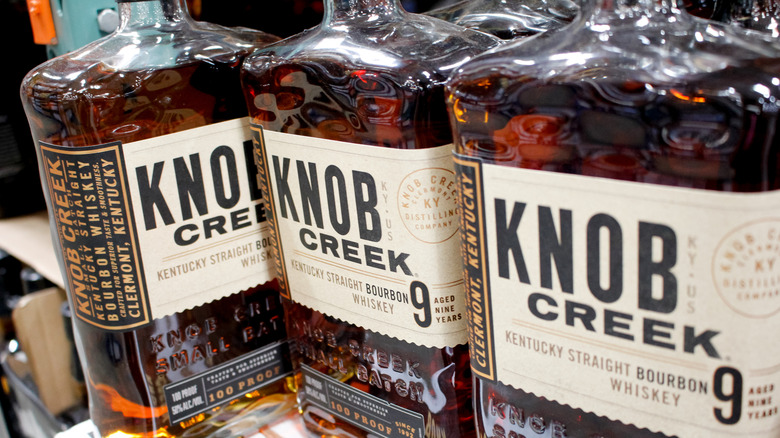
Knob Creek's 9-year age statement was a major part of its identity for years. The current Knob Creek 9-Year Bourbon label states that the whiskey is aged nine years and bottled at 100 proof. That age statement matters because bourbon aging isn't just a number for collectors. Time in new charred oak changes the whiskey's color, texture, aroma, and flavor, adding notes associated with vanilla, caramel, spice, and oak. But Knob Creek didn't always keep that statement on the bottle.
In 2016, Beam Suntory confirmed that Knob Creek would drop the 9-year age statement in the U.S., Canada, and Australia. Whisky Advocate later reported that James B. Beam Distilling Co. removed the age statement from the core nine-year-old in 2016 and restored it in 2021. That temporary change reflected a common bourbon problem: Demand can rise quickly, but aged whiskey takes years to replace.
5. It's made by Jim Beam, even if the branding feels more boutique
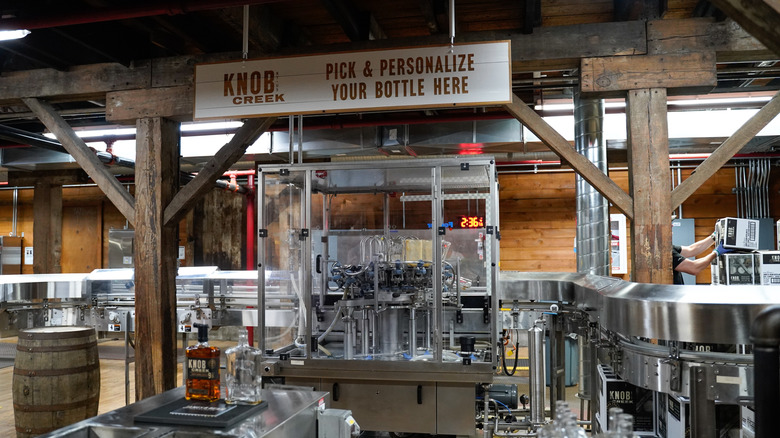
Knob Creek may look like a smaller, more old-fashioned whiskey label, but it is produced by James B. Beam Distilling Co. That's not a criticism, but it is worth understanding. Jim Beam is one of the biggest names in bourbon, with many bottles under its name. Knob Creek benefits from the scale, inventory, and distribution that come with that. At the same time, the small-batch branding gives the bottle a more curated feel than a standard, mass-market bourbon.
Small-batch is not the same kind of regulated term as bourbon or straight bourbon. The U.S. Alcohol and Tobacco Tax and Trade Bureau (TTB) defines bourbon by production standards such as grain content, distillation proof, barrel type, and storage proof. Those rules do not set a specific barrel count or production size for small-batch. There is no legal definition of small-batch, no industry standard, and no widely accepted definition. Different brands may use very different barrel counts for small batch whiskey. That context is important for Knob Creek because the term can suggest something more limited than it necessarily is.
Beam describes Knob Creek as part of the Small Batch Bourbon Collection. In practice, that means the bottle sits in an interesting middle ground. It isn't a tiny craft whiskey from an obscure distillery, but it also isn't simply the same thing as Jim Beam White Label with a different sticker. It's a deliberately positioned expression from a large producer, built to taste more robust, carry a stronger heritage story, and appeal to drinkers looking for something more substantial.
6. Its mash bill is traditional, not experimental
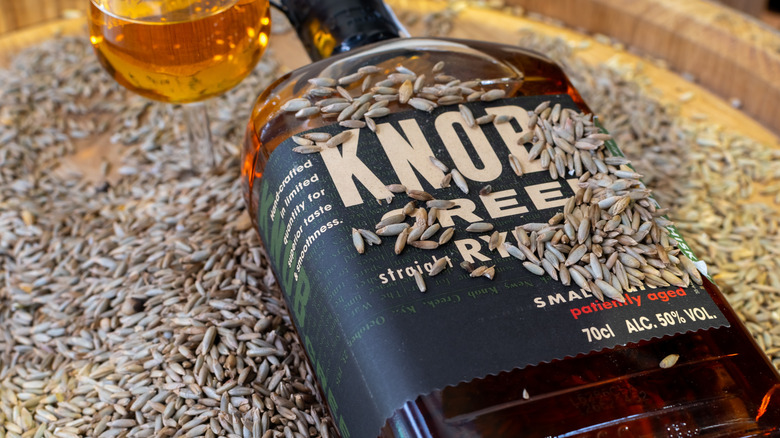
Knob Creek doesn't try to reinvent bourbon. Bourbon must be made in the U.S. from a fermented mash of at least 51% corn, distilled at no more than 160 proof, and stored in new charred oak containers at no more than 125 proof, according to the TTB's standards of identity. Knob Creek follows that traditional bourbon framework rather than leaning on unusual grains or novelty production methods. Beam describes the whiskey as being made through "traditional, tried-and-true bourbon-making processes".
While Beam does not always foreground the exact mash bill on consumer-facing pages, some outlets have reported that Knob Creek's older limited releases are believed to use a mash bill of 75% corn, 13% rye, and 12% malted barley. That kind of recipe explains the balance drinkers tend to associate with the brand: corn-driven sweetness, rye spice, and enough malted barley to support fermentation.
7. Heavily charred oak is central to its flavor
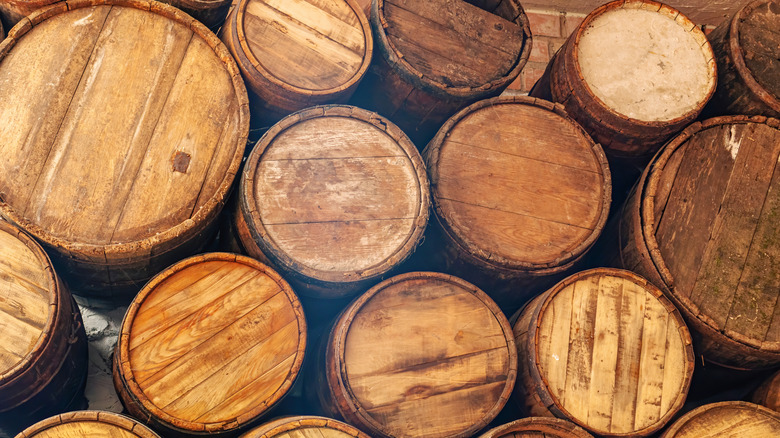
Bourbon has to be aged in new charred oak containers under TTB rules, so barrel influence is not optional in the category. Knob Creek leans hard into that requirement. The brand describes its 9-Year Bourbon as having notes of toasted oak, vanilla, and caramel, which are all classic flavors associated with time in charred oak.
Knob Creek also says its rye whiskey is aged in deeply charred barrels, which reflects the wider house style across the brand. This matters because charring does more than darken the inside of a barrel. It creates a charcoal layer and changes the wood compounds the spirit interacts with as temperatures shift during maturation. That interaction helps shape bourbon's sweetness, spice, color, and finish. With Knob Creek, the oak is not a subtle note in the background. Rather, it's one of the main structural elements, which is why the whiskey often reads as bold, dry, nutty, and caramel-heavy rather than light or delicate.