

This Old-School Filet-O-Fish Ad Proves Why It's Been Such A Hit Since The '70s
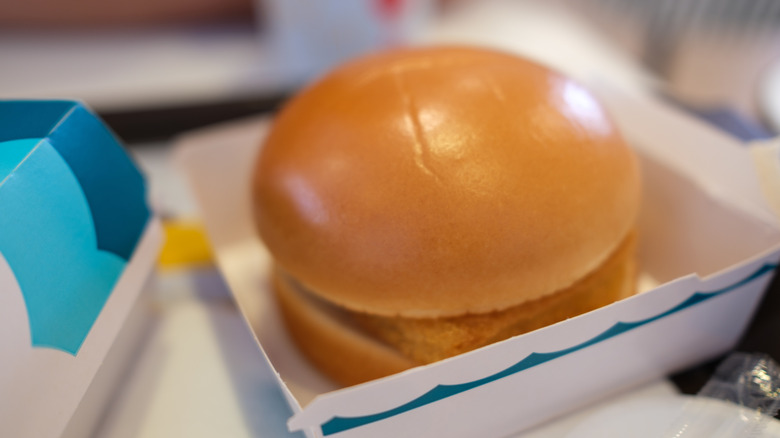
Love it or hate it, the McDonald's Filet-O-Fish has entered icon status, and deservedly so, in our opinion. It's right up there with fellow heavy hitters the Big Mac, McRib, and McFlurry. You might think you know everything about McDonald's famous fish sandwich, but we're betting most of you haven't seen this 1977 commercial advertising its "real fish." In the video below, the McDonald's worker tells us: "Most fish is not government-inspected, but all McDonald's fish is." He then holds up a white packing box to the camera, highlighting the Department of Commerce's "packed under federal inspection" stamp on the bottom.
The worker continues, "And it's all prime white filet — no fish cakes, not ground up, not mixed with other fish." He finishes with the bold statement: "The best-selling fish sandwich in America." While we can't quite fact-check the "best-selling" claim, the commercial really was ahead of its time, selling the idea of transparency and real ingredients.
The ad is certainly in contrast to the 1970s Big Mac jingle, which makes you wonder if the Golden Arches was influenced by the burgeoning natural foods movement. By highlighting its whole fish, McDonald's wasn't just describing ingredients for fun, it was trying to build credibility. And it's quite possible this focus on quality is exactly why the Filet-O-Fish has endured the test of time while so many other menu items have gone extinct (Looking at you, McDonald's Fish McBites).
McDonald's Filet-O-Fish marketing was ahead of its time
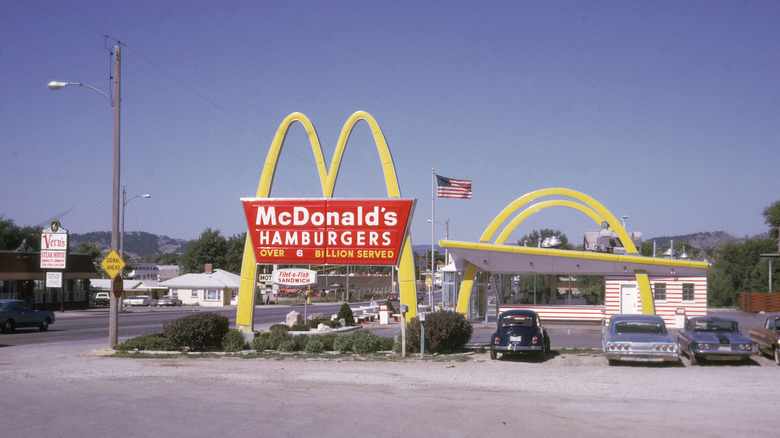
The history of the Filet-O-Fish is well-known to die-hard fans, and since it was first introduced during the Lenten season for Catholics, it could have very well stayed a limited-time offering. Instead, it was so popular that it became a permanent fixture, with a few tweaks. The original Filet-O-Fish was actually made with a pricier fish, halibut, before being switched to the cheaper Atlantic cod. The 1977 version in the commercial was also likely made with cod. McDonald's changed their type of fish yet again in 2013 to the more sustainable Alaska pollock.
The aforementioned fish switch shows just how strongly McDonald's is committed to sustainable fishery. Even as the sandwich evolved, their core promise remained the same: A whole, recognizable piece of fish that hasn't been too manipulated. In 2001, McDonald's launched a Global Sustainable Fisheries Program in response to worldwide worries on overfishing and questionable global suppliers. It was a savvy move at the time — the brand got to protect both its supply chain and its public image.
Today, almost all fast food chains are competing against one another in terms of sourcing, sustainability, and ingredient integrity. Though McDonald's is certainly not immune to its fair share of controversies and critics, it was ahead of the game when it came to highlighting whole foods. The global brand accurately predicted that trustworthy ingredients and responsible sourcing would soon matter as much as flavor.