

Why You Should Avoid Freezing Deviled Eggs
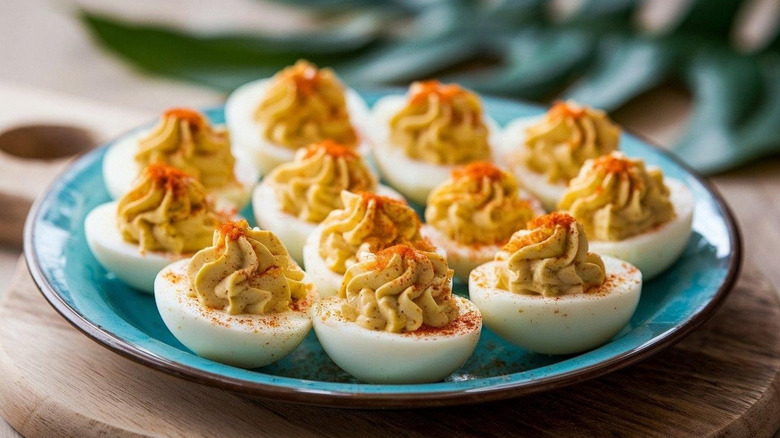
Many people instinctively know that it's wrong to put deviled eggs in the freezer. But asking "why, exactly?" is a valid question, considering other protein-rich foods go into the freezer just fine. Meat holds up well when frozen, so why are cooked eggs so different? The answer comes down to the chemistry and structure of the different parts of the egg, and how they react when ice crystals expand inside them.
The reason you should avoid freezing a cooked egg white is that it will have a yucky texture when it is defrosted. An egg white is a tight network of proteins that trap water in place. Freezing and thawing disrupts that arrangement irrevocably, causing them to unravel, a process called protein denaturation. As the ice crystals form under freezing conditions, they force their way through the tight protein network, leaving behind tiny ruptures, so when the egg thaws, it comes out rubbery and wet. It would still be firm but leaking the water it can't hold.
The yolk is ruined by freezing in a slightly different way. It's made of a dense mixture of fats, water, and proteins that are held together in a fragile, semi-emulsified structure. Freezing pushes water out, and destabilizes the balance between components, and the yolk loses its smooth, mashable consistency — becoming chalky and crumbly. In a deviled egg, the filling adds a third fragile element — the mayo. Mayonnaise is an emulsified sauce made of egg, oil, and an acid like lemon or vinegar, and it will separate if frozen. That's because as the watery elements form ice crystals and expand, the oil slips out of suspension, breaking the mixture. Essentially, a deviled egg depends on cohesion, and the freezer dismantles every element.
The fridge is better for deviled eggs
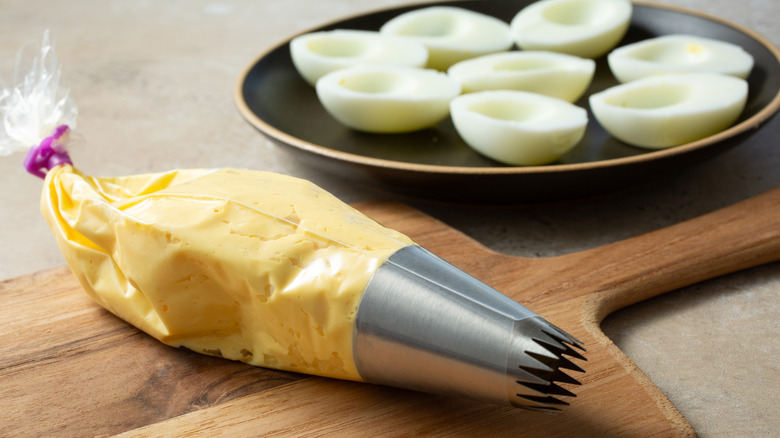
If you absolutely must freeze deviled eggs, the only workable approach is to separate the components and accept the trade-offs. The whites do not recover well under any conditions, so freezing only the yolks or the yolk and mayonnaise-based filling gives you the best chance of defrosting something usable if you want to prepare ahead. Even frozen separately, the texture of the unfrozen yolks or yolk mixture is going to be weird in noticeable and unpleasant ways. It will become unstable, slightly grainy, and therefore harder to pipe prettily back into the egg whites. Because it's separated, it may need some vigorous stirring to come back together, but it's probably not going to be as nice as before it went into the freezer.
Deviled eggs are delicious, and there's a different variation for every kind of gathering. Their whole charm is in the precision of their delicate, ornamental aesthetics and their inherent ephemerality. The best thing to do is understand, appreciate, and respect them for what they are, and make them fresh. They're fleeting and architectural, meant to look striking, like florid decorations that can be eaten in one or two bites. Ideally, the platter is emptied before they have time to slump.
Deviled eggs can be stored for a couple of days in the fridge and no more, but we suggest simply avoiding the freezer altogether. It's their delicate nature and fresh taste that makes them wonderful. You can make a big batch or a small batch of deviled eggs, but you can't preserve them in the freezer any more than you can hold onto the last star of morning in your hand.