

This Is Why Bakery Desserts Always Look Better Than Yours

We may receive a commission on purchases made from links.
Baking is no easy feat. You can spend hours in the kitchen kneading dough, whipping cream, and piping frosting, only to end up with a dessert you're not even happy with. But the next time you look at one of your creations, try not to be so hard on yourself, especially if you're comparing it to something from a bakery. There's a reason they look so good — it's because they're made by professionals.
I've worked in a number of kitchens throughout my life. I grew up in Ireland's gourmet food capital, where I spent years helping out at my parents' restaurant, before working as a server and prep hand at a top seafood restaurant, a busy hotel, and a historic cafe. When I moved to San Francisco, I joined one of the most popular bakeries in the city, where I've watched some beautiful baked goods come to life.
It truly is a joy to see a pastry chef at work. They move with both efficiency and ease, flawlessly guiding piping bags across cakes and shaping dough at speeds that can only be achieved through endless practice and study. These are skills that are tough to perfect without guidance. The chefs I've worked with have spent years at culinary school being trained to combine scientific precision with artistry to produce a range of desserts, from simple pastries to complex plated creations. They didn't wake up with the ability to roll the perfect croissant, so neither will a home cook.
Alongside education, equipment matters
Pastry chefs are not only taught how to mix batters and decorate treats. They take classes in mathematics, conduct scientific experiments, and study the physiological process of tasting, on top of learning about nutrition and business. They spend hours working on speed, product knowledge, and problem-solving, so that they can not only craft wedding cakes, sugar sculptures, and temper chocolate like a pro, but know exactly what to do when things go wrong. For example, I never knew that I needed to heat a bowl to help fix a split cake batter before starting at my bakery, nor did I truly understand how the temperature of butter and eggs can impact everything.
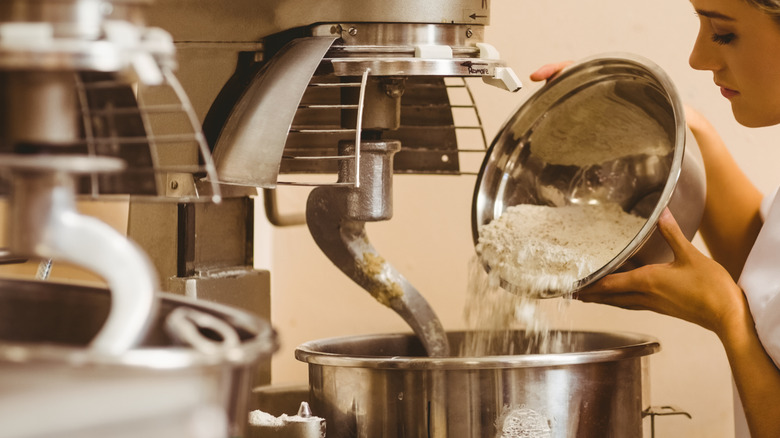
The other thing to remember is that the equipment you have at home is probably very different from that of a stacked professional kitchen. A $50,000 Hobart mixer is going to be a lot more effective than even the best at-home stand mixer brands, and someone using an industrial dough laminator will always win out against anyone baking homemade croissants. I also find it so much easier to use the large piping bags and tips used at work than the ones I have at home. Plus, there are some ingredients available to pros that we just can't get our hands on as mere mortals.
How to make desserts look more professional
There are some things you can get your hands on to make your desserts look more professional. Many chefs buy their kitchenware from places like Le Creuset and All-Clad. Nordic Ware is a good choice for baking trays and Fat Daddio's for cake tins. You'll also want to get yourself a cake stand, some good piping bags, and bowl scrapers. You can even buy products like Wilton Bake Even Cake Strips that wrap around pans for more uniform results, whereas investing in items like a Spring Chef Dough Blender can create better scones and biscuits.
It's also important to try to buy the highest quality ingredients you can, like European butter and King Arthur flour. There's a lot to learn about the various types of salt and flours, too. Additionally, be mindful that while some pastry recipes call for cold butter, others might require a different temperature. Finally, a little egg wash can transform pastries and breads — you can also glaze them with simple syrup for extra shine when they're hot out of the oven.
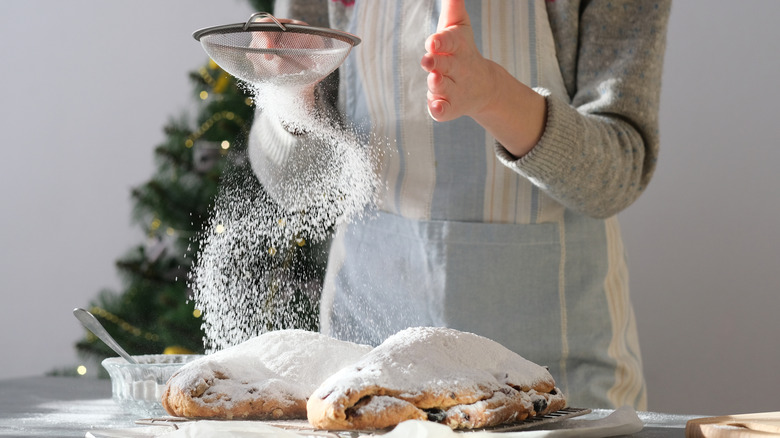
As for decorating, keep things simple. Use plain white crockery for plating or buy some neutral pottery. Top cakes with fresh flowers, dust things like tiramisu and puddings with cocoa powder or confectioners' sugar, and utilize things like crumbles and glazes. And if it doesn't work out, just try again. The joy of baking is that you're always aiming to create something new and, at the end of the day, all that really matters is that it tastes good.