

The Science Of Bark On BBQ (And How To Not Ruin It)
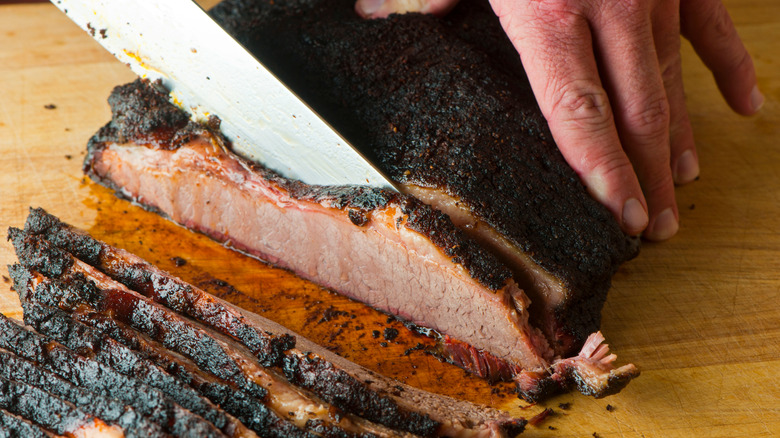
Not everyone who eats brisket knows what the barbecue bark is, but they all know it's wildly delicious. Mostly commonly forming on slow cooked hunks of fatty meat like brisket or when making pulled pork, bark is that thick blackened crust that forms on the surface, which is infused with an incredible amount of flavor and complexity from spices, fat, and smoke. It's the reason burnt-ends are such a desirable hunk of meat. Bark is so essential to the best barbecue that mastering the art of forming it is essential to becoming a true pit master. So we decided to talk to one, pit boss Michael Conlon of Virgil's Real BBQ in New York City, to ask just how bark forms, and any tips he has for perfecting it.
Conlon broke down the formation of bark into several components. The first two you are probably familiar with. There is the caramelization that comes from the sugar in a barbecue rub, and the Maillard Reaction, which is the browning you get from meat proteins over high heat, and which Conlon says, "is central to bark's nutty flavor and depth." Then there is the smoke. Combusting wood produces something called lignin that sticks to the meat, and he explains, "when wood burns in a pit, lignin undergoes pyrolysis (thermal breakdown), releasing aromatic compounds that are key to the smoky flavor and aroma of grilled foods." Conlon says those different compounds in smoke are responsible for a lot of bark's complexity, and can contain flavors that are spicy, sharp, and even sweet or fruity.
More factors affecting bark
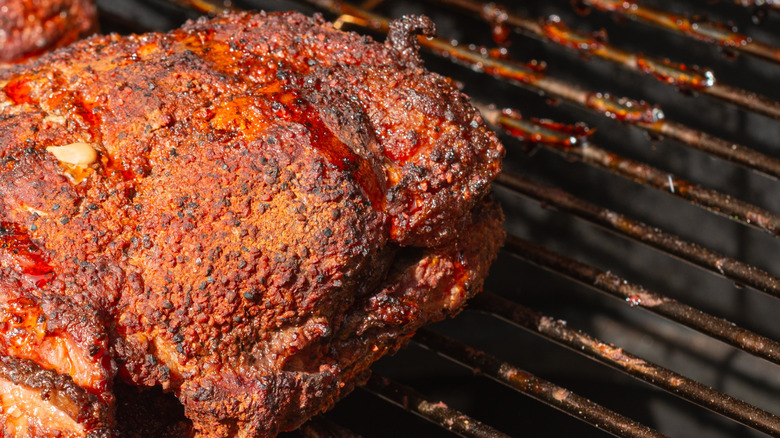
Bark on barbecue is formed from the interaction of many processes like rendering of fat, the Maillard Reaction, and wood combustion. While all those reactions happen in lots of different barbecue recipes, bark forms on things like pork shoulder because of how important fat is to the process. Conlon tells us, "As brisket cooks, fat renders and coats the surface. Under sustained low heat and smoke, these fats and spices link into long molecular chains that harden, giving bark its firm, almost bark-like texture." Essentially, fat is the glue that holds your bark together. Finally you have the moisture evaporation from long, sustained slow cooking. Conlon says that as that happens, "a thin, protein-rich film (pellicle) forms on the surface. This sticky layer allows smoke particles to adhere and accumulate, eventually hardening into bark."
That's a lot to keep track of, but Conlon thinks it's worth it. He notes, "bark is important because it's the flavor, texture, and visual centerpiece of smoked meat. It's the product of science and art, and it's what separates truly great BBQ from the rest." It's not just that it tastes great (although obviously it does), it enhances every aspect of the meat. Conlon says that bark helps to keep your barbecue tender by locking in moisture, and it adds a great textural contrast to the tender meat inside. It's also a huge part of the visual appeal of barbecue, and all chefs know how much we eat with our eyes. Lastly, a great bark is a clear signal of the cook's abilities, because of the knowledge it takes to achieve it.
Mastering a few key variables will make your barbecue bark much better
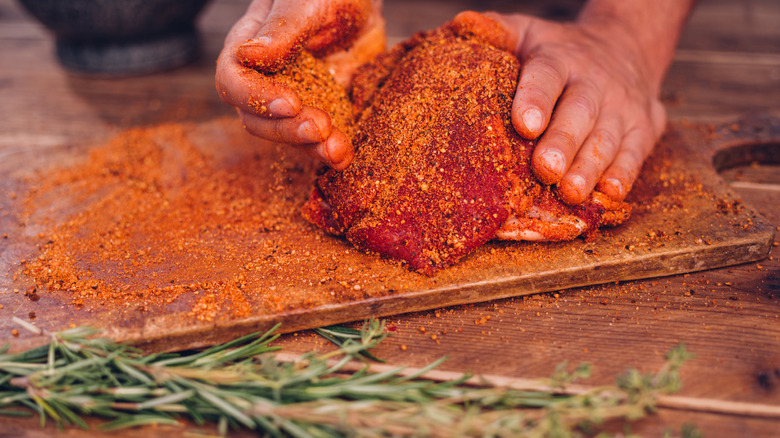
Of course, knowledge of all these interacting processes will only get you so far if you don't know how to manage them. Conlon says there are first variables to focus on. First he says, "rub composition: salt pulls moisture, sugar caramelizes, and coarse spices add texture and flavor." Next he tells us to look for a quarter-inch fat cap, which will slowly render and keep the bark from becoming too brittle. For smoke, Conlon explains, "light, clean blue smoke deposits flavor without bitterness." He also recommends a steady cooking temperature between 200 and 275 degrees Fahrenheit, as any higher can burn the bark before it's done. Humidity is the final variable, and Conlon warns, "Too much steam prevents Maillard from taking hold; aim for 40–50% humidity."
Conlon tells us that lots of meats from beef ribs to pastrami can benefit from a great bark when barbecuing, but brisket is the classic way to test yourself. For a simple process, he says take your favorite BBQ seasoning mix and, "apply a thick layer of rub to the meat 24 hours before smoking it. Leave the brisket alone for the first 3-4 hours of the cook, and wait until the bark is firm before wrapping the meat." It also helps to use pink butcher paper when wrapping your brisket instead of foil, as that will let more moisture escape and prevent the meat from steaming. But once you understand what makes a great bark in barbecue, it becomes much easier to just be patient, follow the rules, and trust the process.