

The Food Mistake Boomers Keep Repeating (And It's Costing Them Money)

Some older-generation consumers may dog Gen Z consumers for perceived "frivolous expenditures," like avocado toast or buying coffee from a cafe. But, according to a January 2026 survey conducted by the Motley Fool, consumers of all ages would benefit from taking a closer look at their financial habits surrounding food. Per the study, members of the Boomer generation (born 1946-1964) are most likely to discard leftovers or expired food. 24% of Boomer survey respondents admitted to doing this. The study also found that Boomers are more likely to stick to familiar name-brand grocery products rather than opt for cheaper generic alternatives.
It's worth noting that the same study found that Gen Xers (23%) and Millennials (21%) are almost as likely to discard leftovers or expired food as their Boomer counterparts. Only members of Gen Z are considerably less likely to do so, at 18%. By contrast, the biggest money-wasting habit of this younger generation is unnecessary orders from delivery apps like Grubhub, reports the study.
These findings might seem surprising considering that, in many ways, the Boomer generation is known for its thrift, practices which may have stemmed from growing up during times of economic uncertainty. However, these same ingrained habits might also explain overbuying at the grocery store, stemming from the same scarcity-minded predilection to "stock up." However, to save money and reduce unnecessary food waste, consumers shouldn't feel the need to overbuy simply because there's an advertised sale. Buying five cans of tomatoes at a discount doesn't equate to any real savings if you end up having to throw away excess, expired food in the end.
Boomers are more likely to throw away leftovers and let food expire
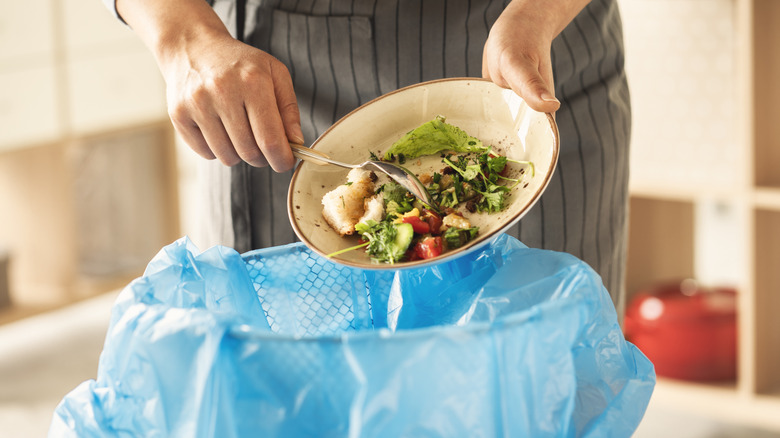
Regarding the food-away-from-home waste front, there might be a reason why Boomers are more likely to pitch their restaurant leftovers than Gen Z diners-out. Some consumers have a negative attitude toward eating leftovers due to anxiety over food safety, especially when it comes to leftover meat or fish. Indeed, this overlaps with dominant Boomer generation dining trends. Compared to other generations, Boomers ate a lot of fish growing up, and are still more likely to feature large amounts of meat with every meal – trends not broadly shared by Millennial and Gen Z consumers.
Hundreds of dollars can be wasted every month when households regularly throw away food. To help combat unnecessary waste, foodies (of the Boomer generation or any age) might try planning their meals ahead of time. This can help avoid double-purchasing the same ingredient. Maybe you already have everything you need stocked in the cupboards at home. Even if meal planning isn't your thing, give your pantry, fridge, and freezer a through once-over before you embark on your weekly grocery run. Taking a second look to acquaint yourself with the existing inventory can add up to major savings. Perhaps more-specifically to Boomer buyers, don't be afraid to choose a generic item over a costlier brand name, even if you've never tried it before. The quality may surprise you. In fact, when it comes to milk, generic and name-brand are often the same product.