

Are Cracked Tomatoes From Your Garden Safe To Eat?
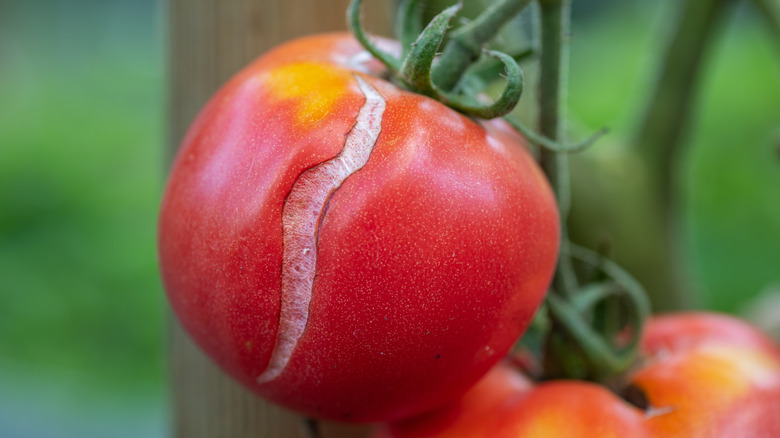
Growing your own tomatoes can be an absolute delight, but it can also be a house of horrors. From planting them too shallow to using the wrong fertilizers, there's so many mistakes to avoid when growing tomatoes. Then, once you've almost made it to the end, your tomatoes might suddenly crack. There's a reason tomatoes split when they ripen, and it all boils down to regular and consistent watering. Cracking typically happens when a tomato's inside grows faster than its skin can stretch. This can occur if a heavy rain falls after a long dry spell, or if you went out of town and tried to overcompensate with water when you came back.
The good news is, though your 'maters might not win any beauty contests, they're usually still perfectly edible. If your tomato is still firm, smells fresh, and doesn't show any signs of spoilage, it's generally safe. A small split that hasn't been there for long is usually fine, just be sure to cut away the damaged bits. Think of your less-than-perfect tomato as just having a little cosmetic damage, but she's still ready for any of these tasty tomato recipes.
Now, what you don't want is any kind of fuzzy mold, insect damage, mushy texture, or sour smells. Inspect the crack carefully for bug larvae as well. If it's an especially deep or wide crack, you're better off composting it. The risk of infection is too high, which is also why gardeners warn against using any split tomatoes for canning as well.
How to prevent tomatoes from splitting
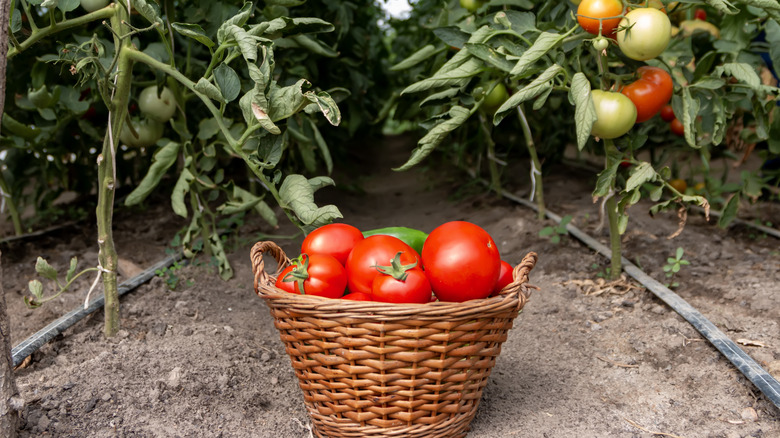
While even the most seasoned gardener can't completely eliminate cracking on tomatoes, there are some preventative steps you can take. Besides maintaining a consistent watering routine, be sure to keep a rain gauge nearby so you can adjust accordingly during summer showers. A drip irrigation system is ideal, and if you're planning on traveling, you'll want to have a timer set up. Tomatoes appreciate healthy soil, and benefit from fertilizers tailored especially to them. You can also make an all-natural fertilizer from kitchen scraps like onion peels to give tomatoes an extra boost.
Finally, you'll want to pick tomatoes when they're just beginning to change from green to red. This is called the "breaker stage" of development, and it happens when the tomato has finally reached full maturity. If you leave them on any longer, odds are the tomatoes will crack or split — or the sun and insects will get to them before you do. The good news is, you're not sacrificing any flavor by picking those San Marzanos early. This is actually the best time to harvest tomatoes.
Once picked, let them continue to ripen to a lovely shade of red in a dry, cool part of your kitchen. If you want to speed up the process, place the tomatoes in a paper bag. Similar to bananas, you'll trap the ethylene gas inside, which induces the ripening process. And even if you do lose a few tomatoes to cracks and splits, nothing tastes better than homegrown.