

15 Foundational Flavor Combinations Behind The World's Most Iconic Dishes
The rich, savory character of your favorite dish doesn't happen by accident — it's usually built on a carefully layered flavor base. This base often contains just a handful of simple ingredients, but when they are chopped and sautéed, heat and fat draw out and transform their flavors. The result is a cohesive base that provides a backbone of depth, complexity, and balance in all kinds of recipes, including soups, stews, sauces, and curries.
Flavor bases also serve as a cultural indicator and exist in most global cuisines. There's the famous French mirepoix and its offshoots, which include Spanish sofrito and Louisiana's "holy trinity." There are also foundational blends with distinct origins, ingredients, and flavor profiles, like China's peppery trinity of aromatics, and Ukraine's beet-infused smazhennya. The sheer variety of existing flavor bases highlights just how expansive the culinary world is. No one blend is superior to another, as they all have unique purposes. Below, we've compiled a list of foundational flavor combinations behind the world's most iconic dishes.
French mirepoix
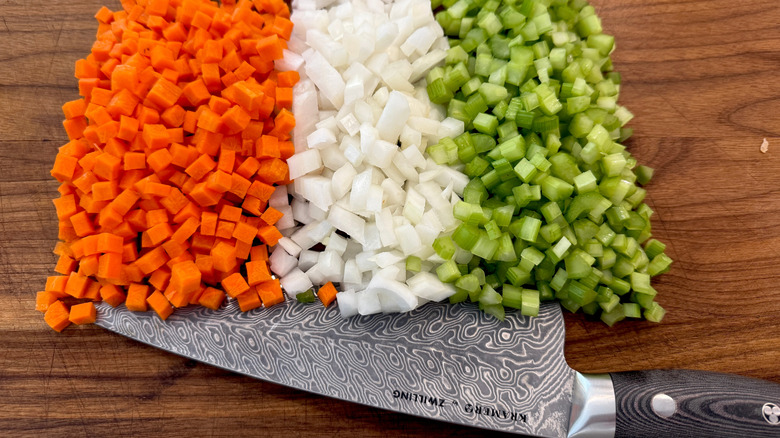
A mirepoix is the aromatic, savory, and sweet foundation that makes up many of your favorite dishes. The iconic base uses onion for depth, carrot for sweetness, and celery for bright complexity, and it dates back to 18th-century France. It was supposedly given its name by a cook who invented it while working under the duke of Mirepoix — a commune located in southwestern France.
When preparing this flavor base, the vegetables are typically diced or chopped into small, uniform pieces. If you're making a sauce, stock, or a braise, using roughly cut vegetables is perfectly acceptable. The ingredients are sautéed in butter or oil, which helps their flavors fully permeate the dish as it cooks. The exact ingredient amounts for mirepoix can vary between recipes, but the traditional makeup — let's say you're making a classic French beef bourguignon – is a 2:1:1 ratio of onion, carrot, and celery.
Spanish sofrito
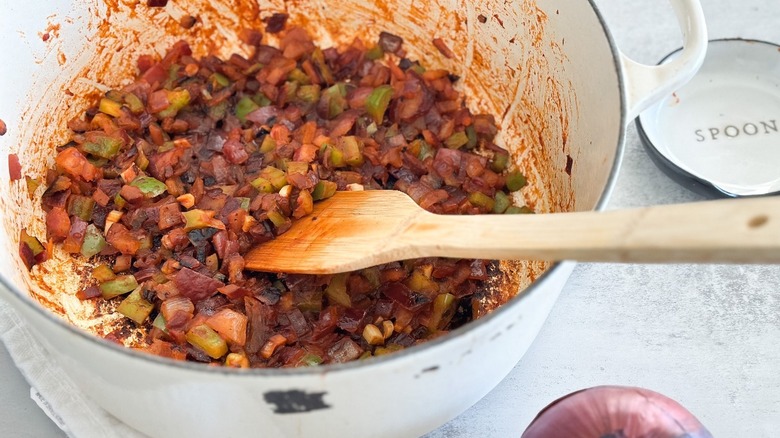
The go-to flavor base in Spain is sofrito, which means to "lightly fry" in Spanish. It's a savory mixture of finely chopped tomatoes, onion, garlic, and sometimes peppers and paprika that's sautéed or stir-fried in olive oil or butter. Sofrito has been integral to Spanish cooking for centuries; the earliest mention was found in a cookbook from 1324, with a recipe consisting of onions and/or leeks with salt pork or bacon. Today, you'll not only find variations of sofrito recipes within Spain itself, but also across South America and the Caribbean, where it was introduced by Spanish colonists.
Unlike the French mirepoix, which is used mostly just as a flavor base, sofrito is a base, flavor-enhancing dish finisher, and savory garnish all wrapped into one. Whereas mirepoix only offers sweet, savory, and aromatic notes, sofrito is a rich fusion of sweet, tangy, peppery, aromatic, and savory flavors. Sofrito kicks off classic recipes like seafood paella and arroz con pollo, but it can also be used as a topping or condiment to elevate grilled meats and sandwiches.
Puerto Rican recaito
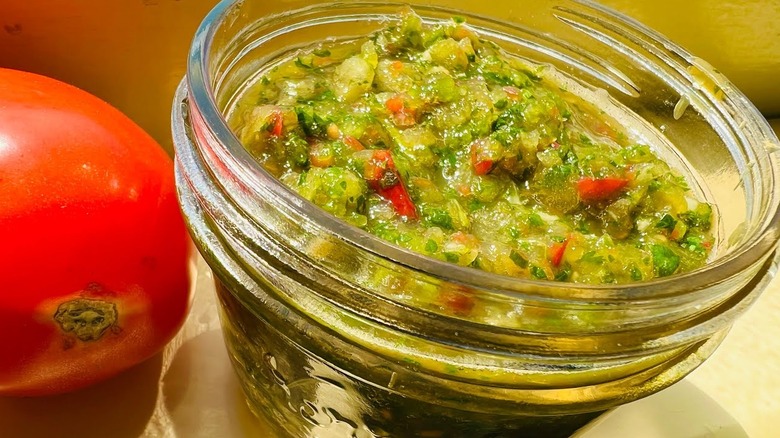
One of Spanish sofrito's many offshoots is Puerto Rican recaito. While both variations contain peppers, onion, and garlic, recaito doesn't include tomatoes. It also features culantro leaves, which taste similar to cilantro (the plants are in the same family) but with a far more intense flavor. Recaito requires a specific type of pepper, too — a small, sweet chile called ajíes dulces.
Unlike the finely sliced mirepoix, recaito's ingredients are usually roughly chopped before being sautéed in annatto oil or lard. You'll find some versions with the pepper seeds in and some without, but ultimately it's a matter of preference. Recaito essentially checks off the same flavor notes as sofrito, but the distinctive, green-hued base swaps the depth of the tomato for a more refreshing herbaceous quality. Recaitos are part of the reason why Puerto Rican food is so vibrant, flavorful, and aromatic. Beyond being used as a recipe base, they can also be blended into rice, dolloped over grilled meats, or swirled into stews.
Dominican sazón
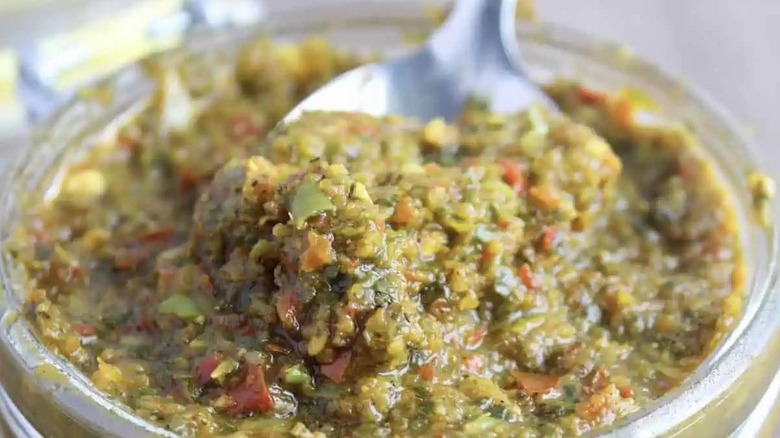
Sazón, which means "seasoning" in Spanish, is the name for sofrito in the Dominican Republic. The flavor base consists of bell peppers, onions, garlic, annatto (achiote), oregano, vinegar, tomato paste (or sauce), and cilantro. Combined, they deliver additional layers of flavor that include earthy, aromatic, spicy, herbaceous, zesty, tangy, and refreshing notes. The sazón we're referring to has a consistency closer to salsa, but it's distinct from the identically named store-bought taco seasoning substitute that's popular in Puerto Rico and Cuba (though both serve similar all-purpose functions).
Some well-known Dominican dishes that incorporate sazón include sancocho, a hearty slow-cooked stew, and habichuelas guisadas, also known as Dominican beans. You can also use sazón to spruce up home-cooked fries or top off succulent meat dishes like prime rib. Plus, it's easy to batch sazón, as you can easily refrigerate or freeze it until you need it next.
Cuban sofrito
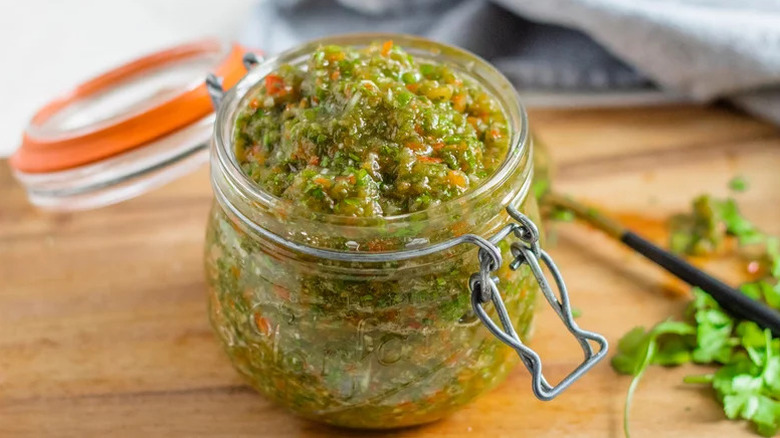
The Cuban take on sofrito switches things up even more — it's composed of onions, garlic, and bell peppers, but depending on the recipe, it may also include tomatoes, dry white wine, oregano, bay leaf, and/or cilantro. Some versions even introduce a meat component, like chorizo sausage, bacon, salt pork, or diced ham.
Once the ingredients are selected, they're seasoned — sometimes with a homemade blend, sometimes with dry sazón — and sautéed in oil. The result is an umami-rich purée with a complex savory, herbaceous, and tangy flavor profile. Sofritos may be inherently customizable, but Cuba splits them into two types: with or without tomato. Dishes like fricasé de pollo, braised ropa vieja, and enchilado de camarones tend to use a tomato-based Cuban sofrito. Meanwhile, Cuban black beans or an egg-topped picadillo cubano will likely incorporate a tomato-less sofrito.
Cajun/Creole holy trinity
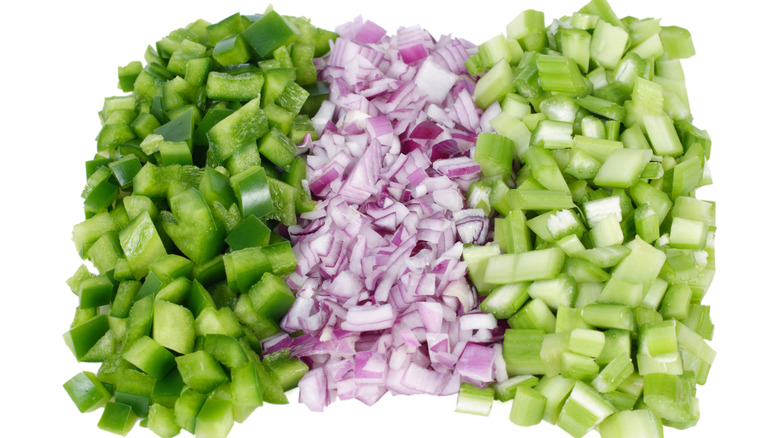
In Cajun and Creole cuisines, a mirepoix is called "the holy trinity," and it swaps out carrots for green bell peppers. This is likely due to the fact that carrots are native to Central Asia, and while they were cultivated in Europe, early American settlers had to make do with indigenous bell peppers instead.
The name is inspired by the Catholic concept of the Holy Trinity, which represents the Father, Son, and Holy Ghost as facets of God. It's a roundabout way of saying that celery, onion, and green bell pepper make up the immutable core of divine flavor. It's sometimes called the Cajun trinity, despite its frequent use in Creole cuisine.
The holy trinity is the foundational flavor base for classic dishes like gumbo, jambalaya, and crawfish étouffée, with the bell pepper offering a sharper vegetal note compared to carrot's soft sweetness. It's often combined with a roux of flour and oil (or butter) to form a base for soups, stews, and sauces. The ingredients are typically sautéed until soft, not browned, as the goal is to preserve their fresh, delicate qualities.
Chinese holy trinity
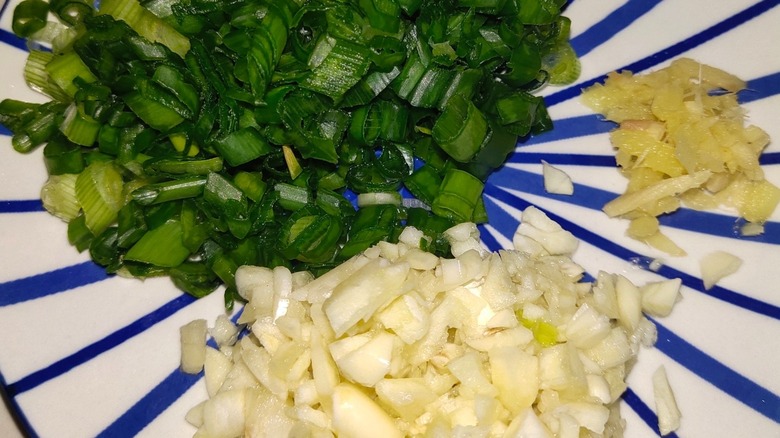
Three aromatic ingredients form the foundation of many dishes within China's vast and varied cuisine: garlic, scallions (spring onion), and fresh ginger. Like Louisiana's version of mirepoix, these base ingredients are sometimes informally referred to as the "holy trinity" of Chinese cooking.
When you make a stir fry, these ingredients are usually the first things sizzling in the wok, infusing the oil with savory, spicy, sweet, and refreshing flavors. This blend is used to create layers of complexity in everything from noodle-based dishes and savory soups to red-cooked dishes like Sichuan dry pot.
Due to the sheer scale of China and its cuisine, the blend takes on varying forms across different regions. For example, in Sichuan cuisine, fiery elements are added to the flavor base, such as hot chilies and Sichuan peppercorns. That said, the purpose of these ingredients runs deeper than just providing specific flavors. Each has a warming quality that, in traditional Chinese folk medicine, is believed to promote the flow of qi and blood around the body. Ginger and garlic in particular are thought to naturally aid digestion and detoxify the body.
Italian battuto
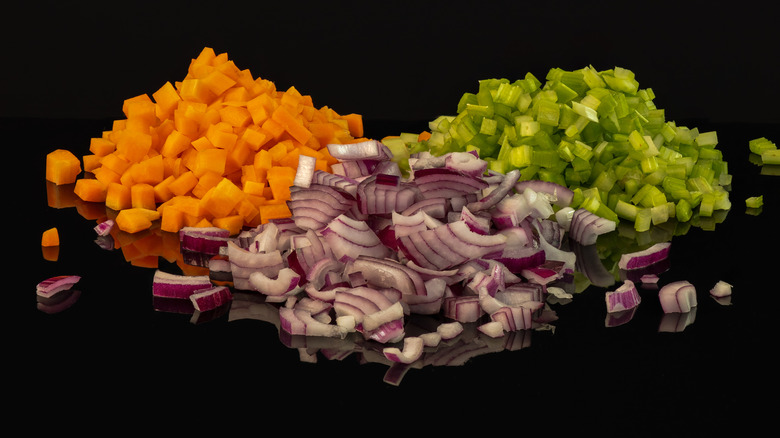
The signature Italian flavor base is known as battuto. This translates to "beaten" in English, which accurately describes its extra-minced consistency. Some Italians call this ingredient foundation "soffritto," which translates to "slowly fried." Others use "odori" — meaning "smells" — which describes the aromatic impact of the ingredient combo.
It's also known as "the Four Evangelists of Italian Cooking" and features the same ingredients as mirepoix — onions, celery, carrots — with the addition of garlic. The ingredients are minced, then cooked in olive oil or butter until very soft. Battuto often features additional herbs, like basil and parsley, and may even include pancetta, prosciutto, or another type of cured meat.
The addition of garlic and cured meat gives battuto a more robust savory quality than French mirepoix. That said, many French recipes still use those ingredients, they're just not part of the mirepoix base. Like most flavor bases, the ratio of ingredients for battuto depends on what you're making. For a classic ragù alla Bolognese, the standard 2:1:1 ratio of onion, carrot, and celery works best, and garlic can be added based on personal taste.
German Suppengrün
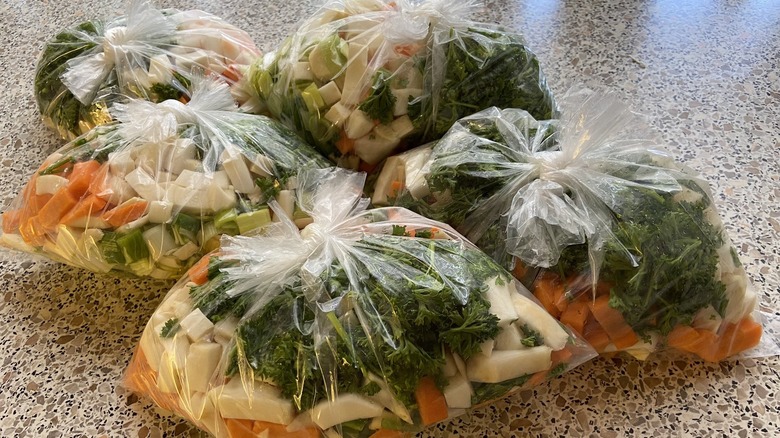
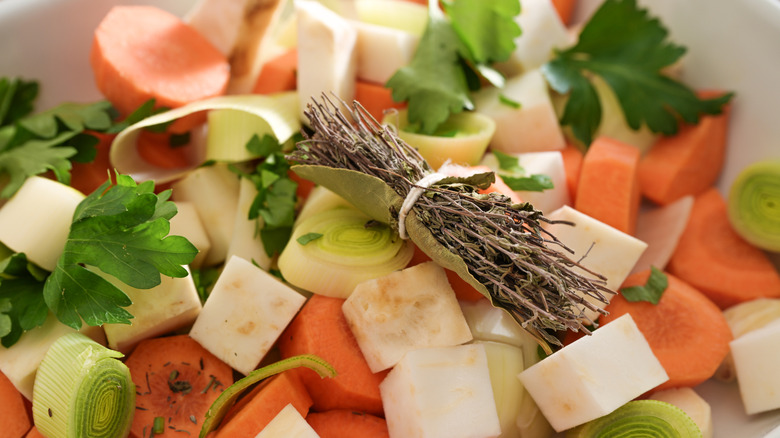
The foundational flavor trifecta took a turn on its way to Germany, evolving to include parsnips and herbs, while swapping celery for celeriac (celery root), and replacing onions with leeks. It goes by Suppengrün or Suppengemüse, meaning "soup greens."
If you own a German cookbook, you might see a recipe call for a "bund of Suppengrün." This refers to a bundle of the ingredients which you can find pre-packaged together at most grocery stores in Germany. Most German stocks and one-pot meals (Eintopf) start with this foundational blend, and it's also used to thicken sauces and spoon over roasts.
Each ingredient plays a role; carrots add sweetness, celeriac contributes a root-like bitterness, leeks are the savory component, parsnips are earthy with a subtle spice, and herbs — like thyme and lovage (Liebstöckel)– provide refreshing aromatics. Whether you're whipping up some homemade chicken stock or making one of Germany's many potato dishes, you'll want to have the flavor-enhancing power of Suppengrün in your cooking toolkit.
Polish włoszczyzna
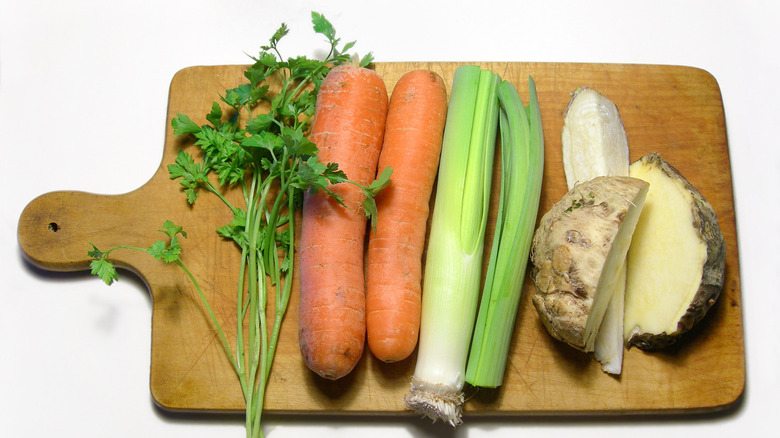
Poland's version of mirepoix, włoszczyzna, features similar ingredients to Germany's — carrots, celeriac, and leeks — with the addition of cabbage and a vegetable called parsley root. Also known as Hamburg parsley, parsley root looks like a parsnip but has a different texture, and it actually tastes like a more robust blend of celeriac, parsley, and carrot. That's not the only thing that makes włoszczyzna stand out from similar European flavor bases – rather than being sautéed with a fat, the ingredients are actually boiled to create a broth, then discarded.
Włoszczyzna means "the Italian stuff" in English, and it was originally used to describe anything Italian-related. Nowadays, it refers to a bundle of these vegetables sold at stores. Grocery stores in Poland also sell frozen (włoszczyzna mrożona) and dried (włoszczyzna suszona) versions of the blend.
While the ingredient ratio can vary, these bundles typically contain 3 to 4 carrots, 2 to 3 parsley roots, half a celeriac, 1 leek, and a quarter of a cabbage. An onion is often added when making meat dishes. It doesn't matter whether the ingredients are finely diced or roughly chopped, so long as the pieces are relatively uniform in size. It's used in popular Polish dishes like żurek soup, barszcz soup, and gołąbki, which is a type of European cabbage roll.
Thai herb trinity
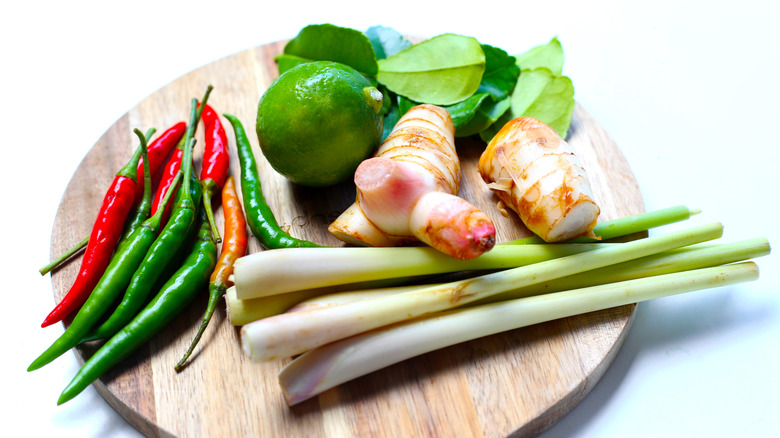
The vibrant flavor of Thai cuisine can usually be credited to three ingredients known as the "Thai herb trinity" – galangal, kaffir lime, and lemongrass. You'll often find the trio sold in a pre-packaged bundle at Asian food markets, and like some of the other foundational flavor bases we've covered, it comes in dried, frozen, or fresh form. If you're unfamiliar with galangal, you can think of it as ginger's sweet, tangy, and peppery cousin. Galangal is also woodsier and more citrusy than ginger.
Kaffir is the go-to lime variety in Thai cuisine, and while the juice and zest of the fruit can be added to recipes, it's typically the leaves of the lime tree that are used in cooking. Meanwhile, lemongrass is a fairly common ingredient across Southeast Asian cuisine. Thai chilies are often thrown into the mix, too. When combined, the herb trinity marries strongly aromatic notes of citrus and pepper, adding a delicious brightness to classic Thai soups, curries, and stir-fries.
Mexican holy trinity of chiles
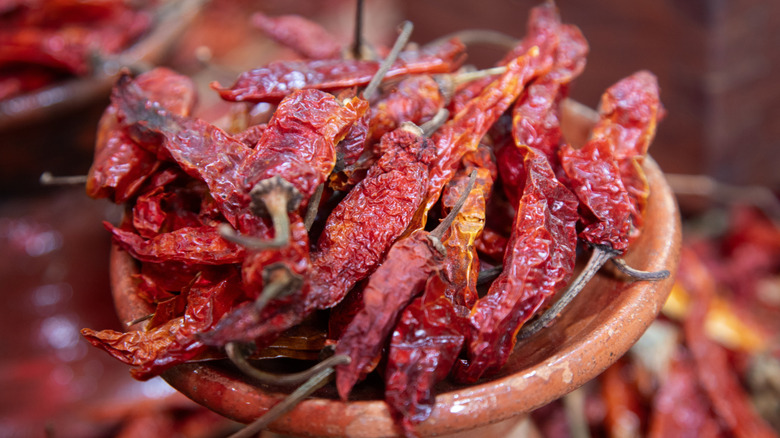
Besides Chinese Sichuan cuisine, Mexico might boast the spiciest foundational flavor blend, composed of three types of fiery-yet-flavorful dried chile pepper. This isn't surprising considering Mexican cuisine's love affair with peppers that will set your mouth on fire. That said, the types of chile used in this spicy base can vary depending on the region. They can range from ancho (dried poblano) and serrano peppers to the lesser-known mulato (extra-aged poblano) and pasilla peppers. The most common chile trio consists of ancho, guajillo, and chile de árbol peppers, sometimes with pasilla in place of guajillo.
These three chiles imbue soups, stews, sauces, and marinades with enhanced flavor and balanced heat. Anchos are mild and earthy with touches of sweet dried fruit, guajillos are a bit spicier with a tangy, berry-like smokiness, while grassy chiles de árbol are the spiciest, reaching up to 30,000 on the Scoville scale.
Ukrainian smazhennya/ Russian zazharka
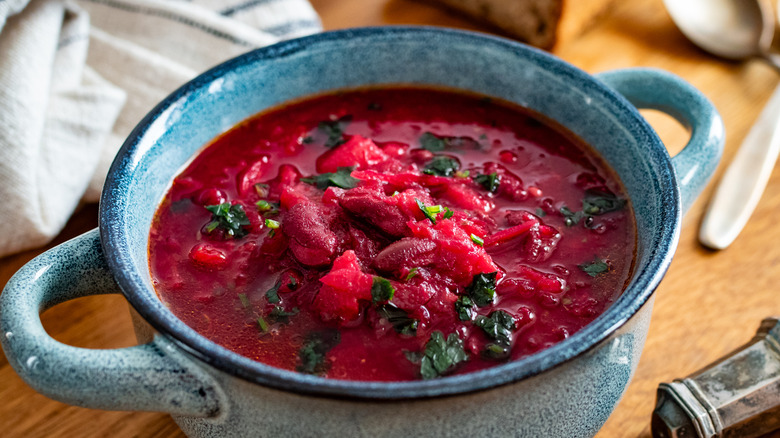
Ukraine and Russia both use the same flavor base in many of their recipes, but each call it something different. Ukrainians refer to it as smazhennya, which means "frying" in English, while Russians call it zazharka, meaning "fried vegetables."
Smazhennya is a mix of onion, carrot, beets, and sometimes celery, and it's the foundation of Ukraine's national dish: borsch. There are endless varieties of borsch – it's arguably the most famous dish in Russia, too, despite its Ukrainian origins — but most recipes still start with smazhennya.
Interestingly, unlike other flavor bases which have multiple applications, smazhennya is generally reserved solely for borsch. The ingredients are typically sautéed in fat, then added to the soup stock as it cooks. The unique blend brings together the aromatic savoriness of onion, the sweetness of carrot, the earthy richness of beets, and the refreshing, vegetal taste of celery.
Indian holy trinity
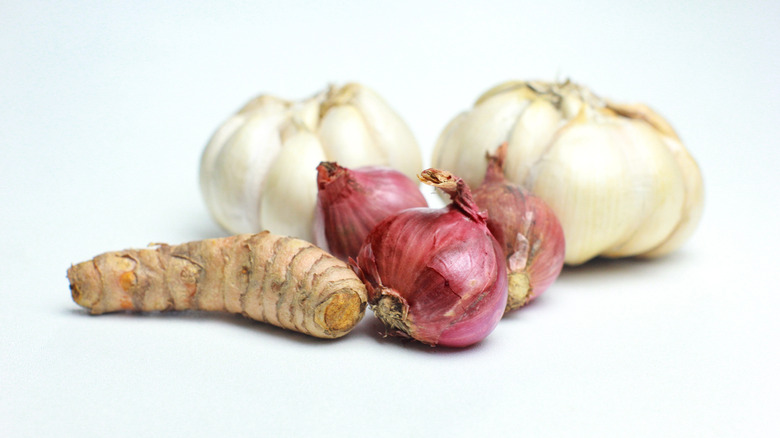
Attempting to make Indian food for the first time can be somewhat intimidating for the uninitiated, thanks to an extensive list of ingredients with potentially unfamiliar names. However, it's not as complicated as you might think, especially as many Indian dishes also start with a simple trinity of garlic, red onion, and ginger, often with the addition of green or red chili peppers. You may notice this is essentially the same base used in Chinese Sichuan cooking, which is unsurprising considering both cuisines have a penchant for spicy, fragrant curries.
Many Indian meat-based dishes — like the iconic butter chicken – and most curry bases start with this foundation of garlic, onions, and ginger. When they are ground into a paste, blended, and cooked in ghee (clarified butter), the combination delivers the rich aroma and depth of flavor that Indian cuisine is known for.
The three Jangs of korea
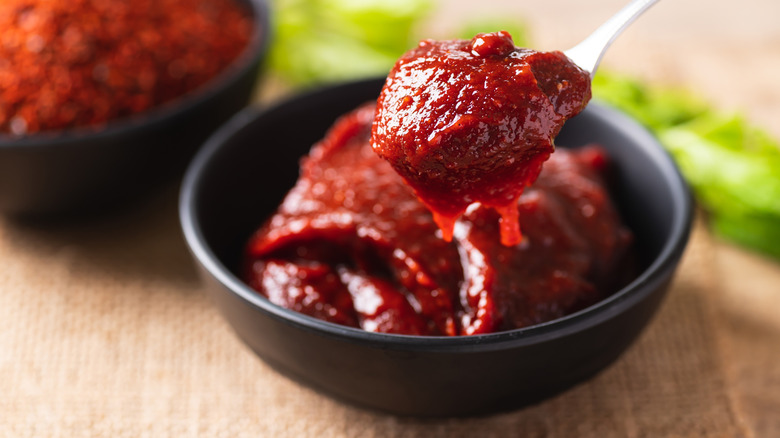
Korea's favored flavor foundations are ganjang (soy sauce), doenjang (soybean paste), and gochujang chili paste – collectively known as "the three Jangs." These are notably different from the other bases used throughout Asia, and most Korean dishes incorporate at least one of the Jangs.
You're likely already familiar with the savory, salty, umami-rich taste of soy sauce. Doenjang is a brown, fermented sauce with a pungent earthy, salty, and sour profile, while the red-hued gochujang delivers a spicy fermented kick that has a subtly sweet finish.
Gochujang is a key flavor component in Korean fried chicken, while ganjang and gochujang are used in beef bulgogi, tteokbokki, and Korean barbecue. Meanwhile, dishes like budae-jjigae (army stew) – which includes kimchi, spam, sausages, and ramen noodles — often incorporate all three Jangs.