

Why You May Want To Skip Buying Deli Meat, Even At The Cheapest Grocery Store
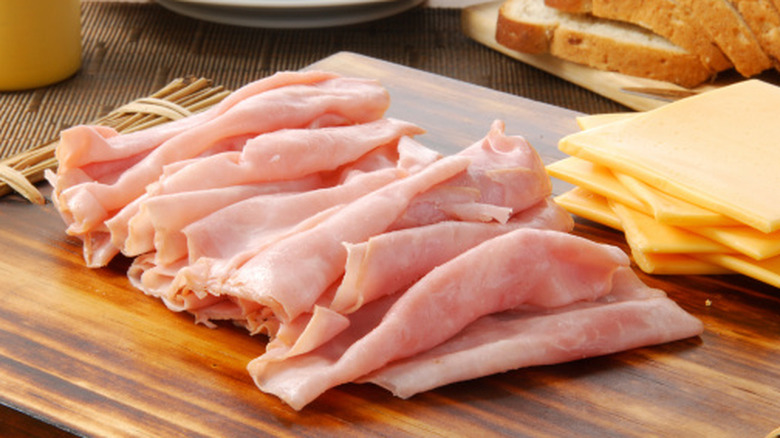
Deli meats are an undeniable staple of the American diet. Two slices of mayonnaise-smeared bread stacked with meat and cheese — and maybe some lettuce and tomato, if you're lucky — is the symbol of lunch in this country. And while every component is important, the way the sandwich is constructed usually begins with whatever meat is in the center — it's a turkey and Swiss, or a ham and cheddar, not the other way around. But while this staple dish is both durable and eminently portable, there is one downside significant downside to it, particularly these days: Deli meats are way more expensive than they need to be.
Step up to the deli counter, and the lowest price you are likely to see for the meats is about $8 per pound. With that at the bottom, they often climb much, much higher. Stop into Trader Joe's for some organic sliced turkey, for example, and you're looking at $5.99 for a 6-ounce package. That's $16 a pound for that deli meat. At that price, you could be eating USDA choice ribeye instead.
There is, of course, certainly a convenience factor to these packaged deli meats. They are sold sliced and ready to go, all you have to do is open the package, slap it on some bread, and lunch is made. But is that convenience really worth the cost? We don't think so, especially once you start delving into the other issues with sliced deli meats.
Reasons to avoid deli meat other than the price
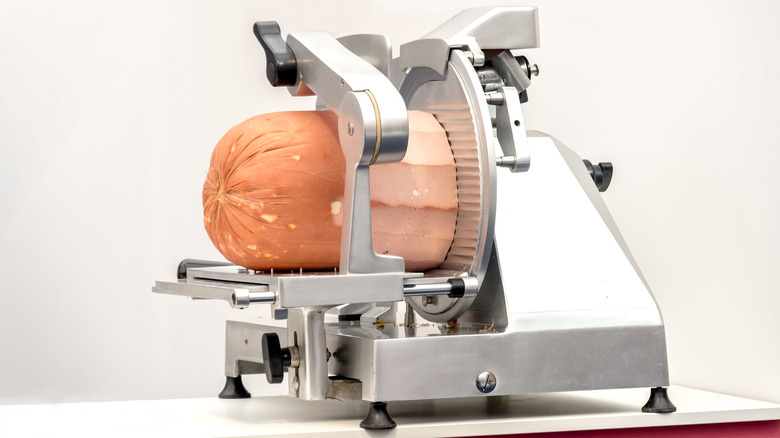
When you pick up a slice of deli meat to toss it on your sandwich, it is immediately apparent to anyone paying attention that this is not a regular piece of meat. The point is redoubled when you go up to the deli counter and look at the array of different meat options, many of them perfectly molded loaves in geometric shapes that have no relationship to the animal they came from. The loaf of ham being sliced should not, by any means, look the same as the loaf of turkey or chicken, and yet they are both strange rectangular prisms. There are sometimes whole-muscle cuts, like roast beef, where you can still tell that it came from an animal, but many other varieties are heavily processed. Making turkey breast into deli meat, for example, often involves grinding the meat, adding seasoning and additives, injecting the paste into a casing, and then cooking it. In fact, largely as a result of this, sandwiches are the number one source of ultra-processed calories in U.S. diets.
Another reason that you might consider building your midday meal around something that doesn't come from the deli counter is that these sliced packaged meats are a common vector for serious foodborne illness. Because these meats are cooked when they are first produced and then sliced and eaten cold, they are quite prone to contamination. Listeria is of particular concern with deli meats, a pathogen with a fatality rate of around 20%. And the deli counter is a serious culprit in spreading this bacteria, as all of the meats are sliced on the same machines, leading to significant cross-contamination between these ready-to-eat products.
Alternatives to deli meat for your daily sandwich
With high prices, a high degree of processing, and a high risk of foodborne illness, it should be pretty clear that those sliced deli meats don't belong in your shopping cart. But cutting those products out of your diet doesn't mean that you need to give up your usual lunchtime routine. Instead, you just need to get a bit more creative.
A simple way to both save yourself money and take more control of the quality of the food you are eating is to prepare your lunch meats at home. This might mean, for example, buying a big package of chicken breasts and prepping it on Sunday for the week ahead. You can poach chicken breasts in many different liquids, like broth, wine, or various sauces, alongside whatever seasonings you like, allowing you to easily cook and flavor a large batch of meat while also keeping it nice and lean. Then just slice it up and it's ready for your sandwiches. With chicken breasts selling for under $3 a pound, this gives a huge savings over the heavily processed meats, which often cost about three times as much.
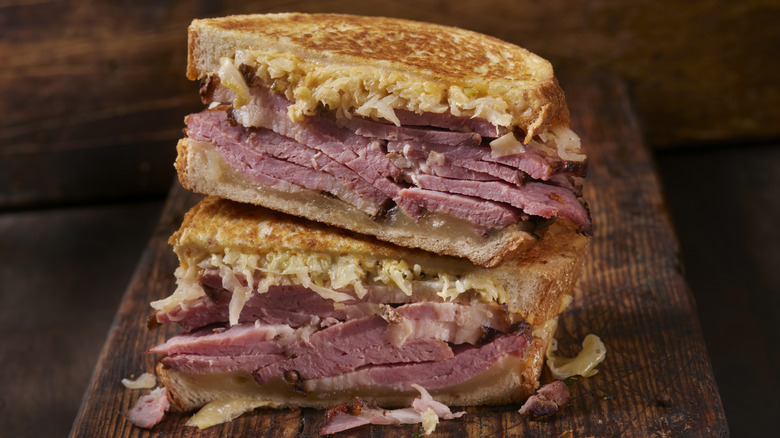
Just like with the chicken, you can make an extra-large eye of roast roast for Sunday supper, then slice the leftovers thin and have roast beef sandwiches the next few days. Or try out a crock pot corned beef recipe and fill your lunchbox with Reubens all week. Beef roasts aren't cheap, but neither is roast beef. However you choose to prepare the meat for your sandwiches, doing it yourself doesn't just net you some savings, it also puts you in control of the flavor and quality of the final product.