

The Iconic Alaskan Meat People In Most States Don't Know Exists
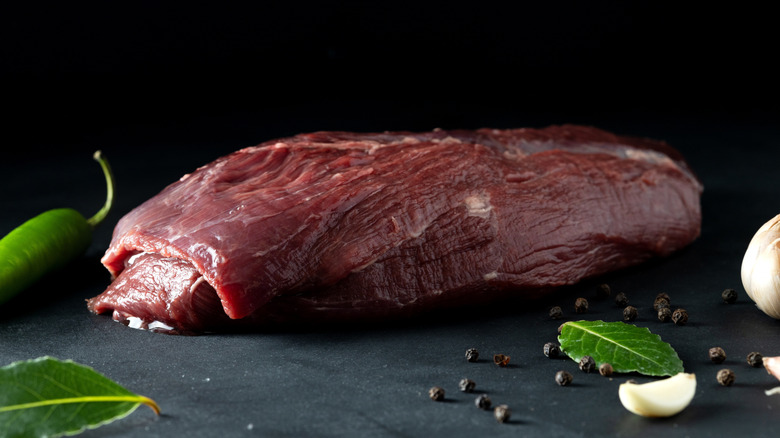
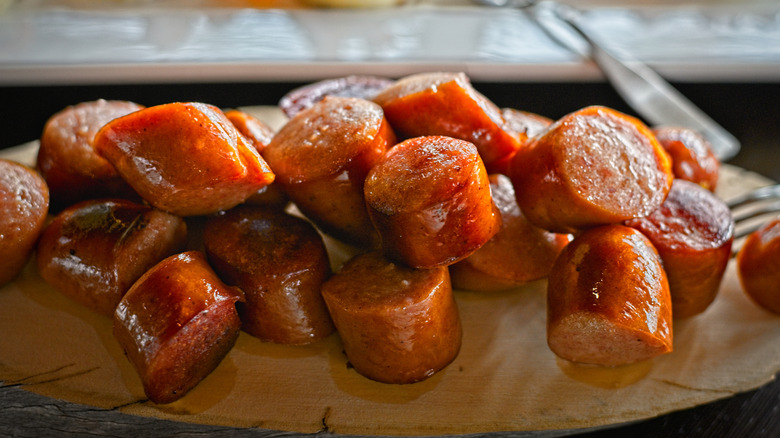
Rudolph the Red-Nosed Reindeer may have had a very shiny nose, but some of his cousins in Alaska likely ended up in a sausage. Although the idea of eating Santa's pets might seem strange to those in the Lower 48, in the Great North, reindeer sausage is a cherished regional specialty. Reindeer sausage boasts a smoky, sweet flavor profile that's largely defined by the spice blend used in the recipe and the smoking method.
Of course, the exact blend of spices differs by recipe and commercial brands largely keep theirs a secret, as even ingredient labels simply list "spices." However, some sources name coriander, white pepper, and fennel among the spices in the mix. Reindeer sausage is traditionally alderwood smoked — alder has a gentle smoke that doesn't overpower the meat. It infuses it with a subtle sweetness and just enough smoke to make it feel earthy. On its own, reindeer meat tastes less gamey than venison. It's mild and earthy, but also distinctly lean. In the sausage specifically, it's mixed with pork and beef to create a moist and fatty interior, while the outside has that signature snap, like all good sausages do.
There is no one way to eat reindeer sausage; each Alaskan eatery puts its own spin on it. It can be served grilled, in a sandwich, on a charcuterie board, as a hot dog, or as a part of a breakfast plate. The hot dog version is especially popular — called "the reindeer dog" — and comes with grilled onions glazed in Coca-Cola, which gives the Alaskan staple its signature flavor.
How the reindeer made it to Alaska (and into the sausage)
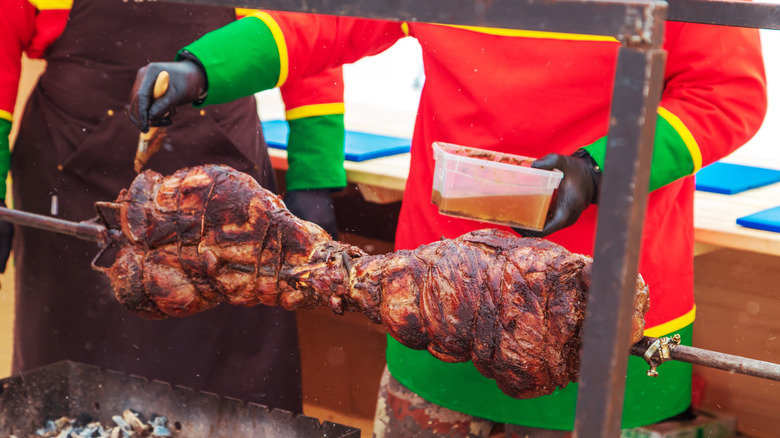
Reindeer are not native to Alaska. They were brought to the Last Frontier from Russia in the late 19th century, in the hopes of securing a new, reliable food source for the state. Alaska does natively have caribou, though, which come from the same species. The difference is that caribou are not domesticated, while reindeer herding has been a successful practice for several centuries in Scandinavia. While reindeer can be fully domesticated, the ones that are raised for meat are considered semi-domesticated. These largely live a completely natural life, roaming freely and feeding on natural pastures until it's time to slaughter them.
Because Alaska is so far away, transporting food to the state is an expensive and time-consuming feat, which is why the prices of groceries in rural Alaska are so alarming. Keeping reindeer as livestock is one of the ways Alaskans can sustainably farm their own protein, even though reindeer herding is highly regulated and nowadays much less widespread than it used to be. The overall numbers of reindeer in Alaska are indeed dwindling, which is why reindeer sausage is typically made with a blend of beef and pork. That said, the percentage of reindeer meat in the sausage differs vastly between manufacturers. Some use as much as 30% reindeer meat, while others settle for as little as 2%.
Alaskans aren't the only ones enjoying reindeer meat
Eating reindeer may be a rarity in the U.S. outside of Alaska, but it's slightly more common in Europe. In fact, a few of the fascinating hot dog variations from around the world feature reindeer sausage, particularly in Scandinavian countries. You'll commonly find reindeer on the menu in Sweden, Norway, and Finland. Particularly renowned is reindeer meat from the Lapland region, which has a Protected Designation of Origin status in the European Union.
Lapland is the northernmost region of Europe that stretches over several Scandinavian countries and is populated with more reindeer than humans. As mentioned, reindeer herding has been a practice there for centuries and remains significant for the indigenous people (called Sami) that are still living in the area. Interestingly, when the reindeer were first imported to Alaska, it was the Sami people who taught Alaskans the practice of reindeer herding.
In Scandinavian recipes, reindeer sausage (and reindeer meat in general) are often served with lingonberry jam — a staple of the area that tastes similarly to cranberry jam. You'll find it plopped on a reindeer hot dog, served with a reindeer fillet, and even alongside a thick reindeer stew. Other classic Nordic companions to reindeer are potatoes, usually mashed or baked, and mushrooms, especially buttons and chanterelles.