

10 Mistakes To Avoid Making When Ordering Pizza
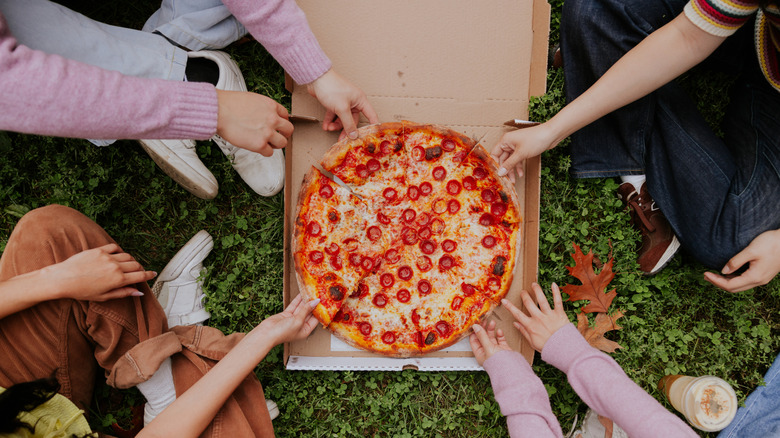
When you don't feel like making food at home but still want a meal that feels comforting and even a little bit decadent, takeout pizza is a classic option. It's hot, often crispy, and always cheesy, and you can pick it up on your way home or get it delivered whenever that pizza craving hits. Even if you order pizza on the regular, though, there's a good chance that you still make some mistakes during the process. To have a better pizza takeout or delivery experience, you should try to avoid those mistakes in the future. But what are the most common ones, and how can you avoid them?
We've consulted with pizza-ordering experts, including Jack Miller, chief writer at Travelingitalian.com; Sean Ferraro, chef-owner of Madison Avenue Pizza in Dunedin, Florida; and Chris Disney, managing partner at Picazzo's Healthy Italian Kitchen, to learn more about these common mistakes. Once you recognize the ones you're making yourself, you can change your ways and move forward as a bona fide pizza-ordering expert.
Ordering too many veggie toppings
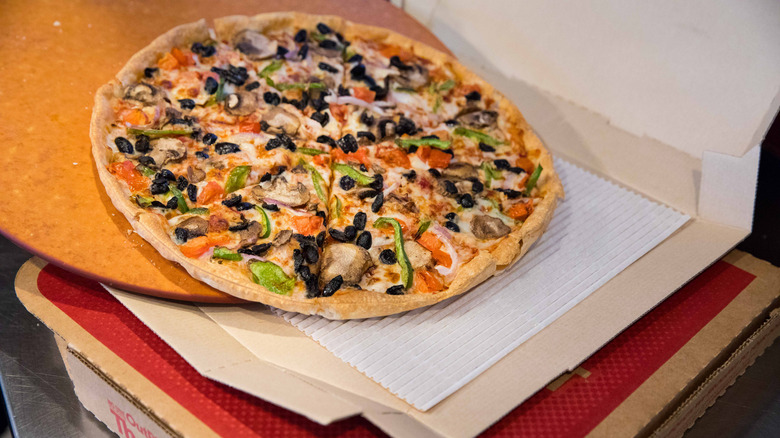
While a lot of people love a meaty pizza, others are looking for a pie that tastes fresher and lighter. If you fall into that camp, then you probably like a lot of vegetable toppings on your pizza. While that's a great way to work more veggies into your diet, it may not always result in the most delicious possible pie. In fact, according to Sean Ferraro of Madison Avenue Pizza, ordering too many veggies on top of your pizza is actually a pretty crucial pizza-ordering mistake.
"Pizzas with tons of veggies are ... challenging to bake, just because veggies dump a ton of water on the pizza, and it is hard to bake off," says Ferraro. He says that a good pizza spot should be able to pull off a solid veggie pie, but less-experienced pizza chefs can't always get it right. If you're not ordering from a place you already know has a solid veggie pizza, you might want to opt for fewer vegetable toppings just in case. Oh, it might be a good idea to skip the onions completely.
Not sticking with classic toppings
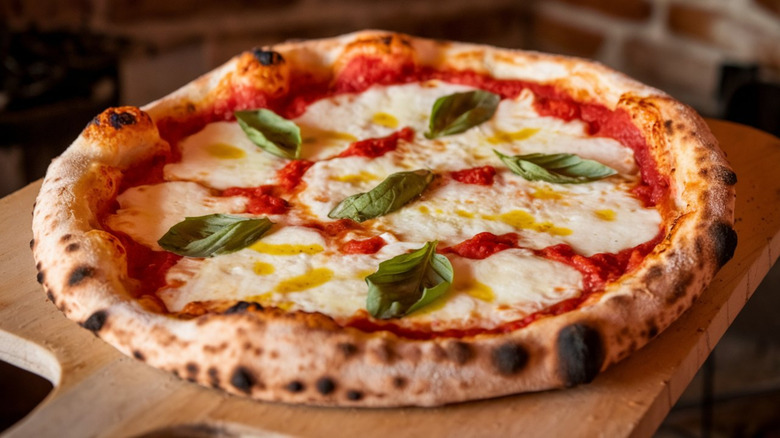
It's quite understandable. Sometimes, you see a unique or interesting combo of pizza toppings on a menu, and you want to experiment with some unconventional options. Opting for less traditional toppings can be fun when you're feeling particularly adventurous, but if you're really trying to get the best pie you can find, it may be a mistake. According to Jack Miller of Travelingitalian.com, sticking with the classics is always a safe bet.
"Stick to traditional Italian ingredients, as sometimes you will be disappointed by pizzas that are a little bit more out there and fancy on the menu," he says. "The Italians have it down to a fine art; often, simple is best." But being choosy with your toppings isn't just about flavor. It also affects the construction of the pizza. "If you start adding more ingredients, you get a floppy pizza," says Miller.
So, what are some classic pizza toppings you can always turn to? Basil, olive oil, and mozzarella are good places to start, and if you're craving some meat, you can't go wrong with pepperoni or sausage.
Adding too many different toppings to your pizza
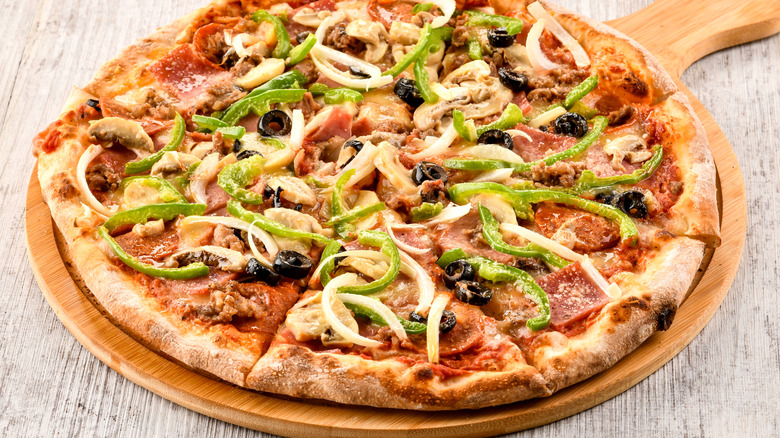
Many of us like toppings on our pizza beyond sauce and cheese. And while a few toppings can totally enhance a good pie, too many can be the downfall of an excellent slice. This is why, according to Sean Ferraro, "The number one mistake, without a doubt, is putting too much stuff on the pizza."
It's not just that you're working with so many competing flavors. All of those ingredients actually weigh down the dough and can compromise how your pizza comes together in the oven. "Stacking tons of toppings, tons of veggies, extra sauce, extra cheese, makes it very hard to cook the pizza properly," says Ferraro. "As a pizza guy, I need to cook off all of the extra moisture to get the cheese to brown and to make sure the slice doesn't flop." He says that he'll make whatever you order, but the quality of your pizza might not be as high if you decide to pile too much on top of the dish. So, not only should you limit yourself to the veggie toppings when you're ordering a pie, but you shouldn't go overboard with the toppings in general for the best results.
Not putting your takeout pizza in the oven for a few minutes before serving
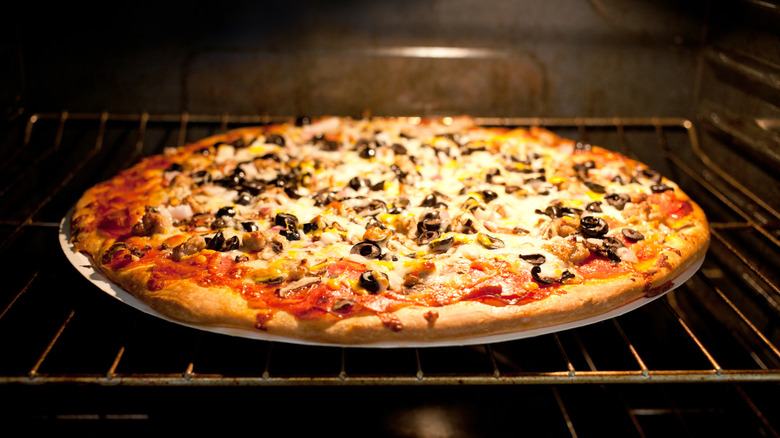
You know how it is when you go to a pizza place and actually decide to eat your pizza there? You've probably noticed just how hot and crispy the pie is right after it comes out of the oven. If you ask us, this is when pizza tastes its absolute best. Unfortunately, though, when you order takeout or get a pizza delivered, there's a lot more time in between when the pizza comes out of the oven and when you actually take that first bite. You might find that your takeout pizza doesn't quite have the heat or the textural bite you're looking for, compared to a slice you enjoy in-house.
You're getting a less-than-ideal pizza experience at home because you're making a critical pizza-ordering mistake: Not putting your delivery pizza in the oven right before you eat it. Just five minutes in a hot oven can make your pizza crispy and hot once again — it'll taste like it's fresh from the pizzeria. Yes, you'll have to wait a bit longer to eat, but it's worth the extra wait both in terms of texture and flavor.
Asking for the pizza to be cut into too many slices
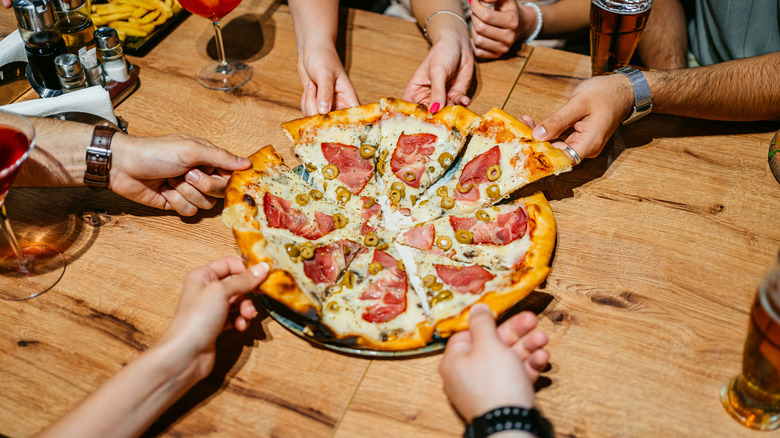
Sometimes when you order a pizza, you might be planning on eating all or most of it yourself. However, at other times, you may be sharing with a bigger crowd. If that's the case — or if you just prefer smaller serving sizes — you might ask for your pizza to be cut into a ton of slices. If you ask for too many slices, though, you might be making a mistake.
"Asking for the pizza to be cut [into] too many slices is also a challenge sometimes," says Sean Ferraro, "especially when the pizza is loaded with toppings." A thicker slice can support more weight, but it's an issue when you're working with smaller slices that are really weighed down with a slew of ingredients. "When we double cut a supreme pizza that has [six] toppings," explains Ferraro, "the slices are too thin to really support the weight of the slice, and it's a mess. Again, we will do it, but I don't recommend it."
Opting for the wrong kind of crust for your chosen toppings
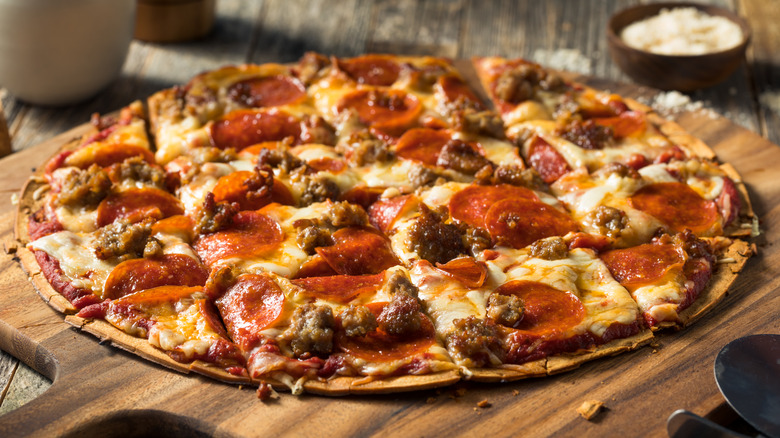
Building a perfect pizza can't be based on vibes alone — you have to think carefully about all of the different elements you're working with and how they fit together. For example, you want a thin-crust pizza because you prefer a nice, crisp crunch in your pie. At the same time, though, you request a ton of heavy toppings, like veggies and ground beef, on your pizza. Although you might think those flavors and textures will work well together, a thin crust is likely to collapse under the weight of too many different ingredients. Similarly, you won't want to order just cheese on a Chicago-style pizza. This form of the dish is supposed to be packed with toppings, and you're going to want to be working with more than a pool of cheese.
So, when you're trying to decide what toppings you want, first think about the type of pizza and the kind of crust you're craving. That can help you make a more sensible decision when it comes time to select your ideal combo of toppings.
Assuming that the pizzeria can't accommodate your dietary restrictions
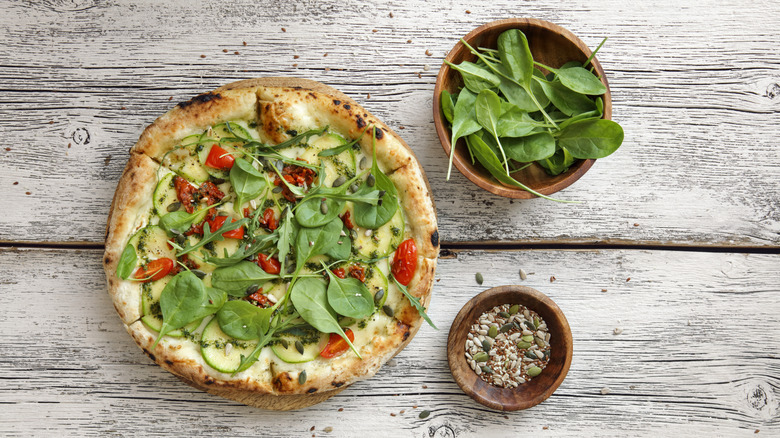
If you're on a certain diet or you have specific dietary restrictions, you might assume that you can't really have pizza at all. For example, people who can't have gluten who are going to a pizzeria that doesn't specialize in gluten-free pies might just think that they'll have to wait until they get home to eat. But according to Chris Disney of Picazzo's Healthy Italian Kitchen, it's a mistake not to ask for what you want. The pizza spot you're at might just be able to accommodate you, but you'll never know until you ask.
"Sometimes customers make the mistake of not asking for what they want," says Disney. "For example, if you have certain dietary requirements or restrictions, don't assume pizza is off the table. Ask what your options are, and you may be pleasantly surprised at the availability of vegan and/or gluten-free pizzas!" These days, it's easier to find gluten-free, vegan, and dairy-free options than ever, so it's always worth a try.
Requesting and extra well-done pizza
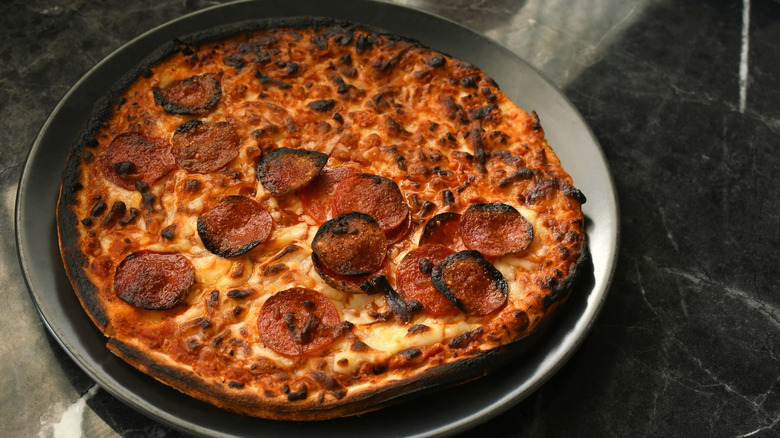
Making special requests about how you want your pizza to be cooked is okay most of the time. If you want extra sauce or cheese, the pizza chef who's making your pie will likely be more than happy to accommodate. But according to Sean Ferraro, there's one request that it's a mistake to make, since you might end up with a pie that's a bit too cooked for your liking.
"Extra well-done pies can be difficult to make just because everyone has a different opinion about what that might be, and it can easily present as a burnt pizza depending on the customer," says Ferraro. If you actually like a pizza that's extra-crispy on the bottom — like almost or actually burnt — you can be specific with that request. However, ordering "extra well done" might be confusing to some pizzerias, and you may end up with a pie that's a bit too overcooked for your liking.
Not ordering your pizza uncut
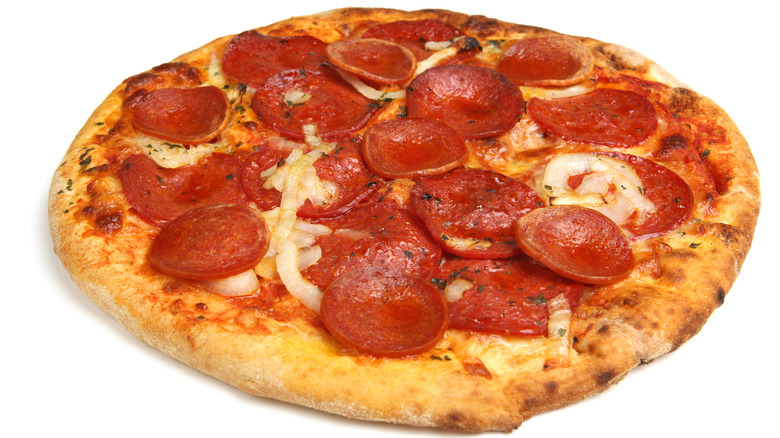
If you're ordering a pizza for takeout and are planning on taking it home immediately afterward, it might be a mistake to get your pizza cut. Sure, it seems like the more convenient option — after all, if you're ordering a pizza, you probably don't want to have to prep your meal much at all. But getting your pie pre-cut could land you with a meal that doesn't taste quite as good as it does if you were to cut it yourself at home.
Why? Well, cutting the pizza makes it soggier, since all of the juices in the pizza have more of an opportunity to seep into the bread. Therefore, you'll be missing out on the crisp, sometimes crunchy crust you may be going for. So, make sure you snag a solid pizza cutter, and serve up those slices yourself after you heat the pizza in the oven for a few minutes. It makes a big difference, especially when it comes to fancy pies from artisanal pizza shops.
Ordering light sauce or light cheese on only half of your pizza
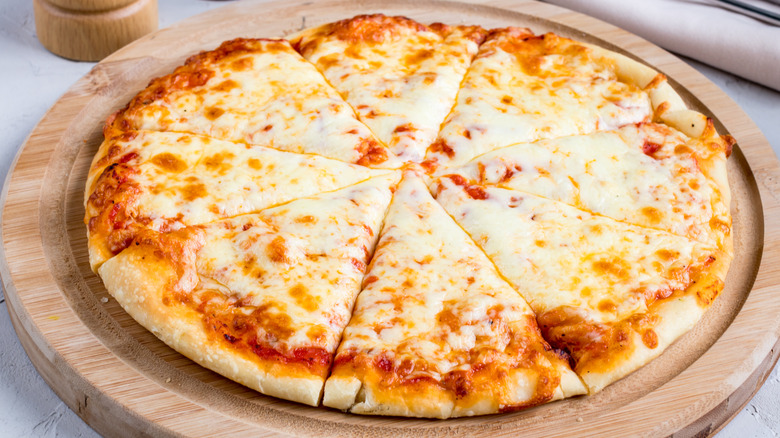
Sharing a pizza with someone else who doesn't like the same toppings as you do? At a lot of pizza shops, you'll be able to order a pizza that's served half one way, half another. For instance, a lot of patrons will order a pizza that's half cheese, half pepperoni, so both the meat-eaters and the cheese-lovers can have a few slices of the same pie. Generally, it's easy to tell which half is which if the toppings are different, but ordering a pizza that's half light sauce or half light cheese might be a mistake for the confusion it can cause.
"Half light sauce/half light cheese pies are tough because it's hard to figure out which half is which after it's baked," explains Sean Ferraro. If you really care about that light sauce or cheese, it might be better to order two separate pies. Otherwise, you'll have to be extra careful when picking out which slices are which — it's not always obvious with these basic toppings.