

10 Unspoken Rules When Dining At A Hibachi Restaurant
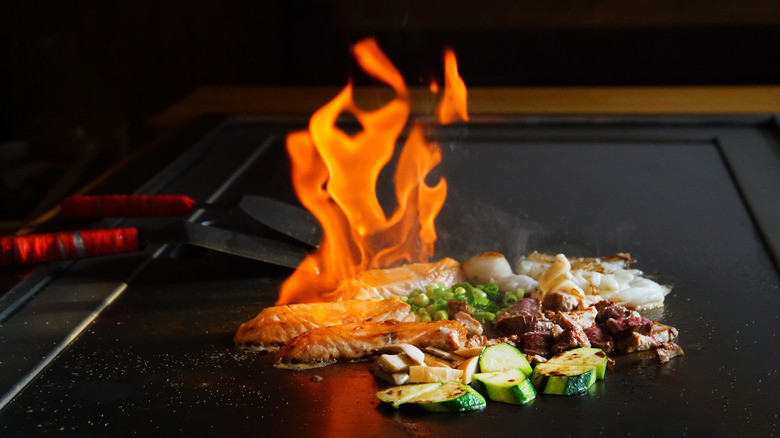
Who doesn't love to sit around a sizzling hibachi grill, shrimp flying towards your mouth, and onion volcanoes a smokin'? There's something so magical about watching your food be created with such precision, such flair, such talent that extends beyond the culinary arts into the performance arts. As viewers of this cultural art, it's important that hibachi diners know what to expect, how to behave, and where to draw the line between enthusiastic participation and show-stealing. That's why I've spoken with Sam Chan, the general manager at Shogun, a chain that uses teppanyaki style cooking to satiate and entertain customers. His 20 years of working in the hibachi-style dining atmosphere and observing chefs and customers alike have allowed him to really understand and dissect both sides of the coin, and how they interact with one another.
Chan explains the ins and outs of dining at a hibachi restaurant, so you can enjoy, observe, and participate with customary respect. One of the most beautiful things about the culinary arts is enjoying aspects of culture outside of our own. To elevate your experience, this should be done with an understanding and appreciation of the culture. With culture comes tradition that deserves respect. And let's be real, if you play by the rules, you're bound to be more relaxed and have a better time. Now, let's let Chan lead us through the unspoken rules when dining at a hibachi restaurant so you can participate like a pro.
1. Don't touch the grill
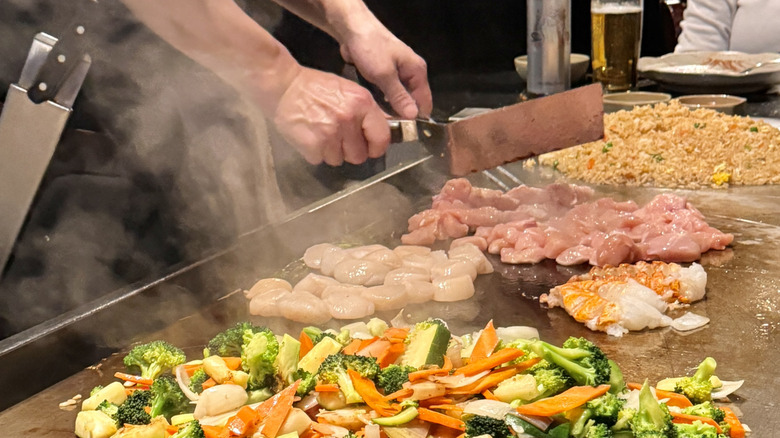
Some rules are obvious, but unfortunately they still need to be stated for those who can't resist their intrusive thoughts. Don't. Touch. The. Grill. It's unlikely that someone would palm a hot grill on purpose, but it can be tempting to sneak a piece of sizzling shrimp, try to clean up after you've spilled your drink, or reach over to pass your friend a bite of chicken. Sam Chan notes, "The main thing is to be aware of the grill. It's very hot, and the chef is moving quickly with the tools. We always ask customers not to reach across the grill and to stay seated while the chef is cooking."
Not only could you get burned, but reaching onto the grill is a health hazard. Refrain from grabbing off the grill because let's be honest, that dude sitting to your left who doesn't know you does not want your fingers near his food. Keep yourself and your fellow hibachi diners comfortable and safe by being aware that you're just inches from a sizzling grill that could scald your hand just as easily as it did that piece of steak. The grill is far enough away that you won't accidentally rest your hand on it, but if you're a reacher or have had a drink or two, it's all the more important to practice awareness.
2. Keep your kids safe
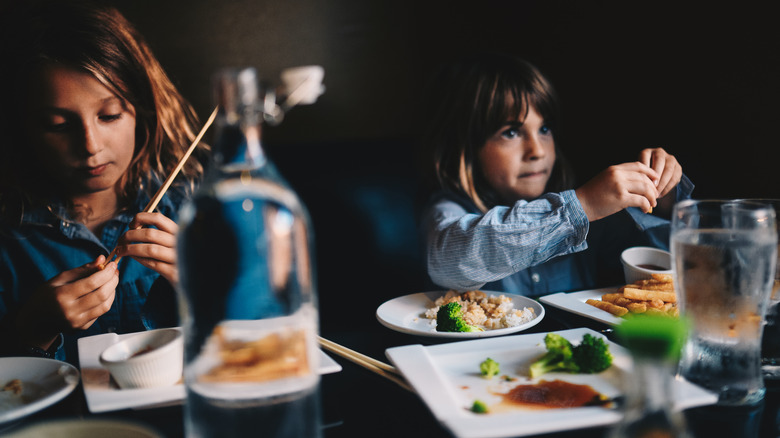
Nobody loves hibachi more than kids. That heart beat rice and flaming onion volcano seem like magic, and experiencing something for the first time can feel like a dream. Kids are often some of the most enthusiastic participants, but they are less aware of their own presence and can sometimes cross boundaries without knowing it. That's why it's the parents' or guardians' job to keep kids safe, engaged, and respectful. Chefs love to wow young participants, so Sam Chan explains, "Kids are always welcome, but they need to stay seated and be supervised. The grill is closed, and things move fast, so safety is important." Most guardians know that this applies to most of life's activities, but when a sizzling grill is within arm's reach, it's even more essential to stay vigilant.
Not only do you not want those kiddos to burn their fingers, but you also want to set up a few boundaries to decrease distracting behavior. To the best of your ability, keep your kids from throwing objects like toys, as they could land in the food or distract the chef. This may mean that you have to keep your pack of "restaurant distraction toys" in your tote. If they are typically loud, work on inside voices, although a joyful cheer and enthusiastic question asking is encouraged. The goal is to allow your child to enjoy the experience, without retracting from others or distracting the chef. It's a fine line, but parents can use this rule of thumb: If you saw someone else's kid doing that, would you be irritated, distracted, or judgmental of that behavior? Teach them some basic dining etiquette, and when in doubt, go with old-school dining rules.
3. Be present
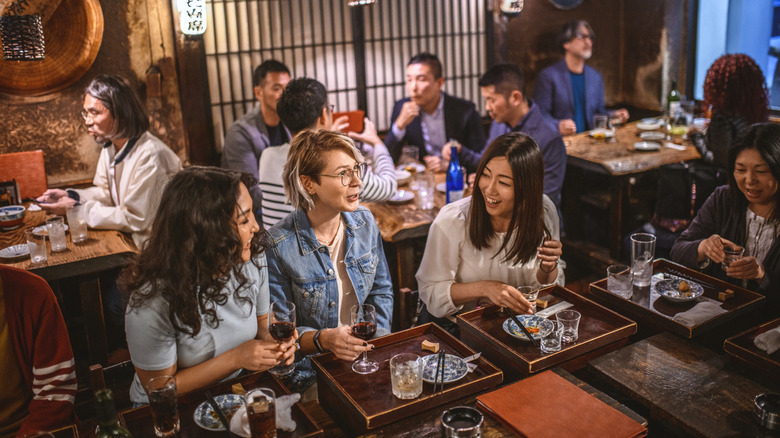
You'd think that everyone would be sitting by the grill, wide-eyed with jaws on the floor. These master hibachi chefs are almost magical with the tricks and moves they can do. But in this day in age, we have that one weakness that keeps us from being present in real life, and that's those little rectangular blocks that we see the world through: cell phones. Sam Chan mentions, "Phones are the biggest [distraction]. When customers are on their phones the whole time, they miss the experience, and it affects the whole table."
Of course, you'll want to snap a few pictures to send to your best friend, but other than that, it's important that you engage in being present with the chef, your crew, and yourself. You wouldn't play Candy Crush on your phone during a comedy show or art lecture, so why fade away during something as magnificent as a hibachi experience?
Chan explains, "Just being present goes a long way. When customers watch, react, and engage a little, it shows respect and helps create a better experience for everyone at the table." Not only does being distracted take away from your own experience, but as Chan states, it's disrespectful to those around you. We live in a society where it's (unfortunately) socially acceptable to interrupt a friend to send a text. But, if you want to show respect, follow the unspoken rule of performance arts and stash that phone away. This goes for crosswords, books, tablets, and computers as well. If you're not comfortable actively participating, that's fine, but certainly avoid closing yourself off from enjoying the experience.
4. Keep your voice down

There is a big difference between enthusiasm and being loud. Yes, you've gathered to catch up with friends and enjoy the hibachi experience together, but that doesn't mean you should be shouting across the table. You are likely sitting at a communal table with strangers, gathering to watch a magnificent cultural and culinary show. So, this might not be the time for that loud conversation you couldn't wait to have with your friend about her recent breakup. To be clear, if you're sitting next to a friend and want to have a conversation, that's entirely acceptable. We just want to avoid that booming, shouting voice that might be distracting to the chef or other guests. "Talking over the chef can also be distracting," states Sam Chan.
Even when cheering, it's important to regulate your voice to a degree. A cheerful "wow" or "look at that" is encouraged, but when other tables are turning around to see who's shouting, you've crossed a line. If you want to engage with the chef and ask questions, be sure you're not speaking over them, and instead wait for small breaks to engage.
5. Participate
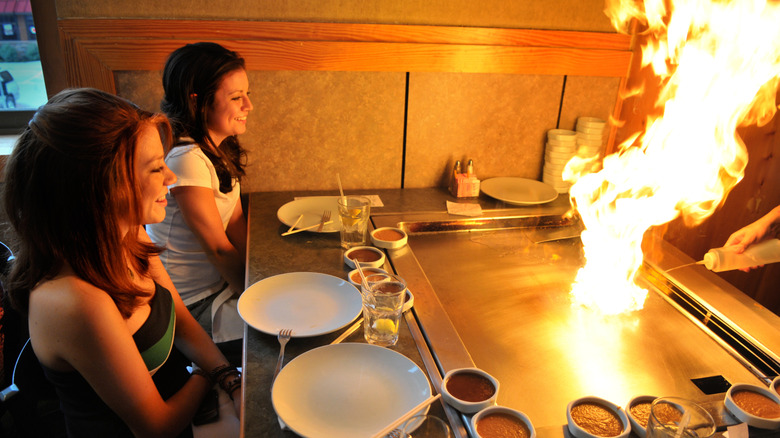
Have you ever been to a comedy show or concert where the audience is putting in little to no effort to engage? Not only does it take the wind out of the sails of the performer, but the rest of the audience starts to dwindle in enthusiasm as well. That's why Sam Chan notes, "We love when customers are into it — laughing, reacting, and enjoying the moment. That kind of energy is contagious at the table." And it truly is. One gasp from a child, a cheer from a first-timer, or a standing ovation can trigger a whirlwind of fun for everyone. It also encourages the chef, who might feel inspired to sneak in an extra trick or flip just one more piece of shrimp into a customer's mouth.
If you're more the quiet, observant type, that's okay. No need to step out of your comfort zone. Instead, engage with eye contact, a bright smile, some thumbs up, and some light clapping. Chan explains, "The more you join in, the more fun it is. Responding to the chef or being willing to participate makes the whole table more interactive." You might even find yourself coming out of your shell or helping another quiet customer to engage. If you're dining alone, this is an opportunity to socialize. It's a group activity, led by a skilled chef who just wants to see everyone enjoying themselves.
6. Thank the chef

In the United States, we tend to use money to say "thank you" to our servers. Chefs don't typically receive tips; servers do. During a hibachi experience, you might have both a server and a chef serving you. The restaurant likely has a system for separating tips between servers and chefs, but handing the chef cash never hurts, especially if you think the show was exceptional. Go with the standard 20% tipping system, with an increase for above and beyond work. If your table isn't full, it's nice (but not required) to slip the chef and servers an extra few dollars.
Beyond cash, the most important thing to do is to directly say "thank you" to your hibachi chef. This small human interaction can go a long way to show appreciation. Sam Chan suggests, "A simple 'thank you' really matters. Chefs notice when customers appreciate what they do. Tipping depends on the restaurant, but genuine appreciation always stands out." Be specific. If there was a particular portion of the event that you appreciated, then let them know. Chefs thrive on feedback, and so do those in performative arts. If something was not satisfactory, be sure to pull your chef aside after dinner to speak with them instead of drawing attention from the surrounding customers. Keep in mind that nobody is perfect, but chefs appreciate feedback if something is unsafe, unsatisfying, or uncomfortable during your experience.
7. Balance the table
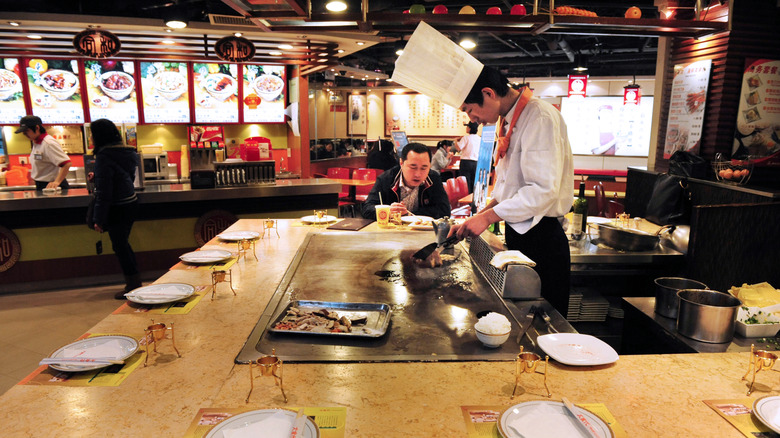
So you've arrived at your hibachi experience, and the table is not full. It's just you, another couple, and a floater. Should you all bunch together or spread out? Unlike the urinal lineup, there are no black and white rules in place. That's where Sam Chan comes in. He explains, "There aren't strict rules. We usually seat people so everyone has a clear view of the grill and the table feels balanced. Being flexible helps everything run smoothly." So the verdict is spread out, fill the gaps, and make sure that you have enough space to enjoy the show.
What happens if you're first to arrive? Where should you sit? First come, first serve works well here, but try to keep your group together so you don't end up talking over others. If you're next to arrive, avoid leaving single gaps between parties, like you might in a bar. Leave space for other groups and couples to fill in. You may even consider waiting to sip your water and hang up your bag until everyone's arrived, as you may have to shuffle around to accommodate other large groups, unless a hostess has assigned you particular seating. The goal is to let folks sit with those they arrived with, and while that's not always possible, it's important to be flexible. This is a group activity, so be welcoming to the newcomers, don't commandeer the entire space, and feel free to get to know your crew.
8. Let them know about allergies ahead of time

Dietary preferences and needs are a huge part of our modern culinary world. Accommodation is essential to provide an experience where everyone feels valued and welcome. Most hibachi restaurants can accommodate these types of allergies, but it's essential to let your server know before the show starts, and if possible, even call the restaurant before you arrive. When you book your seating, tell the staff member you're speaking to about any allergies or preferences. They will likely tell you on the spot how that will be handled, and you can certainly ask for details. Sometimes, chefs can accommodate your needs on the grill, and other times, you may be brought food from the kitchen in the back.
Sam Chan shares that "Customers are always welcome to let us know about any allergies or preferences, such as low-sodium soy sauce. It helps a lot if we know ahead of time so we can prepare." The more and the earlier the cook knows about these accommodations, the better. Please specify if your requests are due to allergies or preferences, as some restaurants have very strict protocols surrounding allergies. If it's just a preference, you won't need separate pans and cutting boards, but for those with celiac, peanut allergies, or shellfish allergies, this protocol might save your life.
9. Ask questions
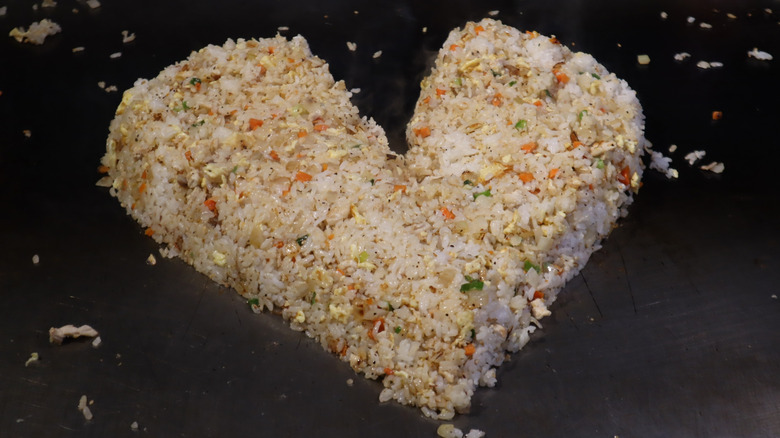
Unlike a play, hibachi can be quite interactive. The chef strives to engage the audience beyond feeding and performing for them. That's why they might squirt some sake into your mouth or ask you if you want to see the fried rice heartbeat again. Find a balance between stealing the show and getting your questions answered. Ask questions like, "How did you do that?" or "What makes the heart beat like that?" Perhaps they will wink at the kid next to you and say "magic," or maybe they will give you a super cool explanation about the power of steam. It can only enhance the experience, and if the chef isn't able to answer your question at the moment, they'd likely be willing to chat with you during the cleanup.
Being present means more than just not looking at your phone. It means engaging in the celebration, practicing curiosity, and speaking with the chef. Sam Chan voices the importance of hibachi interaction: "If we could change one thing, it would be customers not paying attention. Hibachi is meant to be interactive, so being present really makes a difference." So, this is your green light to cheer, laugh, and inquire to your heart's desire. Everyone is wondering the same thing as you, so why not get the most out of your hibachi experience?
10. Feel free to learn
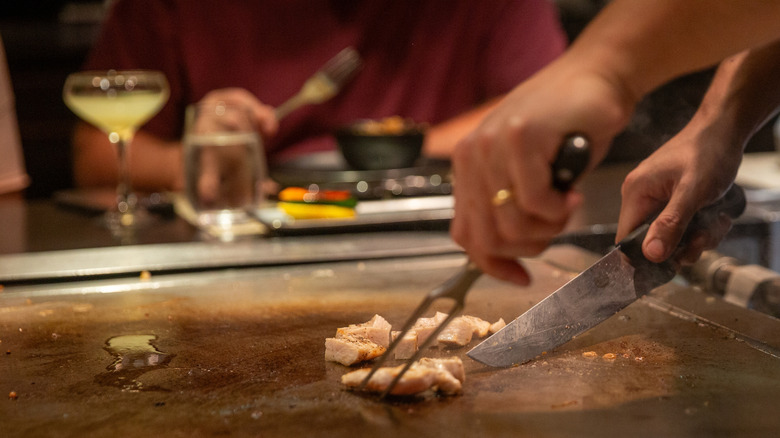
Did you know that the modern hibachi experience was shaped by an ancient prototype? Hibachi is a Japanese culinary and performative art form that is rooted in Japanese culture. Americans are quite fond of the experience, which is why it caught on like wildfire, and you can now find hibachi-style restaurants in many major cities and beyond. Technically, we are enjoying teppanyaki, which uses the flat-surface grill versus traditional hibachi, which is done over a smaller grated grill. Chefs train for extended periods to learn the skills associated with teppanyaki and have a plethora of knowledge about the subject. So, in order to truly immerse yourself in the experience, do a little research before you go.
You can also ask your chef directly for more information about hibachi. Sam Chan encourages diners to soak up the history and culture of the experience by speaking directly with the staff, "Most chefs enjoy it when customers are curious and ask questions. There's a lot more going on than people realize — timing, coordination, knife skills, and how we manage multiple orders at once while still keeping it entertaining. It takes a lot of practice to make it look easy." Engaging means more than just cheering, and can sometimes translate to educating. Chan explains, "Hibachi is more than just food — it's a shared experience. When customers are engaged, it creates a better atmosphere for everyone at the table." Brushing up on Japanese hibachi tradition or asking your chef about the history will not only enhance your experience but might help you avoid mistakes while dining at a Japanese restaurant, and make the ride more enjoyable for everyone around you.
Static Media owns and operates Tasting Table and Mashed.