

The Old-School Dining Rules Your Grandparents Actually Lived By
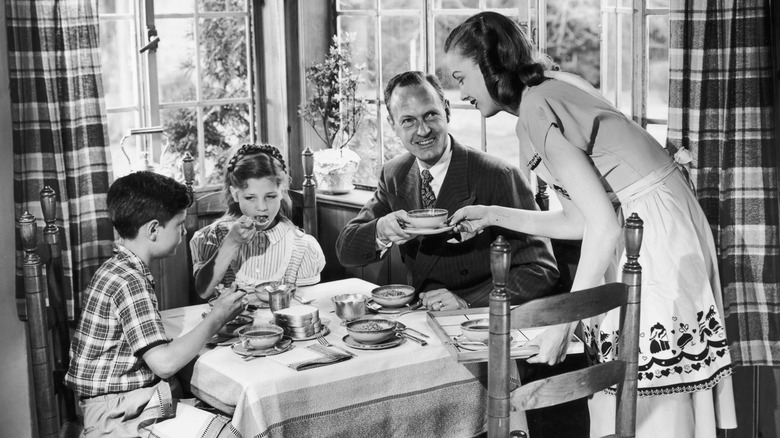
Are your grandparents always trying to get you to sit up straight? Take your elbows off the table? Eat soup correctly? We have good news: They're not just doing it to irritate you (although perhaps maybe sometimes it might feel like it). They just grew up in a different era, when dining rules and table manners were taken a lot more seriously than they are today.
In fact, many young women were even sent to finishing school, also known as charm school, where they learned appropriate etiquette, including how to sit at the table and eat their food "correctly." But this wasn't a universal experience. As you'll see below, most people were simply taught old-school dining rules by their own parents and grandparents.
We will discuss some of the dining rules your grandparents were probably expected to live by. Things like being respectful of a host, having the correct posture, and so much more.
Never leave anything on the plate
Some kids simply have smaller appetites, while others start off as picky eaters. If a child is refusing to eat everything on their plate, nowadays, most experts recommend against forcing them to do so. It might create negative feelings around mealtimes and result in a tricky relationship with food as they get older. But a few decades ago, this thinking was practically unheard of.
Many of the Generation X generation (born between 1965 and 1980) remember being raised on Depression-era cooking, with grandparents who grew up during a time when food was scarce, and so wasting what little you had was out of the question. Plenty remember sitting at the table until late into the night, simply because they hadn't managed to finish every last morsel on their plate yet.
Many still refer to being a member of the "clean plate club" as a kid. This harks all the way back to World War I, when the government urged people to actually take a pledge promising to eliminate waste and clean the plate.
Always ask to be excused from the table
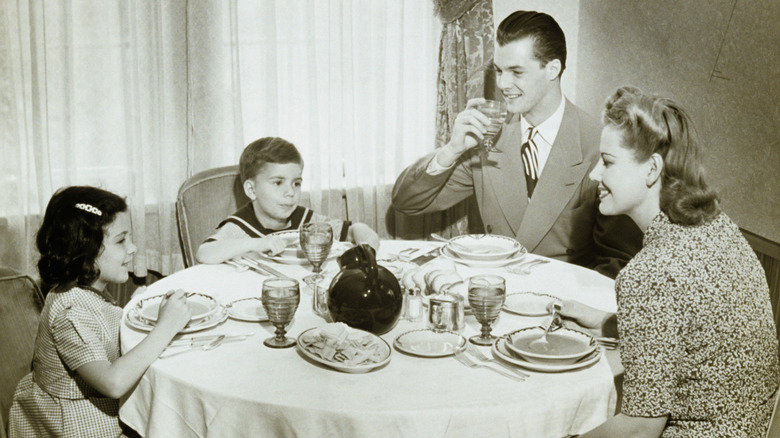
Everyone has finished their food, you're eager to clear your plate and get on with the rest of your day, so you simply ... leave the table? Right? Well, there was a time when just leaving the table without asking wasn't the done thing, especially for children. Many adults today remember having to politely ask to be excused from the table; it was a rule enforced by their parents and grandparents, who also grew up with the same policy.
The rule stems back to the Victorian era. Before the 1800s, Americans didn't really abide by table etiquette — they simply ate their food the quickest and easiest way. Asking to please be excused from the table would have been unheard of, but the Victorians changed things. Dinner became a chance to show your status in society, but it was also an opportunity to instill discipline in children by enforcing table rules, like asking to be excused.
Only drink milk or water with dinner
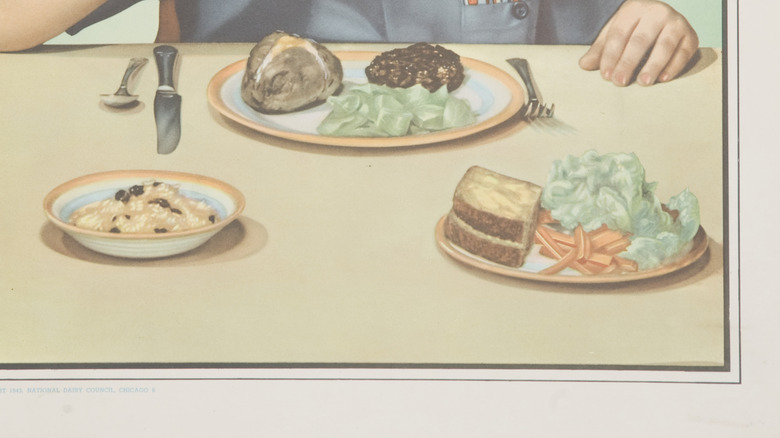
Nowadays, you might be tempted to drink a soda or an iced tea with your dinner, but many people remember growing up with only two options: milk or water. It wasn't that soda wasn't around (Mountain Dew hit the market in the 1940s, while Coca-Cola was invented at the end of the 1800s), but many saw fizzy drinks as an occasional treat, saved for weekends, rather than an everyday thing.
When it wasn't a Friday night or a special occasion, it was back to milk or water. Of course, drinking water with dinner is still very common now, but milk? That's far less normal. During World War II, milk was held up as a "Victory Food," but today cow's milk has been falling out of favor for a while. Per USA Facts, Americans drank 47% less dairy milk in 2022 than they did in 1975.
Don't eat until the cook eats
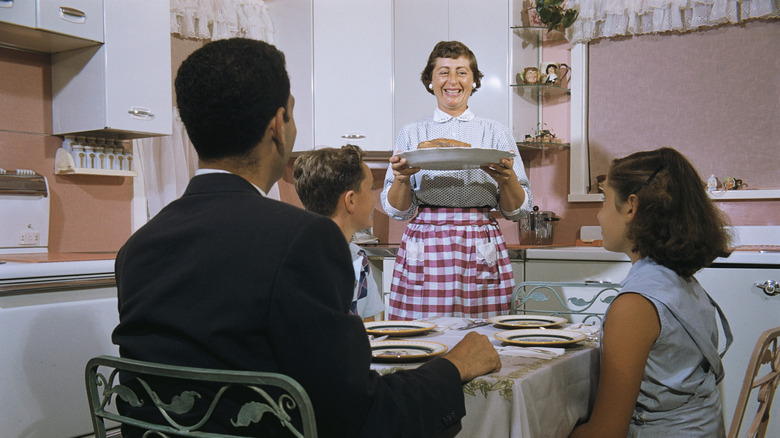
If you've been waiting all day to eat a meal, and you're positively ravenous, it can feel tempting just to dive in and start chowing down as soon as a plate of food is placed in front of you, without a second thought for anyone else. But many remember being taught that the polite thing to do is to wait until everyone is seated, especially the person who has spent all the time in the kitchen cooking and preparing the meal.
Lots of members of the older generation remember days when they used to be taken to dinner parties, for example, and they weren't allowed to eat until the person hosting the party started to eat. But the rule wasn't reserved just for attending other people's houses, plenty also remember waiting for their mom, who usually would have done all of the cooking, to start eating before they could start, too.
Never wear a hat at the dinner table
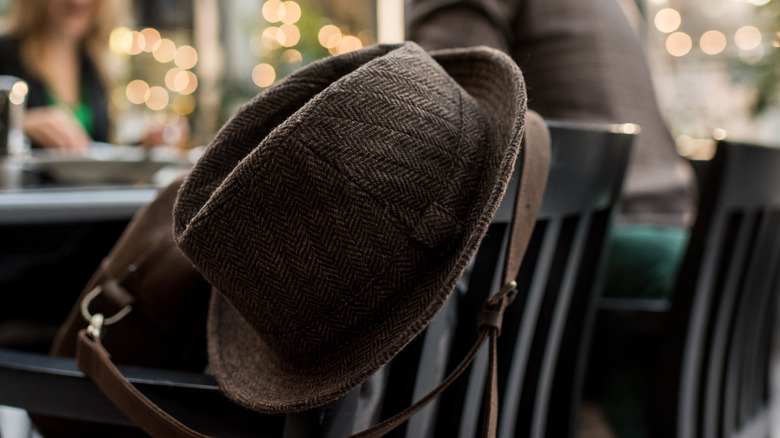
Many people may remember being taught that it was polite to remove their hats before eating dinner, while others recall having to take off their hats before even stepping foot indoors. Some say the rules were a little different for women, as hats were often seen as an essential accessory that had been coordinated carefully with the rest of the outfit. Nowadays, strict etiquette isn't generally observed around hats, and if you wear a cap at the dinner table, it's unlikely people will assume you are being rude. But things used to be very different.
Throughout the 1900s, men, in particular, were expected to wear hats and treat them appropriately. In the 1920s, for example, men were expected to always wear hats outside or in public spaces; they were supposed to remove them for several different occasions, not just when eating dinner, but also when greeting someone, in front of the U.S. flag, in the movie theater, or in a place of worship.
Keep elbows off the table
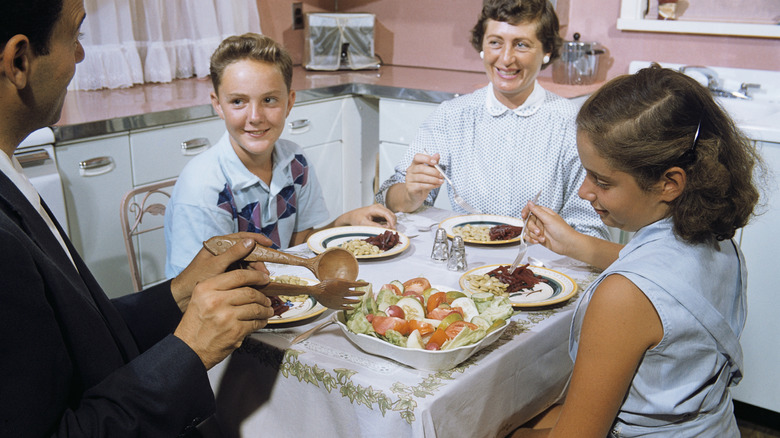
Many people remember being told to keep their elbows off the table when eating. "This is not a horse's stable, but a first class dining table," one Reddit user in the AskOldPeople thread recalls being told. Another recalls the rhyme: "Mabel, Mabel, strong and able, get your elbows off the table."
The rule isn't enforced as much by modern parents, but why was having your elbows away from the table once such a big deal? It actually started a very long time ago, as a way of preventing members of ancient civilizations from starting fights, according to historians. Keeping your elbows low gave the person next to you more space and kept a sense of trust between everyone.
The reason the rule stuck was pretty obvious: It's respectful and more comfortable to give everyone their space when they're eating. But it also helps with posture, too, and allows everyone around the table to see each other more clearly.
Never slouch
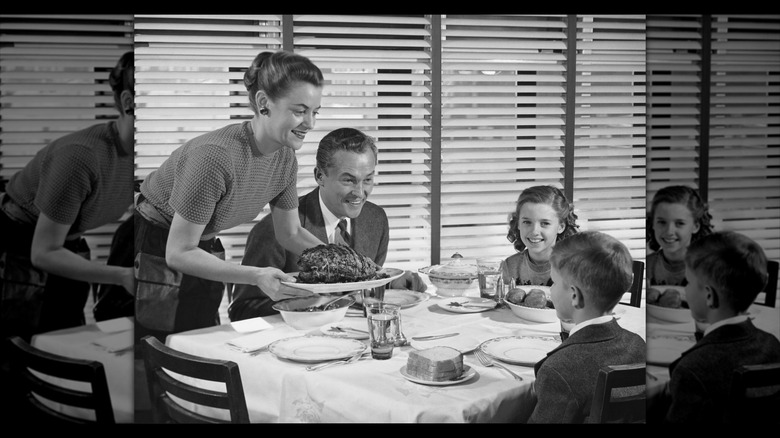
Speaking of posture at the dinner table, slouching used to be seen as pretty rude. For those eating at the table throughout the 20th century, everyone, including children, was always expected to sit up straight with perfect posture to eat. Fidgeting was also frowned upon.
Again, it's less common for modern parents to enforce these rules, as dining has become significantly more informal in the 21st century. In fact, in 2023, one nationwide survey by Home Run Inn found that 81% of Generation Z and 60% of Millennials scroll on their phones while they're eating.
This excessive use of phones might be giving us all bad posture, due to the constant bending of the neck. With that in mind, it might do us good to go back to eating at the dinner table with impeccable posture. Not just for the sake of our necks, but for the sake of health. In fact, some research suggests that eating with a slouched posture can disrupt the flow of digestion and even result in gastroesophageal reflux disease.
Do not reach across the table
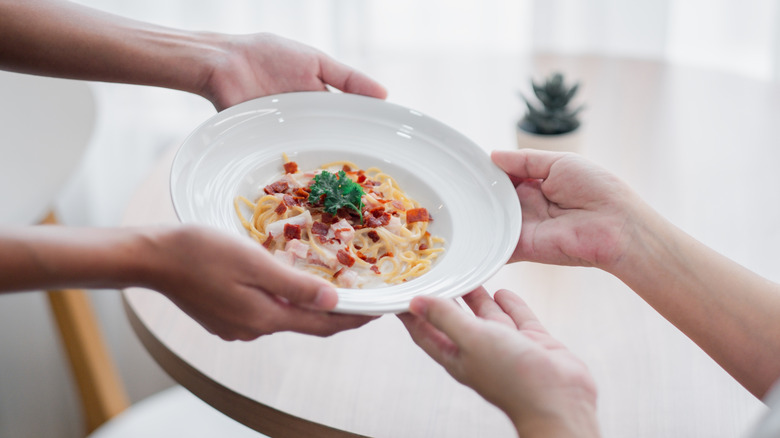
A lot of the old-school dining rules simply come down to sitting correctly. As we've established, it was elbows off, back straight, and no fidgeting. But if you wanted something from the other side of the table, you couldn't break all of these rules to reach across and get it. Instead, you'd have to ask politely for someone to pass you what you needed. Some believe this helped children with their communication skills, while also preventing any spillages at the same time.
Speaking of passing plates, there were set rules on how to do this, too. In fact, there was even a proper direction to pass dishes, which was always to the right. The reason for that is actually pretty straightforward: Most people were right-handed. Some were stricter on this rule than others — some even recall their grandparents stopping meals when plates were passed in the wrong direction.
Keep your napkin on your lap
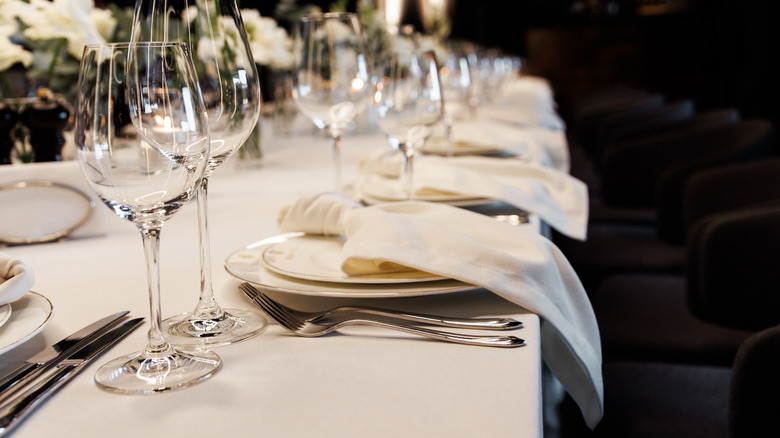
Emily Post was often looked to as the fountain of all knowledge when it came to proper etiquette. The author and socialite, who died in 1960, wrote the book "Etiquette in Society, in Business, in Politics, and at Home" in 1922, which spawned 10 new editions before her death. In fact, many would refer to these editions to stay up to date with the rules of polite society.
In the 1955 edition of her book, Post wrote about napkins. She specified that while you could fold or unfold a napkin in any way you pleased, it was very important that your napkin stayed on your lap throughout the whole meal.
But Post was far from the first to speak of correct napkin behavior. In fact, even the ancient Romans used napkin-like cloths, known as mappa, to drape over themselves and protect their clothes from spills.
If someone else is buying your dinner, don't order the most expensive meal on the menu
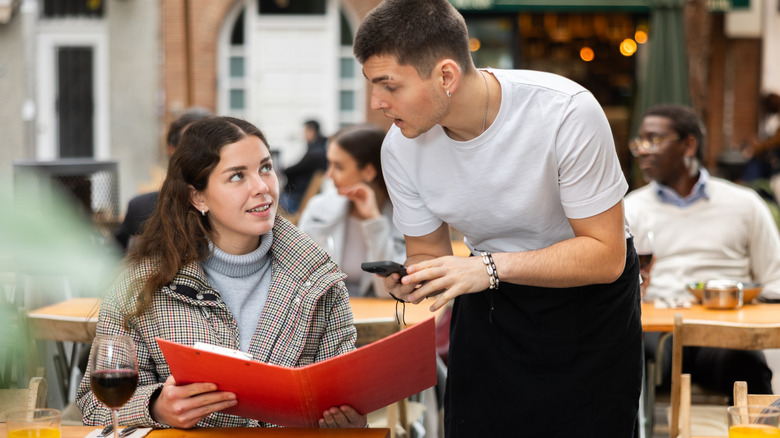
Going out to dinner is a fun treat, especially when someone else is paying. When faced with a plethora of tasty options, it can be tempting to opt for the most elaborate, most expensive dish on the menu.
But many remember being taught that if someone else is footing the bill, it's polite etiquette to order a cheaper option, or at least to follow the other person's lead in terms of pricing. So basically, if they go for a salad, don't punt for the lobster. This would apply to dating, but also when being taken to dinner for business or with friends, too.
Arguably, this is still the polite thing to do today. However, it's important to note that, especially when it comes to dates, it's far more common to split bills nowadays. In 2021, one study by Affirm confirmed that more than half of Americans believe the cost of a meal should be shared on the first date. And when you're paying for your share, why not order exactly what you want, no compromises?
Always use cutlery correctly
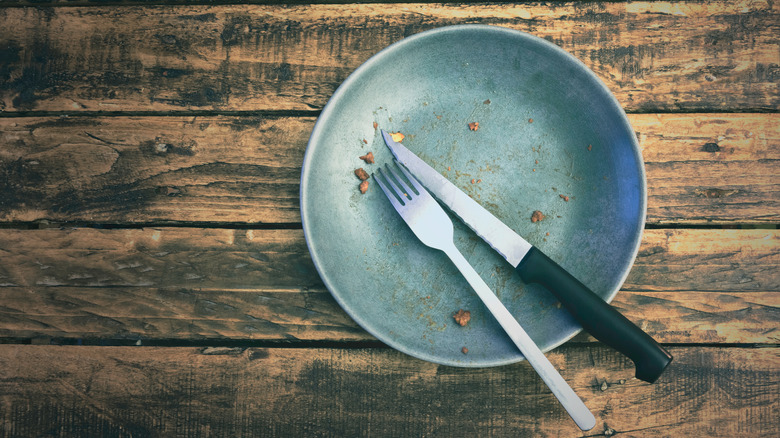
Cutlery, and using it correctly, has long been associated with upper-class dinner tables. Back in the 11th century Europe, most people used a combination of knives, spoons, and fingers to eat their food. For centuries after that, only the very rich used forks. But by the 1800s, forks were a must-have in most of Western polite society, and of course, this meant there were rules on how to use them.
Emily Post advised that forks should always be held delicately in the left hand, unless no knife is being used, and then they can be held in the right. She added that when you're finished eating, the cutlery should always be placed together, side by side, with the handles towards the right.
Many people remember being taught to place their cutlery correctly at the end of a meal. Some were told to think of the plate like a clock, and the cutlery as the hands. Some were taught to place the cutlery at four o'clock on the imaginary clock, while others were taught to place it at 6:30 (this was more of an English custom, however).
Don't dip bread into your soup
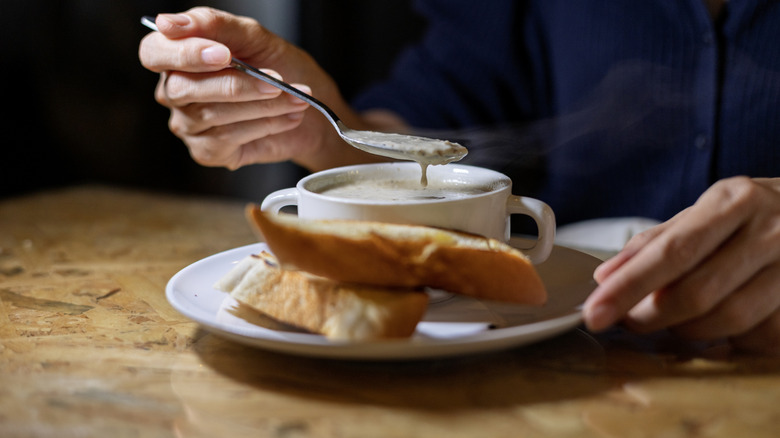
Bread with soup is a classic pairing. In fact, arguably, dipping buttered bread into a hearty bowl of soup so it can soak up all the flavor is the best part of fall and winter meals. Today, some even serve their soup in bread bowls (looking at you, Panera). But plenty remember being deprived of this joyful eating experience when they were young, because it wasn't seen as polite. This rule was carried over from the 19th century. Many Victorians saw dipping bread into soup as quite an uncouth habit. This wasn't just limited to soup, but any sauce or liquid on the plate, like a gravy, for example.
In fact, one book titled "Manners, Culture and Dress of the Best American Society," published in 1890, describes the act of scooping up anything from your plate with bread as "vulgar." Instead, it advised that bread should be broken into small pieces and eaten separately alongside the soup.
Scoop your soup away from you
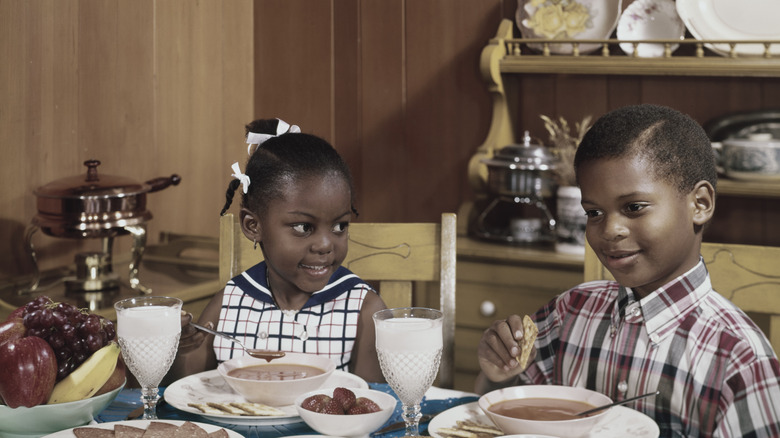
So, we've established it wasn't acceptable to eat your soup with bread. But this was not where the soup rules ended. Many also remember being taught to scoop soup correctly with a spoon. If you're thinking, "How many different ways can there be to scoop soup?!" we'll tell you: two. The first is towards you, and the second is away from you.
While you might think it makes the most sense to scoop the soup towards you, according to etiquette rules, soup should actually always be scooped away from the body. Why? It's just a cleaner way to do things. This way, if the soup falls off the spoon, it falls into the bowl, rather than onto your lap. Using the correct spoon is also important — while you may feel more comfortable holding a smaller spoon, the right spoon for soup is always the largest in the set.
Always tear breads with your hands
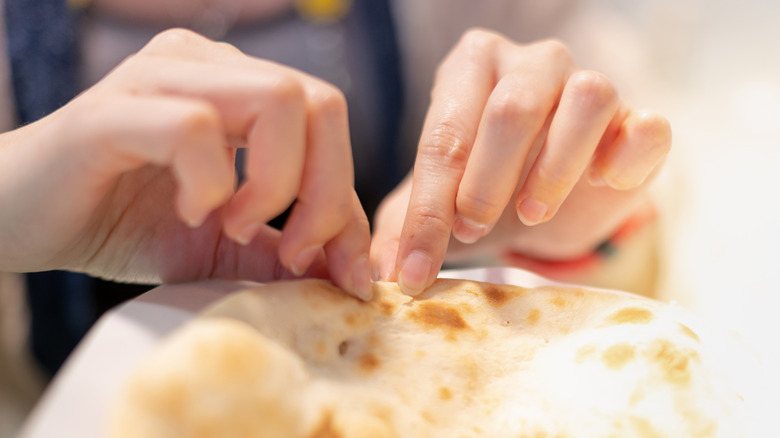
While you might automatically reach for a knife to cut and slice your bread roll now, this isn't what many people were taught back in the 20th century. Instead, you were supposed to tear small pieces of bread off with your hands, butter them with your knife, and then eat them (remember, they go nowhere near your soup bowl!).
This might seem strange, given that everything else was eaten with cutlery, but bread has long been eaten with the hands (and it still is today in sandwiches and burgers, for example). Back in the Medieval era, most people used knives, but only to cut things like meat or cheese. Bread, however, was often treated like another piece of cutlery.
Another fun fact about bread: It didn't used to be served to dinner guests on a plate, but wrapped inside a napkin. In 1922, however, Emily Post suggested that this practice was outdated.
Don't leave the table until everyone has finished eating
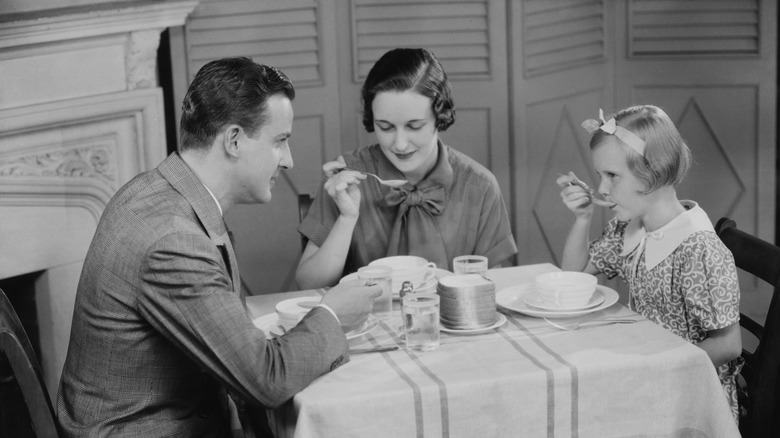
Another old-school dining rule many remember being taught was never to leave the table until everyone has finished eating. Only when the last knife and fork had been placed carefully in the 4 o'clock position could you get up to continue with your evening (or do the dishes), and only after asking politely, of course (see above).
Today, this is less common, alongside most of the rules on the list. And, in part, that's because the environment we eat in has changed. According to a 2025 survey by YouGov, 25% of Americans eat their dinner on the couch or in a recliner chair. Spending a lot of time at the table also isn't that common, with only 13% of Americans taking between 31 and 45 minutes to eat their main meal.
And on top of this, most of us also aren't actually paying enough attention to each other anymore to notice who has finished eating. In fact, the same YouGov survey noted that 63% of Americans watch television while they eat their dinner.