

Grow This Pretty Herb Under Fruit Trees — It Does More Than Just Attract Pollinators
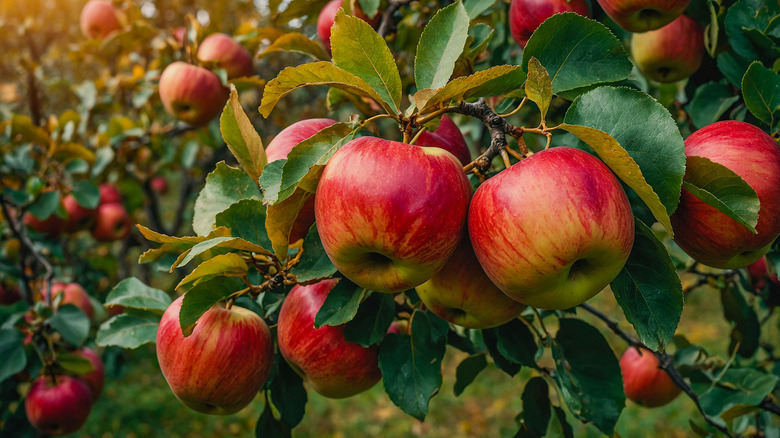
Companion planting is a tried and true gardening technique in which grouping the right plants together benefits the plants and the garden as a whole. Herbs are excellent for this sort of thing, as they are attractive plants that fulfill various roles in both edible and ornamental gardens. For instance, if you're growing fruit trees, planting lavender under or around them has multiple benefits, as it not only attracts pollinators, which help the trees produce and set fruit, but also deters fleas, mosquitoes, and other unwanted pests.
There are many kinds of lavender, from classic Mediterranean varieties to modern hybrids with pink or white blossoms, as well as dwarf cultivars. The most common lavender types are English (Lavandula angustifolia and Lavandula officinalis) and French (Lavandula dentata). All have lovely foliage in varying shades of blue-green and silver that form neat shrubs with showy flower spikes all summer long. Some varieties will bloom again in the fall, and under the right climate conditions, might even bloom year-round. Both leaves and flowers have a wonderful, intoxicating aroma which, as it turns out, many garden pests dislike.
However, the flowers produce plenty of nectar and pollen, which attract a wide variety of pollinators, from honeybees to bumblebees, butterflies, and even nocturnal moths. Like rosemary, lavender is an aromatic herb that acts as a hummingbird magnet. Lavender is easy to grow, requires little water, and will fit in many garden applications, including borders, raised beds, planted alongside vegetables and fruits, and is a perfect candidate for container growing.
How to use lavender in the garden and in the kitchen
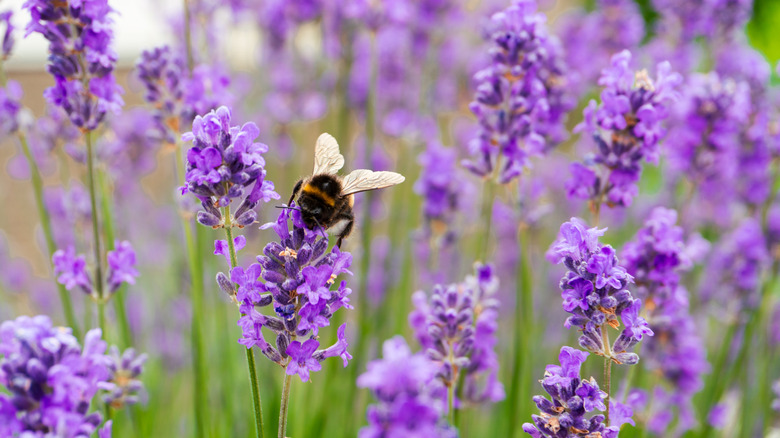
Lavender requires very little care to grow healthy and beautiful. It does like full sun — after all, lavenders are native to the Mediterranean — and enjoys dry conditions, making it a perfect plant for a low-maintenance garden. If anything, it will suffer from overwatering, as it is susceptible to root rot, so it will thrive among other drought-resistant herbs like thyme and rosemary, and under fig and pomegranate trees.
If you plant lavender under fruit trees, be sure they will get enough sun to bloom. You can always plant the lavender in pots with the right soil mix and move them around if needed. If you are planning to use it in the kitchen, be sure to find the best lavender to plant if you want to cook with it.
There are many creative ways to use lavender in your cooking, from baked goods to cocktails and salad dressings. Of course, lavender is a key ingredient in herbs de Provence, and is also a natural pairing for lemon — it will make a fantastic floral lemonade. Lavender also has plenty of medicinal benefits. It helps reduce anxiety and blood pressure, it has antioxidants and anti-inflammatory properties, and its calming effects make it a natural aid for insomnia. When cooking with lavender, however, a little goes a long way. Start with a small amount and make sure you enjoy the heady floral taste, as too much might be perceived as soapy or perfumey.