

How Much You Really Need To Spend To Get A Good Bottle Of Scotch
We may receive a commission on purchases made from links.
For those interested in beginning their Scotch journey, stepping into the whisky aisle of the liquor store can be a bit puzzling. It doesn't matter whether you are buying that bottle of Scotch to share a glass with friends, as a gift or token of appreciation, or simply to start filling out the collection in your home bar, you want it to be a good one. The prices on Scotch whiskies, however, vary quite widely. On the bottom shelf they might dip as low as $20 or so, whereas the prices of bottles on the top shelf quickly climb into the hundreds. Obviously those bottom-shelf offerings aren't going to impress anyone, but how much do you really need to spend for a decent bottle of Scotch? To help sort out this conundrum, we went to the experts, sitting down with Sarah Becan, author of the newly released "Let's Make Cocktails!" comic book, and Robyn Smith, owner of "This Blog's Neat".
You don't need to spend $100 for a great Scotch," Becan says, "but you should probably spend more than $30 for a quality bottle." There are perfectly acceptable options below that price point, particularly for mixed drinks, but for a good bottle to drink neat, aim a little higher. According to Becan, that sweet spot might be right around $50, where you can find some excellent whiskies in the 10 to 12-year age range. But, as Smith explains, "Price depends on a ton of factors: age, cask type, brand, rarity. And most importantly, 'good' is completely subjective. If you enjoy drinking it, it's good."
High-quality Scotch whiskies for beginners
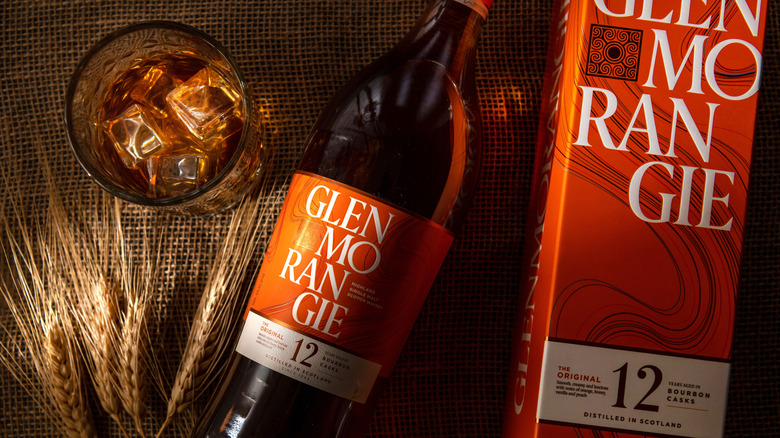
"For a single malt Scotch, Glenmorangie 10 is a great starting point," Becan says. "It's a Highland Scotch, and it's clean and smooth, with some delicate fruit and toffee flavors." The 12-year from the same distillery sits around the same price point and is one of the best quality Scotch whiskies under $50. For an offering on the blended-whisky side of the spectrum, Becan suggests Monkey Shoulder for its approachability. "It's a beautifully balanced blend of milder Speyside Scotches," she says, "with really pleasant notes of vanilla and honey."
According to Becan, "Both of these bottles are excellent introductions to Scotch's more complicated and intense flavors without being overwhelming." Delve too deep into the different whisky-producing regions of Scotland, and you might end up with something challenging for an uninitiated palate like an exceptionally peaty Islay whisky. While that isn't a bad thing necessarily — there are many Scotch drinkers who hold the peatiest varieties in the highest regard — the intense smokiness can be jarring for those who don't know what to expect.
Returning to Becan's starter-bottle suggestions (Monkey Shoulder and Glenmorangie), there is one big difference between them that can confuse new Scotch drinkers. Single malts get a lot of attention, but what is the real difference between blends and single malts, and is one actually worth shelling out more for?
Is a single malt worth buying over a blended Scotch?

There is a significant difference between blended Scotch and single malt, but it is not one defined by a hierarchy of quality. As Becan explains it, "Single malts are usually more unique to the distillery and the location they come from," she says, "but carefully blended whiskies can be incredibly consistent and reliable, with exceptionally balanced flavor profiles."
You see, single malt whiskies must be made from exclusively barley and pot-distilled by a single distillery. Blended whiskies, on the other hand, are often made from a combination of different grain whiskies and distillation methods. "Single malts tend to be more expensive," Smith explains, "because they're produced entirely by one distillery, while blends combine whisky from multiple sources and are often optimized for consistency and cost." In addition to the higher price tag, the stricter methodology of single malt varieties means that they show more of the character of the region and distillery where they are produced. The freedom allowed to makers of blended Scotch, on the other hand, enables them to produce some truly excellent bottles as well.
There is no real answer to the question of single malt versus blended Scotch. You will find plenty of both listed among the best bottles of Scotch for beginners. As Smith puts it, "It really depends on what flavors you like, and what you already drink. There's no one-size-fits-all answer." For the sake of learning about both whisky in general and your own palate in particular, you're probably best off buying some of each.