

Why Prime Rib Can Be A Risky Pick At Buffets
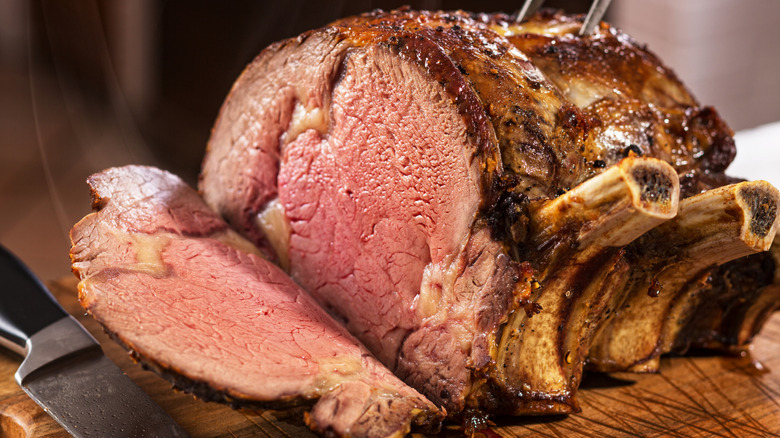
Whether it's your favorite Indian restaurant or The Golden Corral, most buffets are a decadent, all-you-can-eat experience that most of us relish. However, there are faux pas when it comes to buffet dining, such as loading up on the wrong items. According to Dennis Littley, the chef and culinary expert at Ask Chef Dennis, prime rib is a buffet food you should avoid at all costs.
"Prime rib tastes best when it is freshly sliced and rested," Littley told Tasting Table in a recent interview. "However, buffets typically mean that the prime rib sits under heat lamps for an extended period of time." Letting meat sit out for longer than two hours, especially a cut of steak that's usually served medium rare like prime rib, poses food safety dangers. According to Littley, "Large cuts of meat are held at inconsistent temperatures, where the bacteria could multiply rapidly unless proper hot-holding guidelines are followed." Even when left under a heat lamp, the internal temperature of the prime rib could enter into the danger zone, which lies between 40 and 140 degrees Fahrenheit. If the meat falls within that temperature range, the likelihood of bacterial proliferation and foodborne illness is very high.
High-end buffets may have carvers stationed at prime rib stations, taking extra precautions to maintain the proper temperature conditions. Still, keeping the meat warm poses problems. As Littley says, "The top layer may become dehydrated, and the internal temperature will begin to fluctuate, causing potential damage to the texture/flavor of the meat."
Buffet etiquette and safer places to enjoy prime rib
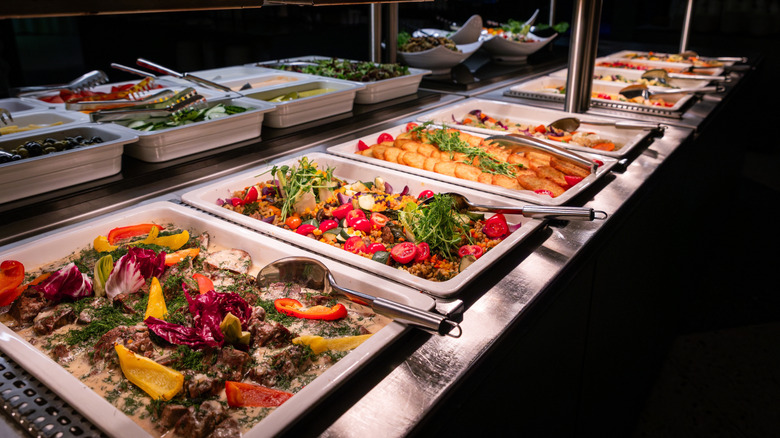
Prime rib may be delicious and rich, but that doesn't mean it should make its way onto your plate at a buffet. For a better dining experience, you're better off saving your prime rib order for a steakhouse. Check out the Thursday night prime rib deal at Perry's Steakhouse or head to your local Texas Roadhouse for a prime rib that customers find "hard to beat" at any other chain restaurant. Of course, you can always make your own prime rib at home; we consulted other experts to help you buy the best cut from the butcher and prepare it properly.
Prime rib isn't the only food to avoid at buffets, either. Other foods at risk of foodborne illnesses if left out for too long run the gamut of delicacies, from raw oysters and sushi to cantaloupe and communal condiments. A crucial tip to navigate any buffet is first doing the proper research to find clean and highly-rated buffets. Once you get to there, take a look around prior to grabbing your plate as you don't want to fill up on starches and steamed veggies before getting to the more expensive specialty dishes. To that effect, a good rule of thumb is to go for the items that you can't make at home, whether it's the perfectly manicured dessert cakes or slow-cooked meats — aside from prime rib, that is. If a buffet has a custom, made-to-order station for pastas, omelets, or stir fries, you're guaranteed a fresh and safe buffet item every time.