

Why Your Dishwasher Tablets Aren't Dissolving — And How To Fix It
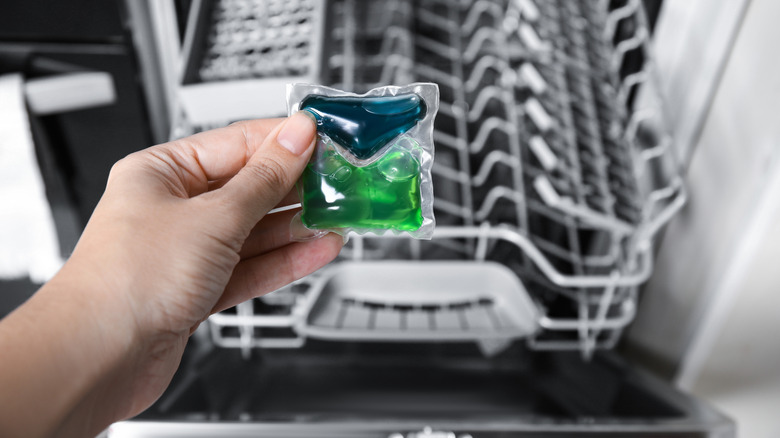
The best dishwasher pods make your dishes sparkle and help you avoid detergent overuse. Yet when you open your dishwasher to find that the pod didn't fully dissolve and you're left with a big mess and greasy, unwashed dishes, you may be rethinking your choices. The most common reason that a tablet or pod might not fully break down during the dishwashing cycle is low water temperature.
The water temperature in your dishwasher needs to be between 120 and 160 degrees Fahrenheit in order to dissolve the filmy outer layer of the pod so the detergent is released. If your water heater is set at a low temperature, your dishwasher is on an eco setting, or you're using multiple hot water appliances at the same time, the water may not get hot enough. This can also happen when an old water heater cannot heat water quickly enough to meet the demands of your dishwasher. The first thing you should do is make sure your dishwasher isn't set to the eco setting. Unlike the heavy cycle setting on your dishwasher, the eco setting saves energy and water by using lower water temperatures and longer cycle times, but it also may prevent detergent pods from fully dissolving.
If your appliance settings are normal, check your water heater. The standard water heater temperature is 120 degrees Fahrenheit, which should get the water in your dishwasher hot enough, however, a higher setting is recommended if your dishwasher doesn't have a booster heater. Also check for signs of a problem with your water heater, like a leak, rust or corrosion around parts, strange noises or odors, or an extinguished pilot light or flame that has turned orange. Those issues should be addressed by a plumber.
Other reasons your dishwasher pods aren't dissolving
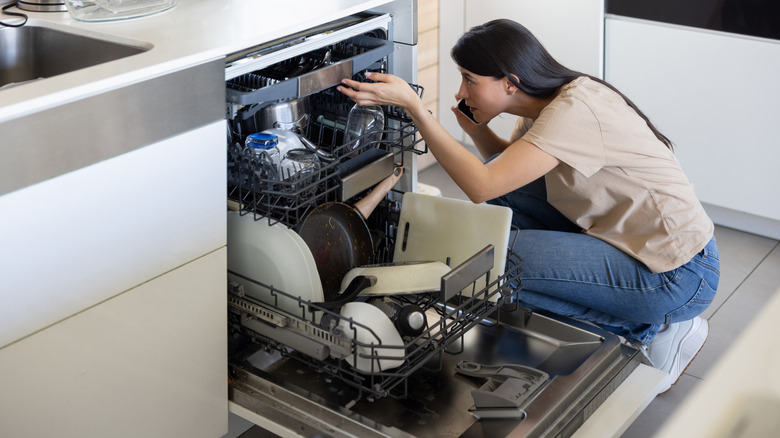
If your water temperature isn't the issue, there are a few other potential culprits: poor water pressure, a blocked spray arm, or a malfunctioning detergent door. Low water pressure can be caused by a clogged dishwasher filter or obstructed spray arm. These problems can prevent the pods from dissolving fully as there won't be enough water to break down the film on the pod's exterior, especially if you're using heavy-duty, pricey dishwasher pods.
Likewise, if the dishwasher's upper or lower spray arms are blocked by food or other debris, or if they cannot rotate a full 360 degrees during the cycle because dishes are in the way, this will prevent sufficient water from reaching the detergent dispenser or pod. Check your filter and spray arms for signs of clogs, and follow the manual or manufacturer's recommended instructions for cleaning these components. If that doesn't fix the problem, there may be an issue with the water inlet valve. If your dishwasher doesn't fill all the way, overfills or overflows, makes a humming noise, leaks, or you're left with dirty dishes and soap residue, call an appliance repair person to test your inlet valve.
If you're still having problems with your detergent pods, the final area to check is the detergent dispenser. Make sure the door opens freely and isn't blocked by goo or residue. Check the dispenser latch to make sure it is functioning properly. When loading the dishwasher, don't block the door with large platters, baking sheets, or other dishes. Avoid handling the detergent pods with wet hands, as that could make them gummy and keep the pod from releasing at the right time in the cycle.