

5 Reasons Your Tomatoes Get Mealy — And How To Avoid Them
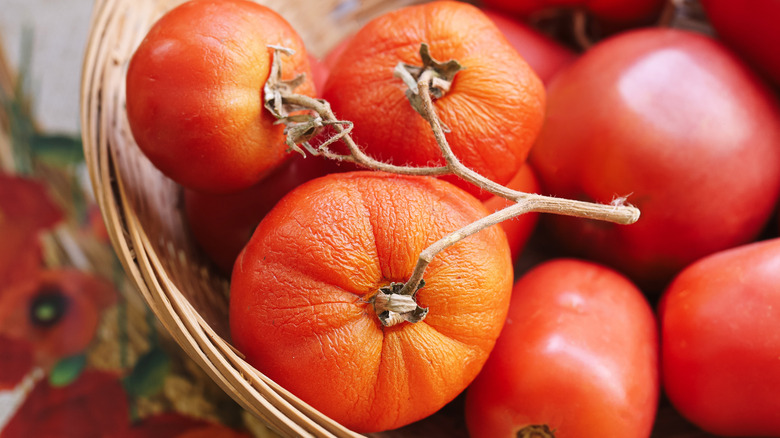
Growing your own tomatoes is the best way to ensure fresh and juicy toms in your salads all summer long, but it's also a big test of your patience. Every now and then, your endless hours of diligent watering will result in a mealy disappointment. Two or three mealy tomatoes in the entire season are no reason for concern; it happens. However, when the hard-grown tomatoes are consistently turning out mealy, it may be time to reassess their growing conditions.
For those who don't know what exactly we're talking about, let's define a mealy tomato. When cutting open a tomato, you expect a firm and juicy texture with a bit of glow to it. A mealy fruit is the exact opposite of that — it's grainy, dry, and mushy. If you bite into it, there's no flavor. Despite that, they aren't dangerous, so you may be able to sneak a few of them into recipes that call for canned tomatoes where texture isn't the main focus. Otherwise, they belong in the compost bin.
There are many possible reasons why tomatoes turn mealy, most of which have to do with growing conditions. Fortunately, that's something that you can control. If you notice consistent mealy tomatoes at the beginning of the season, there's still plenty of time to fix the defining factors and enjoy a better harvest in the future. Here are five most common reasons for mealy tomatoes and how to avoid them in your garden.
Growing the wrong variety for your region
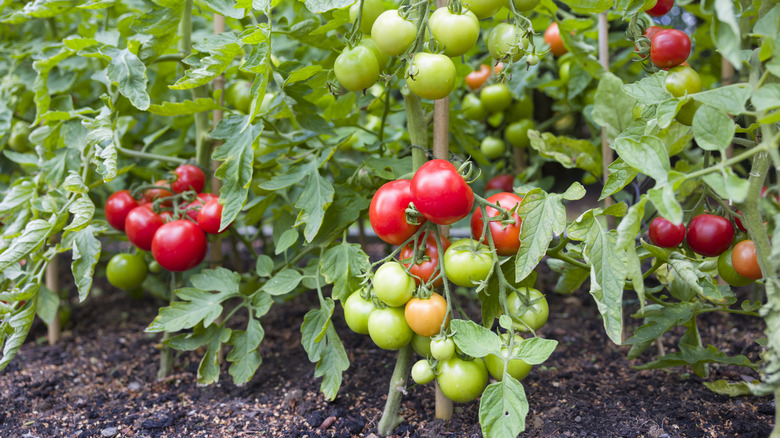
Although there are thousands of tomato varieties, not all of them are suitable for every single region. The United States has 13 major growing zones (each with two sub-zones) and being lackadaisical about which varieties you can grow in them is one of the biggest mistakes you need to avoid when growing tomatoes. Growing tomatoes in a zone that's incompatible with their variety is a great way to mass produce mealy fruits.
If you live in a cooler climate, varieties like Latah, Sub-Arctic Plenty, Siberian, or Beaverlodge are good picks. In hotter climates, Florida 91, Heat Master, Summer Set, Phoenix, and San Marzano are often recommended. Being mindful of the varieties you're planting goes beyond the growing zone, though. Some types of tomatoes are naturally softer and mushier when they reach full ripeness, such as Cherokee Purple, Beefsteak, and Early Girl. While any tomato can turn mealy, you can still opt for firmer, sturdier varieties like San Marzano or Campari.
It's also smart to grow multiple varieties at once, especially when you're still searching for the best one. This way, if one doesn't work out, you still have a chance at a good harvest. And don't forget to talk to other gardeners in the area about which tomato varieties work for them! The local community is often the biggest source of untapped knowledge that you can't always find online.
Not protecting your tomatoes from excessive heat
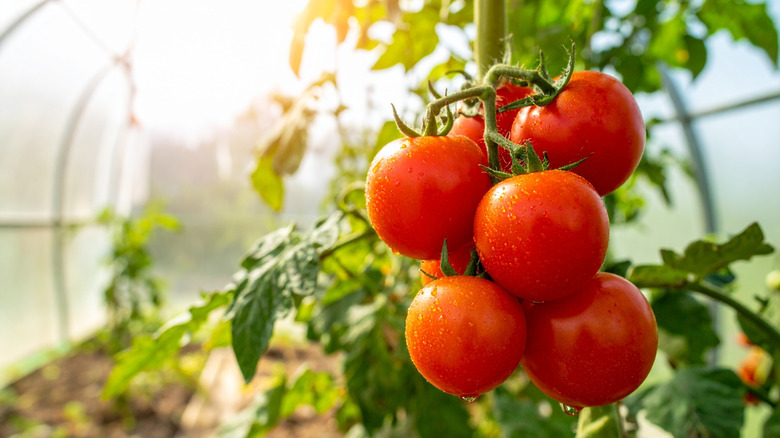
Tomatoes like to be warm — six to eight hours per day is definitely the sunlight rule tomato plants depend on for the best harvest. But loving the sun isn't the same as tolerating excessive heat. In fact, too much heat can disrupt the ripening process, ruining the texture of tomatoes and turning them mealy.
While the ideal temperature for your tomato plants depends on the specific variety you're growing, most thrive at around 70 degrees Fahrenheit. But as the temperatures cross the 80-degree threshold, tomatoes begin to struggle. While the plant itself can survive the higher temperatures, it does slow down (or entirely stop) the production of fruit. Tomatoes that are already on the vine will stop showing signs of ripeness on the outside, while the inside will quickly turn overly ripe, permanently damaging the cells crucial for the fruit's firm texture.
Now, a short heat wave with cooler nights will not instantly result in mealy tomatoes, but if you're experiencing a long stretch of hot weather that refuses to relent even at night, you have to give your tomatoes some shade. The easiest way to do that is with a shade cloth, which can lower the temperature around your tomatoes by several degrees during the hottest part of the day.
Watering too much, or not enough
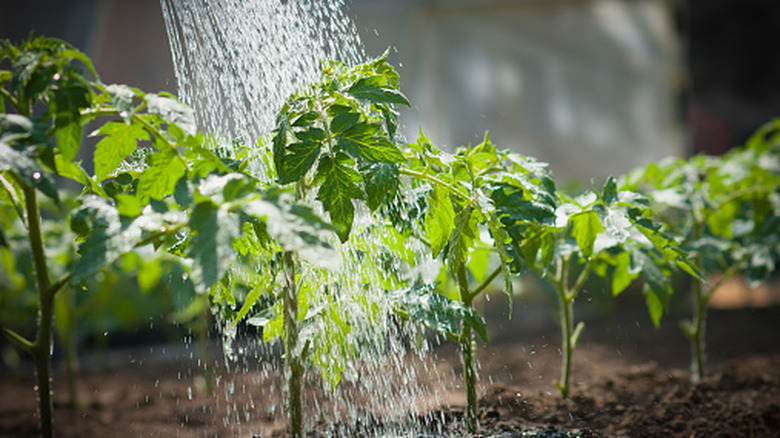
Tomatoes can be quite tricky when it comes to watering, because they have very specific preferences. Watering them either too frequently or not often enough can cause mealy tomatoes, so it's all about finding the right balance. Generally speaking, tomatoes are thirsty plants; they need consistent watering that reaches deep down to their roots. In fact, deep watering is one of the best hacks for growing the juiciest tomatoes.
Focus on delivering all the water directly to the roots (a drip irrigation system can help with that) and avoid splashing the leaves and the fruit, especially during the hotter part of the season. This way, they won't get scorched by the sun. Tomatoes consistently need around two inches of water per week. Accidentally keeping them thirsty for a few days and then trying to make up with an excess does more harm than good for the texture of the fruit. Water your tomatoes when the soil around them dries out; at peak summer, that can mean every other day. Daily watering is usually overdoing it.
Tomato plants will, thankfully, show some signs when they're over- or underwatered. Catch the signs early, and you may just spare yourself the disappointment of biting into a mealy tomato weeks down the line. Underwatered tomatoes have wilted, curly leaves and a noticeable lack of growth. Overwatered tomatoes, on the other hand, have yellowed leaves, darkened roots, and cracks in the skin of the fruit.
Leaving ripe tomatoes on the vine for too long
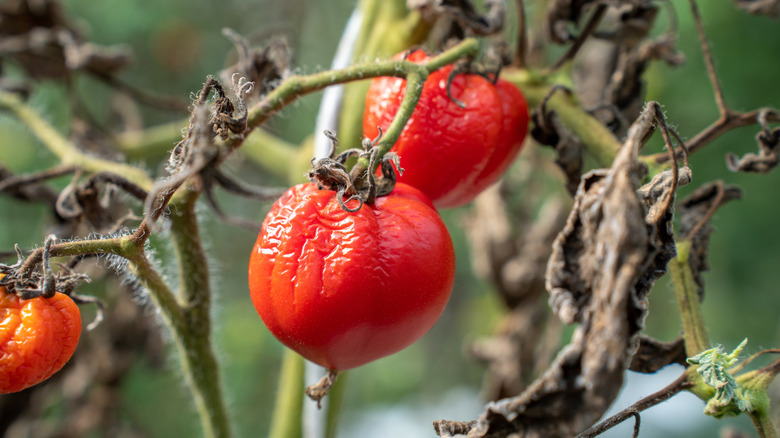
The sight of bright red, fully ripe tomatoes hanging from the vine is a proud moment for any gardener. We all want to wait for the perfect moment to pick them, but waiting too long is a big mistake. The longer the fruit is left unpicked, the more its texture begins to change. On the vine, tomatoes will continue to ripen past their peak — they will turn mealy on the inside and eventually start rotting.
The absolute best time to harvest tomatoes for perfect fruit is slightly before they become fully ripe. Color-wise, the tomato is still going to be a little bit green, with a soft pink shade slowly taking over the surface. This is called "the breaker stage," often considered the ideal time for harvesting as it protects the fruit from over-ripening or other environmental mishaps.
At the breaker stage, the tomatoes aren't ripe yet; they will continue to ripen after you pick them off the vine. This will help you enjoy the fruit when it's at its peak without having to worry about missing the window. Of course, if you are diligent with picking your ripe tomatoes every morning (don't wait until the evening), you can totally let them ripen on the vine. But if an unfavorable weather forecast lies ahead (or you're leaving town for the weekend), it's better to pick the toms sooner.
Storing harvested tomatoes improperly
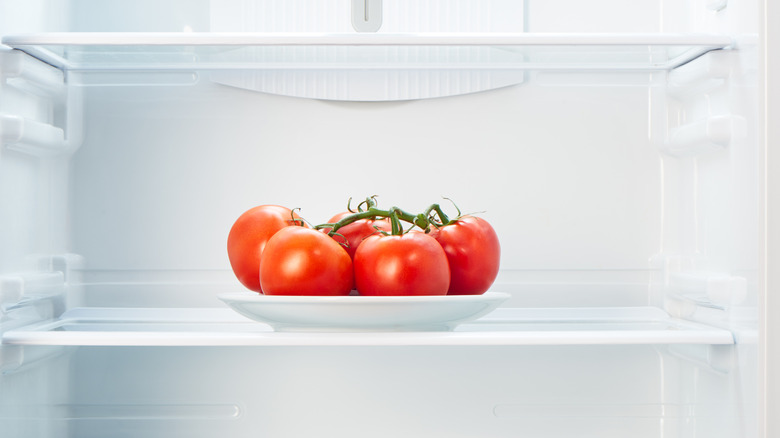
Storing the tomatoes is the final step in this gardening venture, and it's incredibly important to do it right. Imagine taking perfect care of your plants all season long, keeping them well-watered and protected from the sun, and picking them at the best time, only for the whole harvest to spoil due to improper storage. The heartbreak would be indescribable.
Just as tomatoes don't like too much heat, they also don't like excessive cold — therefore, storing them in the fridge is a big no-no. Refrigerator temperatures are way too cold for tomatoes to keep their firm, juicy texture. When you expose a ripe tomato to a temperature below 55 degrees Fahrenheit, it starts to suffer cell damage that completely messes up the texture inside the fruit. The results are dry and awful.
A good way to store tomatoes is at room temperature, away from direct sunlight, with the stem down. The stem is a sensitive part of the fruit, quick to soak up bacteria and moisture from the environment. By storing your tomatoes upside down, you're shielding this sensitive spot and thus prolonging the toms' quality.