

You Might've Been Storing These Small Appliances Wrong This Entire Time
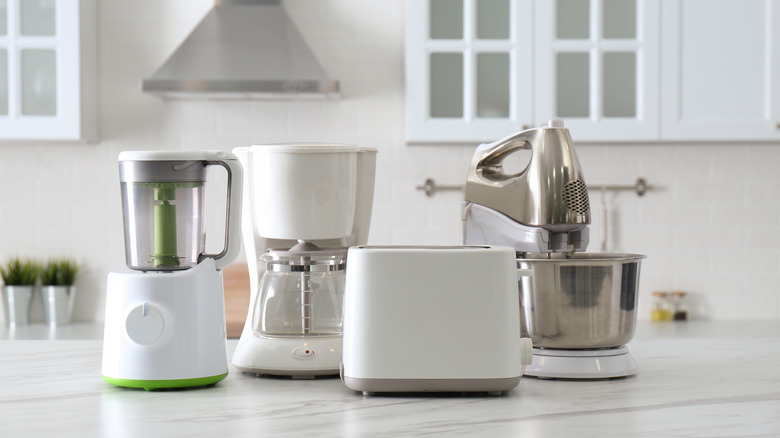
One big benefit of using small kitchen appliances is that they are easier to store. Yet you still need to take care when picking the perfect place in your kitchen to stash them when they're not in use. Many people actually don't realize that there is a right and wrong way to store small kitchen appliances, and that some may even pose a safety hazard if they are not stored correctly.
For instance, small electrical appliances like blenders, hand mixers, milk frothers, and food processors should be kept away from heat sources. Instead, these appliances should be stored in a clean, dry, cool place. If an appliance gets too hot, even when it's not in use, it could be dangerous. Excessive or prolonged exposure to heat may melt, fray, or warp cords. As plastic or metal components heat up, they may expand and become cracked and damaged over time. The next time you plug it in or turn it on, you may face an unexpected safety issue like electrical shock, sparks, or fire.
Electronic appliances are one thing you should never keep in your oven's bottom drawer, in the oven itself (even when it's not on), on the counter near the stovetop, in front of heating vents, or on top of other kitchen appliances that are turned on. It's also dangerous to store appliances near flammable items or liquids that could potentially spill onto them. Don't keep appliances or other electronics in the cabinet under your kitchen sink, on top of your refrigerator, or on shelves directly underneath bottles of cooking oil or other flammable liquids. Storing appliances near chemicals or flammables could cause spontaneous combustion due to the buildup of heat and the lack of air movement or ventilation.
The best spots to store your small appliances when not in use
If you don't want to keep small appliances out on your kitchen counter, you have plenty of other options, as long as you protect them from heat, moisture, and dust. Humidity can cause parts to rust and corrode, while dust can clog delicate parts, resulting in dangerous malfunctions. Start by reading the manual for each appliance, as this often overlooked step could make your kitchen appliances last longer and function more safely. The manual should outline the ideal operating and storage environment for your appliance, which is typically in a temperature-controlled environment, off the ground, and away from heat and water sources.
When considering potential appliance storage ideas, factor in convenience and frequency of use. Regularly used appliances should be within easy reach, such as on a shelf at eye level, or on the lowest shelf of an upper cabinet. Using a rolling kitchen cart, clearing out a drawer in your kitchen island, or adding a pull-out shelf to kitchen cabinets can keep your countertops clear while also making sure appliances are easy to locate and protected from damage. Make sure to always store appliances upright, and protect them from dust and moisture with a manufacturer-recommended cover if they are out on a shelf or cart.
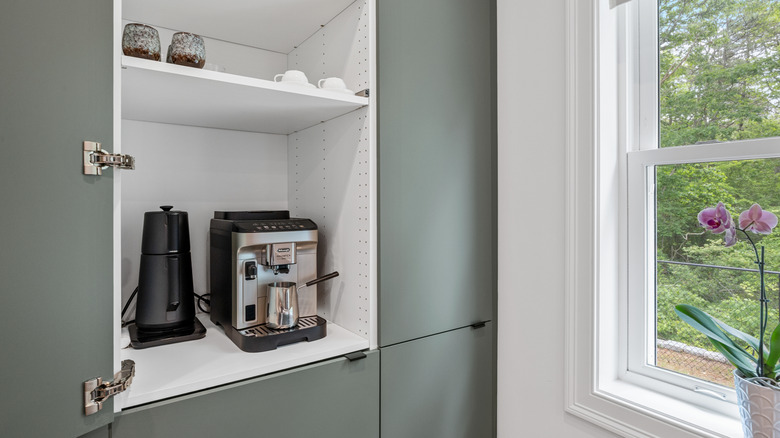
If you have the space, adding an appliance garage to your kitchen may be the perfect way to store small kitchen gadgets. An appliance garage is a dedicated storage area that is hidden from view, but keeps all the gadgets you need within reach on your kitchen counter. Appliances will be safe from dust, spills, heat, and humidity, and the garage can be customized to match your overall kitchen design and aesthetic.