

10 Signs You're Eating At A Quality Seafood Restaurant
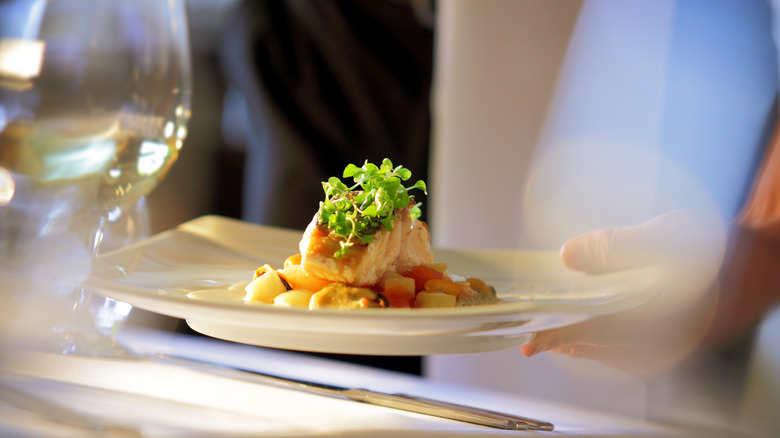
When you want to dine on a lobster dinner or indulge in oysters Rockefeller, it's understandable you'd want a quality seafood restaurant to ensure fresh fish or top-notch preparations. And no one wants to risk getting ill because the shellfish was a bit off and well past its prime. But how can you determine if a seafood restaurant is a quality establishment if you've never eaten there? Do you have to just chance it? We spoke with executive chef Alan Gosker for Lola in Nevada City, California, and culinary director Matthew Gaudet from Saltie Girl Seafood Bar in Boston and Los Angeles for advice on how to spot a quality seafood restaurant.
Quality seafood restaurants are proud to be so, and you'll notice this as soon as you walk through the doors. Your overall impression happens within the first five seconds and may even start in the parking lot. A well-maintained sidewalk and entryway point to quality in the details. And interior decorating, lighting, noise level, and overall ambiance give off a vibe. Additionally, staff that are knowledgeable and courteous instills a sense of competence and professionalism, indicating care for the customers. Gaudet says it all begins with the restaurant's reputation. But if you're unaware of what that is, there are signs you can pay attention to in order to determine if the restaurant is worth a try.
The restaurant is efficient and clean
It should go without saying, but a quality seafood restaurant should be clean and run efficiently. Culinary director Matthew Gaudet suggests looking around once you enter the restaurant. "People can sense if a restaurant is organized and professional," he says. Make note of the staff, how they're dressed, what they're doing, and whether they appear to be taking their job seriously. A quality establishment typically has staff that take pride in their work. The dining area should be meticulous, and so should the kitchen.
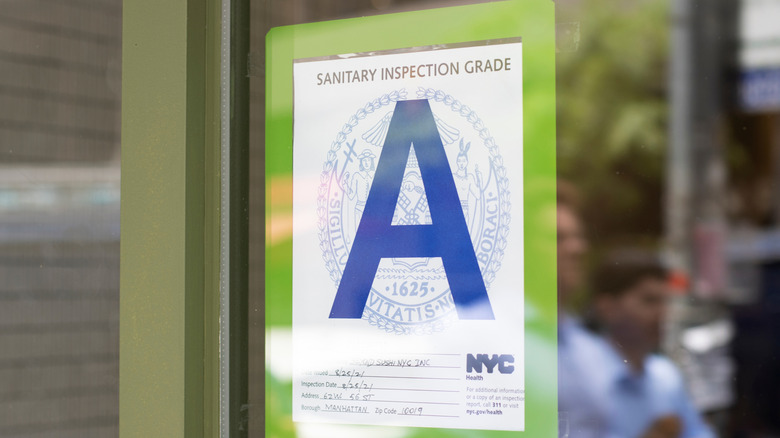
You should also pay attention to health grades. These grades are given based on health inspections and cover hygiene, food sources, food handling, food storage, and sanitation. Health inspectors rate any violations with points. The tallied result equates to a grade, which is posted for the public to see. Look for grade A; this means the restaurant either had no violations or a minimal amount when it was last inspected. Minor violations include things like inaccurate fridge temps, insufficient ventilation, or lack of hand-washing signage. Inspections are required at least once a year, depending on grade, so checking the date on the signage is always a good idea, too. Restaurants that regularly receive high grades are inspected less frequently.
The restaurant smells fresh, not fishy
As you enter the restaurant, let your nose be your guide. You'll know almost right off the bat if something is up — the body inherently reacts to negative smells. "For me, it should smell fresh — like the ocean, slightly briny," says executive chef Alan Gosker. "The dining room should not smell fishy." Despite the notion that fish smells ... well, fishy, it doesn't — or shouldn't. Fresh, quality fish shouldn't really have any smell at all. If there is one, it's light, like a light ocean breeze. "It shouldn't smell like low tide along the Nahant causeway," says Matthew Gaudet.
Gosker warns that ammonia smells are also a bad sign, as an ammonia aroma can indicate spoiled fish. Gaudet recommends asking about the frequency of seafood deliveries to the restaurant, which can help you gauge how current the fish is. Establishments that receive regular shipments from vendors are likely using the freshest seafood. So if there's no offensive smell hitting your nose, but you're still concerned, follow that up by inquiring about the restaurant's source and delivery.
The chef and staff are knowledgeable

The host or hostess is many diners first impression of a restaurant, and they can set the entire tone of the meal. Staff who are attentive, friendly, and helpful create a more successful environment. And this type of service carries into the kitchen. A knowledgeable chef can tell you exactly what type of seafood is being prepared, its origin, and how fresh it is. If you're unable to inquire about the source or when it was caught, Alan Gosker says that's not a good sign. "If I get vague responses like 'it's fresh' or 'from our supplier,' that usually tells me they're not tracking quality closely," he says.
A chef that is on point, running the kitchen like a well-oiled machine, creates a quality wave that trickles out into the dining area. And when it comes to a delicate product such as seafood, it's especially important staff understand the menu. "It is the education of the chefs to the cooks and staff on how to handle, then cut, store and prepare seafood. If this culture of respect and appreciation isn't given to the product, what do you think it will be toward the staff and guests," says Matthew Gaudet.
The menu isn't overly large
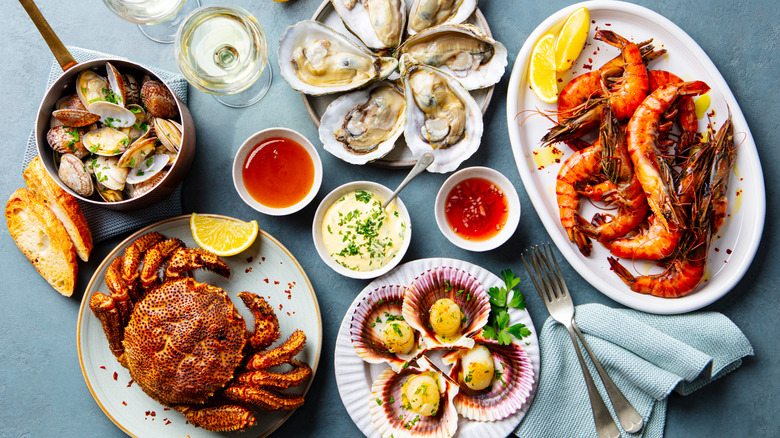
One of the ways to spot a reservation-worthy restaurant is to take a look at the size of the menu and how many options are listed. Whether you check it out online or while you wait to be seated, you'll want to be on the lookout for an overly large menu. "A massive menu worries me immediately," says Alan Gosker. "You genuinely cannot source multiple species fresh and execute all of them well."
If the host or hostess pulls out a book-size menu, or you have to scroll through page after page of dishes online, that restaurant may be sourcing pre-made or frozen ingredients in order to fulfill such a wide range of options. A quality seafood restaurant understands that a minimal number of options is best. The chef can focus on the dishes that are well received in order to zero in on top-notch execution instead of being spread thin trying to create a plethora of varied meals. "Fewer species done with real intention beats a long list done carelessly," Gosker says.
The menu is scant with fried choices
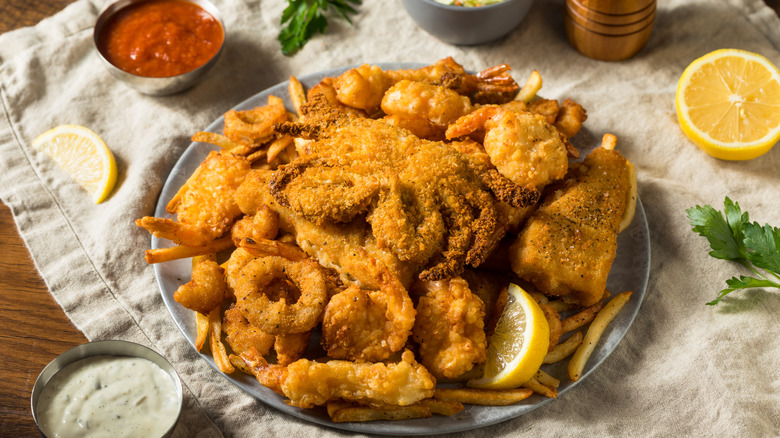
Who doesn't love a good fish and chips meal from time to time? While some of the best establishments can serve up a stellar fish and chip dish worthy of praise, both of our experts warn that a high-quality seafood restaurant won't have a menu full of fried choices. "If I see a menu that is huge with multiple fried items, I know it's heavy on frozen products and not concerned with prioritizing fresh fish," says Alan Gosker. Of course, freezing is often necessary when it comes to keeping fish in peak condition. But a restaurant that's not as focused on quality may source an abundance of frozen fish to cover its many fried options, while also keeping costs down and maintaining an extended storage time. So quality is less about being frozen and more about lengthy storage time.
There are many types of fish that hold up well to frying, but if the seafood is coated in thick batter, you may not get to taste that fish, which may be the restaurant's goal if the fish isn't top quality. On that note, Matthew Gaudet advises staying away from a dish if there is no more detail beyond the words "hand-battered fish" in the description. "You can be certain if it is unidentifiable; it's very much frozen and not likely delicious," he says.
The majority of seafood is local to the area
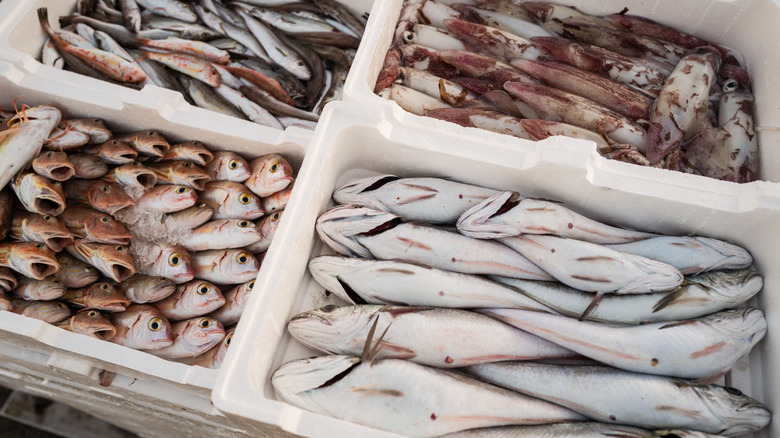
One of the reasons many customers seek out a quality seafood restaurant is when they're looking to enjoy some fresh-caught fish, or indulge in a particular regional cuisine or specialty. "Wherever you are coastally, that should be the predominant origin source," says Matthew Gaudet. Even though modern transportation makes it entirely possible to safely ship fresh seafood from all over the world, it doesn't get much better than dining at a restaurant that sources its ingredients from the local area. "If you ever really want to know what's fresh and local, just get up early and head to the seafood markets for the morning auctions where product is loaded directly off boats and appraised," Gaudet says.
And this is where having a little knowledge beforehand can be beneficial to understanding the type of quality seafood the restaurant is offering. Alan Gosker recommends doing your research about farmed versus wild-caught fish so you can make a more informed choice when it comes time to dine.
Seafood dishes don't rely on heavy sauces or seasonings
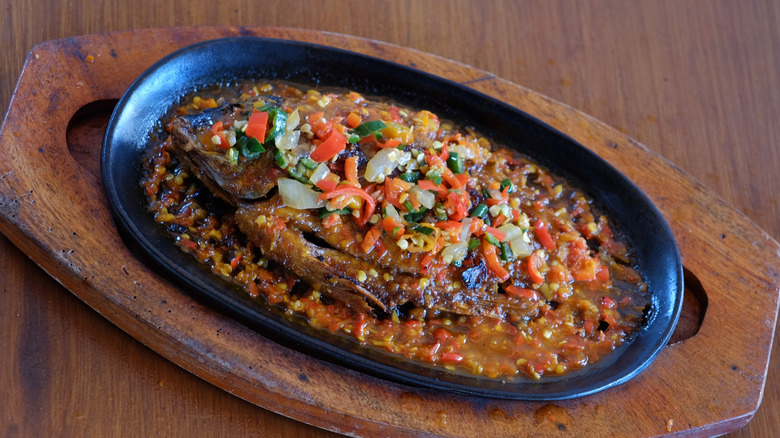
When you're looking over the menu at a seafood restaurant, make note of what's offered. Similar to how excessive fried options should raise a red flag, dishes that aim to hide the main ingredient — the seafood — are questionable. Alan Gosker warns us that dishes may use heavy sauces to counteract seafood that's lacking in freshness. Now, that's not to say pairing sauce with seafood is ultimately bad or unwarranted; in fact, many sauces like hollandaise, dill, or tartar sauce can enhance seafood such as salmon, crab, or tuna. But if the dish relies heavily on a sauce in order to deliver a tasty meal, you should probably question the source of the seafood. Instead, Gosker says to look for salsa or sauces used as a garnish or side.
Another sign of low-quality fish is excessive use of blackened seasonings, says Matthew Gaudet, unless of course, it's a specific cuisine that specializes in heavy or bold seasonings, like Sichuan, Cajun, Indian, or Jamaican. But if it's not regional-specific, then there's a good chance the chef is trying to overpower or mask the seafood. How the food is presented says a lot about what the restaurant wants to prioritize. "If a kitchen needs to hide its fish, it probably should," says Gosker.
Seafood is sitting on ice, looking bright
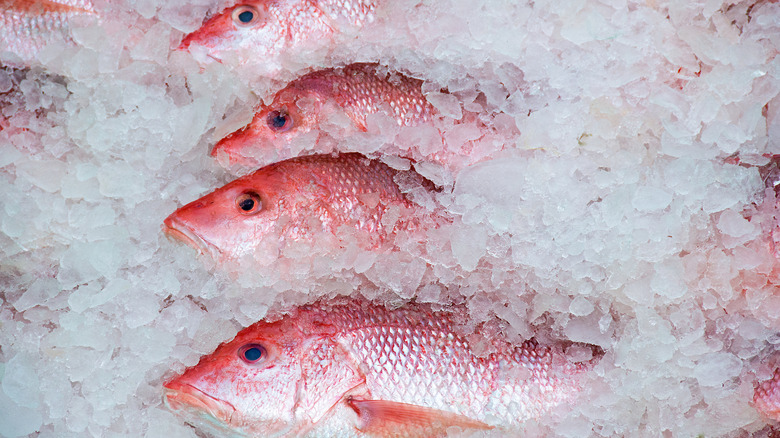
The fact is, seafood needs to be kept pretty cold. Though there is a stigma about frozen seafood versus fresh, most seafood is flash-frozen when it's caught. Freezing allows seafood to hold onto its freshness, Matthew Gaudet tells us, as well as reducing the risk of harmful parasites. "Because this freezing is so cold and fast, it prevents any water crystals in the structure to swell causing the fish to [break down]," Gaudet explains. It's what happens after freezing that matters more.
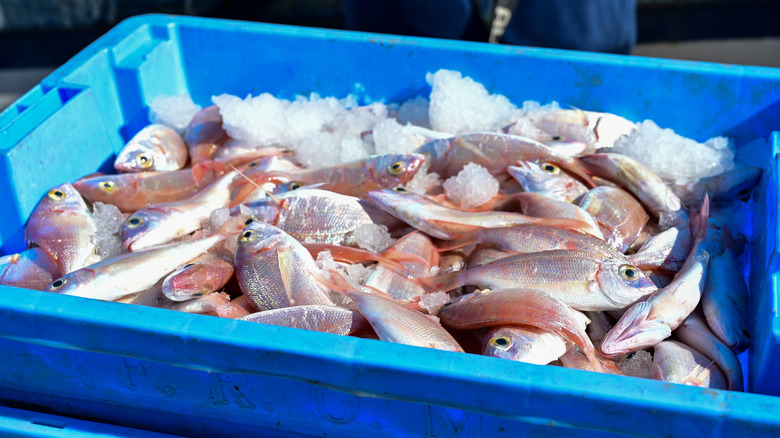
As you look around the restaurant to gain a better understanding of the full operation, check out the display case, if there is one. "You'd like to see ice," Gaudet says. "Cold boxes or refrigeration ... I like seeing whole fish stored in ice ... upright if a round fish, flat if a bottom fish, with drainage underneath." Then, check out their eyes, Alan Gosker advises. The eyes should be clear, not cloudy. And if there's a raw bar, presentation should be pleasing to look at. "Everything should look fresh and bright, not dull and lifeless," says Gosker.
The fish is handled with care
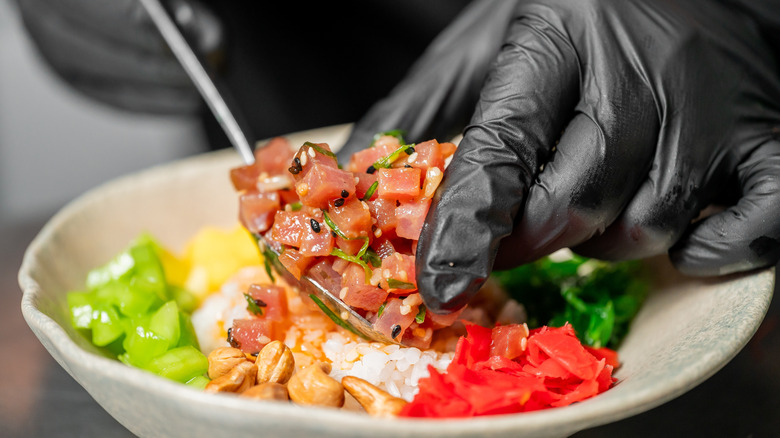
From the moment seafood is delivered to the restaurant to the moment it hits your plate, it should be handled like it's the star of the show (because it is). So one of the most important signs of a quality seafood restaurant is how the fish is handled throughout the entire process, says Matthew Gaudet. "We spend a lot of money to obtain the best quality and the most beautiful product. Our job is to, yes, sell it, but to also prepare it for the guests at its optimal quality, and while it's in our possession," he says.
In order to maintain the quality of seafood from the time it's caught, every step of transportation and handling matters, so what ends up on your plate is its best version. It's vital that seafood is kept super cold when it's delivered and kept clean but dry, with fresh ice and proper storage. Additionally, staff should be wearing gloves when dealing with seafood. Occasionally, you may see fish wrapped in a towel, which is actually an antimicrobial cloth helping to keep the fish dry, explains Gaudet. Dry fish is not only fresher — "Wet fish is expeditiously dying fish," he says — but it also helps create a meaty, dense internal texture with nice crispy skin.
Its raw preparation is high quality
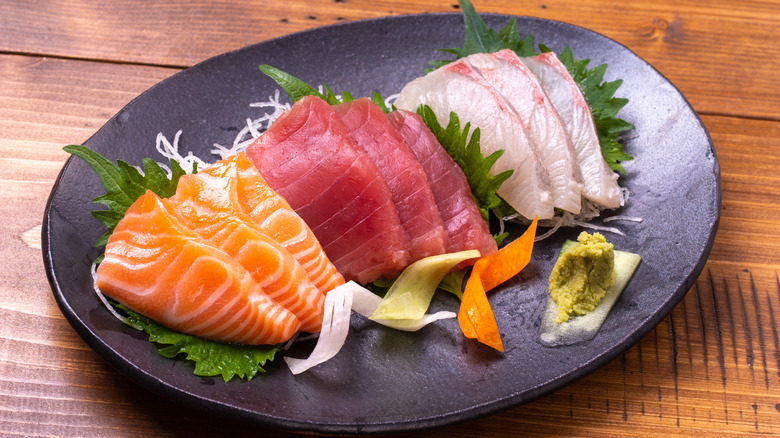
Unless it's specifically a raw seafood restaurant, keep a close eye on the raw bar or raw options listed on the menu. How the kitchen treats its raw dishes can tell you a lot about how the kitchen treats pretty much every other dish. "Raw preparation is the most honest expression of quality," says Alan Gosker. It shows the kitchen is putting in time and effort. "If they're doing crudo or tartare, I'm ordering it," he says.
Though you might think raw preparations are simpler and therefore not needing much attention, a well-done raw offering signals the kitchen is proud to show off its seafood. Matthew Gaudet tells us sashimi, crudo, or tartare (simple dishes that highlight the raw fish with very little extra flavoring) can give you an overall impression of the chef's skills. "This will demonstrate the care, the cuts, the techniques, and the overall quality of the seafood and kitchen team," he says.