

Buy Or Make Sourdough Starter? Here's What To Consider
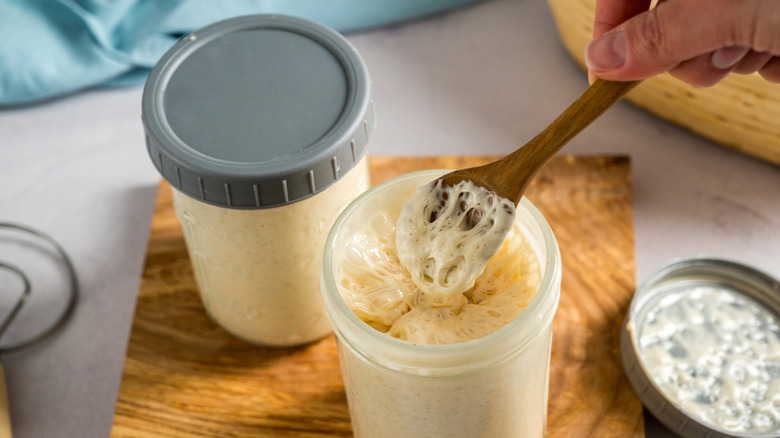
It's easy to get sucked into the sourdough trend after seeing videos of it on TikTok and social media. Folks aren't shy about sharing all of the delicious foods that they make with sourdough starter, including crunchy, crusty breads chock-full of flavorful mix-ins, sweet renditions of loaves speckled with sprinkles, and other sourdough discard recipes. Although you might be gung-ho about starting your sourdough adventure, the one essential ingredient you need is, well, the starter.
Sourdough starter is made by letting a mixture of water and flour sit over time. Bacteria and wild yeasts will colonize it and contribute to its unique flavor. It could take several weeks for your sourdough starter to be ready to bake with, which can put a damper on your baking energy. If you want to circumvent the process of feeding, watching over, and inspecting your sourdough for signs of life, you can instead purchase the starter from a store or a bakery. However, there are some important trade-offs you will have to make if you buy a starter rather than make it yourself.
The first major consideration is how much starter you need. When you culture your own, you can take from the discards and strategically refeed it to maximize its yield. So, if you plan on exploring a lot of different recipes and can use that starter, you may want to make it yourself. But if you are doing a one-and-done sourdough loaf, then buying it from a reputable source may be more ideal.
Keeping a starter alive isn't as hard as it looks
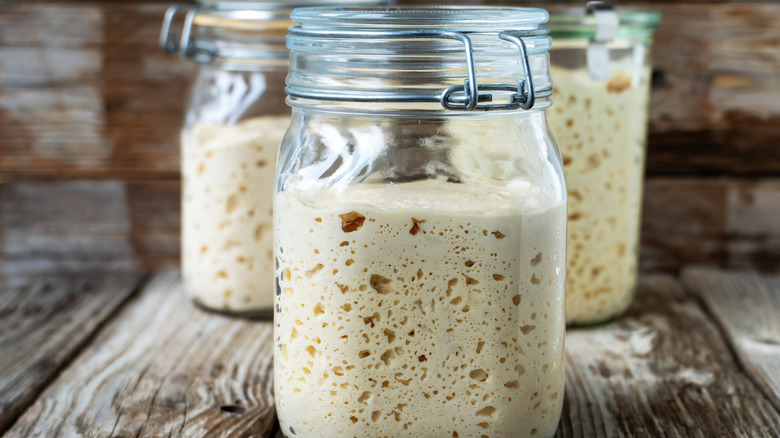
As an avid home baker myself and someone who has taught baking classes, I find that sourdough can be intimidating to home bakers for several reasons. The first — and one of the reasons why people may opt to buy it from the store instead of making their own — is that it's perceived as time-consuming and finicky. In reality, the hardest part about making it is learning its sensory cues — like when it needs to be fed or when it's gone bad. There are more than enough guides in circulation about how to keep your starter alive, meaning there's a ton of reference material. Really, it only takes a few minutes a day to discard and feed your sourdough starter, which is far less than you might expect.
Another reason why people might feel inclined to buy a starter is that they prefer a more predictable flavor. The starter is like a sponge for yeasts and bacteria within a specific location — meaning that the sourdough your local bakery uses won't taste like what you make at home. As such, some people worry that, if their sourdough tastes too funky or not funky enough, it's a bad thing. But this is really subjective — it's the nature of sourdough. Rather than DIYing or buying sourdough, I recommend using the third option: Ask a friend for a little bit of their starter so you can get the hang of working with it, and you can pay them back with all of the delicious sourdough baked goods you make.