

15 Burger Chains That Don't Exist Anymore
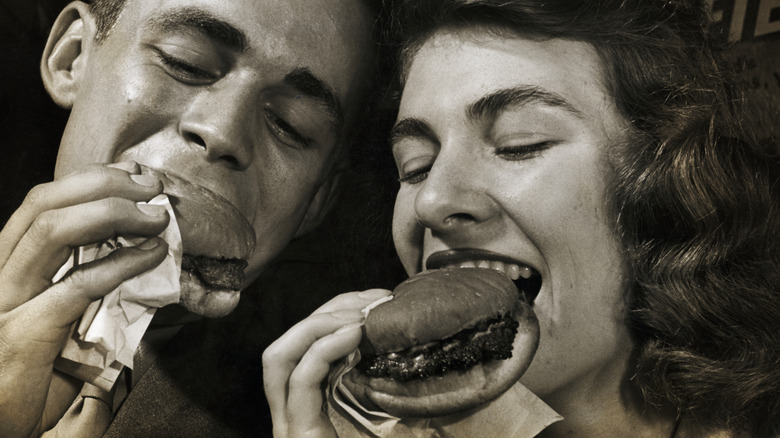
When did you last visit your local McDonald's? If the answer to that question is "today," "yesterday," or "last week," you're not alone. The fast food chain welcomes no less than 90% of the American population through its doors every single year. It is, quite frankly, a burger behemoth. And it's in good company: Burger King and Hardee's are also members of the burger giant club, with thousands of locations between them. Over the years, many burger chains have been and gone, eventually stamped out by the popularity of these big names. For the most part, anyway.
Below, we take a trip down hamburger memory lane to take a look at the once-popular chains that didn't survive. From Scottish-themed concepts (yes, really) to Tudor-style restaurants churning out tiny burgers, the U.S. is somewhat of a burger chain graveyard. Join us as we wind back the clock.
Burger Chef
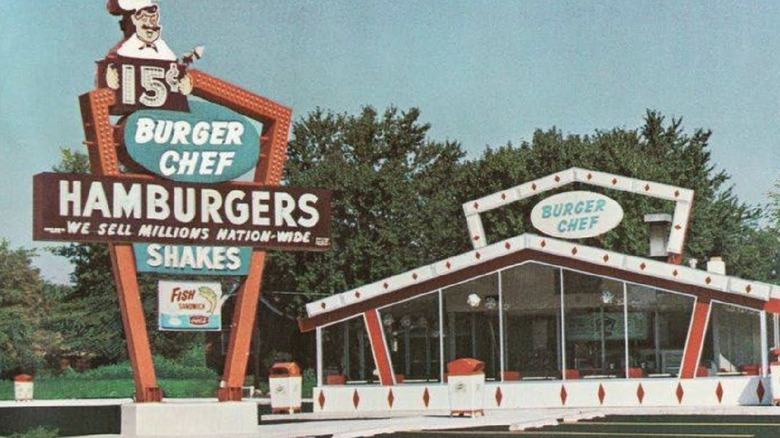
What's your go to order at McDonald's or Burger King? We'll take a guess, it goes along these lines: A burger with fries and a soda. That's the standard fast-food burger meal, after all. But actually, neither McDonald's nor Burger King came up with this format. This combination was first offered as a deal by Burger Chef, a long lost competitor in the fast food industry.
Chances are you've heard of Burger Chef before. Maybe your parents or grandparents have mentioned it, or perhaps you saw Don Draper and his team of New York advertisers go after it in "Mad Men." The chain was founded in the 1950s, and by the end of the 1970s, it had more than 650 restaurants across the U.S.
Many would flock to Burger Chef for its Big Shef, which, according to those who remember it, was similar to a Big Mac, and one of the best fast-food burgers on the market. Another pull was the fixings bar, which was basically a buffet full of toppings like pickles and onions that you could choose yourself. Unfortunately for Burger Chef fans, the fast food chain couldn't keep up with the increasingly crowded fast food market. In the 1980s, Hardee's bought Burger Chef and rebranded its remaining locations.
Burger Queen
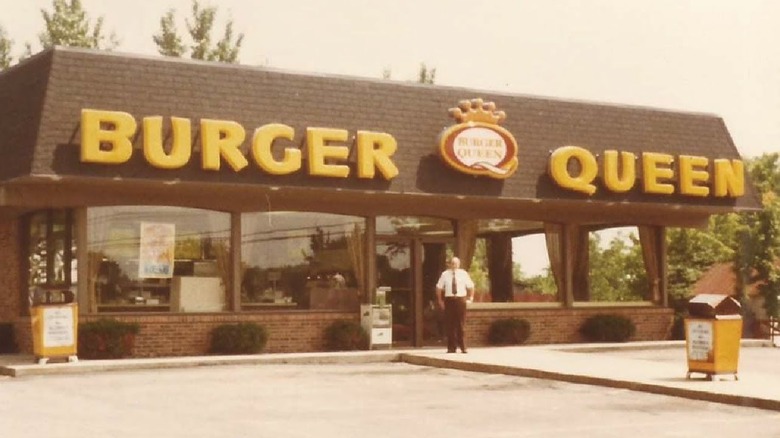
Every king needs their queen, right? Well, actually, not always. Burger King probably wasn't a huge fan of Burger Queen, because in the 1950s and 1960s, the fast-food chain was trying to come for its crown.
Burger Queen opened in Winter Haven, Florida in 1956, and for several decades, things were going pretty well for the chain. By 1974, it had 65 locations in the U.S., and by the end of the decade, it had started to open international locations in places like Canada, Taiwan, and the U.K. Of course, the fast-food joint offered burgers. There was the Imperial Burger, for example, with a quarter-pounder of beef, American cheese, lettuce, onions, tomatoes, pickles, and special sauce. But many people also remember stopping by the chain for fish and chips or a fish sandwich.
Burger Queen still kind-of exists, in a way. In the 1980s, Burger Queen rebranded as Druther's, and in 1990, it became a territory operator for Dairy Queen. The burgers are gone, but the royal presence lives on. To this day, Druther's is still a partner and operator of Dairy Queens across Indiana, Kentucky, Virginia, and West Virginia.
Gino's Hamburgers
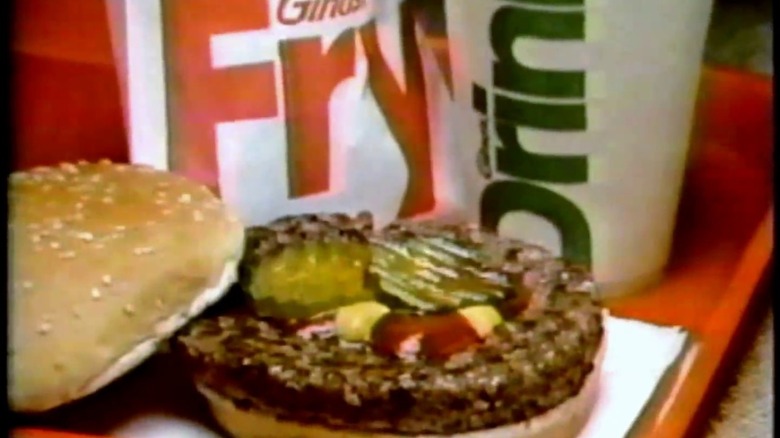
It's not unheard of for athletes to enter the fast food business. For example, after retiring from the NFL, former Dallas Cowboys footballer Kris Brown started investing in Dunkin' Donuts franchises, and in 2017, Richard Sherman of the Seattle Seahawks opened his second Wingstop franchise. The athlete-to-fast-food-restaurateur pipeline has been going on for a while. In fact, back in the 1950s, Gino Marchetti, a defensive end for the Baltimore Cuts, helped set the trend by opening Gino's Hamburgers with fellow football player Alan Ameche.
At its peak, the burger chain had more than 300 locations. Many people remember heading to Gino's for a cheap hamburger and fries with families in the 1960s and 1970s. In fact, some swear that the chain's signature burgers were far better than a McDonald's Big Mac. Others remember their local Gino's hosting hamburger competitions, while some went along for one thing and one thing only: fried chicken. But the dream didn't last forever. In 1982, Gino's Hamburgers sold to the Marriott Corporation, which opted to convert all of its locations to Roy Rogers Restaurants instead.
Geri's Hamburgers
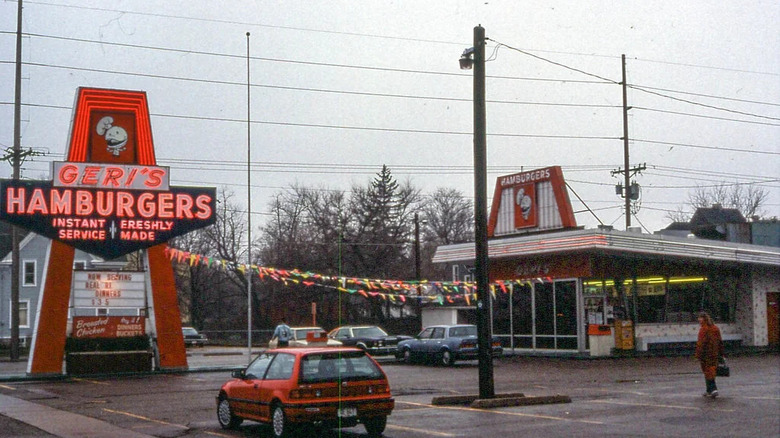
Many people remember Geri's Hamburgers as being just like McDonald's, only better. And there were plenty of similarities. Where McDonald's relied on bright yellow and red branding, Geri's opted for a vivid red to catch people's eye. And of course, it also sold cheap hamburgers, French fries, shakes, and sodas, too.
It's not that surprising that many people compared Geri's to McDonald's, considering the former was actually founded in the 1960s by an ex McDonald's vice president. It started off in Rockford, Illinois, before expanding across northern Illinois and into Wisconsin. Geri's wasn't a giant chain — it had around 13 locations by 1980 — but it was still loved by the people who lived local to its restaurants. Some people loved its burgers so much, they swear they can still close their eyes and taste them to this day. Geri's Hamburgers didn't stand the test of time, and by 1981, the company collapsed. Some locations remained, but its final restaurant closed in the late 1990s.
Milligan's Beefy Burgers
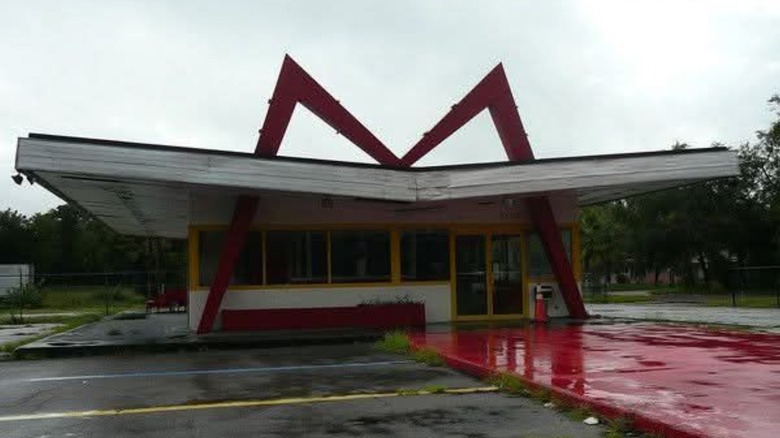
Now, it's pretty much a given that, in most states across the U.S., one fast-food burger is going to cost you over $5. In some places, it might be closer to $7. So it's hard to imagine that there was a time when 12 burgers could cost less than $1. Yep, you read that right. Floridians in the 1960s could head down to their local Milligan's Beefy Burgers and grab a beef burger for pennies, and thousands did. In fact, the chain, which was founded in the 1940s, was flipping and serving around five million burgers a year from its 16 Florida locations in the mid-1960s.
But while Milligan's was loved for its cheap fast-food burgers, that wasn't the only pull for locals. Many remember heading down to their local restaurant to feast on the restaurant's cream pies, too, which, apparently, were legendary. Unfortunately for Florida, like many smaller fast-food chains of the time, Milligan's Beefy Burgers was eventually ousted by behemoths like McDonald's and Burger King. The chain closed down in 1974, taking its $1 burger bags with it.
White Tower
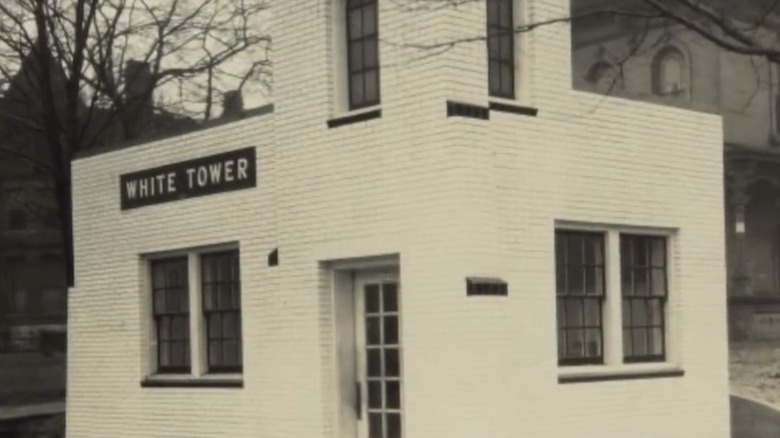
Decades before McDonald's, there was White Castle. In fact, when the fast-food chain opened in 1921, it was one of the first in the country to offer cheap beef burgers. It was affordable, yet clean, and it was family-friendly, too. It was a genius idea, and to Milwaukee father and son duo John E. and Thomas E. Saxe, it was inspiring. So in 1926, the Saxes invoked the most sincere form of flattery: imitation. They unashamedly founded White Tower, a direct copy of White Castle. White Tower was a hit. By the 1950s, it had around 230 restaurants in Milwaukee and beyond. People loved the cheap burgers and many remember heading down to their local White Tower to fuel up after a night of drinking.
White Castle saw all of this success, of course. The chain took White Tower to court, and as a result, the Saxes had to pay the fast-food chain more than $80,000 and pledge to ditch the White Castle-like branding. Still, it wasn't the court case that buried White Tower, but a failure to modernize. The chain didn't keep up with modern tastes, and by the mid-1970s, White Tower was firmly on the way out.
Wimpy
Before Popeye was a standout star in his own right, he was one of the main characters in Thimble Theatre, a 1930s newspaper comic strip. But he wasn't the only breakout character from the comic. Another character, J. Wellington Wimpy, was also pretty legendary. His whole personality was built around his love for hamburgers, so, of course, he was the perfect fast-food chain muse. You get where this is going: He was, indeed, the inspiration for Wimpy.
Founded by Edward Gold, burger chain Wimpy got its start in the 1930s, in Indiana, before quickly expanding into Chicago. To say it was a success feels like an understatement — Chicagoans couldn't get enough. By 1940, Wimpy was slinging around eight million burgers in the area. To this day, people have visceral memories of eating those burgers, which were steamed and slathered in cheese and fried onions. Some remember that Wimpy was so popular, they had to go from location to location to find a seat.
When Gold died in the late 1970s, Wimpy struggled. His attorneys desperately tried to get someone to take on the fast-food chain, but they were unsuccessful, and Wimpy closed down for good. But it's not all bad news. While Wimpy is no longer around in the U.S., it still has several outlets in the U.K., where it expanded back in the 1950s.
Henry's Hamburgers
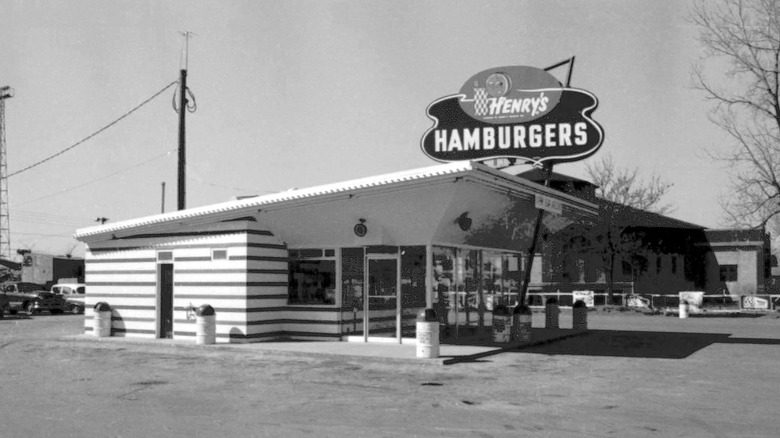
Anyone who was anyone would hang out at a drive-thru in the 1950s. So it's unsurprising that popular ice cream chain Bressler's Ice Cream Company wanted a piece of the pie. In this decade, the company founded Henry's Hamburgers in Chicago. By the time the 1960s rolled around, thanks to a successful franchise model, Henry's Hamburgers had spread across the country and boasted more than 200 locations.
Like many burger chains of the era, Henry's Hamburgers would also sell its cheap beef burgers by the bag. Many people remember stopping by their local restaurant on their way home from school or for a weekend treat, and some swear that the burgers tasted better than McDonald's.
By the 1970s though, Henry's Hamburgers was fading. It had failed to modernize and keep up with the popular drive-thru models of the era, and Bressler's Ice Cream Company closed many of the locations. The dream isn't completely over, though. There is still one Henry's Hamburgers in existence, in Benton Harbor, Michigan.
Wetson's
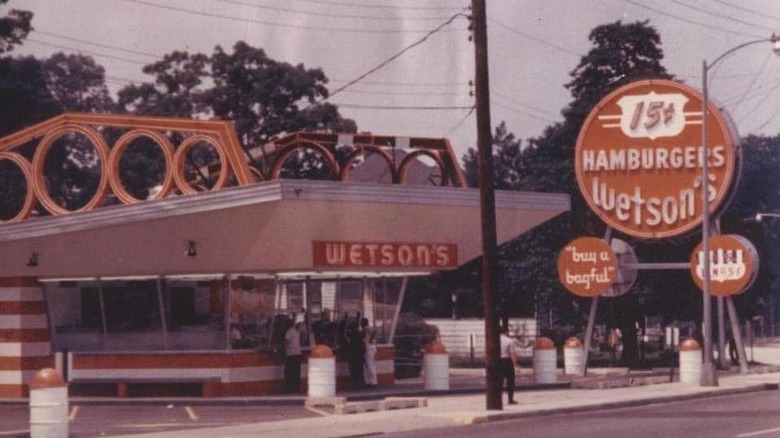
White Tower's story isn't unique. In the middle of the 20th century, as the fast-food industry was starting to boom, many people were looking at successful chains and asking themselves: Could I do the same thing? After visiting a McDonald's in California, Herb and Errol Wetanson decided that the answer to that question was a big yes. And so they opened their own version of McDonald's, called Wetson's, in Levittown, New York in 1959, complete with clown mascots.
Wetson's was a moderate success. Over the next decade and a half, the chain would expand across New York, opening more than 70 locations. For New Yorkers, it was as good as the McDonald's that they didn't have access to yet. You could munch on a burger for $0.15 that people now say tasted just like a Big Mac, only it was bigger.
But it wasn't enough. When the real McDonald's came to town, Wetson's struggled to compete. It merged with another New York fast-food favorite, Nathan's. But, ultimately, the hot dog chain decided to close down all of the locations for good.
Carrols
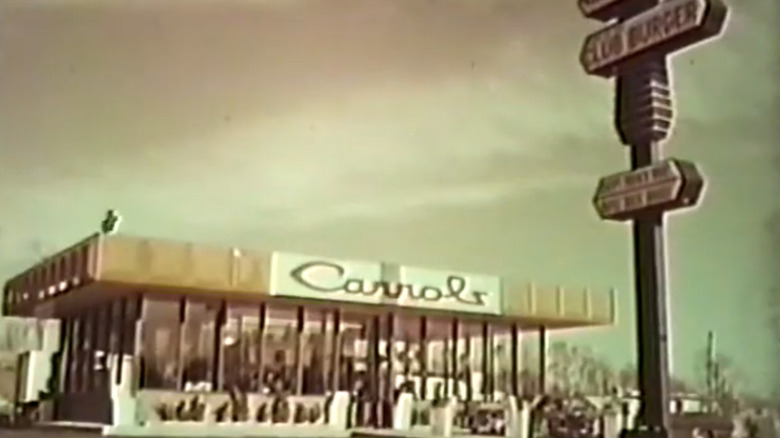
Another East Coast burger chain that fought for the fast-food crown in the 1960s was Carrols. The chain, founded near Syracuse, New York, was heavily marketed toward families. Much of the advertising focused on encouraging kids through the door for an after-school treat and reassuring parents that the restaurants were clean and the food was fresh.
It worked; many people remember hanging out at Carrols as kids, drawn in by the thick milkshakes and the Club Burgers. The latter was the big pull for many: loaded up with two beef burgers, Carrols' signature dressing, lettuce, onions, cheese, pickle, and ketchup. Again, many people swear that Club Burgers were better than anything you could get from McDonald's.
In the end, it was another fast food giant that was the downfall of Carrols. Burger Kings kept opening up nearby and decimating its sales, so in the end, the chain's founder Herb Slotnick gave up, selling Carrols to Burger King in the 1970s.
Dee's Hamburgers
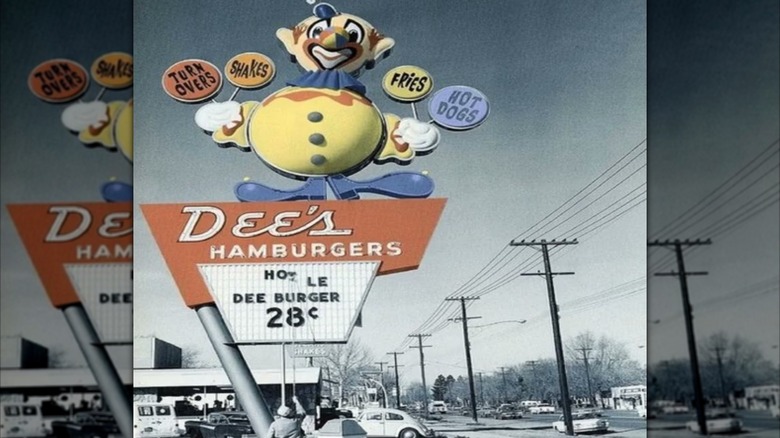
Dee Anderson was 16 when he realized he could make a good hamburger. In fact, his burgers were so good, all of the other hamburger-sellers at the carnival he worked at in Ephraim, Utah would come to his stand for lunch. So, like any decent entrepreneur, Anderson decided to branch out. In the early 1930s, he opened his very first drive-in restaurant in Salt Lake City.
To say that the people of Utah loved Dee's would be an understatement. Anderson's venture had good, cheap burgers, it was clean, it was fun (thanks to the clown mascots), and it was marketed with catchy jingles (which some people can still sing today). Dee's didn't have much competition, either, as giants like McDonald's weren't even around yet. At its peak, the chain had more than 50 locations across the state.
Dee's managed to keep going through the fast food boom of the mid-20th century, and even held its own against McDonald's. But Anderson had to retire eventually. In the 1980s, after he left the business, his family sold the chain to Hardee's.
Sandy's
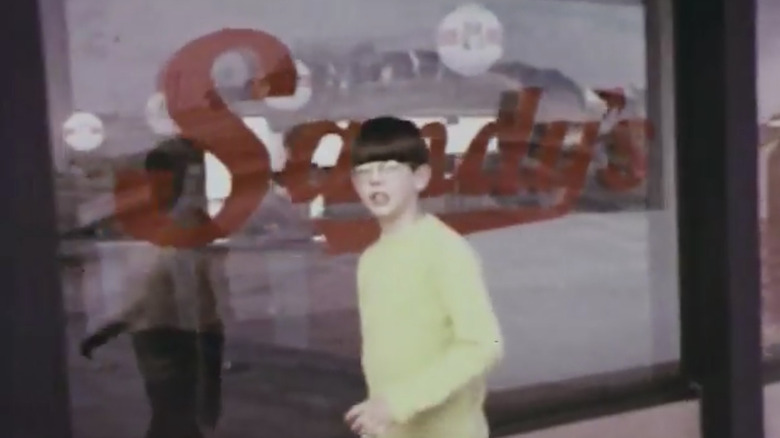
Back in the 1950s, four businessmen decided it was time to fill a glaring gap in the market. There were no Scottish-themed fast-food chains, marketed by a scantily-clad female mascot wearing a tartan beret, and so it was time to start one. They founded Sandy's in Illinois, and their mascot's name? Miss Sandy, of course.
Okay, not all of that is 100% true. The four businessmen, Gus Lundberg, Robert C. Wenger, Paul White, and W.K. Davidson, did spot a gap in the market, but it was actually for a McDonald's franchise in central Illinois. They started opening McDonald's restaurants across the region, eventually expanding into the cities of Decatur and Peoria. But this is where they ran into issues, as they weren't actually contracted to franchise in these areas. Enter: Miss Sandy.
The four men decided to use the locations to start Sandy's. They copied the McDonald's model of cheap burgers and fries (it was Scottish in theme, but not food), and it was a success. By 1966, they had more than 120 Sandy's in five states. In the 1970s, though, Sandy's went the way of Dee's. It merged with Hardee's, and eventually, all of its original locations were closed down and rebranded. RIP, Miss Sandy.
Doggie Diner
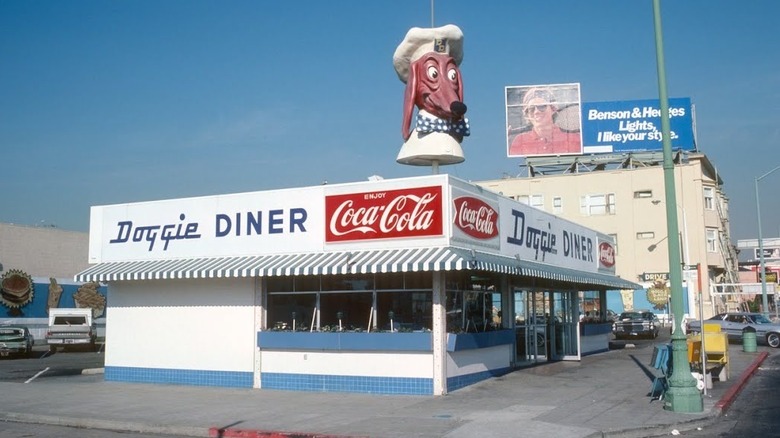
There was a time when San Francisco Bay Area was covered in giant, fiberglass dog heads. No, they weren't part of some abstract art project, they were advertising something much more mainstream: fast-food. Doggie Diner, the burger and hot dog chain responsible for the giant heads, was founded in the 1940s and people loved it. The branding was fun and appealed to kids across the area, but, ultimately, people stayed for the food.
Many remember feasting on fast food at Doggie Diner after school with their parents into the 1970s, or even taking their dates there on a Friday night. The burgers were popular, but, according to those who used to frequent the chain, the chain's hot dogs, pastrami sandwiches, fries, and shakes were also hard to beat.
In the end, though, Doggie Diner became another casualty of Big Fast Food. In the 1970s, McDonald's expanded into the area, and the chain rebranded, losing the giant dog heads, in an attempt to stay cool and relevant. It didn't work, and the last restaurant closed in 1986. One location is set to come back in San Francisco, complete with the signature giant dog's head. It's not open yet, but if you're craving its signature burgers and dogs from the good old Doggie days, watch this space.
Little Tavern
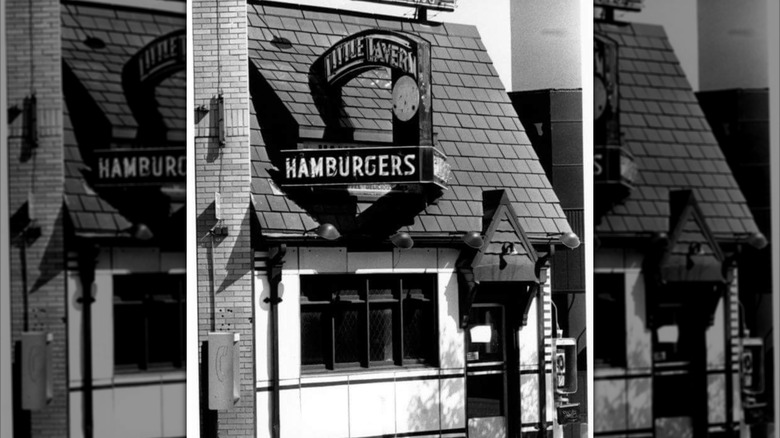
When you think of fast-food branding, you probably think of bright oranges, reds, and big yellow Ms — but, Little Tavern, a Washington burger chain, was different. Founded in the 1920s, the chain's tiny locations had sloping European-style green roofs. For some, they evoked Swiss chalets, while for others, they felt more Tudor, but the general consensus was that they were entirely un-American looking.
The size of the burgers they churned out from their dozens of locations across the Baltimore-Washington area was also distinctly un-American. In fact, they were about a quarter of the size of the average fast-food burger today. And yet, people still loved them. Many remember stopping by a Little Tavern for a bag of those miniature burgers, which they would then eat on the way from school or take to the drive-in movies.
In the 1980s, Little Taverns started dying out after founder Harry F. Duncan decided to sell up. Some locations held on, though. In the early 2000s, there was still a Little Tavern in Southeast Baltimore, catering to people who felt nostalgic about their childhoods spent eating the chain's tiny burgers. In 2008, it closed for good.
Red Barn
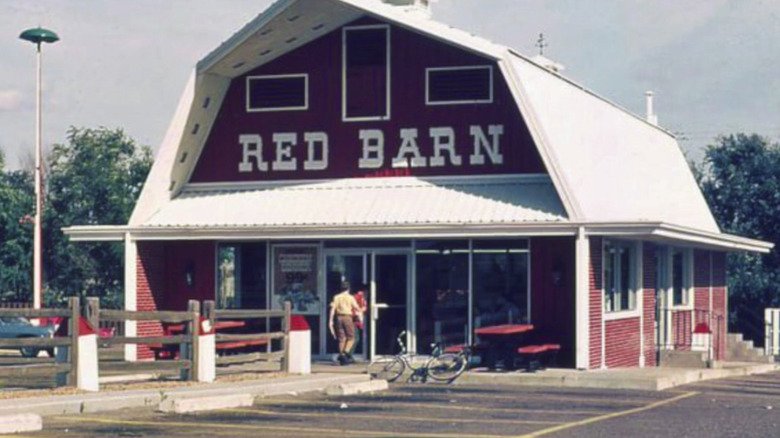
As you've probably gathered from the name, Red Barn burger restaurants were large, red, barn-style buildings that made you feel like you'd just stepped into rural America. The chain was founded in the early 1960s in Columbus, Ohio, and people loved its countryside theme and affordable menu.
Not only could you grab a hamburger for $0.15, but you could also get cheap fish sandwiches, chicken dinners, and grilled cheeses from the chain. Many people remember going there as a child to feast on a Barn Buster specifically, which was loaded with a quarter pound patty, lettuce, tomatoes, onions, pickles, cheese, and its own signature sauce.
Red Barn had the fast food formula nailed, and at its peak, it had 400 locations in 22 states, as well as international restaurants in Canada and Australia. But in the end, it just couldn't compete with, you guessed it, McDonald's. In the 1980s, Big Barn filed for bankruptcy, marking the beginning of the end for the once-popular burger chain.