

Why Wrapping Used Aluminum Foil Around Hummingbird Feeders Is A Smart Idea
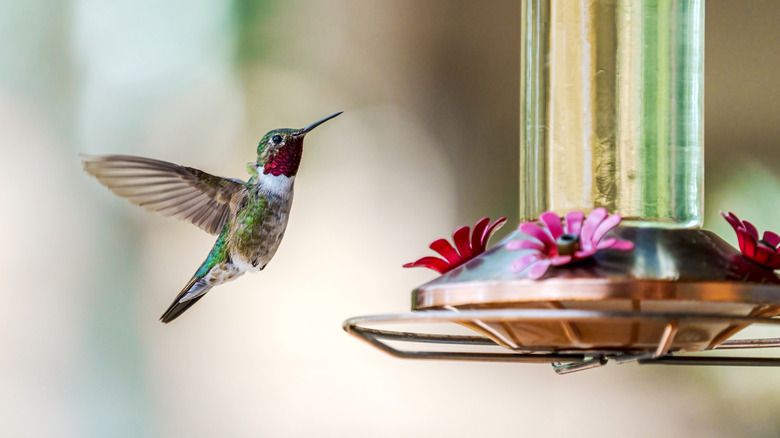
Creating a wildlife-friendly outdoor space around your home is a gift that keeps on giving. Not only do you have the satisfaction of knowing that you are helping to steward the land and care for the other creatures we share it with, but you also get the added benefit of being able to observe them as they come and go. If you really commit to the process, you can plant different fruits to attract birds and take on projects like turning old crocks into bird baths. One of the simplest ways to attract some of the most exciting birds to your home, however, is a simple hummingbird feeder filled with sugar water. Though, if you do install one of these, you may want to consider wrapping it in foil.
It might look a bit strange, but a foil wrap can actually help make your hummingbird feeders much safer for the birds. As it turns out, while hummingbirds love visiting these brightly colored reservoirs, they can actually pose several serious risks. Particularly when the weather is warm, these feeders are prone to spoilage, with the sugary mixture inside fermenting or growing mold and harmful bacteria. On top of that, simply by sitting in the sun on a hot day, the liquid can heat up enough to negatively impact the metabolic rates of these tiny, delicate creatures. Reusing leftover lightly-used aluminum foil by crinkling it up and wrapping it around the reservoir serves to insulate the feeder and reflect light, keeping the temperature low and slowing the growth of any pathogens.
Aluminum foil isn't a foolproof way to protect hummingbird feeders
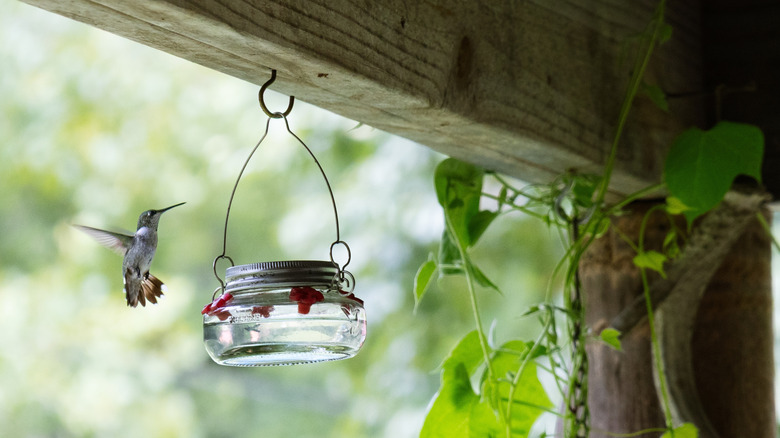
There is, however, one significant downside to wrapping your hummingbird feeder in aluminum foil: It obscures the sugar water from viewing. Keeping the mixture cool is important, but you also need to keep an eye on it, especially during the warmer part of the year. The easiest way to tell that your "nectar" has spoiled is by a cloudy appearance, a telltale sign that isn't easily accessible with a layer of foil in the way.
Either way, though, you should be changing the sugar water regularly. When temperatures are high, we are talking about swapping it every day — or every other day, at least — and cleaning the feeder each time to prevent mold build-up. If you stick to a strict schedule, you don't need sight on your side quite as much. Plus, it's a better strategy than waiting for the cloudiness, which indicates the nectar has already spoiled. After all, the birds don't know to look for that before having a drink.
Regularly cleaning and refilling your hummingbird feeder is an absolute must, but you can also do yourself some favors by selecting the style and location well. Choose a glass feeder rather than one made of plastic to help control the temperature of the solution inside. Additionally, if you choose a spot to hang the feeder that spends most of the day shaded, it will reduce the rate of spoilage and the risk of overheating. With the right feeder, a good spot, regular care, and a clever aluminum foil hack to boot, you can rest assured that you are taking great care of your hummingbird visitors.