

Stop With The Ketchup. This Glaze Elevates Meatloaf With A Sweet And Spicy Bite
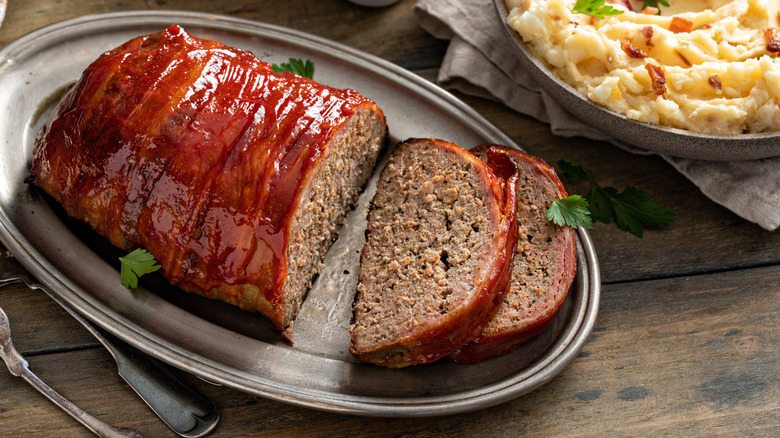
Meatloaf is a classic comfort food. But just because this home-cooked staple has been gracing dining room tables for generations does not mean that it is immune to change. In fact, it may be that the recipes of yesteryear are begging to be updated. One simple way to do that is to swap out the ketchup for a new, more complex glaze. Ketchup may be tried and true, but once you taste a meatloaf coated instead with gochujang and coconut cream — as in this sweet spicy coconut glazed meatloaf recipe — you'll look at this comforting classic in a whole new light.
If either of those ingredients are unfamiliar to you, well, you're in for a treat. Gochujang is a Korean chili paste made with chili powder, glutinous rice, salt, and fermented soybeans. They are combined into a thick paste with a complex flavor profile containing strong notes of salty, spicy, sweet, and savory. It is a real hack for bringing depth of flavor to a dish.
For this recipe, coconut cream is the other major component in the glaze. Coconut cream differs from coconut milk based on the fat content. As you would expect, the cream is richer and thicker, perfect for both spreading the flavor of the gochujang and sealing moisture in the meatloaf alongside its own delicate coconut aroma. Just those two ingredients would already make a nice swap for ketchup, but you can dig even deeper with this recipe, both in terms of the glaze and the meatloaf itself.
How to tweak your meatloaf recipe to work with this gochujang glaze
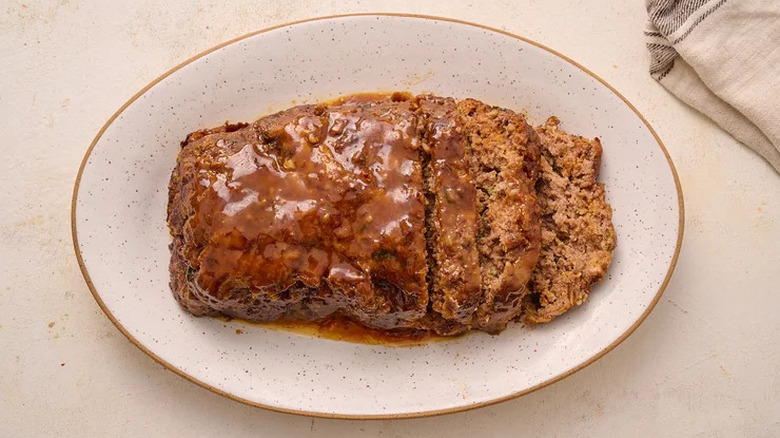
Rice wine vinegar and brown sugar round out the flavor of the sauce, adding another layer of sweetness as well as a tinge of acidity to cut through and balance the fat of the coconut cream. But the meatloaf, too, gets some Korean-inspired flair, with touches like white pepper and scallions. If you really want to amp things up in your gochujang-glazed meatloaf, though, just start flipping through the list of essential Korean ingredients.
In the meat mixture, consider using soy sauce in place of salt, to add a deeper umami flavor to the meat. A bit of minced ginger wouldn't be a bad idea either, complementing the garlic and scallions while adding an earthy sharpness to the loaf. Sesame seeds or toasted sesame oil would also provide a touch more aromatic complexity to the mélange. Or, if you really want to dig into the Korean flavor profile of this meatloaf, you can even mix in some chopped kimchi.
Whether you choose one of those ingredients or all of them, they are all easy ways to make meatloaf better, giving us a whole new take on a comforting dinnertime classic. The last thing to do with this recipe is to decide what to serve beside it. For a play on tradition, you could swap the standard mash for Korean gamja bokkeum, fried potato batons with carrots and onions in a flavor-packed sauce. Fill the dinner table with a platter of sweet and spicy coconut-glazed meatloaf and fried potatoes with maybe a few other Korean banchan dishes, and you have yourself a meal that won't soon be forgotten.