

Signs Your Rosemary Plant Is Stressed, And The Most Common Mistake Behind It
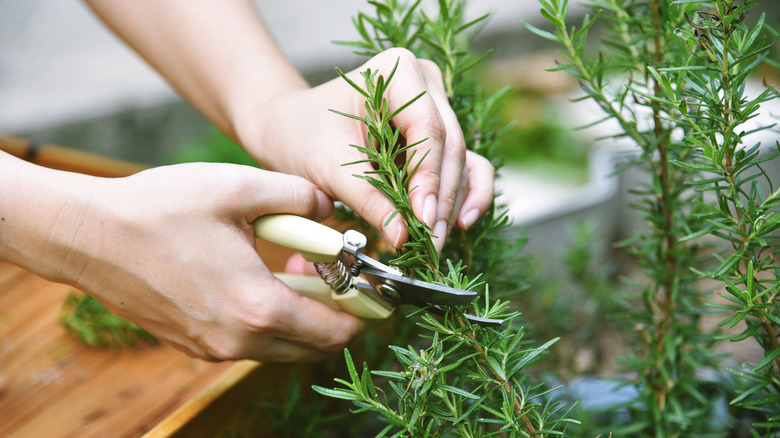
Of all the things you can grow yourself, one category can be especially approachable, rewarding, and tasty: herbs. If you start your own herb garden, you'll find yourself popping beautifully aromatic fresh herbs into everything you cook. And one of the best herbs to grow in particular is rosemary. As long as you can provide enough light either way, it can grow indoors or out, and you'll be able to enjoy its signature aromas in everything from meat dishes to breads to cocktails.
For your rosemary to thrive, you need to know how to spot when it's stressed — and why, and what to do about it. Yardwork founder Michael Clarke told Food Republic that key indicators your rosemary is struggling are leaves that are yellowing or browning, or feeling mushy; or entire stems starting to turn brown or getting weak and floppy. You'll also notice a lack of the plant's beloved aroma in its leaves. What does all of this tend to mean? Your rosemary is overwatered.
Rosemary loves sun and heat — it originally hails from dry areas in the Mediterranean region, and is drought-resistant. All the water it really needs, it will likely get from rainfall, with maybe a sparing amount of supplemental water if you live in an especially dry climate. Essentially, err on the side of dryness and focus more on how much sun and warmth your rosemary is getting, and you'll have healthy, sturdy, green plants bursting with aromas.
Further care tips for rosemary
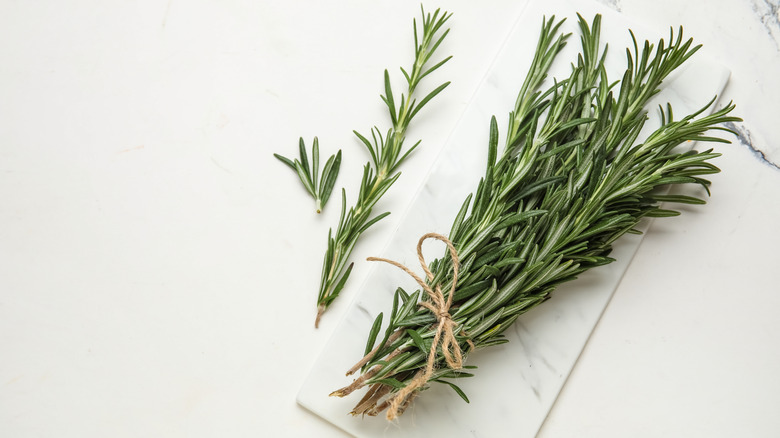
For watering frequency, aim for once every one to two weeks, depending on how dry your climate is. Potted rosemary might need water once or twice a week. You'll know if rosemary is underwatered if the top couple of inches of the soil is dry and the leaves are brittle. Keep an eye on the leaves, stems, and soil, and you'll easily be able to tell when your rosemary is at a sweet spot for watering consistency.
Rosemary demands lots of light, at least six hours a day. It's one of the best herbs for growing in hanging baskets but can also grow in containers indoors, garden beds outdoors — it just needs access to direct sunlight. You also want the right soil. Rosemary grows best in "sharp" draining soil, meaning coarser soil that prevents water from pooling and saturating the plants' roots. Set your rosemary plants up for success by adding sand or gravel to the soil.
You also want to maintain your rosemary with pruning. According to Clarke, in the late spring to early summer when rosemary's flowering is complete, you should just trim its tips so the plant's hormones redistribute, causing fresh shoots to grow. This can help your rosemary grow well each year and keep doing so for a decade. It will even smell and taste better, because pruning causes higher concentrations of essential oils in newer leaves. With light, well-draining soil, pruning, and the right approach to watering, you can enjoy years of gorgeous rosemary.
Static Media owns and operates Tasting Table and Food Republic.