

This Trash-To-Garden Hack Keeps Pests Away From Young Plants
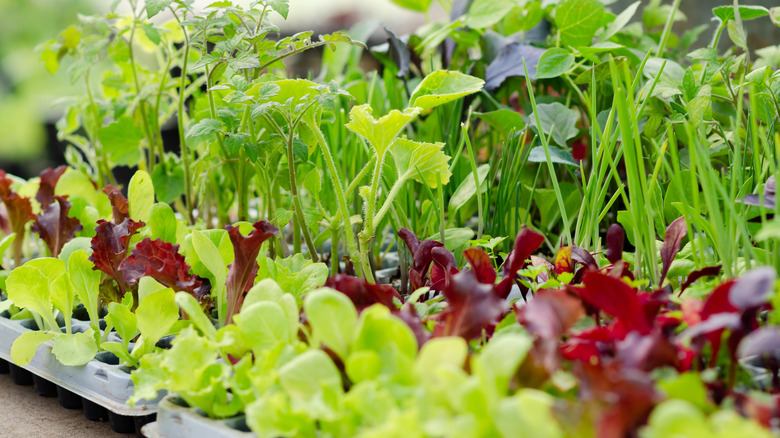
Whether you've bought them from a nursery or lovingly grew your fruits and vegetables from seed over the winter, baby plants are at their most vulnerable when it's time to transplant them outdoors. Young seedlings are fragile and susceptible to attack from a number of enemies, including birds and insects, and there is nothing more disheartening than waking up the next day to find them all but gone after spending so much time and effort. But there is a simple hack to avoid this crushing defeat: protecting the seedlings with toilet paper and paper towel cardboard tubes, which you would otherwise discard.
These cardboard tubes are the perfect size to use as "plant collars" to protect seedlings from pests like cutworms — the caterpillar larvae of certain species of moths — and slugs, which love to feast on the tender young plants. Placing the tube around the seedling and burying it one or two inches underground will form a barrier against these nasty pests, which attack both above and under the soil surface.
Cutworms hide in the soil during the day, doing all their damage at night. They have a special affinity for cruciferous vegetables like cabbage, broccoli, and kale, but they will happily chomp up your lettuce, spinach, radish, beans, and pea seedlings, too. In fact, any tender vegetable shoot, soft-stemmed herbs like basil and dill, and seasonal flowers are all fair game. The toilet roll trick will also work to protect seedlings grown in pots and raised beds, as both creepy crawlies can live in the soil over the winter and emerge in the warmth of spring when the tasty leaves are transplanted.
More garden ideas to use cardboard tubes you'd otherwise discard
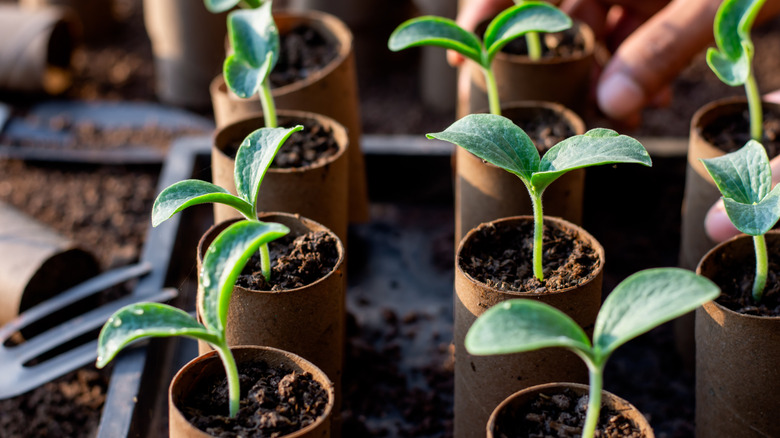
Turning cardboard tubes into little pots is great for planting small-seeded vegetables such as carrots, parsnips, and lettuce. For example, growing carrots in toilet paper tubes has unexpected benefits, since you plant them in the garden complete with the tube, which protects the fragile roots and emerging seedlings. The cardboard will eventually biodegrade thanks to the microbes in the soil, and the vegetables will continue growing once most danger has passed.
If you're planting seeds directly in the soil, you can still use the cardboard tubes as protection. Bury half of the toilet paper tube into the soil, and plant the seed within the section above ground. Any seed that can go directly in the ground can be planted this way — think radishes, beets, melons, squash, and fragile seedlings like lettuce and carrots if you didn't start them indoors. You can also make insect traps from discarded toilet rolls to attract pests that prefer damp hiding places, like earwigs.
Put the cardboard tube on its side near the plants that are getting munched on and fill it with a damp paper towel. Leave the trap overnight and check it the next day. If you suspect earwigs are causing the damage, shake the tube over a bucket of soapy water to dislodge them and reuse the trap as needed. Slugs may have hidden within the damp towel, too, so remove the tube and discard the towel, slugs and all. These free and easy ways to deter pests using pantry staples and common household items are much preferred to chemical solutions, as they respect the ecosystem and protect the food chain.