

10 Retro Appliances We Rarely See In Kitchens Today
We may receive a commission on purchases made from links.
Today's modern consumers have an abundance of luxurious kitchen appliances to choose from if they have the desire and the means. Boiling water taps, climate-controlled wine cabinets, smart refrigerators, coffee makers with built-in grinders, the list goes on. But there was a time when none of these things existed. In the 1940s, for example, one of the most desirable appliances on the market was, drum roll, please: a refrigerator.
Yep, that simple appliance we all take for granted was once a highly sought after item. So, what did people use instead? We'll give you a clue: it relied heavily on a wooden cupboard, some ice, a man, a horse, and a cart.
If you want to find out more, keep reading. We've gathered 10 retro appliances that we rarely see in kitchens today. We won't give too many spoilers, but more than one of them involves an interesting combination of appliances, and several of them sound like they've been taken straight from "Wallace & Gromit."
1. Iceboxes
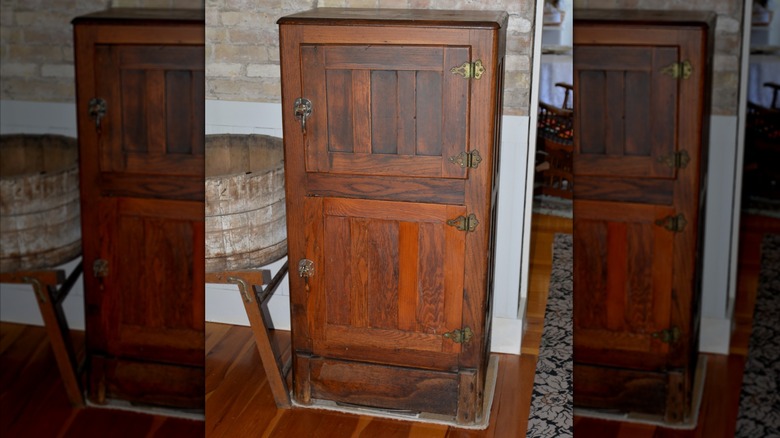
Nowadays, keeping our food chilled is easy. You just pop it in the refrigerator, and move on with your day. But there was a time, not too long ago, when household refrigerators weren't that common. In the 1800s, people relied on iceboxes to keep their food fresh.
Iceboxes were a little more sophisticated than the name implies, but they were still pretty simple. They were large lined, insulated wooden cupboards, built to store ice, food, and drinks. The ice would usually be placed on the upper shelf, with the food and drinks below, and the cool air from the melting ice would help to keep everything nice and chilled. They required more maintenance than the modern-day refrigerator because you had to keep the ice topped up (or risk spoiled milk). If you needed more ice, you would simply place a sign outside your home, and wait for the iceman to roll up with a horse and a cart full of ice.
Fridges were introduced at the beginning of the 1900s, but didn't become a common fixture for a few decades. It was in the 1930s, during the Great Depression, that sales started to boom (reducing food waste was more important than ever during this period, after all). By the 1940s, iceboxes were quickly becoming redundant, and modern refrigerators were mainstream.
2. Electrochef stove and refrigerator combos
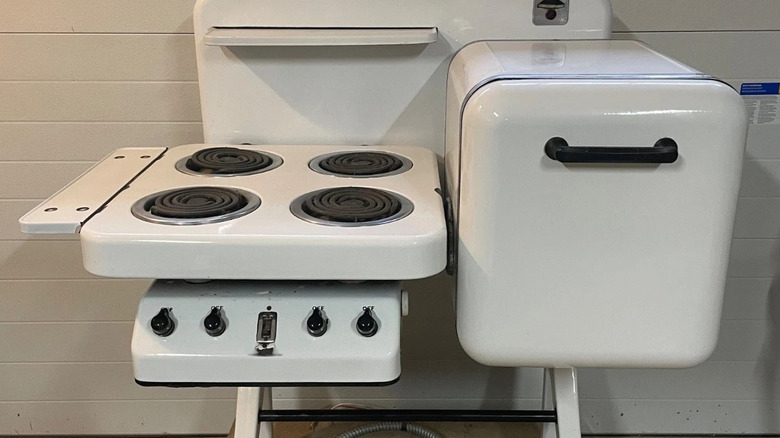
With the rise of modern refrigerators, people got creative. In the late 1920s, Detroit-based company Electro Master Inc. created the Electrochef, which was basically an electric stove and a refrigerator, combined. At the time, it was intended to be the height of modern technology and convenience. You take your eggs straight from the small, compact fridge, and without taking a step, you can crack them straight into a pan on the attached stove. The appliance truly was groundbreaking for the 1920s, when many people still had bulky old wooden iceboxes in their homes and gas stoves.
The Electrochef was designed by an engineer named Warren Noble, who was commissioned by the Detroit Edison Company to create an appliance that would revolutionize modern kitchens. In the end, the Detroit Edison Company didn't have the capacity to manufacture the Electrochef, and so Noble created Electromaster, Inc.
According to a 1930 edition of Electrical Merchandising, when it was first advertised, Electromaster, Inc. managed to sell 70 Electrochefs. The appliance stuck around for a few years; in 1939, consumers could purchase an upgraded version of the appliance in mint green. If you're intrigued by Eletrochefs, good news: You can still buy them on eBay, and you can snap one up for $1,500.
3. Radio fridges
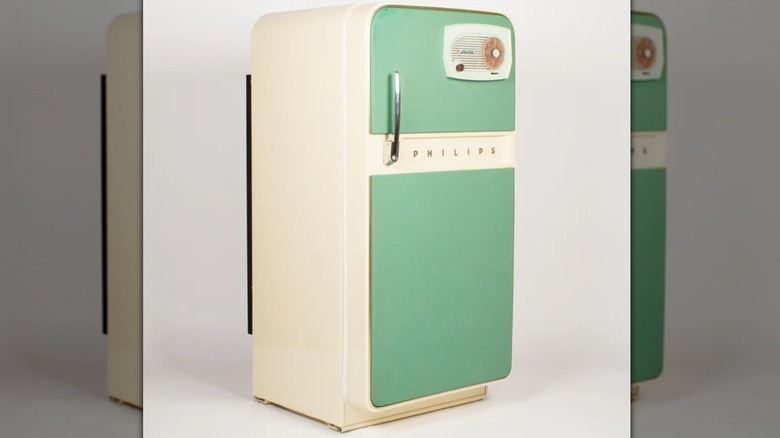
The 1920s and 1930s had the Electrochef, and the 1950s had radio fridges. Yep, Philips' Radiofrigos were sleek-looking refrigerators with a radio fitted neatly on the outside. The height of luxury, right?
The refrigerators were the height of modern living: They had a capacity of 160 liters, and came with aluminum ice cube trays and a vegetable tray. The radio was inbuilt at the top of the door, meaning housewives (and it was the 1950s, so it was nearly always housewives) could blare out hits from artists like Elvis Presley and Little Richard while they were cooking for the family.
Radio refrigerators aren't as common now, but they hung around for a while. Many people remember similar appliances from the 1970s, for example. If you're lucky, you might find a fully restored one for sale. It's sold now, but the French brand Appartement Témoin recently fixed it up and listed an old 1957 Radiofrigo.
4. Teasmades
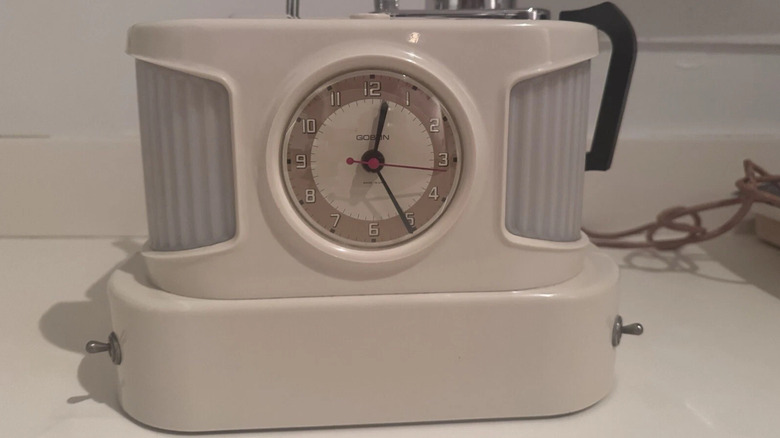
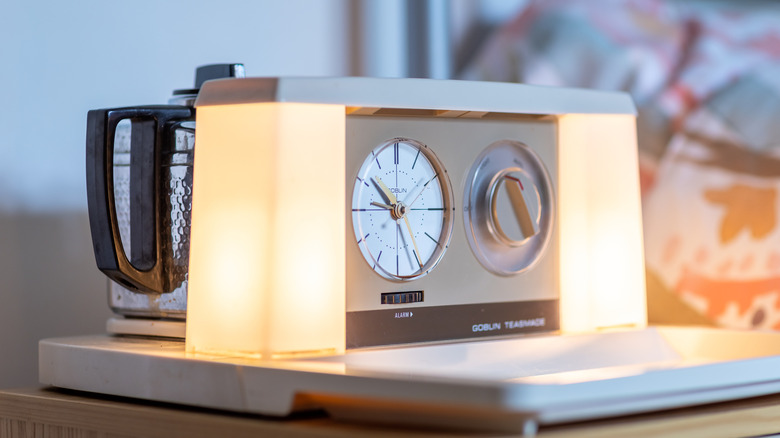
Some stereotypes are unfair and inaccurate. Parisians don't all wear berets, for example, and not all men from Florida do strange, illegal things. But if there's one stereotype that is, arguably, well-deserved, it's that the Brits solve everything with a cup of tea. So, of course, the U.K. was the birthplace of the bedside automatic tea maker.
In the 1890s, a Bedfordshire engineer called Charles Maynard Walker created the first automatic tea maker, which he called the Early Riser's Friend. He would be followed by several inventors and engineers, who created very similar appliances. Many of those early versions would automatically light a spirit lamp (a compact alcohol burner), boil a pint of water, pour it into a teapot, and then wake the user up with an alarm. If you're thinking: But isn't that a major fire risk? You'd be correct. While handy in theory, automatic tea makers were a big source of house fires.
But fire risk didn't hinder their popularity. In the 1930s, British vacuum cleaner company Goblin purchased the rights to an automatic tea maker design, and started making its own soon-to-be-iconic version, called Teasmades. Just like the Electrochef, it was marketed as a groundbreaking invention and the height of modern living. Kitchen technology has evolved rapidly in the last few decades, and Teasmades are nowhere near as common as they used to be, but they are still sold by the appliance company Swan. And don't worry — these days, they don't require a naked flame.
5. Toast-o-lators
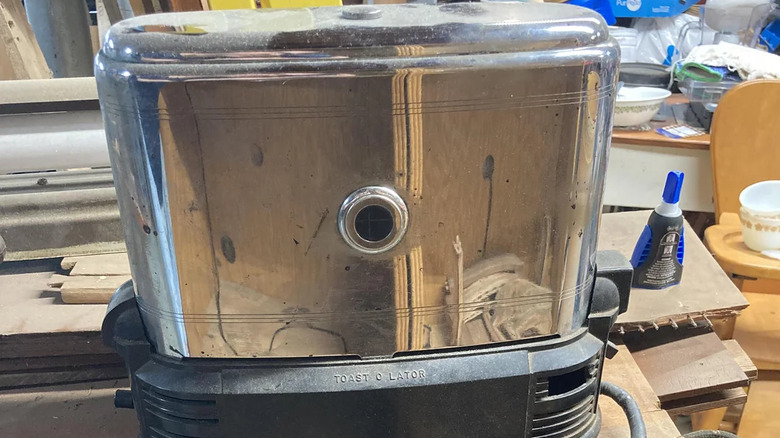
There are many ways to make toast. You can place bread under the grill, you could hold a slice on a skewer over an open flame, or you could fry it on the stovetop. But let's be honest, most of us don't faff around with any of that if there's a toaster available. It is, arguably, the perfect appliance. Bread goes in, toast pops out, butter goes on — perfect. Pop-up toasters have been around for decades. In fact, the very first one was invented in 1919. But while they were an efficient way of making toast back then, they hadn't been perfected yet. Hence why people were still experimenting with different appliances, and the Toast-o-later ended up being created.
At first glance, the Toast-o-later, sold in the 1930s, 1940s, and 1950s, looks like a modern toaster. But actually, look a little closer, and you'll see it's quite different. The toast is placed in on one side, and then it moves through the toaster, past the heating element, and comes out the other side. It's left to right, rather than up and down.
In the end, though, the Toast-o-later just wasn't efficient or safe enough to last. Modern collectors say these appliances are full of hazards, and while they're fun to look at, they're not recommended for use. Fortunately, the pop-up toaster was perfected in the 1970s and 1980s. Additions like temperature sensors, wider slots, and heat-resistant plastics changed the game, and the modern toaster market was born.
6. Veg-o-matics
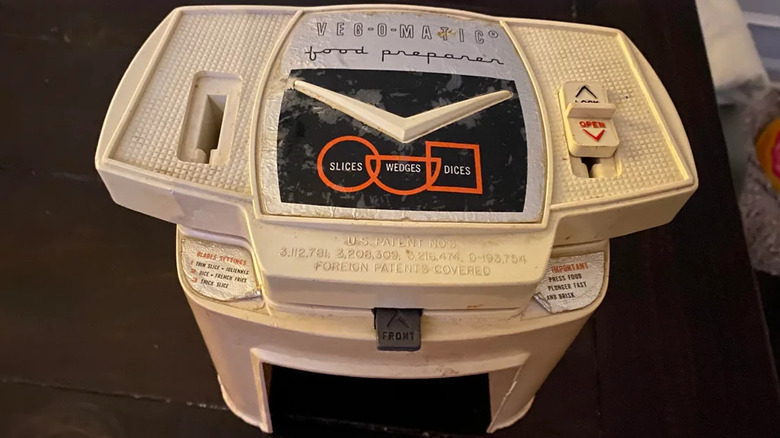
Who wants to spend ages dicing onions? Not the housewives of the 1960s, that's for sure. That's why, when Samuel J. Popeil invented the Veg-o-matic in 1963, it flew off the shelves. The appliance was very simple: It was just a piece of plastic fitted with different shaped steel blades. You could push the vegetable through the blades, and it would chop it into pieces for you. Very similar vegetable choppers still exist today, and although plenty eschew them in favor of a simple knife and chopping board combo, they still have their fans.
But the Veg-o-matic was a special vegetable chopper because it was one of the first to exist. Most people saw it on television, where it was advertised by Popeil's son, Ronald. His efforts were a huge success; the Veg-o-matic gained a huge fan base, and similar appliances followed (like the Mince-o-matic meat grinder, for example). All were sold by Ronald's company, Ronco.
Decades later, in the 1990s, though, Ronald actually implied he was embarrassed by the Veg-o-matic, and even hinted that they weren't very impressive or good quality. Ronald sold Ronco in 2004, but it's still going today. You won't find Veg-o-matics on the website anymore, but you can buy another of its famous gadgets, the Ronco Pocket Fisherman.
7. Thor Automagic washers
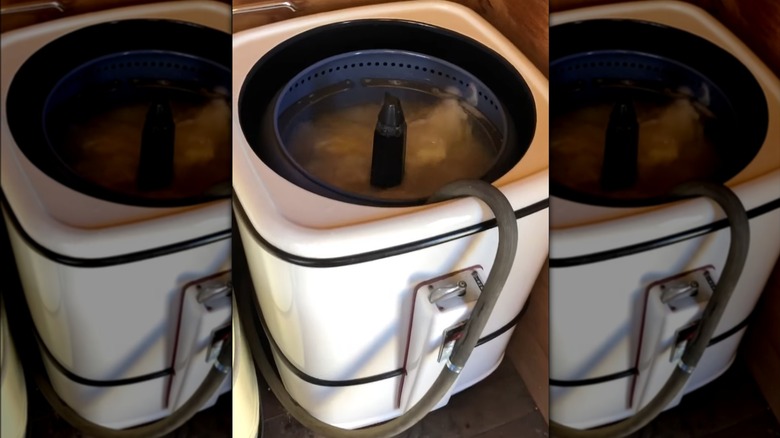
We've had fridges attached to stoves, and now we give you the Thor Automagic, a washing machine and dishwasher hybrid. Yep, this appliance actually had the capability to wash your clothes and your dishes. "How?!," you ask. Well, it was actually quite simple. There were two different tubs, the clothes washing tub would spin clothes around a central wringer, while the dish washer tub came with racks that you could use to load up your plates and cups. In fact, according to Thor (a brand created by the Electric Household Utilities Corp.), it could even be trusted to clean your most precious china.
Perhaps unsurprisingly, the idea of washing your clothes and your dishes in the same appliance didn't catch on. It's a nice idea, but the machine ultimately didn't have the capability to offer the different speeds and temperatures required for each set of items. Thor Automagics are still around, but usually in houses that haven't been updated since the 1940s, so they're pretty rare. But if you find the idea interesting or bemusing, you can purchase vintage print ads for the old appliance on eBay.
8. Sunbeam Mixmasters
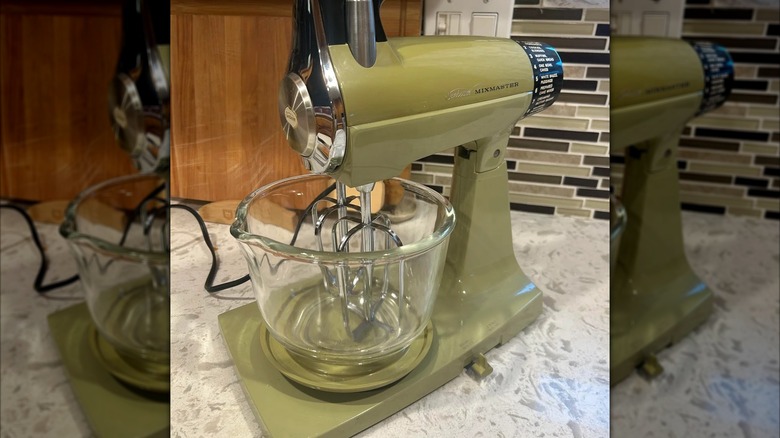
Invented in the 1940s by the Australian company Sunbeam, the first Sunbeam Mixmaster was, in essence, a highly efficient stand mixer. For the home cooks of the era, it was revolutionary (whisking and mixing by hand is time- and energy-consuming, after all). The Mixmaster was particularly effective at whipping up meringue for pavlova, a traditional Australian dessert, and people loved it. The Sunbeam Mixmaster didn't stay in Australia, though. It had global appeal, and it easily found a fanbase in the U.S. (Sunbeam actually has American roots, and started off life as the Chicago Flexible Shaft Company before it relocated).
Many of the products we've listed so far haven't stood the test of time, but the Sunbeam Mixmaster is different. While it's no longer as common thanks to popular brands like KitchenAid and Breville, people still seek out vintage Sunbeam Mixmasters. At the time of writing, you can find 1950s Sunbeam Mixmasters that still work perfectly on eBay, for example.
9. Gas garbage incinerators
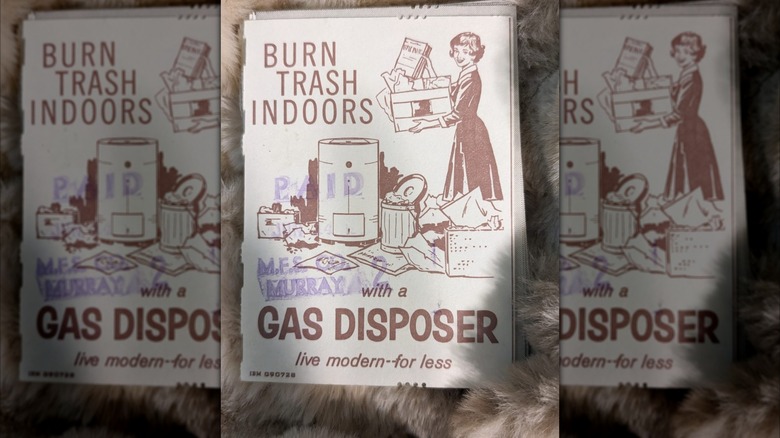
It might seem strange now, but there was a time when people burned their own garbage inside their homes. In the early to mid-1900s, gas-powered garbage incinerators were a common fixture in people's homes, and would usually be located in the basement or even inside the kitchen. Many people who grew up in the first half of the 20th century remember these appliances vividly — particularly the smell they would give off that would fill not just the kitchen, but the entire home, and even drift into the house next door, too.
Unsurprisingly, given the huge amounts of pollution they give off, home garbage incinerators are no longer a common sight in modern homes, and in many places, they're actually illegal. That said, despite this, it's not uncommon for people in the U.S. to burn their own trash. Although it's important to note that this rarely happens inside the home nowadays, and is usually a backyard activity that happens in burn barrels.
10. Electric sinks
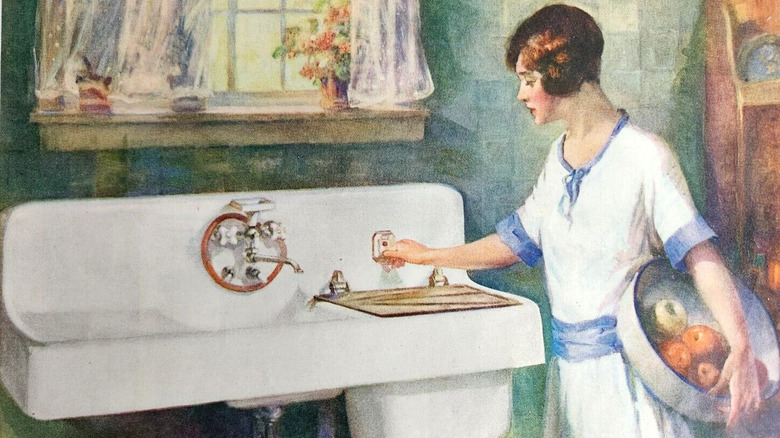
"Every clever woman has wondered, rebelliously and often, whether the dishes would always have to be washed by hand." Those words are written at the start of a 1927 print advertisement from Kohler. "They won't," it continues. Why? Because the manufacturing company had created an Electric Sink, of course. This early dishwasher was in the shape of a sink, but it had a lid, and it was plumbed into the wall so that water could flow into the sink and wash the dishes without the "clever woman" having to do anything (other than push a button).
Genius, right? Well, yes. The housewives of the era hadn't seen anything like it. But there was a problem: the Great Depression meant that people didn't have money for frivolous appliances (and excessive amounts of hot water). But it wasn't the end of the concept of the electric sink. General Electric manufactured its own version in the 1930s and 1940s, which even came complete with a garbage disposal, too.
Those early electric sinks are quite different to the modern dishwashers we have today, of course, but they did pave the way for them to exist. In the 1940s, front-opening dishwashers started to rise in popularity thanks to the addition of electric drying elements, and the rest, as they say, is history.